Friday, July 19, 2019

My body and me, we're just two wild and crazy guys: June 2019 music diary

Things I want to comment on but can't because I'm fucking drowning in stuff (not just music and not just fun) right now: Beyoncé's concert film Homecoming; the massive Radiohead leak of OK Computer sessions followed by the brief official release of same; Prince's Originals, which I've heard bits and pieces of via unauthorized releases like The Work but is of course massively upgraded here; and the expanded repackage of clipping.'s face, which I'll try to take on via Backmasking eventually.

Amyl and the Sniffers (ATO) [r]
Australian throwback punk with touches of ‘70s glam, this is bang on like Sheer Mag down under and boasts shouting, spirited delivery on the part of lead singer Amy Taylor. Gacked on anger, stressed on tick, go fuck yourself. The memorable riffs peak on “Angel,” which is too-brutal melodic pop, and “Monsoon Rock” which is fucking lit; the energy flags later, but not always unenjoyably, with “Got You” credibly frontlining some Deb Harry speak-singing.

Cate Le Bon: Reward (Mexican Summer) [r]
Le Bon, a Welsh singer-songwriter now well established as a leading light of this era of indie folk, is less controlled and therefore, I think, better than oft-named peer St. Vincent — she means to prove less with the phrasing intricacy and smallness of her arrangements. That I don’t especially enjoy her vocal delivery is my affair; these are hypnotic songs that register themselves fully with you even after one exposure. “Daylight Matters,” “Home to You” and the Annie Lennox-ish “Mother’s Mother’s Magazines” all are intimate and driving, lovely in their fashion, in a way that seems confident and unaffected, and for all its repetitiveness “Sad Nudes” drives deep into its groove. A record you could probably get lost in if you needed to, and more generous than usual from the modern-day crop of singer-songwriters.

Mavis Staples: We Get By (Anti-)
Ben Harper produces this time and gets a nice pillowy, minimal sound out of the musicians while Staples commands the stage as ably as ever, though only the first few songs (“Change” and “Anytime” especially) are rousing enough to be memorable.

Flying Lotus: Flamagra (Warp) [r]
Certain things about this record are monumentally fun, not least of them being the usual obviousness that FlyLo is having the time of his life screwing around with archival sound, random noises and provocative guest stars. He is on a bit of a mondo-lounge space age Beautiful Music kick, and even more of an 8-bit video game kick, and this sometimes feels like the Avalanches but scarier. It's a tad too much at over an hour of material, though, especially once it passes the tipping point from surreal meditation to outright noodling. Moreover, it's the kind of record whose peaks knock it off-balance; when the melody kicks in through the Anderson .Paak vessel on "More," when Denzel Curry contributes his fury to an Afrofuturistic Mancini soundscape on "Black Balloons," or when George Clinton proves to Lotus he can still find new ways to unnerve a complacent audience after all these years on "Burning Down the House," when "The Climb" evokes Kaki King via Thundercat, it makes harmless goofiness like the Tierra Wack cameo "Yellow Belly" ("condoms, we got a problem") seem trivial. Still, nothing here errs badly, with distorted earworms aplenty and no shortage of invention. And there's even a Smile homage.

Denzel Curry: ZUU (Loma Vista) [hr]
As unapologetically regressive at times as it is boldly confrontational, Curry's fourth album is a radical shifting of gears from the Floridian rapper's previously broad, semi-abstract aggression in favor of a launching into full-on early 2000s party rap, only with his quick and sharp bars intact. The production, dominated by the Australian collective FnZ, frontlines four-on-the-floor bass and beats with filthy grooves that sidle up to Curry's classic flow with tracks and hooks that are often so unapologetically pop it's almost silly, while never coming across as anything less than incredibly hard-hitting. You might hear better hip hop records this year (Little Simz, Tyler, Loyle Carner), but you won't hear any that bring it so ferciously and immediately, and no less than nonstop at 29:02. Every major cut is a pleasure, and even "Yoo" isn't the lamest skit you've heard by a mile. "Wish" is a big T.I. throwback with a saxophone; "Ricky" is bonkers club music; "Birdz" has Rick Ross wild and wailing; "Carolmart" is dumb and good; and "Shake 88" boasts an Ice Cube-cribbing hook so disgusting it actively itches.

Kate Tempest: The Book of Traps and Lessons (Columbia) [c]
Since 2014 I've been complaining about certain outlets that won't be named maliciously excluding Kate Tempest from rundowns of major artists in modern hip hop; there's been a suspicious resistance to naming Tempest as a rapper, which is a characterization no sane person up to and including Chuck D would doubt or question, instead bizarrely labeling her first two, highly beat-driven records as "spoken word" and continually preceding her name with "author" or "poet," which are true but not the whole truth and not of prime interest to a music publication. (Bob Dylan is an author and poet for chrissake.) That she's white and British is neither here nor there, as none of these same gatekeepers have any issue classifying the Streets or Sleaford Mods as rap; that she's a woman and a lesbian, well, that's another column, but let's just say it felt mighty interesting to read a whole summer's worth of handwringing thinkpieces about Pwr Bttm from "most trusted" journalists who refused to so much as acknowledge that Let Them Eat Chaos was a piece of music. Meanwhile, I've also gotten sick and tired of defending the erudite, brilliant wordsmith Tempest from accusations she was an empty didact whose work was preachy and superficial; the criticism seemingly stemmed from a misreading of tracks like "Europe Is Lost," which is the paranoid rant of an unreliable narrator, and "Tunnel Vision," a summing-up of Tempest's own socialist outlook, as wholly representative of her skill set. (In case you're unaware, she wrote a novel called The Bricks That Built the Houses that's full of cutting prose, vivid characterizations and detail and is as achingly moving as any modern fiction I've read.) So look, in advance, I forgive her as I would any gifted person who moves on with their lives from catering to my own wheelhouse, but I have to admit to you it stings a bit that on her major label debut (although: props in the sense that this is by far the least commercial album she's made), with Rick Rubin of all people in tow, she has recorded what is unmistakably a spoken word album that bears no resemblance -- in beats or vocal patterns -- to hip hop or, frankly, to music; and she spends it essentially yelling at us, with a brief break on the audibly personal "Firesmoke," which not coincidentally is the only inclusion worth hearing more than once. She owes me nothing, obviously, but I'd be lying if I said I didn't kinda feel like an idiot.

Bill Callahan: Shepherd in a Sheepskin Vest (Drag City)
You already know my general opinion I'm sure, but since I was flippant last time: Callahan is the 53 year-old icon of home recorded alt-folk who by this point, despite his every word being anxiously awaited in certain quarters, really just coasts on atmosphere and goodwill. His approach to songwriting is remarkably pragmatic: the better and more awake his guitar playing is, the less attention he pays to melody, to singing, or to worthwhile lyrics (which, overall, are the weak point here). While mostly spare, the new record's shapeless and delicate songs occasionally flirt with a more layered and even exotic sound. He writes about how good it is to be writing again. He rhymes "747" with "Heaven." He changes things up a little by inviting backing vocalists into the studio for "Lonesome Valley," which is a welcome distraction that makes it feel like a complete song. Still, taken together the whole thing isn't totally absent of grace and generosity, especially compared to total washouts like Mt. Eerie and Hamell on Trial. Inspirational Sentiment*: "I got married / to my wife."

* r.i.p. Expert Witness/Consumer Guide

Polo G: Die a Legend (Columbia)
Hyped Chicago rapper of the moment is pretty generic I'm afraid, though -- while his flow is awkward and technically lacking, stumbling over the beat on "Dyin Breed" -- he gets points for nonstop speed even as he cops too many tricks and phrases from other MCs. The tracks produced by Ayo are awash in an admirable bleakness while Polo lets it falter into something that ultimately feels surprisingly maudlin, though it's fairly relaxing party music if you keep one eye shut, and with Serious Themes! As a 20 year-old on a major label -- and good for him -- he has reason to feel skeptical of the people who are telling him he's a wunderkind of some sort, and maybe if he outlives their obsequiousness he'll come up with some sort of distinctive identity.

Black Midi: Schlagenheim (Rough Trade) [NO]
Boy this sucks. (I have a foot out the door, can you tell?)

Titus Andronicus: An Obelisk (Merge) [r]
The T-A fan who is a punk purist will be happier with this economical album than with any they've done since the underrated Local Business; but does such a T-A fan exist!? I would think that most of us by this point are fine with Patrick Stickles' attacks of humorous insecurity, best represented here by the dumb and delightful blooze rock parody "My Body and Me." The rest finds him in people pleasing mode, and the results are frequently inspired if just as frequently repetitive or familiar, with both results periodically colliding on single tracks like the power pop "Hey Ma" that throws in a Monitor-style bagpipe solo at the end. There's a run of songs that barely run a minute and have the barren thrash-with-wisdom strength and muscle of Sorry Ma-era Replacements. "Within the Gravitation" is longer only because, like "Pink Flag" or something, it eventually wanders into a sort of sneaky minimal post-punk interlude. But for me this works best at its most off-the-cuff, even if it's a distinctly different (and notably less friendly and weird) kind of off-the-cuff than A Productice Cough, which I still think is one of the most unabashedly "fun" albums of the last ten years -- you could do far worse for your anthemtic punk fix than "Just Like Ringing a Bell," "(I Blame) Society" (which would be "the single" in a different era) and "Tumult Around the World" (which cops a riff from a Supremes hit) -- the latter two of which boast a James Brown-like penchant for catchy sloganeering -- or for heavy filthy riffs than "Troubleman Reunited." It's just, you know, none of it is surprising exactly -- except "The Lion Inside," on which Stickles steps outside himself, sings credibly and feels it, and comes across like what he is: a true original, regardless of what he's doing at any given moment.

Hot Chip: A Bath Full of Ecstasy (Domino) [hr]
In a summer that's found me let down by a distressing number of old favorites who seem to have hit their sell-by dates at last, Hot Chip bring home the Andrew Bird award for completely and utterly blindsiding me with delight long after I begrudgingly wrote them off. With the addition of cutting edge producers Rodaidh McDonald and the late Philippe Zdar (who tragically died in a freak accident on the week this was released), this has a similar shot-in-the-arm feel to Pet Shop Boys' Electric, and quite frankly it often sounds like PSB, only more earnestly romantic than the older institution typically allows. Some of its best songs grew out of a gig working with Katy Perry, and it's perhaps for this reason -- the pressure and excitement of working for an outside artist -- that the record has an energy and playfulness that's been mostly lacking from the now-veteran band's last two records. This is handily their best since One Life Stand and returns to that record's full-fledged danceable kindness, a vibe they generate like no one else within their generation or any. The aptly titled "Melody of Love" immediately makes plain the record's alignment with classic pop, and your chief response is to note how good it feels to hear Alexis Taylor singing to you again, like a burst of fresh air in the midst of dystopia -- well, not even "like" that, pretty much literally that.

The songs take time to settle in but always make wise use of that time, and operate with a consistent nod toward readiness for the floor without disallowing the genuine eclecticism that once marked left-field choices like "Brothers" and "These Chains." A fine example is the Joe Goddard-led "Hungry Child," whose multiple disparate parts seem to magically click together when the beat comes in. "Spell," one of the Katy Perry outtakes, drifts with a ghostly, blissed-out sound familiar from the One Life Stand period but actually boasts more fully developed words and music than most of the very minimalist upbeat songs from that record; the chorus initially seems nondescript, but it's not done yet, and the whole thing takes a neat, vibrant shape whereby there's so much in it yet it never feels busy, which makes Arcade Fire's amateurish stabs at a similar fusion of dance pop with rock & roll redemption sound even dumber in retrospect. The real stunner from the Perry sessions, though, is "Echo," with a seemingly endless wash of hooks behind its PSB-like melody and tricky electronics. Elsewhere, we get the hedonistic nighttime sounds of "Positive," one of the most deeply felt Taylor vocals ever on "Why Does My Mind," a title track that sounds like what Father of the Bride should have sounded like, and broadly a whole lot of music that's consistently pleasing but also bright and modern. That the record closes out with the "I Feel Better" sequel "No God," delivered like a hymn, is some clue to the underlying seriousness of its mission; the record, as the band has pointed out, does not point to the club or to the music itself as an escape but rather as a symbol of coming together -- while making that sound wonderful, progressive and sexy. The world isn't necessarily watching Hot Chip anymore, but Hot Chip are still watching over us, and that makes them a treasure.

The Raconteurs: Help Us Stranger (Third Man) [c]
I really liked the White Stripes back in the 2000s but everything Jack White does now makes me increasingly terrified of what I'll find when I go back and listen to those records again. His other other band's first record in more than a decade runs weakly on classic rock fumes, owning the zeitgeist by sounding like Queen when it's not covering Donovan or shooting more logically for the Rolling Stones -- indeed, the least annoying song here is the Stones-like ballad "Somedays" until its coda when it amps up and turns into the damn Killers, one of the only 2000s radio bands whose hits could be as irritating as "Steady as She Goes." Good thing the lyrics break the monotony with sophisticated character development: "There's a man who lives up the block / and he doesn't even own a clock." Does anybody really know what time it is?

Leif: Loom Dream (Whities) [r]
Never expected this famous onetime teen idol, drunk driver, drug abuser and reality TV host would come back with some wicked minimal ambient soundscapes but, as the Pets.com dog once said, everyone deserves a second chance.
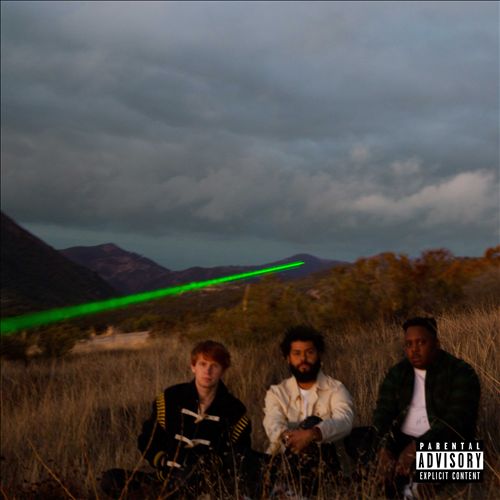
Injury Reserve (Loma Vista) [hr]
Almost comically amiable, extremely online rap trio from Arizona hedge their bets convincingly on fusing the classic sound of an old-fashioned MC crew (Stepa Groggs and Ritchie with a T), who complain about Instagram and can name every file sharing service they've ever used, with adventurous and bizarre production courtesy of third wheel Parker Corey, a certified weirdo whose total lack of deep knowledge of hip hop history is cleverly harnessed by the two rappers in order to render anarchy from wide-eyed cluelessness. It's true that guests like Freddie Gibbs, DRAM and Rico Nasty upstage everyone on the home team handily in technical terms, but that happens even to established legends ("Monster," anyone?), and the front-of-house duo has a good ear for hook-worthy phrases that comes out all over "Jailbreak the Tesla" and "Three Man Weave." Corey's broad, playful impulses would be too much if he were trying to sell them as a creation unto themselves, but they blend enjoyably with the crew's laid-back, sarcastic and occasionally even sentimental ("New Hawaii") style, the album's dichotomies striking enough that it never feels like a mere wavering outsider art version of Jurassic 5 (or "preachy ass niggas out here sounding like a TED talk") even if it has a similar universal agreeability. Indeed, its often inspiring wickedness stems from what feels like a lack of fear and a determination to embrace the stupid ("Gravy 'n' Biscuits," "Rap Song Tutorial," which has nothing on the Roots' rap video manual) and make it addictive. It's not clipping., but that it's far less satisfied with itself may finally be the source of its unusual, unexpected vitality.

***

ALSO RECOMMENDED:
Megan Thee Stallion: Fever (300) [ain't no dick alive that could make her lose her mind; "Cash Shit"/"Money Good"/"W.A.B."]
The Cranberries: In the End (BMG) [not as ominous as I feared, it's really nice to hear Dolores O'Riordan's voice one last time, and as usual she renders transcendence from songs that tend to be no more than passable]
L7: Scatter the Rats (Blackheart) [and as for my own '90s heroes, I wish them health and safety, but a lot of this is too on-the-nose and silly for me, while the dreaded vulnerability becomes them; "Stadium West"/"Holding Pattern"]
Kedr Livanskiy: Your Need (2MR) [weird and lovely and completely inscrutable, like a sensitive Prodigy]
Carly Rae Jepsen: Dedicated (Interscope) [slick and exciting, but feels longer than it is]

ALSO RECOMMENDED FOR THE AMBIENT FILES:
Ezra Collective: You Can't Steal My Joy (Enter the Jungle) [horns, jazz, vibes and apocalyptic L.A. chase scenes, plus Loyle Carner; "Shakara"/"What Am I to Do?"/"Red Whine"]
Laurence Pike: Holy Spring (The Leaf Label)
Tim Hecker: Anoyo (Kranky)

FURTHER INVESTIGATION TO COME:
* Peter Perrett: Humanworld
Lee "Scratch" Perry: Rainford
Sacred Paws: Run Around the Sun
Kevin Richard Martin: Sirens
Dylan LeBlanc: Renegade
Julia Shapiro: Perfect Version
Sarah Davachi: Pale Bloom
Bedouine: Bird Songs of a Killjoy

REJECTS:
[I don't know what the scientific explanation can possibly be, but I swear to christ that there is a glut of awful music at the end of every decade.]
Rosie Lowe: Yu
Mdou Moctar: Ilana (The Creator)
Kelsey Lu: Blood [NYIM]
SOAK: Grim Town
Haelos: Any Random Kindness
P!nk: Hurts 2B Human
Carlton Jumel Smith: 1634 Lexington Avenue
Olden Yolk: Living Theatre
Bruce Springsteen: Western Stars [NYIM]
Earth: Fall Upon Her Burning Lips
Black Mountain: Destroyer
Faye Webster: Atlanta Millionaires Club
Hayden Thorpe: Diviner
Duff McKagan: Tenderness
Richard Hawley: Further
Pip Blom: Boat [NYIM]
Stef Chura: Midnight [NYIM]
Palehound: Black Friday
Santana: Africa Speaks
Aurora: Step 2- A Different Kind of Human
Jonas Brothers: Happiness Begins
Jambinai: Onda
Jake Xerxes Fussell: Out of Sight
Plaid: Polymer [NYIM]
The Divine Comedy: Office Politics
Pixx: Small Mercies [NYIM]
Perry Farrell: Kind Heaven [NYIM]
Lukas Nelson & the Promise of the Real: Turn Off the News, Build a Garden
Psychedelic Porn Crumpets: And Now for the Whatchamacallit
Calexico / Iron & Wine: Years to Burn [NYIM]
Mattiel: Satis Factory [NYIM, but great title]
Madonna: Madame X
Los Coast: Samsara
Bad Breeding: Exiled
Buddy & Julie Miller: Breakdown on 20th Ave South
Fruit Bats: Gold Past Life
Willie Nelson: Ride Me Back Home
Hatchie: Keepsake
Bad Books: III [good grief this is dreadful]
Mark Ronson: Late Night Feelings [NYIM]
Two Door Cinema Club: False Alarm

ORPHAN TUNES
Rosie Lowe ft. Jay Electronica "The Way" [Yu]
Kelsey Lu "Due West" [Blood]
Haelos "Boy/Girl" [Any Random Kindness]

Friday, July 5, 2019

The Beatles: Sgt. Pepper's Lonely Hearts Club Band- 50th Anniversary Super Deluxe (1967)


(Apple 2017)

Things got quiet at Apple after the 2013 copyright extension release Bootleg Recordings 1963; in contrast to the busy catalog excavations of other '60s artists, each year passed with no sign of any new glimpses into the Beatles' recorded but unheard legacy. Things got remixed and reissued, at times generously, but there was no invitation into the depths of the vaults with new material, booted or otherwise. Finally, in 2017, came a milestone that not even the most tight-lipped quality control stalwart enterprise in rock & roll could ignore: the fiftieth anniversary of the Beatles' quintessential album, Summer of Love totem and onetime conventional-wisdom masterpiece, Sgt. Pepper's Lonely Hearts Club Band. Rumors about elaborate deluxe repackagings of the record had come and gone many times over the years, especially in the wake of the Beach Boys' game-changing boxed set The Pet Sounds Sessions, which proved the marketability and scholarly value of such investigations into the mechanics of a classic pop record. But the Beatles and their staff always tended to keep the reins tight on this sort of stuff -- every band member or widow wields veto power, which is why at this writing you haven't seen a reissue of the film Let It Be in almost forty years -- so it was another two decades before something actually happened.

To their credit, they did it right when the time came, and while there was no way that the Beatles' working methods (at least in this period) and relatively primitive recording techniques would ever have allowed for something as intricate and revelatory as The Pet Sounds Sessions, this first full-on deep dive into the pieces, parts, mechanics of a canon Beatles LP serves as a model for future releases of its kind. There were budget CD and lavish vinyl versions of the release, but the most complete edition was a four-disc collector's set formatted in a manner evocative of old bootlegs: two discs containing mixes of complete tracks, and two discs of session material. That last element made this the largest collection of "new" (meaning: not previously booted) Beatles material since the Anthology series. Unfortunately, this distinction is rather deceptive, as you learn once you sit and listen to the session CDs, but we'll come to that in a moment.

God knows why, since previously unheard Beatles session music seems like it should be considered a much bigger deal by any stretch, but much of the fanfare around this release centered on Giles Martin's new remix of the album and its associated single ("Strawberry Fields Forever"/"Penny Lane"), meant to bring the urgency of the mono version -- the band and George Martin's preferred mix -- into the realm of stereo and surround sound, and to subtly update the sound of these songs, giving them a hopefully more robust, "modern" feel. The results are tasteful and mostly well-done, and objectively may even be superior to the original 1967 stereo mix, though sentimentality toward the version most of us grew up with will prevent it from overtaking the old stereo album's place in the canon in the minds of most longtime fans. (Pointedly, the boxed set does not include the original stereo mix at all but does make room on disc four for the original mono releases of the album and both sides of the single; it sounds fine here as usual, with the new remaster placing a lot of emphasis on Paul's meticulously crafted bass parts.)

Still, there's no way to deny that the care taken here and the dynamics, clarity and stunning level of detail give the new mix a nicely rich, full quality that points up some general weaknesses of most of the Beatles' original stereo albums. Martin may be a bit too slavishly devoted to the decisions made in the old mono mix at times -- the presentation of "She's Leaving Home" in its faster speed being the best example -- but he rarely seems to arrive at a certain sound just to be different, or to trip up those who know the record well. His only noticeably bad choice is the dried-out intro to "Lovely Rita"; otherwise the mix stands up just as well as the 1967 versions, but don't tell that to certain hardcore fans who've been out for blood ever since the remix was even announced, much less released. If you actually have the energy to become upset about Giles Martin tweaking Beatles songs to make them sound slightly younger and meatier, perhaps it's time to track down some semblance of a life purpose beyond all this.

The remainder of the set -- in addition to a Blu-ray and DVD and book and all the rest -- is dedicated to two discs of sessions and outtakes, nearly all previously unreleased and mostly never heard on bootlegs either, totalling about 100 minutes. As noted, this seems more generous at first glance than it really is, but this isn't really the fault of the compilers. As Richie Unterberger has pointed out, this is probably the least interesting year of Beatles outtakes, in terms of their radical differences from the finished product; Sgt. Pepper was worked out and recorded piece by piece, so with the exception of "Strawberry Fields Forever," there are not really any "alternate versions" per se from this era -- the band just recorded a rhythm track and refined each song as they went. So instead of straight outtakes of the kind familiar from the Anthology CDs, these are more like works in progress. Apple has done very well to largely avoid overlap with Anthology and even skirts competition with boots for the most part, but nothing can really change the fact that none of this is nearly as fascinating as hearing totally different approaches to the Beatles' material, or Brian Wilson conducting rooms full of brilliant musicians while constructing his teenage fantasies, or Bob Dylan just playing and playing and playing and generating brilliance and a feeling of completeness with every performance.

The basic format is smart enough; with the exception of "Strawberry Fields Forever" and "A Day in the Life," we get one or two tracks devoted to listening in on each song from the record at various stages in their development. At best, this tends to be of primary curiosity to hardcore fans schooled in the minute details of Beatles tracks. It's nice to hear the backing tracks to "Penny Lane" and "Getting Better" (which, sans vocals, sounds like Deerhunter!) and even "She's Leaving Home," but actual drama is thin on the ground here. That said, the "Strawberry Fields Forever" cycle is truly glorious because, as we well know, that song did change radically from first take to last, and every step along the way is fascinating and beautiful in some fashion, with take 26 -- the fast version that was used to construct the second half of the single -- one of the greatest Beatles outtakes of all, and one of their most violently unpredictable forays into psychedelic rock. The moment when the cacophony that closes out the single starts pounding its way in without the respite of a temporary fade is unhinged in the best way; John Lennon's vocals -- across all of the versions of the song here -- are natural, impassioned, angelic. Plus, takes 4 and 26 will be entirely new to most fans who haven't dug deep for the bootlegs.

"A Day in the Life" gets the only other deep dive, with specific emphasis on the end of the song in addition to two proper takes; we get a window into that wildest of Beatles sessions on the night the orchestra was recorded, and the chance to hear them fumble their way through getting the final chord on tape, along with a weird attempt along the way at closing the thing out with a ghostly, Coltrane-like vocal hum. (The last disc throws in a complete early mix of the song with all of Mal Evans' creepily urgent count-down in the place of the later orchestral overdub. There is also a solid piece of ephemera in the form of "She's Leaving Home" with the full extra bars cello at several intervals intact. Unfortunately Apple botches one of the most interesting canonical alternate mixes from the period; the U.S. promo of "Penny Lane" with the extra trumpet ending makes the cut, but was clearly transferred from a scratchy record someone found, rather inexplicably.)

Otherwise, despite the logic of running everything in session order, this feels as slapdash as a bootleg; some of the songs, like "Fixing a Hole," differ only slightly from their released counterparts and feel like desperate inclusions (finally, "Lovely Rita" with a few overdubs missing). If you're familiar with Anthology 2, think of that rather sad version of "I Am the Walrus" that made the cut there and was really just the master without bells and whistles. It's never unenjoyable to hear a Beatles track in progress, but unless you're trying to get a very detailed sense of the order in which each song was put together, you're left mostly just missing the feel and finality of the masters themselves. More fun than the music, honestly, are the scattered windows into the Beatles' regular lives as of 1966-67 through unaltered studio interactions that flare up here and there. For recreational listening to Beatles performances with vocals recorded, guitars worked out and decisions made, this doesn't stand up to the Anthology albums, for all their flaws.

Still, my personal advocation would be that every minute of these sessions should be out there for people to hear if they so wish; at this point, the historical importance of all of the Beatles' sessions seems as obvious to me as that of Bob Dylan's or Miles Davis'. Apple's unlikely ever to go that far, so what we're left with feels a bit like a compromise that few listeners are likely to ever cotton to. But I hasten to add that it was exciting to, for the first time in a very long while, actually have "new" Beatles tracks to hear, and the context in which this set places them is more than ideal. Thankfully, the following year would bring an even more exciting release to which very few of these same criticisms apply. For the moment, fans of Sgt. Pepper will undoubtedly appreciate the deconstruction of the Beatles, George Martin and Geoff Emerick's finely tuned working methods circa '67, and the celebration of Pepper on this scale is obviously very long overdue. I suspect, however, that assuming "Carnival of Light" is as bad as Mark Lewisohn says, there really isn't much else to hear from this era, and therefore this box is as good as it could possibly be.

Friday, June 28, 2019

The Beatles: Bootleg Recordings 1963 (1963)


(Apple 2013)

RECOMMENDED

2013 was the biggest year for "new" Beatles music in nearly two decades; assuming we don't count remixes and remasterings or the deconstructions on Rock Band, after the mid-'90s heyday of Live at the BBC and Anthology, the only complete track put out by the band that was previously unissued (if not unheard) was an alternate take of "The Long and Winding Road" on Let It Be... Naked. But suddenly in '13, the floodgates opened with the two-disc On Air compilation, followed at the end of the year by this mysterious curio, a disorganized gathering of items from the Beatles' first full calendar year as EMI recording artists, initially released for only 24 hours exclusively on iTunes, that accidentally makes one of the strongest cases ever for their consistency as a live band.

The original logic behind the release was as a copyright extension package, similar to curios put out by the Beach Boys and Bob Dylan and meant to allow rights-holders to retain their stake in music recorded fifty years ago and to prevent public domain releases of the unissued material in Europe. As it turns out, the copyright law was more complicated in Europe than was then supposed, so further no-frills copyright extension packages have not been forthcoming. For those who've pored over unauthorized Beatles ephemera for years, Bootleg Recordings 1963 isn't exactly a revelation, but the fidelity is (for the most part) greatly improved from the boots, sometimes with previously mono-only takes now heard in stereo and such. And we must think also of early-period Beatles fans who never had time to investigate the darker corners of the fandom, for whom this set might well have been a marvel if it had been more widely or longer available (and eventually it was, now back up for purchase on iTunes).

Bootlegs have long been the elephant in the room in Beatles fandom, so it's rather strange to see their existence so openly addressed by the cover of this release, until we remember that the actual reason most of the Beatles' circulating studio outtakes are out in the world is rumored to be down to one John Lennon, who is known to have been an avid tape and record trader in the 1970s. The title is appropriate insofar as unlike the Anthology CDs, this set -- which runs over two hours -- makes no attempt to "cohere" for a general audience or to encourage fluid listenability. It's an archive dump, more or less strewn together in three divisions -- studio sessions then BBC performances then a couple of demos -- and then in semi-chronological order. The only odd element of this is that what's been chosen for inclusion, and what's been left off, seems almost random; why three performances of "There's a Place" from the Please Please Me sessions but only one of most other cuts? (The collection doesn't duplicate anything already included on a previous official release, so the relevant outtakes of "I Saw Her Standing There" and "One After 909" and the errant BBC performance of "Devil in Her Heart" from the "Baby It's You" single aren't here.) That goes double for the huge number of BBC performances included, another boon for fans but failing to gather all of the 1963 performances missing from either prior BBC compilation, which seems strange -- why include such a large selection, with many repetitions, and not go whole hog? If the compilation was never exactly meant for general release or interest, that only furthers the mystery.

Still, this is a surprisingly fun collection of material. The highlight reel of Please Please Me is essential for those who love that album as much as I do. "There's a Place" reaches for its finalized magic sans harmonica but doesn't quite make it. "Do You Want to Know a Secret" sounds a little more raucous with extra backing vocals on this earlier take. "I Saw Her Standing There" is engagingly sloppy; the bass even drops out altogether at one point. The differences in "Misery" and "A Taste of Honey" are harder to scope out (a lot of echo on the former). Moving past the LP, we can hear -- if in less detail than on boots -- how much trouble the band had getting "From Me to You" down, as it never stops sounding stilted. The included work on "Thank You Girl" gives us its alternate title ("Thank You Little Girl") and precedes John's switch to all he's gotta do from all he wants to do (shoutout to Gia Gunn). I like how frayed John's vocal is here, especially toward the end of the second included take when he really strains for a soulful moment, a nice bit of business on such an innocuous song. The session for "One After 909" and attendant breakdowns are presented with less editing and more detail than on Anthology 1; and we get an older "Hold Me Tight" with a drier mix... but I still wonder where the other off-the-wall outtakes from this period are that we know to exist, like George's listless "Don't Bother Me."

The bulk of the collection is composed of more BBC tunes, a sort of extension of the On Air two-discer from a few months earlier with much more variance in reproduction quality, but with the advantage of no interruptions from dialogue or interviews. This is actually more like listening to one of the old-school BBC bootlegs than to a curated official release; I lost count of how many versions of "A Taste of Honey" are on this. But these are great raw live takes of these songs mostly sans audience; if not for the rough-hewn quality of the tape itself, I'd probably prefer this version of "Too Much Monkey Business" to the one on Live at the BBC, and I favor this "A Shot of Rhythm and Blues" regardless. Other highlights here are a very bouncy version of "Do You Want to Know a Secret," a particularly raucous "Roll Over Beethoven" that should've been on one of the standard compilations, two takes on "You Really Got a Hold on Me" that are both lovely, a solid "Money" and a nicely snooty, almost punkish "I'll Get You" (of all songs), with its bristling "oh ya!" chorus. "All My Loving" demonstrates the band's aptitude at sounding professional and alluring without the aid of studio slickness and production (and on certain versions of "Love Me Do," "Please Please Me" and "She Loves You," they do the same even with a roomful of screamy teens), and "Long Tall Sally" -- heard a year before the band officially recorded it -- was never played better by the band or sung more uproariously by Paul.

Yes, there are repeated songs, as noted, but this ends up really selling how good the band was capable of being night after night, performance to performance; and remember that these BBC broadcasts were in addition to their studio work and regular concert gigs. Despite the modesty of this material, it very handily gives the lie to any notion that the Beatles were anything less than the best of the best at delivering concise, felt rock & roll in their heyday. I listen to this mess of sonically lacking miscellany and what I hear is a fucking great band, in fact the greatest; and if their many circulating live shows (Star Club, Stockholm '63 and Atlanta '65 aside) never gave me the feeling that I desperately wished I could have seen them, this stuff certainly does. To watch this band bulldoze through some of their best songs and these excellent covers? Sign me up.

This collection is mostly about the Beatles as performers rather than composers, but we're reminded that they were the full package -- which is what gave them an enduring career -- by the closing inclusion of the two of the most long-legendary and genuinely beautiful Beatles bootleg items, John Lennon's solo demos of two songs he gave to Billy J. Kramer & the Dakotas: "Bad to Me," on acoustic guitar with what sounds like an overdubbed secondary vocal, and "I'm in Love," on piano. These are both beyond stunning; even more than the other Beatles, Lennon was capable of wringing absolute magic from something so boring and simple as the echoing lavatory in which he's said to have recorded "Bad to Me." His voice on these two demos is haunting in its loneliness; Kramer's renditions find nothing of emotional value in either song, but when Lennon sings them they are transcendent and impossibly powerful. Hearing him play them, especially "Bad to Me" with its lilting, sad "birds in the sky" chorus that sounds so trite on the hit version, all these years after he was taken from us is an emotional rush like few others. The sound quality here is no better than on the bootlegs, but it doesn't matter; now they are out there, legally, for people to hear. For this reason alone, this odd collection is a major blessing to the world.

Friday, June 21, 2019

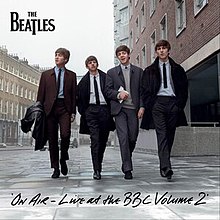
The Beatles: On Air - Live at the BBC Vol. 2 (1963-66)


(Apple 2013)

RECOMMENDED

After nearly twenty years, Apple made the decision at last to return to the fruitful well of the Beatles' BBC performances, which had in 1994 provided the basis for the splendid and enormously popular release Live at the BBC. As those who collected bootlegs were aware, the Beatles' BBC archive contained another eight or nine discs' worth of material, if not necessarily in sterling sound quality, so there was much clamoring for a follow-up release or even an official complete collection to fully supersede the bootlegs. What we got was another two-hour "best-of" collection of the band's work at the Beeb, and an extremely fun and listenable one, but one that doesn't quite fill all the gaps it could have and still leaves a number of stones inexplicably unturned.

On this second collection, the tracks alternate much more consistently between actual performances and amusing bits of banter among the band and with their usual host Brian Matthew; there aren't many lengthy chunks of uninterrupted music here, which doesn't really violate the purpose of the compilation but does make it a less cohesive listening experience, especially on repeat visits. The switch to a mostly chronological format is welcome, however, with the entirety of the first disc recorded in 1963, the second venturing into the following year, though nothing from after 1964 is presented apart from a few long "bonus interviews" with the individual group members that feature them in a much more relaxed, candid state than is usual for them in this period; among other things, you get the chance to hear evidence of John Lennon's depressing state of mind as of late 1965, when he is clearly floundering for some sort of meaning and having trouble finding it in his new bougie lifestyle. The rest of the dialogue -- plus a cute "Happy Birthday" rendition dedicated to the Saturday Club program -- is worth hearing once or twice, though most of the funnier bits are on the previous volume; the best moments this time come from George and Ringo, the latter accusing John of being "college pudding" and both of them subtly jabbing their bandmates about their lack of involvement in songwriting.

Because Live at the BBC gathered most of the legendary thirty-odd songs that the Beatles performed on broadcasts and never recorded at EMI, there aren't many absolutely "new" songs for us to hear this time out. The exceptions are a rather insipid version of Stephen Foster's "Beautiful Dreamer" inspired by Tony Orlando's 1962 pop version of the song; and a solid John-led take on Chuck Berry's "I'm Talking About You," the song that directly inspired "I Saw Her Standing There." The only remaining BBC-only Beatles songs in the bootleg archives, not counting additional versions of those that have been issued, are the very early ones with Pete Best still on drums: "Dream Baby" and "A Picture of You." One doubts the likelihood of a future official home for these at this point.

That's far from the only act of housecleaning here; some fans may object to the violation of formerly exclusive deep-cut material and/or the duplication of a generally available track, but in my opinion, On Air quite helpfully gathers up two of the extra BBC cuts from the 1994 Baby It's You EP as well as the stray "Lend Me Your Comb" included on Anthology 1 and brings them here where they belong, though it's somewhat annoying that the EP version of "Devil in Her Heart" is replaced here by a different (better) one, making the old EP still essential. (Some fans have theorized that the slightly flubbed earlier take on "Heart" that made the EP was put there by mistake to begin with, since the On Air version from two months later is clearly stronger.) One of those rescued EP cuts is a revelation and the best track on this set, a stunning "I'll Follow the Sun" that runs circles around the more refined master, more clearly emphasizing John's harmony; it's remarkable that this, one of the oldest Beatles compositions of all, retains enough vitality for them that they're still finding new nuances in it as late as 1964.

The cream of On Air is in the canonical Beatles songs (including covers they recorded at EMI, even if it was some time later) that we didn't hear on Live at the BBC; these are consistently a treat, running out of the gate with a lovely "Words of Love" and through enjoyably unpolished versions of much of the first album ("Do You Want to Know a Secret," "Anna," "Please Please Me," "Misery," "Chains," "Ask Me Why," "P.S. I Love You" and a most welcome "There's a Place"). Perhaps excluding "P.S. I Love You," whose lack of formalism here is a big help, none of these will eclipse the studio versions for anyone, but they really attack all of them and it's a joy to hear them in this different, comparatively obscure context after decades of committing the originals to memory. Signature covers "Please Mr. Postman," "Twist and Shout" and "Money" are passionately tackled here, that last one in particular a good showcase of how excellent they were even stripping down a song that they famously rendered apocalyptic at EMI. Since Live at the BBC tended to roll past most of the early hits, it's a great bit of intrigue to hear how they work in a different environment without either George Martin or the screaming audiences that typically accompany live takes; both sides of their two most enduring early singles are here, and while "She Loves You" can't quite overwhelm the stuffiness of its surroundings, "I'll Get You" is lovely here, "I Want to Hold Your Hand" impressively confident, "This Boy" raw and beautiful (as much self-assurance as he lacked about his voice, you can't deny the wow factor of Lennon singing his way through that bridge). Moving into the era of A Hard Day's Night we get a few more welcome rearrangements, though two of them were stage regulars: "If I Fell," "And I Love Her" (robust but delicate here) and "You Can't Do That," which suffers some but not fatally.

Lastly, Apple also incorporates alternative performances of some of the songs introduced to the Beatles' official repertoire with the first BBC album,: "Lucille" (here with weird guitar solo), "The Hippy Hippy Shake," "Sure to Fall" (this version slightly better than the Vol. 1 rendition), "Glad All Over" and "Memphis" will seem interchangeable with their counterparts on the '94 record to most fans. The surprisingly polished and intriguing "I Got a Woman," a very different performance from the Lennon-centric one that opened Live at the BBC, is another matter, and along with "This Boy" it's probably the most interesting track uncovered for On Air, with an arrangement that seems carefully worked-over and almost country & western, as if the song could have been considered for Beatles for Sale later in the year. Oh, and Ringo is safely in the lead vocal chair for "Honey Don't" here, but the performance is almost identical to the For Sale rendition. The collection closes oddly with the same performance of "I Feel Fine" from Live at the BBC but with a different lead vocal (John overdubbed the one on the previous set); rumor suggests this was a last-minute substitution for a silly performance of "Tie Me Kangaroo Down, Sport," cut because of the abuse allegations against Rolf Harris in the lead-up to the release.

On Air was a very welcome and happy release for fans like me who treasure the early Beatles; its chief flaws are mostly academic, and taking the entire breadth of the two Apple BBC releases together, you end up with a wonderful representation of the Beatles as a tight, joyously devoted live band, a picture that isn't really available anywhere else. Several songs here have no actual live recordings anywhere in the archives, and even when they do, there's no better way to hear the Beatles interpret their own work in this era, usually raw and without overdubs, and almost always without the intrusion of young loud audience members bleeding their way into the microphones. I also really like the bits and pieces of sweeping history here: the long interviews that capture the Beatles as of the waning days of the Mania period, and the amusing bits of their conversation with Matthew during the first American trip plus the hype about their forthcoming Royal Variety performance a few months before that. But having said all this, I can't unreservedly recommend this collection to casual fans the way I can with Live at the BBC, which was so rich with unique songs and at times was nearly as good in terms of selection and performances as a canonical EMI Beatles album. (I probably like it more than Help! these days, to be totally honest.) The quality of the performances is somewhat lesser overall -- which makes sense, given that the best BBC material was deliberately used on the original collection -- and there's too much incidental filler for it to avoid status as a "fans only" selection.

If the intention, then, was to summarize the Beatles' recorded legacy at the BBC rather than to provide a definitive and complete collection of it, On Air still disappoints, and not just for the very minor issue of the "Devil in Her Heart" fiasco or the exclusion of the historically vital 1962 performances with Pete Best still in tow; it comes extremely close to collecting every canonical Beatles song the band performed at the BBC with Ringo, but irritatingly stops just short, failing to include exactly four that all exist in strong performances, in all but one case with reasonably good sound quality: "I Call Your Name," "I Should Have Known Better," "I'm Happy Just to Dance with You" (all 1964) and "The Night Before" (1965, though this tape is rather poor). Were these held over for a potential third volume? Under that theory, Apple would be getting so close to a complete BBC set -- over halfway -- that the haphazard release methodology would just seem silly. To me, the ideal would have been the two-disc "cream of the crop" set issued in 1994 with maybe a few On Air cuts (certainly "I'll Follow the Sun" and "I'm Talking About You") gathered in lieu of some of the dialogue sequences, followed by a large-scale complete BBC sessions set. In this era of copyright extension sets, super deluxe editions and Bob Dylan's exhaustive bootleg series, it seems increasingly clear to me that such an official release may one day be possible. (Later in 2013, even more early BBC takes made their way out on the iTunes release Bootleg Recordings 1963; see our review of that release for details.) In that case, I'm afraid it's likely to render On Air a bit of a silly curio; but for now, it's another way to hide in the wonderful moment when the Beatles really held the world in their collective palms.

Tuesday, June 18, 2019

He's beautiful and I'm annoyed: May 2019 music diary

Based on what I can verify through rudimentary research... median age of Charly Bliss: 25. Median age of Big Thief: 29. Median age of the National: 43. Median age of Ezra Koenig: 35.

The Mountain Goats: In League with Dragons (Merge) [r]
Unless I'm too unschooled on tabletop RPGs to know what I'm talking about, which is quite likely, John Darnielle seems to have given up on making this a concept album about Dungeons & Dragons past the cover and title, with the songs as varied and rich in subject matter as on the relatively concept-free Heretic Pride -- people operating past their prime are a recurring motif, but then, aren't they always. (I thought All Eternals Deck, which this record's title cut would have been at home on, was also an album with no overarching theme and embarrassingly said so in print, but now I believe it's overwhelmingly fixated on death.) They're also slicker and more full-sounding than ever thanks to producer Owen Pallett, who occasionally takes things a little too far; "Sicilian Crest" carries its canned fake triumph all the way to a bad adult contemporary station, while a few cuts, especially piano power ballad "Possum by Night" (which is about exactly that) and the Ozzy Osbourne tribute "Passaic 1975," fall into an uncomfortable blandness that lamentably has become somewhat routine on the Goats' Merge albums. However, for the most part, these are fine distinctions and this is Darnielle being Darnielle -- and, increasingly, Jon Wurster being Jon Wurster ("Done Bleeding" and "Younger" both center him gloriously) -- and the songs uncover themselves effortlessly with time. Darnielle somehow continues to evolve as a singer long after most rockers, especially indie rockers, give that up: the gaming chronicle "Younger" plays with a tone of simultaneous peace and insistence, as befitting someone who is doing something relaxing to them that they're nevertheless extremely competitive about, and the melodic "Clemency for the Wizard King" has him playing intriguingly with a hushed tone that has an entirely different emotional essence than the one he exhibited on Get Lonely; this is followed on with palpable, narratively telling detachment on the verbose, mournful "An Antidote for Strychnine"... but all of these are incremental and faint progressions on things the band has done before. The wildly engaging "Going Invisible 2" sounds actually new thanks to Pallett's spare treatment of what amounts to an assertion and rejection of creative identity in a thrillingly anthemic format, in which Darnielle finds a wavering but explosive strength in his voice we haven't heard in this capacity before.

Pallett's other main utility is emphasizing the full band's rock-steady, increasingly polished arrangements; "Younger" is so full of disparate elements -- piano hook, propulsive guitar, slick backing vocals, saxophone solo -- it becomes amusing how fans once thought "Autoclave" (2008) was as busy and studio-bound as the group was ever going to get. And while subtler, "Done Bleeding" isn't much more direct, with the producer making so much of its simple hook and pleasing buildup. Two jaunty songs, one whose title invokes Waylon Jennings, even bring in pedal steel; and "Doc Godden" boasts Spanish guitar and sounds as lovably out of place as "Shelved" did on Goths. The emphasis on the individual elements and interplay of an unerringly solid band ensures that the record is great fun to listen to even when its songs hang back a bit, though it's still kind of a relief when everything gets stripped away enough to return to the roots of a dark, rollicking, oddly catchy number about something exceptionally unpleasant: a Forensic Files-evocative crime scene functioning as the same sort of oblique simile as weapon-lugging trucks on the border between Greece and Albania, all with the inspirational chorus "Bring in the cadaver sniffing dog." Ladies and gentlemen: the Mountain Goats.

Aldous Harding: Designer (4AD) [r]
New Zealand native's third album will get short shrift in indie-folk world thanks to its release in close proximity with the similarly bare-sounding and pretty Big Thief album (below), but Harding's voice is a bit more upfront and assertive; "Fixture Picture" sets the tone with its faint catchiness and considerable dignity, while the title track brings things around to more versatile territory with its appealingly lush sound and unexpected horns. The guitar playing is frequently exquisite ("The Barrel," which also adds a pleasing low-toned male-female interplay on the vocal a la "Past the Mission") and the songwriting engages for the most part; there's a bit of a Sufjan Stevens melody on the piano-driven "Treasure." It eventually gets a bit repetitive, and her voice doesn't have the same appeal at the range she explores on songs like "Damn," which suffers from a lackluster piano centerpiece but does get redeemed by some lazy New Orleans horns. But it stays transfixing at least through the midpoint.

Kevin Morby: Oh My God (Dead Oceans) [c]
Morby's never been interesting and now that he's doing M. Ward nursery rhymes he's become ridiculous, rhyming "moat" with "boat" and channeling Everclear in a maudlin sound collage of children and women thanking God, and the record feels comically overlong despite coming in under fifty minutes. By track ten or so I'm in disbelief that he's still fucking going, and there's quite a bit left at that point! Respect for setting this to music, though.

The Tallest Man on Earth: I Love You. It's a Fever Dream. (Rivers/Birds)
I heard "Kids on the Run" (2010) a few days ago and suddenly realized, that extreme outlier from Kristian Matsson's second album set the tone for what's now his entire career: soupy balladry and war-torn vocals, and a mostly sidelined or absent guitar. There are enough good songs and performances on his fifth LP to make it an improvement on the Boss-like Dark Bird Is Home, but nearly every time there's a touch of the stark, unadorned mystery of his early work -- usually a little broad and obvious melodically (title track) but occasionally fine even in that department -- something adulterated and disruptive comes in: a damn orchestra, a power chord-flaunting rock band, even the revenge of the "Kids on the Run" piano. So it's all acceptable but anonymous, slowed down too much into placid old age -- he's six months older than me so I guess this is life now? -- and even when he's running through some basically classic folk ("There's a Girl"), the material is still thin and I feel like I'm, I dunno, listening to the radio in the garage. It's Saturday afternoon homeowner rock; "memories of being young," indeed. One exception to all this is "Waiting for My Ghost," on which the integration of harmonica actually sits peaceably with one of his better new songs. Even then, the biggest problem of low-tempo sluggishness never disappears except on "I'm a Stranger Now," which could have easily been a song from one of his first three albums and doesn't get around to fucking it up. I guess it's ominous in a way that I'm already in the position of telling an artist my age that he's past his prime except when he evokes the old stuff. Life goes on...

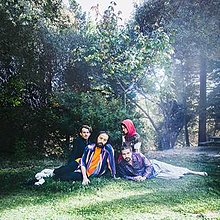
Big Thief: U.F.O.F. (4AD) [hr]
The least New York-sounding New York band of our time, this folk troupe tapers down their crowd-pleasing impulses and ironically ends up crafting their most distinctive and accessible album yet, marked by the same general hushed intensity as before but accompanied by thrilling spaciousness and detail as well as a vocal sweetness that borders on harsh, confronting where the old records shrank. Adrianne Lenker carves out a presence with a truly eccentric voice that's difficult to grasp in the aural space at first until its language becomes clear and it starts to weave around you seductively, magically. Her and Buck Meek's intertwining guitars ring, chime and grind through a litany of stark riffs while producer Andrew Sario wants to establish a sense of place, and does so as adeptly as a Stax or Sun single, or the Beatles' Please Please Me or Great Lake Swimmers' debut: for all its intimacy, the sound can feel remarkably limitless, or it can be airless and claustrophobic ("Terminal Paradise"). Still, the record forges its identity through melodies that tease and deny (the watery, dreamlike title cut) and its repeated challenges to complacency; opener "Contact" settles into its own calm bleakness before breaking into a series of bloodcurdling screams and intrusively sharp guitars like the Police's "A Kind of Loving." (That's the only real sign of the "rock" half of folk-rock apart from the memorably freaky and circular "Jenni" and the slightly less successful, mood-breaking "Strange.") You can fall over yourself proclaiming vocal comparisons to Joni Mitchell or Kate Bush or Meg Baird but even on the most explicitly Mitchell-like "Orange," Lenker still comes off as an original, her emotional delivery both hauntingly delicate in its affect and unerringly tough in its directness; actually, I'm reminded a bit of Jeff Mangum on the scattered new songs he played on Neutral Milk Hotel's Aeroplane tour. She has that same instinct to strip songs down to their wounded, almost primitive essence ("From") but doesn't shy away from the unpredictable nooks and crannies of something like "Betsy." This enchanting craftiness peaks with the gorgeous and mysterious "Cattails," which almost feels like a lost Carter Family number; you can all but see the Great Lakes scene she takes pains to set in her lyric. The record ends a little abruptly; "Magic Dealer" seems anticlimactic and sputters out into silence, but almost everything before it is so striking and shockingly vivid it doesn't really matter.

Vampire Weekend: Father of the Bride (Sony)
What's left of this once-zeitgeisty unit on the occasion of its major label debut, following the departure of musical backbone Rostam Batmanglij, throws the entire kitchen sink at a distant dartboard. It's an assaultive approach to reinvention, a double album (more like albummer, right guys?) that's not so much bloated as... overstimulating. The tone is confused, the attitude is weird, there's sunny-side-up pop but also strangely mournful country, and it may or may not essentially just be Ezra Koenig on the process of growing up, losing your band, getting married, having kids. He talks about shirking lyrical obscurity but the title alone invites almost endless questions about purpose and thematics: is the father of the bride Quincy Jones? Spencer Tracy? Ezra himself (in the James Whale sense)? With the sheer volume of material, there's a lot of difficulty getting a handle on how to even think about this music, aside from one common denominator: it all suffers from too much studio tweaking, on tunes that finally don't feel like much of an evolution or the work of much of a band. Rostam's aural busyness was baked into the songs. The random orch hits, awkward layering of noises, between-verse sounds of puttering around in the studio, and pointless augmentation of Jenny Lewis autotune, for a few examples, communicate a certain wrongheaded desperation to entertain; it makes the simpler songs, particularly the three country duets with Danielle Haim, suffer badly because they end up sounding so slight you grow suspicious of what their skeletal, plaintive lyrics are really getting at. There's a certain freedom Koenig understandably finds when he strips everything away like this, like Paul McCartney crooning away on "The Lovely Linda," but there's also an audible, slavish reverence to domesticated convention and infuriating cutesiness ("We Belong Together," bizarrely cowritten with Batmanglij, on which pots and pans are predestined to make a go of it but alas cannot coexist), like Paul... well, you know.

The thing is, whereas McCartney thumbed his nose at the outside world (ex-bandmates inclusive) upon finding his private bliss and then got lost in the trite, happier-than-thou trappings of trying to communicate it, Koenig's instincts serve him better, and his popcraft hasn't left him either. The ideal modern Vampire Weekend song may indeed be the Wings-like "Bambina," which runs under two minutes but is complicated and memorable; and speaking more generally, his lyrics remain good, grown up, scared and interesting. Even on the swooning opener "Hold You Now," there's something haunting about the story he's telling us: of romance spanning a lifetime but still hitting a wall, of the endless labyrinthine stories we tell of our own lives. And he continues to pile references to references on top of references to try and explain a worldview in progress, this time including references to Vampire Weekend itself which are at least less clumsy than Arcade Fire's invocation of Funeral on "Creature Comfort": he reprises the key line "I don't want to live like this, but I don't want to die" from "Fingerback," a moment that despite myself I almost never could resist belting out along with him, and I'm mildly annoyed that it gets recycled into a celebratory chorus all its own on "Harmony Hall," yet 27 million Spotify plays can't be wrong. Though its upturned guitar sound is sweet, "This Life" struggles with his tendency to make ordinary sentiments sound like they're hiding something, until they collapse under their own emptiness and -- especially -- Ariel Rechtshaid's fussy production, which places too much emphasis on every awkward moment. "How Long" has lots of hooks and goes for imitation Rostam. And those are the sanctioned iconic moments on this thing! Actual progression shows up here and there: the stronger, more unresolved melody on "Unbearably White" is welcome; and while "Sympathy" has the feel of an afterthought, its Latin-derived sound also breaks some of the monotony. "My Mistake" is shapeless but actually enigmatic and, when divorced from context, reveals itself as a standout, and even its closing saxophone break is well-placed. The two Steve Lacy guest shots, "Sunflower" (a rewrite of the Inspector Gadget theme song) and "Flower Moon," use jam bands as their basis and deserve some attention for being actively different and more unabashedly pop, though the former does blather on a bit in its scat-singing interlude. Most of the final quarter, alas, is depressingly forgettable, though they never did really know how to end albums; it's all so Normie even when it's decent, and the filler tracks on the first half -- the slackening "Rich Man" making very clear the band's inability to locate the strength and passion of something like "Taxi Cab" again -- wouldn't be so offensive if one got the sense that there was any credible reason for the band to overload the marketplace with so much stuff. There's something poignant about Koenig trying so hard to keep this beloved brand going, but the degree to which it really is now a (highly bougie) brand, and how they're finally upholding all the accusations leveled against them when they surfaced a dedcade ago, is mildly disturbing.

Charly Bliss: Young Enough (Barsuk) [hr]
This is a joyous occasion even if you were fully sold on them already thanks to the irreverent, addictive Guppy two years ago: it is punk rock growing up in all the right ways. Taking cues from various bands they loved in high school that could never dream of recording anything so delightful in their lives (Fountains of Wayne, Weezer, Panic! at the Disco), they add a lot of texture and moodiness to their raw, bashed-out sound while retaining their basic fast-and-loud dynamism. From the start with the instantly iconic "Blown to Bits," the stage is set by huge riffs, giant hooks, audibly increased confidence on the part of the entire band, who seem at last to be catching up with the unpredictable, well-controlled emotional arcs of singer-guitarist Eva Hendricks, who can't be denied as the spotlight hog of the century here, and I doubt the band would disagree with me that she merits every bit of the attention. To hear her impeccably expressed, universal angst laid against these lovable pop constructions is to feel something like young again, easily as much as Surfer Girl or "Hot Fun in the Summertime." (Jealous, too; all my generation got was, like, Len. And LFO.) As fiercely pleasurable as this music is -- going so far as to evoke the Cars on the smartly syncopated "Chatroom" -- it's also tough-minded and relentless, with compelling stories ("Camera"), elegant simplicity that never stoops to pandering or unintelligence (the circular "Hurt Me"), and unexpected grace notes that can be roaring, dramatic and brief like "Fighting the Dark," or sprawled-out and grown up and hurting like "Young Enough," all cases in which they remain utterly credible and inviting. In an alternate universe, "Hard to Believe" would've been the biggest rock radio hit of the year. In any universe including ours, this wonderful album reasserts that rock & roll will always be a young person's game, and thank heavens for that.

Ciara: Beauty Marks (s/r)
Regular readers know I sincerely love Ciara and tend to enjoy even her mediocre music so it's never great fun to slam it, and this latest record, liberated from WMG, actually contains a genuine hit ("Level Up"), though one that's already a year old. It does sound slicker than she has in a while, and there are a few buoyant pop songs ("Thinkin' Bout You" and the bubbly "Freak Me") and odd evocations of "Tom's Diner" and Depeche Mode's "Dangerous"... but there's also lots of somewhat generic club empowerment, and a Macklemore guest verse (ugggggh) so it's kind of a wash. The material is surprisingly stale given how convicted she was about moving out, but I maintain she's still an infallibly engaging vocalist and I wouldn't kick "Trust Myself" out of bed, bath or motor vehicle.

Jamila Woods: LEGACY! LEGACY! (Jagjaguwar) [r]
Woods has grown a lot since HEAVN, which was a free Soundcloud release and sounded like it. By contrast, this largely sounds like something that would have played on a very expensive hi-fi fifty or sixty years ago. It's a name game that comes out swinging, stylish and sensitive on "Betty" and "Zora" and drowns out the Kamasi Washington lite-FM style on the credibly hot "Giovanni," then gradually leans into the less beautiful but no less engaging forms of hi-NRG, trip hop ("Octavia")... and eventually more generic dance music, but nothing we hear is ever less than solid. It's Woods' voice that threads through it, and occupies a room you don't particularly want to leave, with subtle Baduizms here and there on "Sonia" and synth textures that add a touch of menace to an often airtight endeavor. The moments of profanity and cutting loose end up feeling like a relief -- so I look forward to more of that in the future.

The National: I Am Easy to Find (4AD) [r]
Like Sleep Well Beast, this musically is the pretty-and-bleak-as-ever National sound with bonus electronics and even (on the otherwise draggy "Hey Rosey") a bit of trip hop. Unfortunately, its litany of guest vocals by women, despite lending an interesting relief to the band's normally unbroken sensitive maleness, gives it the feel of being a side project rather than a studio album -- something that might be mitigated if it wasn't so long and overbearing that its occasional loveliness gets drowned out. The best song, "Where Is Her Head," sounds like Arcade Fire; the worst one, "The Pull of You," is cluttered with chitchat -- who are they, Vampire Weekend? -- and the rest are generally fine. "Not in Kansas" lovingly references R.E.M.'s Lifes Rich Pageant in a way that feels reverent and genuine, but the Mike Mills serving as producer is not that band's bassist but the writer-director of 20th Century Women, a film everyone reading this should see; as a knob-spinner, though, he's a little too enchanted with John Williams-like choirs for my taste. The lyrics are fine, mostly. The baseline sound remains largely irresistible (see "Oblivions") but with an hour-plus of material it all sounds the same after a while despite the variances in pace and tempo, and you feel like this isn't a band exploring their limits so much as finding them.

Tyler, the Creator: IGOR (Columbia) [hr]
So I won't eat up your evening speculating on whether this is more "mature" or accomplished than Flower Boy, nor will I try and parse out how it sits with an overall career I used to disdainfully ignore, but let's take one look in the mirror and say this: you're an idiot at this point if you don't kneel at the altar of Tyler as a producer if nothing else. "I Think" makes every other futile gesture toward oldschool Kanye soul soundscapes a joke, and it's not Solange that sells that, it's the artist's own totally unassuming matter-of-fact ingenuity, in which he repeatedly -- not just here but across the whole album -- mixes himself into vibrant sonic wallpaper in a way that's both more pointed and more profound than Matt Berninger turning away from his microphone. He sings sometimes, he rambles repetitively other times; he writes pop but not like on the last record. The songs double back on themselves and deny full-on release like all the best jazz and alternative recordings. I don't claim to be an expert on anyone's psyche and won't try to box in what's mostly just a a pleasurable collection of little earthquakes with overbearing hooks, deliberately strained California vibes and smartly judged samples ("Gone, Gone"). At the same time, though, this is about something, and it permeates much more than his lyrics which tend toward sidestepping it anyway. Why the old-fashioned horror movie tropes on the title and cover? Because more than some grunting Screaming Lord Sutch of hip hop, he's a self-lacerating George Romero character whose artistry comes at the price of exposing his own humility and doubt, and it's only by falling back on generosity and examining his own issues and fears, and treating his own sense of self with respect and a distinct lack of bombast, that he's come gradually to be himself: the mild self-criticism and lost voice is baked into who he is right now. And I don't know, maybe it's because I feel like I get that on a personal level, but his snarling, unassuming delivery has become nuanced and deeply engaging and that makes this a head-spinning miniature chronicle of the day to day that it absolutely didn't have to be. But also, just listen to the fucking sounds, to the alarmingly otherworldly and just as alarmingly sensitive "Thank You," or to the delirious irony and idiosyncrasy of "Are We Still Friends?" and you'll find enough that's personal, true and vital to fill plenty of deep thoughts and dark nights.

Slowthai: Nothing Great About Britain (s/r)
Northampton rapper with an uneasy, messy debut album, basically par for the course in terms of personal statements but boasts at least one cut, "Doorman," with serious punk momentum, a few that constitute obvious noble failures, and lots of padded out material... especially on the streaming sites where it adds six interminable bonus cuts I didn't know weren't part of the album till I checked Wikipedia; after Tyler's 39 minutes it was making me extremely antsy, and I normally wouldn't mention this but I have to get this risible witticism out of my system: "This one's for the ladies / cause they have our babies / and they drive us crazy." The most representative song on the proper LP is "Missing," which is draggy and aggressive and muddy in a particularly English way while feeling a bit too slick to be full-on grime, more like an early 2000s rap rock band's benignly ominous approximation of same. "Peace of Mind" boasts an iPhone alarm and Sid Vicious, but it's on "Toaster" that Tyron Frampton is on to something, contrasting unhinged powerhouse delivery with a calm lush beat; not a new idea, but laid against his voice when it's that off the rails, it keenly suggests the influence of Kendrick Lamar's various laid-on personas while also breaking the mold that sets across the rest of the album, which as on so many modern albums makes a really palpable difference.

ALSO RECOMMENDED:
Jayda G: Significant Changes (Ninja Tune) [the whales' average age was nineteen; "Orca's Reprise"/"Leave Room 2 Breathe"/"Renewal"]
Ex Hex: it's real (Merge) [lost slasher movie soundtrack; "Another Dimension"/"Good Times"]
Quelle Chris: Guns (Mello Music) ["step out daddy long legs, Cab Calloway stride / make a rapper freeze up like I was Zack in Bayside"; "Obamacare"/"You, Me & Nobody Else"/"Straight Shot"]
Elva: Winter Sun (Tapete) [some of her songs still sound like back-of-the-notebook music with front-of-the-notebook words, but one big score on Allo Darlin' here is that the songs the dude sings are actually good too; "Athens"/"Tailwind"]
Orville Peck: Pony (Sub Pop) [goth swagger; "Roses Are Falling"]
Avey Tare: Cows on Hourglass Pond (Domino) [columnated cows domino]
Lee Fields & the Expressions: It Rains Love (Big Crown) ["Will I Get Off Easy"]
Priests: The Seduction of Kansas (Sister Polygon) [lumbering post-punk glory; "The Seduction of Kansas"/"Texas Instruments"]
Anderson. Paak: Ventura (Aftermath) [adorable; "Make It Better"]

ALSO RECOMMENDED FOR THE AMBIENT FILES:
Mary Lattimore & Mac McCaughan: New Rain Duets (Three Lobed) [nice way to calm down]

FURTHER INVESTIGATION TO COME:
* Ezra Collective: You Can't Steal My Joy
* The Cranberries: In the End
* L7: Scatter the Rats
* Rosie Lowe: Yu
* Laurence Pike: Holy Spring
Mdou Moctar: Ilana (The Creator)
Kelsey Lu: Blood
SOAK: Grim Town
P!nk: Hurts 2B Human
Kedr Livanskiy: Your Need
Haelos: Any Random Kindness
Tim Hecker: Anoyo
Carlton Jumel Smith: 1634 Lexington Avenue
Olden Yolk: Living Theatre
Carly Rae Jepsen: Dedicated
Megan Thee Stallion: Fever
Injury Reserve

REJECTS:
W.H. Lung: Incidental Music
BTS: Map of the Soul - Persona
Rozi Plain: What a Boost
The Budos Band: V
Bibio: Ribbons
Shovel & Rope: By Blood
Stealing Sheep: Big Wows [NYIM]
Local Natives: Violet Street
Craig Finn: I Need a New War [NYIM]
Tacocat: This Mess Is a Place
Drahla: Useless Coordinates [NYIM]
Bad Religion: Age of Unreason
Rhiannon Giddens: There Is No Other
Paula Temple: Edge of Everything
Caroline Spence: Mint Condition [NYIM]
The Felice Brothers: Undress
A.A. Bondy: Enderness [NYIM]
Alex Lahey: The Best of Luck Club [NYIM]
Rahsaan Patterson: Heroes & Gods [NYIM]

ORPHAN TUNES:
Stealing Sheep "Girl" [Big Wows]

ARCHIVAL GRADE CHANGES:
Love Is All: Two Thousand and Ten Injuries (Polyvinyl 2010) [hr] -> [A+]

Saturday, June 1, 2019

The Beatles capsules: post-1987 compilations & miscellany

I make the "1987" distinction because that's when the catalog was standardized worldwide to reflect the British discography, and when Apple pretty much became the sole proprietor in the Beatle business; everything below was band-sanctioned to whatever extent the band is still a band. Right now there's not much here, with most later comps being significant enough for full reviews or qualifying more accurately for our page of deliberately divergent remixes, but this page will stand for inevitable future collections and marginalia. To put it more bluntly, here's the stuff that I didn't have anywhere else to put.

***

The Beatles: 1 (Apple 1962-70/2000) [r]
Almost twenty years later it seems so quaint: a greatest-hits collection heavily advertised on TV briefly became a pop culture phenomenon, selling 31 million CDs and revising the Beatles' original spirit as a youth culture touchstone (rather than as mere artists) for what will probably remain the last time, though they did manage to get back in our faces a few years ago when the catalog went streaming. It started a trend, too -- also probably the last time the Beatles will pull that off -- with Elvis, Beach Boys, Stones, even Wings following suit. As a fan, it was fun at the time to see the malleability of the Beatles' music confirmed, and it's especially comforting that George Harrison lived to see it happen. But at the center of this grandiose gesture, this is just familiar music in a fancy new dress -- an attractively minimalist package with decent liner notes, nice reproductions of the old Avedon photos and lots of Helvetica. As for the songs, obviously taken without any context they're almost uniformly phenomenal: "From Me to You," "All You Need Is Love," "Hello Goodbye," and "The Long and Winding Road" are the only bummers for me, and if you're a sane fan of pop music you won't have more than a handful either. However, two things give me pause: one is the impossibility of summing up the Beatles in a best-of. There's a reason the previous best attempt spanned four discs. (One earlier stab at summing things up more concisely, 20 Greatest Hits, felt facile and incomplete; if one just wants to define Beatlemania with the quickness, the old British EP The Beatles' Million Sellers gets it across more charmingly.) Virtually every Beatles album is essential for even a casual rock & roll listener, and so this can only serve as a convenient playlist for reliving their radio impact. Conversely, there is the fact that many of these songs weren't originally on albums, which brings me to my second point: defining the Beatles' legacy as a singles band while limiting the scope to the songs that topped the charts gives an impression that's often woefully incomplete. The most glaring examples are the absence of "Please Please Me" (which was a #1 in England, just not on the chart that later became canonical) and "Strawberry Fields Forever," without either of which any Beatles chronicle feels terribly lacking. Not to mention the oft-ignored fact that, since everything here apart from the first three tracks is in stereo, these aren't even the hit versions of these songs. If you think that's irrelevant, check out our Mono Masters review.

Apple's criteria for this release meant that any song that "officially" made #1 in either the UK or the U.S. was to be included, neatly coinciding with the ideal running time of a single compact disc. But this also lets in songs that the Beatles never intended as singles but were marketed that way in America, namely "Eight Days a Week," "Yesterday" and "The Long and Winding Road"; admittedly, "Yesterday" probably belongs on any greatest-hits package since it was massively popular and remains likely the most-covered song of the rock era. (My favorite version is Tammy Wynette's; Ray Charles' is good too. I love the song but never thought the Beatles' version lived up to its promise.) It continues to annoy me that, after more than a half-century, no one's ever just put all of the Beatles' 26 official A-sides in one place, in mono, and released them together; the playlist I've made in this format is revelatory in terms of narrative, and doesn't distract with sidelines and gray-area selections like 1 does. You get part of that same remarkable story of a band's development, peak and decline on this disc, but the portions that are missing really hurt -- like watching your favorite film edited for time. Of course, I understand 1 was meant for new and casual fans and thus stereo mixes and only the truly infallible cuts makes some marketing sense, but how much has the spirit of the '60s totally dried up when marketing is our primary concern here? Anyway, streaming renders a lot of this moot, but if you're still in the physical music market, skip this and just get the albums and Past Masters; this isn't exactly a case in which people crow about the album cuts being lackluster compared with the hits.

The Beatles: Tomorrow Never Knows (Apple 1964-70/2012) [c]
The Beatles themselves rebuked EMI's procession of "themed" compilations in the late '70s and early '80s, those with names like Rock 'n' Roll Music, Love Songs, Reel Music and Ballads; understandably, they considered it all rather cheap. But a number of decades later, in celebration of the band's new presence on the Apple iTunes store (their long dispute with the computer company over the Apple trademark finally settled), they essentially approved the same idea themselves with this fourteen-track collection of some of their "harder rocking" songs. Existing only as an iTunes playlist and -- briefly -- a promotionally pressed vinyl LP, it's a totally useless creation meant apparently to keep the Beatles' name lively and valid to "new" fans and to suggest a legacy as edgy rockers that isn't accurate or necessary. Fans needn't bother with it, they have all of it except possibly the versions of "I've Got a Feeling" (from Let It Be... Naked) and "The End" (from Anthology 3); in both cases you're better off just springing for those full releases. So why does this exist? Quotes from Dave Grohl, members of several other mainstream bands, and a couple of token indie rockers accompanying the release are apparently intended to serve the same purpose as the testimonials from the likes of Fred Durst at the time of Let It Be... Naked, but does anyone who'd actually buy this feel impressed by such people? Grohl, after all, is himself at this point a "classic rocker," and one doubts that the Beatles are in any particular need to kowtow to "rockers" -- kind of a niche culture now anyway, right? -- to attract a wider crowd. It is just a silly iTunes thing, after all, but just glancing at it ("file under ROCK," the cover proclaims) you can see it was the result of far too many closed-door meetings about demographics and such. It just seems like a weird gesture from a band whose quality control tends to be so strict, but shortly after this, the reins would be loosened in a positive manner.

The Beatles: Live at the Hollywood Bowl (Apple 1964-65/2016) [r]
At last, the Beatles' lone truly official live album came back into print in conjunction with the Ron Howard documentary about their touring years in 2016; Giles Martin remixed Capitol's three-track recordings to present the music and particularly the vocals with greater clarity. As a result, everyone from CD-buying grannies to neo-nostalgic Spotify teens can hear the shrill sounds of Beatlemania preserved in perpetuity, with the band brilliantly attacking "Things We Said Today," "She's a Woman" and others with relentless speed despite every kind of towering obstacle they confront. Rock & roll and forever-young sexuality live, baby. Apart from the horrible cover art, this supersedes the old LP release quite handily (I do not know whether George Martin's charming liner notes -- in which he recalls his daughter asking him if the Beatles are as good as the Bay City Rollers -- are preserved in the new physical issues) but it still feels a little like a missed opportunity. Rather than comprehensively releasing these three professionally recorded gigs, Giles Martin somewhat obsessively sticks to his dad's volleying back and forth between '64 and '65; I'm all for historical accuracy, but to a live album released with the usual caveats of LP length in 1977? Not so much. Instead he fills out the time with four bonus tracks, two from each year, collecting one errant track from the 1996 "Real Love" single ("Baby's in Black") while cutting out part of John's hilariously snippy intro (alleging that the song is "a waltz, for those of you over ten") for some reason; Lennon's above-it-all ranting is part of the Beatles live experience, goddammit. The others -- "You Can't Do That," fine; "I Want to Hold Your Hand" and "Everybody's Trying to Be My Baby," both a bit weak -- seem randomly selected, since we know the shows held other unusual gems like "If I Fell." Martin's justification is probably that the disc was meant, like the original LP, for a general audience of non-obsessives, but I can't see that putting at least two complete shows here would've really turned anyone off. It's not like they were lengthy. Repetitive, yeah, maybe, but imagine how the Beatles felt!

Friday, May 31, 2019

The Beatles: Mono Masters (1962-70)


(Apple 2009)

!!! A+ COMPILATION !!!

Mono Masters was at first issued exclusively as part of the boxed set The Beatles in Mono; a sister of sorts to the familiar catalog item Past Masters, it gathers every official "canon" mono mix of Beatles music that EMI originally issued in Great Britain in the 1960s that was not part of an LP release. This means it contains 11 of the band's A-sides, 11 b-sides, the contents of the Long Tall Sally EP, the two German-language tracks, and the oddity "Bad Boy." (Like the last two Beatles albums, their singles from "The Ballad of John and Yoko" onward were issued in stereo only apart from the archival b-side "You Know My Name," so they are absent here.) Like Past Masters, it also serves as a de facto greatest hits, if an obviously incomplete one since it doesn't cover the likes of "A Hard Day's Night" and "Help!"; it's really the first opportunity ever given, apart from the old EMI boxed sets of singles and EPs, to hear the Beatles' progression in sequence with the original mixes that made these songs popular in the first place, which are often much more different than is now recalled.

In 1988, Past Masters brought once-elusive stereo mixes like those for "This Boy" and "The Inner Light" into general release at long last, sparing hardcore Beatles fans the trouble of tracking down promotional Heineken cassettes and obscure foreign LPs. Mono Masters goes one better; it marks the first official release, film and video aside, of the mono mixes created for three of the four new songs in the Yellow Submarine film ("Only a Nothern Song" is mono-only and is included as such on modern issues of the YS album, though until 2009 it was usually presented in rechannelled stereo) and the charity compilation version of "Across the Universe" -- these had been meant, at one time, for an EP that was fully mastered and ready to go before getting scrapped. Just over forty years later, it's finally here. In addition, of course, this collection -- with its later vinyl release taken into account -- simplifies the process of gathering all of the Beatles' catalog in mono considerably; don't forget that much of this music had been hard to find officially in mono for decades by this point, the upshot being that this album -- like the entire mono boxed set -- really marked a new listening experience for at least a full generation of longtime fans.

All the praise heaped on Past Masters as a listening experience applies here too. There are few better, more concise ways to hear the Beatles' story told than through their singles and supplemental material, far richer than you might anticipate for a band so universally celebrated for defining the album format. The first portion of disc one repeats a few mixes that are also included on the revised Past Masters because no stereo versions exist -- "Love Me Do," "She Loves You" and "I'll Get You" (the original Past Masters CD also utilized mono versions of "From Me to You" and "Thank You Girl") -- but "From Me to You" is the first marker of how different the experience can potentially be; it's obviously complete in a way the stereo mix (not released until 1965) is not, including harmonica overdubs that were excluded in stereo for one reason or another, which is why best-of compilations continue to use the mono mix even now. Oddly, "Thank You Girl" provides the opposite experience; Americans who know the song from The Beatles' Second Album, which used the stereo mix and a fold-down, will probably still be jarred after all these years by the absence of several elements in mono; and it does sound odd, especially without that closing flourish. The introduction of "I Call Your Name" also offers an obvious divergence from the canon stereo mix or either original American mix (the song was released here a few months before the UK got it, and all four versions have slightly different edits). "Matchbox" is one of the few casualties on this set, handicapped by a dreadful guitar solo and some flubbing on the vocal take. Despite George Martin's case to the contrary, there are times when stereo did get more attention and finesse.

For the most part, what makes Mono Masters valuable isn't really specifics like these (or other mixing quirks such as the longer fade on "I'm Down," letting us hear a bit more of the performance), which we could spend all day laying around and listing. More generally, it's about a certain feel and fullness that tends to be sacrificed by the separation of elements in stereo. "I Want to Hold Your Hand" and "Revolution" are the most egregious examples of songs that lose much of their might and intensity in every version save the original mono -- to hear both on this set is to hear them with their muscle and hypnotic power finally restored. Famously (because John complained about the stereo mix), "Revolution" is an unbelievably tough song in mono, played with a distorted abandon that gets compromised in the cleaner mix, but really so is "I Want to Hold Your Hand," robust, sexy and powerful in a sense that you really can imagine, all these years later, being irresistible for those who made it a worldwide pop cultural phenomenon in early 1964. This also goes for the almost subliminally powerful "I Feel Fine," which towers in mono, sounding like the vocals are bouncing off the walls of a cathedral. Mono is almost always more generous to the chaos and cacophony of rock & roll than stereo; it's for this reason that you can find yourself so much more engrossed here in songs like "Long Tall Sally," "I'm Down" and the colossal "Slow Down" that come alive on this collection and, despite the use of only one channel, manage to totally engulf you in their energy.

Fans who aren't fond of mono sometimes accuse it of being a "mush" of sound, but what I tend to hear is a greater emphasis on band interplay. Take "Slow Down" for example, and hear how Paul's bass completely drives it and also seems more distinctive when not shoved off into one channel or another. The same with Ringo's drums on the relatively innocuous "She's a Woman." I don't mind the stereo versions of most of these songs, but as in the case of many other '60s recordings, mono really does have an almost inscrutable magic about it -- it seems to be closer, more dynamic, and to be happening right NOW.

The second disc brings us to songs that are downright stunning in this format. Across the two singles that open it, "Day Tripper" c/w "We Can Work It Out" and "Paperback Writer" b/w "Rain," we have three songs that exhibit all the benefits of the Beatles' and George Martin's considerably increased attention toward mono mixes (plus one dud in the oddly mixed "Work It Out"), and these alone make a strong case of how valuable a complete single-disc compilation of the band's singles in mono might have been. (Note that except for the Sgt. Pepper album, the mono versions of the catalog are still not on streaming platforms.) "Day Tripper" gets right in your face and demands your attention; it's only in mono that you can fully hear how the Beatles still stood out so starkly on the radio in late 1965, well after their influence was becoming palpable everywhere. With "Paperback Writer" they prove themselves adept at every sound and style they deign to attempt; known now to most of us as a good piece of witty rock & roll, it's fuller and more dramatic in mono and turns into some sort of psychedelic monster full of phasing, unexpected assertiveness (the lead guitar), and uncompromising experimentation, and even it is eclipsed by its b-side "Rain," somehow simultaneously the Beatles' best piece of folk-rock and the most fully convincing, pure moment of psychedelia by pretty much anyone aside from "Strawberry Fields Forever" and maybe some of Love's Forever Changes. Again, "Rain" is wonderful in stereo, that's how it became one of my favorite songs, but in mono it seems to place emphasis on and drive forward every suggestive element of it that makes it alluring across two channels, so that the entire song takes you over and refuses to be ignored.

As on Past Masters, we skip over 1967 as a release year entirely and jump to the pre-India period with "Lady Madonna" and "The Inner Light"; you'd think by now the differences would be less pronounced but they're not. Both are practically different experiences in mono; "Lady Madonna" might as well never even be heard in stereo after you become familiar with this, with its bounce, filthiness and utterly convincing nightclub sleaze pronounced and engaging in ways that can't fully be described; you almost wonder if the prevalence of stereo mixes of songs like this is why there are people out there who don't "get" the Beatles. There's no avoiding "getting" this. As for "The Inner Light," it's obviously a lesser song in the catalog, but still very pretty and in mono you can hear the actual original intro which is vastly different from the stereo mix that wasn't widely heard for decades. The difference is less pronounced with "Hey Jude" -- which sounds wonderful either way -- but there's a nice feeling to being aware that you're hearing specifically what was heard at the time, what made it their biggest hit.

The botched Yellow Submarine EP is something of a distraction here; it interrupts the flow a bit with a couple of lackluster songs, and with the disappointment that the full unedited, wild "It's All Too Much" wasn't used, though "Hey Bulldog" sounds terrific here, as strong a piece of throwback rock & roll as "Lady Madonna" in its own acerbic manner. "Across the Universe" would have been preferable in the version that circulates on bootlegs without the wildlife sounds; that problematic song's best Beatles version is on Anthology 2, followed by Let It Be... Naked if one is attached to the original performance the band kept tweaking. And the "Let It Be" b-side "You Know My Name" is an anticlimax -- it always was -- but before that we do get one last bit of rock & soul fury with the stunning "Don't Let Me Down," the b-side of the last mono Beatles single ("Get Back," also here but only a marginally different experience than the familiar one), which only shows slight concrete divergences from the stereo but still benefits from the compression into one channel, achieving its primal grace as a love song even without the extra room to breathe. Billy Preston's piano solo never seemed so much to be playing one's heart and body.

The purpose of Mono Masters is practical, not artistic; but the music it contains, with scattered exceptions, is nearly flawless and encompasses many of the Beatles' signature works. It stands as a monument to the achievements of their career because, for once, their work is treated sonically with the historical reverence it deserves. This is how the Beatles sounded on the radio in the '60s, and the legacy created by that interaction is why they are still so beloved across generations today.