Saturday, September 9, 2017

I got my hands full all summer long: June 2017 music diary

My stepdad, who I loved very much, died on August 27th. For some time thereafter I put all the energy I had into being with and helping my mom (with my wife by my side at every turn), and with planning and speaking at his memorial service a week later. It was an experience I won't get over for a long time. Meanwhile I don't much want to talk about it, but I've found it therapeutic these past few days to go back to writing, preferably about anything petty and frivolous, album reviews for instance. The first two reviews below were written before he passed; you'll probably notice that I sound more impatient after a certain point, and I do apologize, and yet also I don't, because so what. I can't promise I put my heart and soul into this but it did help to focus on something else, and on stuff that does mean a lot to me, but perspective like this does make you wonder what the point is of writing about music that was never gonna speak to you in the first place. Maybe I had some anger to get out too. I dunno. Thank you for your patience.

Incidentally, Mom tasked me with choosing the music for Chris' funeral and she had some mandatory selections; I added stuff I knew he loved -- Prince, the Stones, the Animals, Chuck Berry (he's the one who gave me Berry's autobiography, which I read and greatly enjoyed recently), B.B. King, Johnny Cash singing "Amazing Grace" and "Oh What a Dream," "Man on the Moon" by R.E.M. -- and she only vetoed one of my choices, "Mannish Boy" by Muddy Waters, which probably was too naughty anyway. But I editorialized with one song and one song only, "Louisiana" by the Walkmen. So far as I know Chris never heard the Walkmen and he had no special ties to Louisiana -- he and Mom went there and loved it, but nothing beyond that -- but I got some strange urge to hear it and everything about the music, Hamilton Leithauser's vocal, and the lyrics seemed to me improbably, almost superstitiously perfect, especially the bridge just before the horns come in. I can't hear those words without picturing him working on the land he'd bought that he enjoyed so much, invariably followed by cats, goats, chickens and roosters, and sometimes us. I never knew anyone who was interested in so much, and filled his time so well, and on top of all the times he bailed me out of various jams, he was a boundless inspiration to me. My wife and my mom and I will all miss him terribly, but I kind of love that "Louisiana," the song, will now always be about him for me.

***

Chastity Belt: I Used to Spend So Much Time Alone (Hardly Art) [hr]
For a band whose best song is called "Drone," Chastity Belt's music historically hasn't exactly been a dour affair; from that song's priceless chorus of "he was just another man tryin' to teach me something" to the same album's anthems about jokes and sluttiness, their work was marked by equal parts defiance and good humor. You might expect their first post-Trump release to double down, but this instead is the sound of defeat, regret, even resignation. Julia Shapiro's lyrics are now about anxiety and isolation, but what's more telling is that in varying their music only by a matter of degrees -- it's still a beautiful wall of jangling post-punk guitars, tempered by lilting, unpredictable melodies and subtle propulsion -- they generate a sophisticated portrait of malaise and dread that feels both like an exorcism and a source of comfort. More songs break out of the pattern than before; several of these are essentially pop ballads as driven by non-buried vocals as by guitars, but it's the guitars that seem to jab at the gut the hardest, the muffled riff on "It's Obvious" articulating the track's bottom-heavy despair, and the floating ballad "What the Hell" capturing the album's lethargic mood perfectly in its beautiful licks. And the maturity on "Caught in a Lie," which asks what good truth brings and, in its towering chorus, "Is this what you want?" defines the album's mixture of sonic bliss with personal agony perfectly. This kind of lateral movement and emotional expansion is what separates a long-lived band from the pack, and it's thrilling how much this builds on its predecessor Time to Go Home, while taking completely unexpected avenues to do so. I just hope we all survive this, but in the meantime, it's quite moving to hear someone openly proclaim with full-throated intensity that they're not OK.

Saint Etienne: Home Counties (Heavenly) [hr]
Almost no band could follow up an album as wonderful and singular as Words and Music without delivering disappointment on some level, but when you view Home Counties as an enhancement of that record's concept, approaching the past and future through the cultural touchstones and personal histories we define for ourselves, it becomes equally moving in its modest fashion, and musically its warmth and variance are in character and unfailingly inviting. This is a chronicle of suburban life outside London -- its speed, its grace, its radio -- but one needs little familiarity with the area to appreciate its mixture of nostalgia and lament. In contrast to the sharp dance floor tones of the prior record, Sarah Cracknell et al. approach each of the proper songs here differently, from orchestral modern-ish pop-rock to bouncing synthpop ("Magpie Eyes") to disco ("Dive," demonstrating how adept Cracknell is at full costume) to pure hook-filled bliss ("Out of My Mind") to cultural manifestos ("Truck Drivers in Eyeliner"). And on the ballad "Take It All In" and sprightly "Underneath the Apple Tree," you can almost hear the music bouncing off the walls of some recommissioned warehouse for an impromptu Northern Soul sock hop circa whenever. It's a long album with a lot to say -- eloquently, as ever -- and a lot of short ambient pieces and side roads, but it also has much to reveal, nearly all of it rewarding. Mostly this is the sort of group, like Pet Shop Boys or Yo La Tengo, with whom it's just an unerring pleasure to spend an hour.

Big Thief: Capacity (Saddle Creek) [r]
Brooklyn band, led by Adrianne Lenker, has hushed and hypnotic, still and distant songs that are almost too sweet and candy coated, but a feeling of peace doesn't seem like a bad thing right now.

Lorde: Melodrama (Republic)
When Auckland's Lorde hit the big time with Pure Heroine in 2013 I was polite and didn't say anything, and luckily the album slipped through my various filters for one reason or another, but I'll tell you now that I didn't get it. I still don't. She seems fine but the hype for "Royals" baffled me and nothing on here has a shred of personality I can detect beyond the usual trend-mongering that bizarrely impresses the poptimist set. Good for her for making the Forbes young turks list or whatever, but generally speaking everyone who makes this kind of music except maybe Tegan & Sara and Carly Rae Jepsen sounds like a cop to me.

Jason Isbell and the 400 Unit: The Nashville Sound (Thirty Tigers)
I'm enough of a square that when I got into alt-country the first thing I bought was an Old 97's greatest hits CD, not any of the albums, and I have to say that the fact that the liner notes included a form to donate to the Southern Poverty Law Center made me like them even more; thereafter, Old Crow Medicine Show and Chatham County Line and (years hence) Drive-By Truckers issuing songs explicitly honoring the Civil Rights Movement meant a lot to me as a southern leftist, which may sound sentimental, empty and stupid, but if you're not around here -- even in a relatively diverse, well-integrated area like mine -- you don't realize how much of a comfort it is when white redneck types explicitly reject our racist heritage. Still, those bands mostly sang about the same stuff Hank Williams sang about, which is what set them apart and gave them the "alt" tag; until alt-country itself became a trend, they didn't seem particularly beholden to the Flavor of the Month sheen and anonymity that drives most actual Nashville records today. Meanwhile, Isbell and his crew's songs all seem like emphatically PC, overly choreographed anthems of white male guilt, and while it's a good thing he isn't defensive like Ben Folds, eventually that earnestness wears thin and grows terribly dull, not least because if being one of the Good Dudes is all you ever sing about, it seems... well... suspicious. Points for a song about depression that doesn't gloss over its ravages and randomness at all, though, but even that is cold comfort in the month that gave us Chastity Belt's "Complain."

Songhoy Blues: Resistance (Fat Possum) [hr]
Like a lot of African music that manages to get ink in the U.S., this terrific Malian band's work could be labeled as "westernized" -- and their associations with Blur and the Yeah Yeah Yeahs likely don't help, though a blood relation to Ali Farka Touré is more telling -- but that would be missing the point as surely as accusing Talking Heads or Vampire Weekend or tUnE-yArDs of appropriation is. Fuck it, this quartet's "desert blues" is rock & roll -- guitars that scream, words that jumble delightfully, body-music beats that leap out and wound -- and as long as this record's on, your sense of history just ceases and you're faced with the complete border-crossing timelessness of music like this. They cite American R&B, John Lee Hooker, Jimi Hendrix and the Beatles as influences, but they sound like a revolution. They further the image of post-jihadist Mali as one of the world's greatest hotbeds of musical invention. They won't be ignored.

Kevin Morby: City Music (Dead Oceans)
It's a depressed Mac DeMarco -- slightly less smarmy and a bit prettier but still. If you were friends with him or something you'd probably think he was a genius. You can copy/paste my review of the last album, only that time I complained about Father John Misty instead, but I figured you'd like a change of pace.

Fleet Foxes: Crack-Up (Nonesuch) [c]
One of the many late 2000s indie prog bands that caught fire and acclaim for a brief moment (Animal Collective, Dirty Projectors, Grizzly Bear, Bon Iver, etc.) before rapidly becoming a quaint symbol of a dead movement, which -- for me at least -- has made it harder to be mad at them, except when their music is offensively bad like the Projectors'. So yeah, this is insipid crap that takes all of its Brian Wilson cues from the most annoying music he made in his prime years, and it sounds like Art Garfunkel decided to take acid and join the Moody Blues, but it's not worth the trouble of really hating it. Its biggest departure from earlier Fleet Foxes material is the near-total absence of hooks, and it's obviously a bit better when Robin Pecknold puts a bit of muscle behind his singing, or when the production and compositions aren't quite so soppy or fussy (see "Third of May" for an example). I know that in the streaming era we're supposed to just let the fans of this kind of overblown pretension review it on their own personal curve and I should just shut up, and soon I won't bother with this sort of thing, but for now: yeah, this sucks.

SZA: CTRL (RCA)
Lest you forget that popular radio is pretty dismal these days, the pampered debut of Solána Imani Rowe -- heretofore best known as writer of several tracks for Rihanna and Beyoncé -- is a chillwave and neo-soul blender, full of sound and fury and all of it bland, finding time for a whole album's worth of half-baked pop hooks and the worst Kendrick Lamar verse in the history of the world. Could alt-R&B be wearing out its welcome this quickly? For me at least, the empty empowerment anthem-emitting and excessively groomed stature of even a talented artist like this feels hollow and wasteful; that might be generational. It might be me feeling sick to death of poptimism. It might just be my love of the weird overtaking me after thinking for just a little while in this decade that the stuff teens like or that's on the radio might be OK. I don't want to be condescending here, but I'd love to understand how one gets excited about this or Lorde; it's nice when someone breaks through the sausage fest that now overwhelms the pop charts, but that alone just isn't fucking enough for me.

ALSO RECOMMENDED:
- Sylvan Esso: What Now (Loma Vista) ["Die Young" / "Radio"]
- Paramore: After Laughter (Atlantic): once adored Tennessean alt-rockers' initial ebullience here, such a miracle you squint, is finally weighed down, but hey, there's a poiuyt on the front! ["Hard Times" / "Rose-Colored Boy"]
- Trombone Shorty: Parking Lot Symphony (Blue Note): lifestyle music and idgaf, it sounds fantastic played loud
- Blondie: Pollinator (BMG): a deepened snarl and some of Debbie Harry's most expressive singing, the writing from an array of guests impressively sharp and dark even at its most layered
- Don Bryant: Don't Give Up on Love (Fat Possum): wrote songs for the "5" Royales, Ann Peebles and Al Green, and a whole history of good times and hard dues spills out of his delightful voice on this Tapestry-like excavation of beach music past, living the high life at 75 like the generations haven't passed onward
- Juana Molino: Halo (Crammed Discs): Argentine experimenter unsettles with her ambitious clash of warmth, avant and electro; I honestly wish the new xx sounded like this

ALSO RECOMMENDED FOR THE AMBIENT FILES:
- Ryuichi Sakamoto: async (Milan)
- Forest Swords: Compassion (Ninja Tune)
- Do Make Say Think: Stubborn Persistent Illusions (Constellation)


FURTHER INVESTIGATION TO COME:
* Beach Fossils: Somersault
* Chuck Berry: Chuck
* House and Land
The Heliocentrics: A World of Masks
TOPS: Sugar at the Gate
Amber Coffman: City of No Reply
Sufjan Stevens et al.: Planetarium
Phoenix: Ti Amo
Alison Moyet: Other
Big Boi: Boomiverse
Beth Ditto: Fake Sugar

REJECTS:
Wilsen: I Go Missing in My Sleep [NYIM]
Mary J. Blige: Strength of a Woman [NYIM]
Jane Weaver: Modern Kosmology [NYIM]
Chastity Brown: Silhouette of Sirens [NYIM]
The Unthanks: Diversions Vol. 4
The Charlatans UK: Different Days [NYIM]
Justin Townes Earle: Kids in the Street
Pixx: The Age of Anxiety
Richard Dawson: Peasant [holy goddamn shit]
Dan Auerbach: Waiting on a Song
Roger Waters: Is This the Life We Really Want?
Thea Gilmore: The Counterweight
Marika Hackman: I'm Not Your Man
Anathema: The Optimist
Cigarettes After Sex [NYIM]
The Drums: Abysmal Thoughts
Steve Earle & the Dukes: So You Wannabe an Outlaw
Ride: Weather Diaries

***

Believe it or not, I actually got this post done very quickly; the delay is because for about two weeks, I wasn't working on anything, and also because I felt guilty about the Lorde and SZA reviews and kept putting them off. As alluded to above, I'm having a constant internal debate on giving up the reviewing of records that don't particularly interest me just because they pass a certain threshold of widespread attention -- I'm only doing it for me anyway, I realize, and why force it? -- but for now my stubbornness is requiring me to stick to the current plan through 2019. I may change my mind though.

Sunday, August 13, 2017

The Beach Boys: 1967 - Sunshine Tomorrow (1967)


(Capitol 2017)

HIGHLY RECOMMENDED

Issued at an optimal moment in the summer of 2017, fifty years after the music embodying it was made, this overview of and new spin on the Beach Boys' creative output in 1967 is the best archival release credited to the band since The Pet Sounds Sessions; it may be less comprehensive than Capitol's Smile boxed set or the carefully compiled Becoming the Beach Boys, but in contrast to both of those sets this one compiles music that's consistently wonderful and exciting, in addition to being from a crucial moment in their creative genesis. Among other things, it puts the lie once and for all to the notion that Brian Wilson entered a period of creative surrender and retreat after his and the band's abandonment of the Smile project.

The compilation opens with, at long last, a complete stereo mix of Wild Honey, the last remaining Beach Boys album that had only been officially released in mono. As well documented here, most of Mark Linett's contemporary stereo mixes of Beach Boys music are poor substitutes for the original mono versions, surgically removing their sense of life in the interest of painstakingly separated elements and (at times) extraneous effects; they also are frequently missing key elements of the original finished records, which makes it irksome when stereo mixes find credibility as "canonical" within the band's discography. However, the two major exceptions are Linett's 1996 Pet Sounds mix and this new version of Wild Honey, a badly needed chance to hear this truly great album escape its muffled, muddy origins and come out to breathe. Bootlegs had long freely indicated that such a definitive mix was possible, and now it's available for all to hear. This isn't the place to again promote the view of Wild Honey as one of the greatest white-soul albums ever produced, but its unstoppable energy and spontaneity remain miraculous after all these decades, and while there are some scattered flaws in this new mix, this stereo edition richly deserves to be considered alongside the historical 1967 mix for a full portrait of these sessions, which offer such a winning example of Brian and Mike Love's easygoing collaborative skills as songwriters, and of Brian's undimmed genius as an arranger and producer.

Luckily, Sunshine Tomorrow provides us with even further evidence of this latter element with a host of outtakes, alternates and session materials that provide mainstream listeners a chance to hear Brian still as much in command of his band as he was of rooms full of Beach Boys and/or Wrecking Crew members a year or two earlier, and even bootleg aficionados will be hearing much of the provided material for the first time. A smattering of similar tracks corresponding to Smiley Smile, the prior record, is provided as well, and will be just as revelatory for many listeners. (Far more of the Smiley sessions were previously booted.) It's quite difficult to emphasize enough how much of a relief it is to hear the purposeful nature of the Beach Boys' late 1960s work validated so undeniably, and it's worth a perverse blessing to how much the record industry has changed, allowing releases like this that seemed impossible so recently to not only be prepared and printed but available widely, to anyone with an internet connection and a Spotify account. (Sunshine Tomorrow was released during a summer full of catalog and vault unloadings from artists as diverse as the Beatles, Prince and Radiohead, a situation that made it difficult to lament the collapse of a marketplace that would lead to a willingness to mine such material.)

The two discs are rounded out by some live material from November 1967 covering the Wild Honey period (it's wonderful if you can ignore Mike's obnoxious interjections), with "How She Boogalooed It" particularly fun on stage, and by -- at long last -- an official release of the incomplete Lei'd in Hawaii live album. For those unaware, this was initially meant to be Capitol's damage control move after the crash and burn of Smiley Smile: a hit-filled live album, but with a lineup change (Bruce out, Brian in) and a lack of rehearsal time, the recordings were considered unfit for release, which resulted in a hastily booked studio session that featured stripped-down, organ-driven versions of many of the Beach Boys' best songs. While there are some off-kilter and amateurish moments in the phony "set" that results (the version of "Sloop John B" is a disaster, with Dennis stumbling through his part after the bridge), there are just as many transcendent performances, and the laid-back, ethereal (some would say "stoned") vibe of the session is a perfect introduction to the Smiley-era Beach Boys sound. Without any audible strain, the quiet and beautiful variations on "God Only Knows," "Good Vibrations," "You're So Good to Me" and even "Help Me Rhonda," among others, reinterpret and enliven some of the loveliest songs in the band's catalog, with a couple of fine covers to boot. (The presence of "With a Little Help from My Friends" and "The Letter" as well as the excised tag from "I Was Made to Love Her" finally renders Capitol's 1983 LP Rarities wholly obsolete unless you desperately want to hear the weird sound effects laid onto "Bluebirds Over the Mountain.") As noted before, these simplified, elegant arrangements of "Vibrations" and "Heroes and Villains" (finally audible without the snide monologue that Brian wrote for Mike to read) would be a better fit for Smiley than the commercial singles.

With still space left at the end of disc two, this incredibly generous collection -- easily the new go-to way of experiencing the Beach Boys' messiest transitional year, surpassing the old Sea of Tunes boots -- offers some short live pieces from the actual Honolulu shows as well as some live cuts from Washington and Boston. As we knew from the Lei'd boots, these are mostly lackluster and uneventful, though it's fascinating to hear them try to win what sounds like a rowdy teenage crowd (the kids still wanted the hits in 1967 and let no one tell you otherwise) over with "Gettin' Hungry," in a performance that one doubts sold many audience members on the new Brian & Mike single. Lastly we get an expanded version of the "Surf's Up" Brian recorded impromptu while tuning his piano during the Wild Honey sessions; this already leaked out on the Made in California box, but it's more complete here with several false starts, and now you don't need to root through all the garbage on that set to get to it.

The only objection one can possibly have to this magnificent collection -- which works not just for historical interest but as a full-on listening experience, not true even of the Beatles' Sgt. Pepper 50th anniversary expansion -- is that it's a pity we didn't get similar treatments of the 1965 albums Today! and Summer Days, forced to contend instead with multiple discs of Party! outtakes. At any rate, this is wonderful and given everything I've heard and heard about, I can't see how they could have made it a more complete or full-bodied treatment of the Beach Boys' brilliant, eclectic work during rock's most mythologized year.

Sunday, August 6, 2017

I'm still young and I can write C++ just as good as anyone: May 2017 music diary

Back in May, in the absence of any potential future gigs in my current town, I started a new DJing podcast called Sleaze of the Boom Years. I've posted two episodes so far; they consist of me playing a block of records then chatting briefly and informally about what you've just heard. Repeat four times. They are quite long and not meant to be heard in one sitting unless your schedule is that clear. I'm going to try to get the length under control a bit next time. Here is Episode #1, devoted exclusively to stuff from my vinyl collection, some of it very famous, some not so much. Here is Episode #2, which makes an attempt to flow slightly less jarringly. I would have posted a third episode in July but the month was a mess because of family medical issues and I've not been home much. I'll try to find time soon.

The summer of 2017 has been almost overrun with interesting archival releases that are worth noting here. I talked a bit about the Beatles' Sgt. Pepper reissue set last month, a miraculous collection mostly because at one time it seemed the Beatles would never publicly mine their outtakes again. In terms of the finished product, however, you'll find much more pleasure forthcoming from the exhaustively complete Purple Rain deluxe collection, the first foray into Prince's fabled vault since his death. The set gathers the remastered album (I'm told the mastering is too loud but haven't confirmed), a disc of outstanding studio outtakes, and a collection of all of the non-album material corresponding to that era of his career, including alternate edits. I would probably have sequenced that last disc differently but who cares. The physical set also includes a live DVD, which I've not yet seen but I may stoop to buying compact discs just to get it. Less momentous but no less special to me personally is Radiohead's OK Computer: OKNOTOK 20th anniversary triple-vinyl set; the new third record offers all of the b-sides and three newly completed outtakes from that project, whose importance in my own life I attempted to track in a long narrative posted at my other blog. If you sprung for the super-expensive deluxe set at Radiohead's website you also got a cassette of unreleased material, which has of course leaked online and which I'm anxious to hear when I get the time. The commercial set is handsome, although leaving the booklet out seems like a huge oversight.

The Beach Boys' Wild Honey finally received the treatment it's long deserved as well, in a double-set called 1967: Sunshine Tomorrow, which is the finest and most focused archival collection of Beach Boys music in many years. Perhaps The Smile Sessions was more of an event, but the music wasn't as good. I'll be posting a complete review of this collection in the next few days to add to my BB discography pages. Only thing is, I wish we'd gotten something along the same lines for Today! and Summer Days. In the process of researching the contents of the new release I discovered that Capitol quietly released a 1960s-vintage Beach Boys performance as a new live album late last year, with no fanfare whatsoever. It will be added to my extant entry on live albums soon as well.

Three more of Yoko Ono's momentous '70s albums on Apple saw reissue via Secretly Canadian this month: Fly, the magnificent Approximately Infinite Universe and Feeling the Space (which I discovered I had forgotten to grade and include when building my original albums list, oops). These are exceptionally generous packages and it's a thrill to finally own these wondrous records physically, joining the reissue of Yoko Ono/Plastic Ono Band last year. And finally, a much-awaited Pet Shop Boys reissue campaign began, with the dual purposes of continuing their old "Further Listening" series to encompass their later Parlophone albums, and of circumventing the outrageous market that's sprung up for vinyl copies of some of their records. I picked up Release myself and look forward to the reissues of Behavior, Very and Bilingual. And someday I'll even hear the bonus tracks.

But all the while, new music continues to accumulate, and here's another batch -- delayed yet again by external events both within and beyond my control.

Thurston Moore: Rock N Roll Consciousness (Caroline) [r]
These guitars are absolute heaven -- Moore fires off into the subsconscious with these endless drones, robust and powerful like you could live in them -- but then he ruins the vibe completely with his damn singing, which sounds thin and silly in this environment. What a spectacular noise he makes here all the same, though; play "Smoke of Dreams" and "Exalted" loud and find yourself wishing they went on even longer.

Feist: Pleasure (Interscope) [r]
Everything Feist has done since The Reminder has been slightly polite and ineffectual in comparison, even though her launching point seems to be "The Limit to Your Love," her very best song, but still good and worthwhile. The arrangements on her fifth (fourth "proper") album are splendidly idiosyncratic, running down melodic rabbit holes like those on the almost spiritual "Get Not High, Get Not Low," contrasting the florid with the stark in its dynamic production (listen to "A Man Is Not His Song" to hear how she can make a song sound simultaneously expansive and restrained). And even as her songwriting remains curiously uneven -- would the covers that filled out Let It Die relieve the pressure a bit, one wonders? -- her voice still brings chills, with the peak "I'm Not Running Away" harking back to her interpretation of "When I Was a Young Girl" in its earthiness and purity, the kind of song that feels like it existed long before any of us were alive to hear or sing it.

Mark Lanegan Band: Gargoyle (PIAS)
The usual: very classic rawk, very QOTSA with a bit of Dave Navarro goth, very not me.

Brad Paisley: Love and War (Arista)
44 year-old West Virginia native is one of modern country's most celebrated singer-songwriters, capturing the all-American pursuit of meaning well on this amiable collection that struggles with the usual insipid production and lazy writing of seemingly every new record that spews forth from the mainstream of the genre in its present state. He writes about ruined summers, "selfies" and "the internet," Johnny Cash and June Carter, nostalgia, even disgruntled veterans, but I never get the sense that he's putting himself out there or at any sort of risk as he hobnobs around with the increasingly banal likes of Mick Jagger, Timbaland and John Fogerty. 44 probably isn't too early to surrender to being Dad, but 33 is too young to listen to this mess without cringing.

Mac DeMarco: This Old Dog (Captured Tracks) [c]
DeMarco adds shades of psychedelia and even pu-- oh fuck it I can't tell one song from the next from this jackass and I won't lie to you and pretend I can. But I really like the video for the first single.

Perfume Genius: No Shape (Matador)
It's like if Xiu Xiu wasn't deliberately trolling us. I was sold on Mark Hadreas' voice a long time ago but this is his least engaging album to date (meanwhile I'm reeling from the knowledge that it's already three fucking years since the last one), with not one song that bursts through like those two-minute concoctions that could sink their teeth into you so deeply ("Hood" and "Dark Parts," of course, but also "Fool"), and the lyrics seem like a step down. At first it seemed like the songs being uninspired were the problem, just a lackluster set, but his own performance suffers as well, full of affectation and (to my ears) little feeling. Melodramatic anthems are well covered elsewhere; what I miss here is intimacy, immediacy. The production remains beautiful, of course... and also, yeah, kind of annoying.

Slowdive (Dead Oceans) [hr]
Slowdive were one of the bands, Creation labelmates of My Bloody Valentine out of Reading, that I listened to during my exhaustively dedicated shoegaze phase that lasted about a month while I was single, but they never really became a habit the way MBV and Lush did, even though I liked two of their three 1990s albums. (I never heard the last one, Pygmalion, which added electronics.) It could not be said, therefore, that I was anticipating their fiscally wise reunion with bated breath, but their new record finds the quintet reconvening for eight expansive, stunning new songs that instantly render moot any question of nostalgia or revivalism. To describe its sound is misrepresentative and inadequate: yes, dreamlike vocals (by Neil Halstead and Rachel Goswell) and beautiful, ringing riffs and maxed-out noise, but there's a reason that people are celebrating it not as a return to form but as a band that has unexpectedly found its voice, and all the vitality implied by that. What makes Slowdive such an achievement is that its songs operate perfectly as a complement to their sonic dynamics and, in terms of their singing and performing of them, the band's subservience to sheer feeling. Written and recorded with the intention of taking it on the road, the LP has the warmth and immediacy of a live rather than a studio creation, mixed at Sunset Sound in L.A. by Chris Coady (whose productions for Beach House are beloved by Slowdive, the influenced influencing the influencers) and rendered as a record for now that's also totally out of time. You can feel it defining your moment. Speaking for myself, its lullabies for the lost are everything I hoped mbv would be and more, from the lilting and bliss of "Star Roving" and "Sugar for the Pill" to the orgasmic "No Longer Making Time". There are great young shoegaze bands that can sweep you up and turn your head right around -- I've come to find Pity Sex's White Hot Moon more and more tragically gorgoeus since they imploded, and I don't think Pinkshinyultrablast's sound is comparable to much else that's happening -- but there's a great deal to be said for the sheer elegance and craft wrought here by the veterans.

The Afghan Whigs: In Spades (Sub Pop)
Cincinnati post-grunge outfit was widely celebrated in the 1990s; I was never aware of them at the time, they've remained a blind spot for me ever since and this is the first album of theirs I have heard. You may claim that I'm therefore missing the context to appreciate it, but that's certainly not a problem with Slowdive, and this just sounds like shitty generic rock to me with very little range. Doesn't mean their old stuff wasn't good, but this isn't.

Pond: The Weather (Marathon Artists) [r]
Not to be confused with yet another '90s act of the same name, this psychedelic Perth group sounds like Bradford Cox or Ariel Pink fronting Deerhoof. Their seventh album (!) is apparently a progression beyond its predecessor, Man It Feels Like Space Again, which I called "Grizzly Bear-lite" in 2015. (I don't remember it, tbh.) Eclectic and weird and emotionally messy, this took a little while to sink it but its slapdash intricacies do end up asserting themselves.

PWR BTTM: Pageant (Polyvinyl [cancelled])
Ill-fated New York punk-queercore duo's second record is a series of anthemic, occasionally goofy and brash songs meant to empower a primarily LGBTQ audience. Singer-guitarist Ben Hopkins had several allegations of sexual assault weighed against him just before this record was issued, resulting in the release being cancelled and pulled from streaming services, the band dropped from their label, but not before a good number of fawning reviews had already made the rounds. You can still hear it on Youtube, to which it's been banished despite the fact that a similar censure never seems to be inflicted upon straight musicians who face similar or worse accusations. (Forget Surfer Blood and Chris Brown; Lostprophets and Charles Manson's albums remain available on Spotify.) I don't want to harp on Polyvinyl, a great label, or on other folks for trying to do their part to do the right thing -- maybe all this means is that those directly affected by this are more conscientious, or maybe times are just changing for the better. But our concern here, where we celebrate all too many problematic artists, is the music, and it's not too great. The revisionist opinion of one writer who says their work now seems "hollow" is onto something, only I don't think the absence of recent news would make me feel any differently about it since these are mostly "Jesse's Girl"-style power chord songs that engage occasionally but mostly pander awkwardly and wouldn't warrant nearly as much excitement if the band's openness about gender and sexuality weren't understandably seen as liberating. Pitchfork posted an article stating that "queer kids deserve better," and they do, not that you'd know it from the publication that dismisses or ignores LGBT musicians such as Ezra Furman and Kate Tempest, but I guess that's none of my business.

Girlpool: Powerplant (Anti-)
Band name is the best thing about this Los Angeles trio, who aren't bad but employ the same boring, whispery vocal style and pedstrian guitar playing on every single track that comprises their second album. The results aren't unpleasant but I can't imagine why all the attention.

(Sandy) Alex G: Rocket (Domino) [r]
Alexander Giannascoli hails from suburban Pennsylvania and has spent time in what sounds like a commune where he makes inscrutable bedroom pop in the vein of Ariel Pink and Beck, and his career (this is his second album on Domino after the lovely, strange Beach Music under the name Alex G) has grown organically from music he made for the amusement of his family and friends. Rocket lurches between genres and ideas so violently, and with such conviction, that it can be exhausting, spinning folk and metal plates while remaining best at a weird impasse of intimate country music with an Elliott Smith tone, though "Big Fish" uncannily recalls an early Ben Gibbard song whose name escapes me. "Proud" and "Bobby" are terrific songs, sung like they have the wind of history behind them. The ramshackle structure has its charm but the energy does flag, yours if not his.

Land of Talk: Life After Youth (Saddle Creek)
Probably weird to take on a guitar band and say you mostly just like the arrangements, but this rough Montreal collective led by one Elizabeth Powell has all the polish and professionalism that comes from a second coming (Powell was active in the Bush and early Obama years; I missed her entirely) and a song like "Inner Lover" sounds radio-ready, but the songs tend to be forgettable. It's either a gateway to something better or the first ebbs of a gradual surrender.

The Mountain Goats: Goths (Merge) [hr]
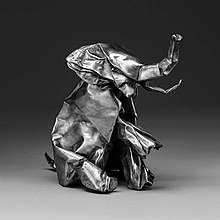
John Darnielle raises a glass to the KROQ bands -- the real goths and their many imitators -- and the cultists who made their moment and legacy sing out in all its leather-clad, blackened intensity. Darnielle's not joking about his affinity for this now-dormant universe (of course there are still goths, but he's interested in the former goths who laugh nervously when you remind them of this time in their lives), but in an abrupt break from Beat the Champ and many of his other records, he's aligning himself with the mainstream of historical narrative if not musical relevance. Celebrated alternative rock is closer to the wheelhouse of most of Darnielle's fan base than almost anything else he's talked about at length, from meth houses to Bible verses to local wrestling matches, and in a strange sense the direct, literal celebration of Sisters of Mercy, Siouxsie and the Banshees (who, lest we forget, inspired Thom Yorke to pursue a musical career, hardly Darnielle's usual casual company) and Gene Loves Jezebel would seem at a glance to be a kind of surrender away from his usual esoteric, unguarded lyricism. What he's actually doing is pushing himself both lyrically and musically, and I don't think I'm saying this because he's singing about and within a world I feel I understand well: not just the era and the genre; after all, I'm more a Flock of Seagulls and Depeche Mode guy than a Birthday Party guy, though I'm sure we could agree on Joy Division. I'm referring to Goths as a paean to California, to its youth culture and music, as deeply felt and honest in its fashion as Endless Summer. The lazy horns, the bursts of sonic energy, the colorful pallette, and the most elaborate Mountain Goats arrangements since The Life of the World to Come gather together to create a parallel narrative with the one indicated on the cover. "Rain in Soho" is kind of an aesthetic lampoon, and the likes of "We Do It Different on the West Coast" and "Unicorn Tolerance" are just slightly expansive, focused variants on the usual Goats material. But on the striking, incredibly engaging "Andrew Eldritch Is Moving Back to Leeds" and on the outstanding suite that begins with "Paid in Cocaine" and ends with the absolutely staggering New Order clone "Shelved," Darnielle and his band push themselves past every sense of expectation and persona and lose themselves in love of a kind of music they've never played before. Does that mean they're growing anonymous, or does that mean they're willing to let these songs sing them while they can? Darnielle alleges that he fully expects people to forget the Mountain Goats one day as completely as they forgot Gene Loves Jezebel. I find it hard to believe that a catharsis this felt, wise and impassioned would be so moving if it came from a less surprising source, and I find it hard to imagine a source capable of such unexpected turns and such personal and varied communication fading into the ether, but maybe I'm just the same kind of lonely fan as Darnielle is here. Either way, this is the most brilliant album about rock & roll since Saint Etienne's Words and Music.

Jlin: Black Origami (Planet Mu) [hr]
Jlin's Dark Energy was somewhat more carefully structured as some sort of dance music than this abrasive, furiously busy collection of playful keyboard loops and often maddening samples. It's all too much, yet it's somehow perfect -- as constantly entertaining as a Chemical Brothers album but as bizarrely addictive in its punchy, noisy restlessness as Crystal Castles or Vessel. It's the ideal motivator for riding out a catastrophe, or staying extra alert while driving, and like Oneohtrix Point Never's R Plus Seven, it has a homespun creative-loafing quality that makes it both modestly impressive and consistently engaging.

Charly Bliss: Guppy (Barsuk) [hr]
Wikipedia lists this fierce but airy Brooklyn quartet (which includes the kid who played Dash in The Incredibles!) as having opened for Veruca Salt and Sleater-Kinney, so I feel less guilty for bringing up that they recall '90s moden rock radio for me -- but not in the strained, obviously deliberate manner of Yuck or Cloud Nothings, more like the organic sense you get with a group like Royal Headache that they're just proud of what formed them. And like Royal Headache, they can write up a storm -- their songs lean punk in arrangement but pure pop in composition, plus furious and funny lyrically, and with Eva Hendricks' terrifically ingratiatingly youthful vocals they bring thoughts of the immortal Cardigans, who I also remember being labeled "bubblegum grunge" at one point. Hendricks sets the stage for the entire record on the introductory "Percolator" when she lets out a spontaneous scream that struggles and succeeds at being heard above the bed of swaying feedback and guitars. Hendricks' lyrics are so splendidly direct, unflinching and familiar, it's like if you stripped the melodrama away from our classic teenage music of yore, even though she's a self-avowed fan of metaphor and hyperbole. There are songs about hookup anxiety, getting high during a show, dreading the looming threat of a day job if this doesn't all work out, kissing someone and instantly regretting it, and just the fully conscious miraculousness of being young and loud. Some people think little girls should be seen and not heard, but we think "Does he love me most now that his dog is toast?"

Joey Bada$$: All-Amerikkkan Bada$$ (Cinematic) [hr]
Meanwhile, here's an album about the constant terror and dread of being young and loud. Bada$$ is the same age, roughly, as Hendricks and hails from the same borough, but on his second full-length record he sees, like so many before him, no possible respite from the institutional impossibility of living life in these United States if you are not white and well-off. With steady beats by 1-900 and a number of seemingly off-script rants about taking up arms against power, and sobering commentary that a Trump administration spells the beginning of the end, it's a strikingly emphatic, angry political record that makes no use of metaphor or hyperbole. It is not cynical, resigned or pessimistic like There's a Riot Goin' On, it's a statement of purpose that begins with the premise that everything is fucked and has to change. It's quite difficult to find anything to really argue with in his conclusions, and impressive that such a popular performer is choosing to address his audience on these terms so early in his career. Maybe its ideas are "undercooked" if you find it easy to dismiss these as frivolous, youthful, misplaced passions to be set aside once the first 401K payments start, or maybe we're being confronted with truths we would like very much to deny. If the screed that closes "Amerikkkan Idol" is less crafty than Kate Tempest's "Tunnel Vision," its pleadings are no less vividly wise and impassioned.

ALSO RECOMMENDED
Freddie Gibbs: You Only Live 2wice (ESGN) - a well-produced, morally suspect Second Coming
Spiral Stairs: Doris & the Daggers (Domino) - so difficult to hate Bud Lite rock when you know how much heart there is in it
Saltland: A Common Truth (Constellation) - cellist Rebecca Foon swoons into the long night and I'd seldom slept better before I noticed the subject
Orchestra Baobob: Tribute to Ndiouga Dieng (World Circuit) - maybe a little too soft but it sounds good
Goldfrapp: Silver Eye (Mute) - hey, someone's weaning them off the Tylenol PM ["Systemagic"]
Les Amazones D'Afrique: Republique Amazone (Real World) - worldbeat is back, if a little generic and polished
IFE: IIII + IIII (Discos Ifá) - pop gets thrown back at us from Yoruba, delightfully; Rostam should join this gang ["Yumavision"]

ALSO RECOMMENDED FOR THE AMBIENT FILES: (in addition to Jlin above)
Jacques Greene: Feel Infinite (LuckyMe)
Hauschka: What If (Temporary Residence) - maybe a little too much like what they pipe into hospital rooms; "We Live a Thousand Years"]
Actress: AZD (Ninja Tune)
Kelly Lee Owens (Smalltown Supertown)

FURTHER INVESTIGATION TO COME:
* Sylvan Esso: What Now
* Paramore: After Laughter
Wilsen: I Go Missing in My Sleep
Mary J. Blige: Strength of a Woman
Ryuichi Sakamoto: async
Trombone Shorty: Parking Lot Symphony
Juana Molino: Halo
Forest Swords: Compassion
Blondie: Pollinator
Don Bryant: Don't Give Up on Love
Do Make Say Think: Stubborn Persistent Illusions
Jane Weaver: Modern Kosmology
Chastity Brown: Silhouette of Sirens

REJECTS:
Lydia Ainsworth: Darling of the Afterglow
Rodney Crowell: Close Ties [NYIM]
Yorkston/Thorne/Khan: Neuk Wight Delhi All Stars
The New Year: Snow [NYIM]
Little Cub: Still Life
Willie Nelson: God's Problem Child [NYIM]
John Mellencamp: Sad Clowns & Hillbillies
Colin Stetson: All This I Do for Glory
Mark Mulcahy: The Possom in the Driveway
Gorillaz: Humanz
BNQT: Volume 1
Bill Baird: Easy Machines [NYIM]
John Moreland: Big Bad Luv
Chris Stapleton: From a Room Vol. 1 [NYIM]
Joan Shelley [NYIM]
Bonnie "Prince" Billy: Best Troubador [NYIM]
Black Lips: Satan's Graffiti or God's Art?
At the Drive-In: In-ter a-li-a
Ozomatli: Non-Stop: Mexico to Jamaica [NYIM]
Diagrams: Dorothy
Will Stratton: Rosewood Almanac
Jim Jones & the Righteous Mind: Super Natural
Paul Weller: A Kind Revolution [god, this is depressing]
Pumarosa: The Witch
Low Cut Connie: Dirty Pictures, Pt. 1
Aldous Harding: Party
Nick Hakim: Green Twins
Pokey Lafarge: Manic Revelations
Wavves: You're Welcome

OLD RECORDS RATED (NOT REVIEWED) THIS MONTH
Avey Tare: Down There (Paw Tracks 2010) [r]
Beach House: B-Sides and Rarities (Sub Pop 2009-2017/2017) [-]
Yoko Ono: Feeling the Space (Apple 1973) [hr]

Saturday, June 24, 2017

You did all you could: April 2017 music diary

Before we return to the current century, some thoughts related to the last one: I've now read both Brian Wilson and Mike Love's new autobiographies -- Wilson's is unexpectedly delightful, Love's predictably dire but not without interest -- and my brief thoughts have been added to the Beach Boys overview page. Also, I'd be remiss if I didn't mention that I did indeed listen to all of the newly issued Sgt. Pepper material; you'll be hearing more about it when I get my Beatles project off the ground in the next few months, but for now, the remix is decent apart from a few curious choices, and the outtakes are fun to hear once (nothing truly revelatory) except for the "Strawberry Fields Forever" material, most of which has been booted but almost all of which is sublime. I have another announcement I thought I'd be ready to make but I'm not, so instead here's another post that was supposed to be ready in two weeks but took three and a half. I'm so good at this.

Mount Eerie: A Crow Looked at Me (PW Elverum & Sun) [c]
If there's a delicate way of saying this, I can't think of it: I don't think that this album should exist, at least not for you and me to hear. Last July Geneviève Castrée did of pancreatic cancer. She was the wife of musician Phil Elverum, a.k.a. Mount Eerie, and his widely acclaimed new album (even Danny Brown tweeted about being moved to tears by it) is a song cycle -- in his usual hushed acoustic style, only more so -- about his grief and attempts to cope with the aftermath of his loss. Being deeply in love with someone for more than eight years myself, I cannot fathom the pain he is enduring at this moment, no matter how intimately he chooses to document it here, and my heart sincerely goes out to him. But when I listen to this I can't escape the sensation that it's something I have no business hearing... moreover, something that has no business being fawned over, celebrated, analyzed, as it simply is not built for such treatment. Nick Cave's album Skeleton Tree that still ached with the loss of his teenage son had a complicated genesis and was filtered through a sense of abstraction, duty, distraction. Elverum confronts the agony head-on, which is something that often must be done, but for anyone but him and his family, friends or therapists to engage with these highly specific and personal non-songs -- they are absolutely not songs, just strummed chords with Mark Kozelek-like diary entries floating above them -- feels exploitative, and frankly I'm suspicious of any audience member fetishizing it in the same way I'm suspicious of the mythology drawn around, say, Brian and Dennis Wilson's coked-out piano tapes. The artist's therapy or the artist's lowest ebb or most human, vulnerable moment shouldn't be in the world for us to look at it, to judge as a constructed artistic work. He says it himself at the outset: "death is real, someone's there and then they're not / it's not for singing about, it's not for making into art." He's right, and this isn't art, it's the selling -- perhaps by outside pressure, who's to say? -- of private bereavement, and it's a terrible experience: how does the publication, for Pitchfork and Spotify's benefit, of a verse about his wife's final bloody tissues benefit his well-being? And I must admit that in a selfish sense, I also find it gauche: how do you judge this on its own merit without sounding like an asshole? You can't, and that's the problem.

Bob Dylan: Triplicate (Columbia) [c]
Once and for all: your voice becomes beloved, an addiction, a passion, because of the words that you sing (the ones that you just accepted a Nobel Prize for) and the idiosyncrasies it adds to them. It has nothing to add to standards made famous by technically stronger voices. We hear past or through the voice to hear the words, your words, but that gives no compelling reason to hear you slathering it -- more weakly and less in tune than ever -- over the songs of others, apart from an extremely misguided brand of nostalgia. This was true in the early 1990s. It is true now. And a triple-record set of it is more than a joke, which is what your last two albums (and that Christmas nonsense, for that matter) were; it's obscenely unnecessary. I would honestly prefer it if you and Brian both just left pop standards, blues standards, jazz standards, Gershwin standards, Disney standards, showtunes, whatever alone and went gently, quietly into the night until you had something interesting to say. Said with love but also with genuine irritation, because you don't seem to realize that those of us who think your work is important enough to belong in a canon have to actually listen to this shit.

Aimee Mann: Mental Illness (Superego)
Mann in the 2010s is remarkably similar to Mann in the 1980s and 1990s: sings well, is a competent strummer, is totally boring but impossible to find offensive.

Arca (XL) [c]
Number of seconds it takes for each track on this album to become intolerably annoying (please note that this is not a measurement of when each cut's first annoying thing happens, merely a judgment of when the steady accumulation of irritation pushes one over the edge): 1) 50. 2) 20. 3) 7. 4) 43. 5) 8. 6) 12. 7) 19. 8) 28. 9) 0 -- or 23, if we're being very generous. 10) 62 (nice job!). 11) 14. 12) 16. 13) 17. Average: 25, meaning that the ideal Arca experience would be those faded-out samples they used to post on CDNow.

Diet Cig: Swear I'm Good at This (Frenchkiss) [r]
Alex Luciano's voice is a soft but demanding whine, her guitar playing a helicopter propeller that defies the tentative insecurity she writes about; but the attraction on this delightful New York punk duo's first album is really the way those lilting, nagging, slightly grating (in a way that she knows, expertly, how to use) vocals meld with lyrics that some may find trite, that others -- like me -- will find disarmingly honest and probing. For instance, "it's hard to be a punk while wearing a skirt" sounds like a charming but empty motivational poster except that Luciano melds it into a desperate confession and rallying cry -- and precedes it, crucially, with "my stomach hurts." And there are other narratives of post-adolescent misery that you may pretend are the mutterings of the Entitled Millennial personified, but the great fact of being part of this generation is the loneliness that sometimes feels inherited; mixed in with observational tales of fucking a guy with the same name and wanting to go back to being a kid with cake and ice cream on one's birthday, there's "Bite Back," wherein "I'm so lonely in this big city / and everybody's so damn busy" is repeated until it becomes funny, repeated until it becomes powerful, repeated until it becomes an act of protest, repeated until it becomes radical self-preservation.

The New Pornographers: Whiteout Conditions (Concord) [r]
Unless you count the surplus of low-energy ballads on Challengers, the New Pornographers' seventh album is their first major break away from the formula that's generated all of their previous output (it's also their first album as labelmates to Paul McCartney). That's because Dan Bejar is gone -- maybe permanently, who can say? -- and the sound has fully surrendered to a flaunting of Carl Newman's record-collector credentials. There's initially intrigue in the way the title track smudges its pursuit of pleasure, but its fusion of Newman's usual stilted XTC-like writing fused with widescreen Arcade Fire theatrics -- though with complex, unpredictable chords and notes that never ring out with the winning simplicity of real pop or arena rock, for better or worse -- sets the stage for everything that follows. In other words, it's every previous New Pornographers album but more so, and as preoccupied with its indulgent definitions of pleasure as Newman's solo records. It never soars like their best work, no matter how Neko Case's full-throated vocal on "This Is the World of the Theater" may try to get there, and the absence of Bejar's tension-cutting contributions makes the record feel as much like an out-of-control roller coaster as a Cars greatest-hits album. Newman's no creative force to dismiss -- he has never sung with more confidence and infectious enthusiasm, even if his lyrics remain minefields of repetitive nonsense as always -- but (apart from the nicely economical "Clockwise") these songs manage to feel too long even with none of them far exceeding four and a half minutes. Bejar's worse off on his own as Destroyer, running toward accidental self-mockery when unchecked; but so is Newman, whose songs eventually feel computer-generated.

Father John Misty: Pure Comedy (Sub Pop) [NO]
Like Mount Eerie, Josh Tillman is a songwriter who doesn't write music, whose post-Fleet Foxes career (ugh, imagine that as the sad defining line in your resumé, no wonder he's such a miserable sack of shit) implies he neither knows nor cares what that means, and if you challenge him on it he can always pretend he's no longer Josh or Joshua or J. but Father John Misty, the persona he pretends to adopt when he sings his alternately deplorable and laughably preachy polemics hummed and barked over skeletal chords and schlocky mid-'70s AM radio arrangements. His favored use for the Misty name is to proudly wave his own self-indulgence like a flag while beating himself with it, presumably in the interest of gaining credit for honesty... while still hiding behind the risk-free cruel detachment of an internet dirtbag living in the post-apocalyptic universe of Fahrenheit 451 or The Lobster. He's Conor Oberst with slower music except he thinks his unfiltered thought processes make him a rock star megagod, a maddeningly boring version of a hair metal guy who loathes his audience, a fucking Tim Heidecker character. It doesn't scare him to lay anything bare because none of this matters to him except that he's being told his hot shit, or as he puts it, "I've got the world by the balls, am I supposed to behave?" (and if you think Tillman has earned Kendrick Lamar's right to tell everyone else to sit down, compare the sales figures of this album and DAMN.). In short, this is just like the last record, which included a song about choking a woman in bed because he hated her "soulful affectation," except it now includes a Very Important Public Service Announcement about religion, and I'm so glad he's chosen to grace us with his insights: "They get terribly upset / when you question their sacred texts / written by woman-hating epileptics [...] and how's this for irony, their idea of being free is a prison of beliefs!" Basically Misty is the stereotype of every smug, entitled white male personified; he's the most obnoxious musician alive in America today, bar none.

Khalid: American Teen (RCA)
Teens! We love 'em, right? This 19 year-old Texan -- he sounds it too, introducing a rural drawl into his anthemic R&B -- senses something universal in stories of trying to get the weed smell out of his car, but his songs are catchy and deeply uninteresting runs through a world that seems to be explored in shorthand. In fact, it often feels like post-adolescent life defined by writers, producers, executives old enough to remember the month in which Khalid was born, because that's what it is. The kid's trying -- I like "8TEEN" -- but he's drowned out by synergy.

Gas: Narkopop (Kompakt) [r]
Wolfgang Voigt's acid-stoked ambient goes back decades now, and he's something of an expert at filling up a quiet, tense room -- his lengthy return (78:39) feels far shorter than it is. It's a little scary sometimes and never either wholly sumptuous or repellent.

Kendrick Lamar: DAMN. (Interscope) [hr]
A three-year gap ensued after the near-masterpiece good kid, m.A.A.d city, but DAMN. in turn marks three consecutive years with a major new project from Lamar, probably at the moment the most beloved male performer of popular music in the country, and the rock star upon whom all eyes and ears are most universally cast right now. DAMN. is a more erratic collection in terms of its consistency than the supposed throwaway LP untitled unmastered., and its rundown of post-fame pratfalls, doubts and modest boasts and self-assessment with shades of Biblical apocalypse doesn't have the conceptual death of To Pimp a Butterfly, but it's his first album since Section.80 that, for all its consternation about stardom and the maddening state of the country, is equally concerned with delivering the goods for his increasingly huge audience. It's yet another gathering of incredibly evocative performances, hooks, features and ideas -- inventively produced too. All the tracks are immediate, coming faster and lingering longer than any previous apart from "King Kunta." It's easier to pick out the moments you want to hold permanently at your side than it was on his other records, and this time they are mostly not moments but songs -- the two trap singles produced by Mike Will, the Marvin Gaye-like BadBadNotGood collaboration "LUST." and the glorious Alchemist production "FEAR." -- with the exception of the moment-defining finale of "BLOOD.," a ghostly "The Gift"-like narrative about an unprompted murder, when a sample of two FNC pundits decrying the lyrics of the BLM anthem "Alright" dissolves into Lamar's undaunted freak-flag intro to "DNA." The only misstep is an exceedingly ordinary love song (entitled "LOVE.") with a guest vocal from the anonymous Zacari Pacaldo. There's something uncommonly comforting about an artist as trusted and righteous as Lamar serving commentary about the last few months in our lives -- "We all woke up, tryin' to tune to the daily news / looking for confirmation hoping election wasn't true / all of us worried, all of us buried and the feeling's deep / none of us married to his proposal, makes us feel cheap / still and sad, distraught and mad, tell the neighbor about it / bet they agree, parade the streets with your voice proudly / time passing, things change / revertin' back to our daily programs, stick in our ways" -- mirroring Kate Tempest's prediction of this narrative in "Tunnel Vision," but because of said daily programs, the words that sing out with the most power are those in which Lamar tries to process everything that's happened to him personally and gives conflicted perspective: "I feel like the whole world want me to pray for 'em / But who the fuck prayin' for me?"

Robyn Hitchcock (Yep Roc) [r]
It's almost never acknowledged what a versatile singer Hitchcock is; from Underwater Moonlight right up to this third album for Yep Roc, he can fill in almost any of your blanks from the scope of new wave, British Invasion and power pop influences that define him. Here he's John Cale, here Tom Petty, here Ray Davies, and always with a wit and a sweet lilt whose irresistibility defies his reputation as an off-center quack. There's no song here to match "The Ghost in You" from 2014, his strongest composition in decades, but it's more consistently appealing than The Man Upstairs and the stirring lullaby "1970 in Aspic" will remind you why you care what he's up to.

Ibibio Sound Machine: Uyai (Merge) [hr]
Props to Merge, newly down an Arcade Fire and several Spoons, for replacing them with a Nigerian-by-way-of-London musical collective whose output is all but unclassifiable; cathartic opener "Give Me a Reason" is as beholden to techno and funk as it is to West African polyrhythms, and this cornucopia of influences, beautifully redefining the narrative of what comprises folk music from the ground up, continues throughout to make this an engaging modern example of traditionalism shot through with pleasure and paranoia, a welcome return to worldbeat aspirations without the soul-crushing commercial imperative. Singer Eno Williams, her voice ice and fire, is a master storyteller and raconteur, and a disco superstar (see "The Pot Is on Fire"). An undeniable thrill, the party record of 2017.

Valerie June: The Order of Time (Concord) [hr]
Why did you first come to love Americana, or alt-country or alt-folk or whatever the vogue term is, when you came across it? Presumably because it was music that could sound both sophisticated and comfortably effortless; folk embraces the strange individual quirk in its mainstream while other genres place it on the fringes. But like country music itself, this world is now dominated by what Thom Yorke called "fridge buzz," a deadening obligation for a certain sound and feeling above all else that has gradually rendered several careers, frankly, pointless -- listen to Great Lake Swimmers' catalog, album by album, for a depressing example. So far, however, Memphis singer-songwriter Valerie June has pushed against the coffee bar NPR morass (though no doubt they are more than happy to embrace her) to write and produce material that feels entirely divorced from time (its central preoccupation) and from outside motivations. This succeeds beautifully; it's unspeakably moving, lovely music that will make you want to shut out and forget everything else. June's stunning, unique vocals are a Daniel Johnston-style attack on radio dross with their Billie Holiday-Joanna Newsom cadences, and the songs are ethereal, immediate, monochromatic, relaxed and warm without a trace of constraint to their lovely spareness. The first two cuts will convince you -- they seem, lyrically and musically, far older than June's 35 years -- and while "Shakedown" and "Got Soul" need their complete context to achieve their proper roles as climactic triumphs, you won't need any setup to fall into the quiet bliss of "Two Hearts" and "Slip Slide on By."

***

ALSO RECOMMENDED:
Karriem Riggins: Headnod Suite (Stones Throw): nearly thirty breakdowns from Detroit-born jazz/hip hop drummer-producer, not Donuts but fun
Oddisee: The Iceberg (Mello Music): twelve good and true moments-in-time of consciousness
Anohni: Paradise (Secretly Canadian EP): I didn't write in for track seven but maybe I should

ALSO RECOMMENDED FOR THE AMBIENT FILES: (in addition to Gas' Narkopop above)
Sherwood & Pinch: Man vs. Sofa (On-U)

FURTHER INVESTIGATION TO COME:
* Freddie Gibbs: You Only Live 2wice
* Charly Bliss: Guppy
Jacques Greene: Feel Infinite
Kelly Lee Owens
Spiral Stairs: Doris & the Daggers
Hauschka: What If
Saltland: A Common Truth
Lydia Ainsworth: Darling of the Afterglow
Orchestra Baobob: Tribute to Ndiouga Dieng
Goldfrapp: Silver Eye
Les Amazones D'Afrique: Republique Amazone
Rodney Crowell: Close Ties
IFE: IIII + IIII
Joey Bada$$: All-Amerikkkan Bada$$
Yorkston/Thorne/Khan: Neuk Wight Delhi All Stars
Actress: AZD

REJECTS:
Stormzy: Gang Signs & Prayer [NYIM]
Hurray for the Riff Raff: The Navigator [NYIM]
Laetitia Sadier Source Ensemble: Find Me Finding You [NYIM]
Creeper: Eternity, in Your Arms
Craig Finn: We All Want the Same Things
The Moonlandingz: Interplanetary Class Classics
The Jesus and Mary Chain: Damage and Joy
Jake Xerxes Fussell: What in the Natural World
British Sea Power: Let the Dancers Inherit the Party
Pharmakon: Contact [NYIM]
Mastodon: Emperor of Sand
Pile: A Hairshirt of Purpose
Leela James: Did It for Love [NYIM]
Happyness: Write In
Ulver: The Assassination of Julius Caesar
Andrew Combs: Canyons of My Mind
Timber Timbre: Sincerely, Future Pollution
Wire: Silver/Lead
Future Islands: The Far Field
Jeb Loy Nichols: Country Hustle
Fionn Regan: The Meetings of the Waters
Part Chimp: Iv
Woods: Love Is Love
Ron Sexsmith: The Last Rider
Tara Jane O'Neil [NYIM]
Joe Goddard: Electric Lines
Angaleena Presley: Wrangled
Ray Davies: Americana

OLD RECORDS RATED (NOT REVIEWED) THIS MONTH:
The Avett Brothers: Mignonette (Ramseur 2004) [-]

Monday, May 29, 2017

Are secrets still a thing?: March 2017 music diary

Something I forgot to share last month -- in April we saw Kate Tempest in Washington and I wrote a little bit about it here. Onward.

Dirty Projectors (Domino) [NO]
The line between this joyless bunch and Gentle Giant was never as thick as we pretended when hordes of indie rock critics were going through their extremely unfortunate Grizzly Bear-Bon Iver phase, but even I was surprised by how violent a reaction this record elicited from me. Holy fucking shit this is bad, guys. The bridge in the first song is the worst thing I've ever heard, and I've heard First Love and Country Love. Remember the little man in Edward G. Robinson's chest or stomach or whatever who told him which insurance claims not to approve in Double Indemnity? The same little man suddenly appeared in my body and begged me, demanded that I turn this off, made threats against me if I wouldn't. I pressed on anyway so I could tell you that this twiddly, trebly, cutesy, aimlessly overstuffed music is probably the best case ever made that the collapse of all markets -- indeed, of the planet itself -- is a good thing.

Rhiannon Giddens: Freedom Highway (Nonesuch)
Giddens is a gifted musician with a great voice, but all of her recorded output to date has been politely boring and blandly produced, and this is no better; it lifts up occasionally with some of the covers, like Mississippi John Hurt's "The Angels Laid Him Away" and the version of the Staple Singers' peerless title cut, but even those can't come out from underneath the overly slick sonics, which make the record seem indistinguishable from virtually all modern roots music.

The Feelies: In Between (Bar/None)
The Clean and Yo La Tengo and the Bats and R.E.M. and Antietam and god knows who else wouldn't exist without the Feelies. Bands like Real Estate wouldn't exist without the Clean and Yo La Tengo and the Bats and R.E.M. and Antietam. Now, in 2017, the Feelies sound clean, relaxing, carefully atmospheric, ineffectual. In other words the Feelies have turned into, well, Real Estate.

Crystal Fairy (Ipecac) [r]
A supergroup comprised of members from the Melvins and At the Drive-In plus engagingly gritty singer Teri Gender Bender -- who sounds a little like Donita Sparks and a lot like Karen O -- make a lot of noise and end up with an unpretentious and engaging hybrid of hyperactive post-punk and crunchy '70s metal. Bender really holds it together with her tireless, confrontational singing, and for a few minutes a rock band just sounds like a rock band and it's actually an okay thing.

Visible Cloaks: Reassemblage (Rvng Intl.) [r]
If the influence of Music from the Hearts of Space on modern electronic music hadn't already been clear, prepare to get centered with this duo from Portland. These tracks are so peaceful they're almost startling, in the sense that if you close your eyes you'd swear you were in a very clean waiting room somewhere or getting a massage; the pair started out mimicking Japanese ambient on a number of underground releases. This proper debut incorporates the irresistible sound of vintage MIDI sequencing and is as likely as not to improve your evening.

Grandaddy: Last Place (Columbia) [c]
Sophtware Slump was one of the last CDs I remember being enthusiastically shared among friends on burned discs in high school; I remember little of it except that it seemed inoffensive and nondescript. I should probably have listened to it again before trying to review the California band's reunion record, but I'm not getting paid enough to delve into the genesis of such a dishwater dull recording. Grandaddy are somewhere in the vicinity of Spoon and latter-day Wilco: despite technical slickness and occasional charm, finding the space in the heart to be passionate about their music is beyond me, and even by those standards this particular record is hard to put up with. But people are excited they're back, so what can you say? Lyrically it's another divorce album, with such chasms prompting as always a sudden need for catharsis that seems to have resulted directly in the band's revival by chief proprietor Jason Lytle. But the music has the slick bloodlessness that suggests a tired, desperate over-eagerness to please; even though only one song is totally embarrassing ("Check Injin," strong evidence that Decca's Dick Rowe was right all along), listening to the whole album is like eating plain bread for an hour.

Blanck Mass: World Eater (Sacred Bones) [r]
Electronic project of Benjamin John Power from Fuck Buttons is somewhat more interesting than that band's aggressive droning, though this record is equally bombastic and quickly proclaims itself ideally positioned as film score music. I dunno, if you put it on while you're cleaning or something I imagine it would be a stronger motivator than pure ambient -- think Mogwai, Explosions in the Sky, or Shadow Morton if he scored spaghetti westerns.

Thundercat: Drunk (Brainfeeder)
Skilled session bassist and producer Stephen Bruner has built up an impressive resumé over the past decade by working with virtually everyone in the Los Angeles hip hop scene as well as the likes of Shabazz Palaces, Suicidal Tendencies and Erykah Badu. This is his third solo record but the first to become a significant crossover hit; while his voice, instrumental talent and ambitious sonic artistry evoke memories of Stevie Wonder, he's yet again done in by ordinary writing, facile lyrics and a tendency to paper over his ideas with bad jokes -- the same sort of stuff that has made Frank Ocean's albums so frustrating, so if by your standards that's excellent company to be in, or if you think the "friend zone" is a credible concept (Ben Folds take note: I've found your next cutesy "ironic" cover), you may appreciate this. Maybe Thundercat has ideas worth exploring, maybe not, but the way to find out is not to playfully deflect any attempt to take them seriously.

Vagabon: Infinite Worlds (Father/Daughter) [r]
Hailing from Cameroon via New York City, Laetitia Tamko is a freak-folkie somewhat in the tradition of Frankie Cosmos, Kimya Dawson and Jeff Mangum but with a refreshing musical eclecticism alien to the foundations of that movement. Tamko's vocals evoke the beautiful shouted naivete of Doug Martsch and Kathleen Hanna without seeming indebted to any specific predecessor, and while her songs are only sporadically memorable, she knows how to push them away from singer-songwriter convention and to leave an impression with a variance of style that ranges from the confessional to the explosive to pure avant sound collage.

The Magnetic Fields: 50 Song Memoir (Nonesuch) [r]
Stephin Merritt's best album 69 Love Songs might have been a gimmick, but it was also inspired and witty in a manner that was completely unforced. His attempt to recapture that energy, by writing a song dedicated to each year of his life to this point, is run aground by the feeling that he's structuring it this way out of a sense of obligation. Such an obsessive commitment to concept also destroys the possibility of coherent pacing, much as his original plan to arrange 69LS alphabetically would have. In fairness, almost every song on this quintuple album (!) is a complete thought -- no "Punk Love," no "World Love," not even a "Boa Constrictor" -- and the mediocrity of some of the melodies and the occasionally haphazard production is likely meant to call attention to the often brilliant lyrics, but it sadly has the opposite effect most of the time. And it seems as though Merritt's childhood, adolescence and twenties inspire a far more varied litany of textures than his evidently calmer adulthood, which is why the last two discs of soppy, meandering ballads could try the patience of even his most dedicated fan. But perhaps the biggest mark against this 150-minute collection is that its songs are sung exclusively by Merritt; on several of them he stretches that monotone like never before, but the presence of various guest singers on 69 and other Magnetic Fields records has been an indispensable element of their appeal historically. I could run down my objections to the individual cuts but it's easier to tell you which ones are keepers: the adorably melodramatic "'68: A Cat Called Dionysus," the eerily relatable "'70: They're Killing Children Over There," gorgeous reverse-protest apathy song "'74 No," the cruel stepfather revenge "'77: Life Ain't All Bad," the Byrds nod "'79: Rock 'n' Roll Will Ruin Your Life," the anthemic instant classic and best song on the record "'83: Foxx and I," the communal AIDS lament "'85: Why I Am Not a Teenager," the synth lust piece "'87: At the Pyramid," the second best song on the record "'92: Weird Diseases," the effectively lyrical pop "'94: Haven't Got a Penny," and the impeccably sarcastic "California Girls" sequel "'08: Surfin'." The message is that Merritt's not a bad musical theater composer. He's just a better synthpop composer, and an LP of between ten and twenty songs would have been a far more consistently rewarding use of his energy.

Laura Marling: Semper Femina (More Alarming)
British singer-songwriter's impressively fierce, guttural vocals survey friendship and lonerism with smart if passive lyrics, but the only unqualified score is the magnificent "Always This Way," which captures grief against a driving, teasing backdrop. This is Marling's sixth album; she's massively celebrated in England, and her previous work is probably worth a closer look than I can give it at the moment.

The Shins: Heartworms (Sony) [r]
The Shins haven't been a "band" in nearly a decade, but they weren't a real band when they made their reputation-creating Oh, Inverted World either. James Mercer's once-infallible capacity for crafting an endless stream of hooks and impeccable pop songs is no longer with him, but his reversion to minimalist bedroom pop without the distraction of Danger Mouse (even though "Perfect World" is the best song he's written since 2007) or the array of guests on Port of Morrow does plenty to recover some of the goodwill lost during the long stretches of downtime that resulted from his dismissal of the rest of the group. Like Inverted, this is pretty and at times irresistibly catchy, even if it verges much more often on irritating than he ever used to, and even though it's never incisive or cutting in precisely the way that the three Sub Pop albums were, making them still among the most indispensable examples of modern American guitar pop. Basically, if Mercer retired the Shins name and called this "Wings" or something you'd be really floored by how much fun you're going to have listening to it.

Jay Som: Everybody Works (Polyvinyl) [r]
Oakland's Melina Duterte has a voice that absolutely soars in its best moments, and she gets an equally lyrical, expressive sound from her electric guitar -- a wonderful relief from miles upon miles of acclaimed singer-songwriter records out this year that are acoustic or electronic-based, good as some of them are. Her second album under the Jay Som title is a promising gem indeed, though its two peak moments stand so far above the rest of the material that it's an easy bet record number three will be the triumph. Some of the rest of the perfectly agreeable tunes here were largely improvised, so it's remarkable how easy on the ear they turn out to be (see "One More Time, Please") but the wonderful "The Bus Song" is the anthemic rock track of the year so far, and the title cut is the perfect gesture of solidarity with a world that lives paycheck to paycheck to keep its head above water.

Conor Oberst: Salutations (Nonesuch)
Oberst was exactly on the precipice between navel-gaze and catchy dad-rock that made perfect sense on his last album, a precarious situation he promptly ruins on his follow-up, which tells us stories about divorce and health paranoia right down to the systolic/diastolic blood pressure numbers, but give it up for the fact that unlike Mark Kozelek, Oberst isn't necessarily telling us about his own blood pressure; and unlike Father John Misty, he doesn't then sing about fondling the doctor who measured it. Fun drinking game: knock one back every time Oberst drops a famous person's name -- he could fill a Sgt. Pepper LP cover with the cast he conjures up, including but not limited to Sam Peckinpah, the Dalai Lama, Patti Smith, Lou Reed, Patty Hearst, Robin Williams, Oliver Sacks, Christopher Hitchens and Heinrich Himmler.

Spoon: Hot Thoughts (Matador) [r]
Read my review from last time and just paste it here, it's the same thing they did! Actually that's unfair -- Spoon is a really good group of players and their music is punchy, precise and instantly appealing, I just don't have a damn thing to tell you about it. It's dancier than any of their music since their first couple of Merge albums, but they seem reluctant to label it such. It's allegedly political. Listen to it. You'll like it.

Depeche Mode: Spirit (Columbia) [hr]
It's got nothing to do with Dave Gahan's genuinely hilarious reaction to his long left-leaning ("the grabbing hands grab all they can") band being ignorantly co-opted by a Nazi that their ferociously angry new album is their best since Playing the Angel, but it makes it an even more joyous occasion to hear just how good it is. The shot in the arm might come from their latest production savior (James Ford from Simian Mobile Disco), or from the emphatic and mobilized and energized mood they seem to be in, or from Gahan and Martin Gore singing with more focus and passion than they have in years, or it could just be that their newest crop of songs just happens to be unusually inspired, top-tier material. Gahan continues to contribute some of the band's best latter-day hooks ("No More"), Gore proves himself more than capable of getting a feel for the boisterous, tempestuous room on "Going Backwards" and the single "Where's the Revolution," and the procession of anthems -- peaking with the tremendous "So Much Love" -- is Rose Bowl-worthy. The time was right for Depeche Mode to remind us how fucking great they are, and I'm thrilled that we're all in sync with them again; by so openly rebuking the fringe insanity of their most questionable follower they've renewed their vows with the rest of us, and having loved them since I was a teenager I feel proud of the association, and when Gore becomes the first rock star (to my knowledge) to announce "we're fucked," I'm both deflated and ecstatic over the honesty, because I really trust that he means it and that deep down he's right in the mire with us.

Loyle Carner: Yesterday's Gone (Virgin) [hr]
The debut of this south London rapper (who's collaborated with Kate Tempest, which I swear I didn't know till just now) entrances immediately with its laid-back, tough-minded charm and only grows more addictive thanks to its lush, jazzy production, Carner's versatility and flow as a rapper and vocalist see us through several top-of-the-line hooks (especially the instant earworm "NO CD," at least in part an anti-shuffle anthem that touchingly betrays the auteur's affection for '90s hip hop), plus a closing suite of songs dedicated to his long-suffering mum, including her own poetic contributions, that will put something in your eye. Carner's lyrical style is openly awkward and confessional, honest about disadvantage and disability, which runs ragged in an interesting way against his smooth, quick-witted phrasing, with a cappella interludes and scattered moments when he slips into an unexpectedly lovely singing voice. In much the same way, the producers' varying stylistic choices somehow add up to a well-sequenced and complete portrait of the artist that can incorporate the catchy, guitar-driven "Stars and Shards" as easily as the throwback stoned vibe of "Ain't Nothing Changed." It's an album that, for all its eclecticism, demands to be heard complete and in sequence, and with the undivided attention you'd afford a Kendrick Lamar or Gil Scott-Heron... or some old Jay-Zs, couple ODBs.

London O'Connor: O∆ (s/r) [hr]
This exuberantly uncategorizable California singer-rapper-producer has it out for the net and for social networks but the suburban malaise he brilliantly articlates on this brief, stunning debut could just as easily be a narration of 1990s or 1980s or 1970s boredom, probably earlier if we wanted except that then we'd never get to hear music that so defies any notion of organization or prettified slickness. O'Connor's minimalist vocals vacillate between a breathless whisper and an atonal wail, and when he strips everything but himself away there's a world of feeling and Jonathan Richman-scale paranoia in his dry monotone; his maximalist synthesizer lines invite primal identification and also seem as keyed to post-adolescent turmoil as a Ronettes record. He's funny, he's fine if you can take or leave what he's doing, he's distinctive and instantly impossible to shake, he hates your guts and wishes people still hung out, and if his earnest narrative of not wanting to end up like the cranky oatmeal-eating uncle on the couch asking about the "music thing" just to make small talk is more superhero origin story than full-on exploration of the alienation really at the core of that encounter, try this impeccable couplet that seems more salient every time you hear it: "All my friends are on the net and all my friends are in the net / and all of us are out of it and none of us are into it."

ALSO RECOMMENDED:
- American Wrestlers: Goodbye Terrible Youth (Fat Possum): studio-based full-band followup to St. Louis singer-songwriter Gary McClure's home recorded project, this has an engaging post-punk nightclub intensity despite its more plaintive, wide-eyed emotional base and a few hooks that soar ["Terrible Youth" / "Real People"]
- Tinariwen: Elwan (Anti-)
- Madness: Can't Touch Us Now (Universal): if every revivalist throwback record any older-gen band made brought back the old times, the old times I never even thought I liked all that much, so effortlessly...
- Lee Fields & the Expressions: Special Night (Big Crown) ["Never Be Another You" / "Special Night"]
- Dawn Richard: Redemption (Local Action) ["Voices" / "Tyrants"]
- Denzel Curry: Imperial (Loma Vista): brutal hip hop (originally out last year but under my radar) with fellow Floridian Ronny J producing and a small, solid group of guests ["Zenith" / "Pure Enough" / "Story: No Title"]
- Teen Daze: Themes for Dying Earth (Flora): if Real Estate hadn't started sounding like presliced yellow American cheese
- Molly Burch: Please Be Mine (Captured Tracks): slightly solid, slightly edgy, slightly soulful
- PVT: New Spirit (felte): Yeasayer meets Underworld meets idk ["Morning Mist, Rock Island Bend"]
- Jesca Hoop: Memories Are Now (Sub Pop): folkie starts out with a bang and ends up resting on her laurels for a bit but her voice is "different" and the songs go somewhere

RECOMMENDED FOR THE AMBIENT FILES:
A new subset for the "also recommended" section. I use ambient and electronic music constantly in my day to day life even if it doesn't directly move me; in fact I think it's very often not the point to find such music novel or entertaining. (Some of what's listed here will be anyway, though more often I will tend to use it because it recedes -- and because excessive familiarity will make it less effective in this regard, I rotate the stuff constantly.) As both someone who appreciates something that just subtly harnesses a mood, keeps things calm or adds to atmosphere and as someone who once lamented the seemingly infinite amounts of electronica and techno music I'd never be able to afford that seemed so cool and would be so fun to use to make dubs and that sort of thing, I feel a duty to recommend the current records I've addded to the library of this kind of thing even if I don't really have much to say about them individually. Obviously if an ambient, electronic or instrumental record really strikes me as special you'll hear more detail about it.
- Romare: Love Songs, Pt. 2 (Ninja Tune)
- Bonobo: Migration (Ninja Tune)
- FaltyDL: Heaven Is for Quitters (Beat)
- Steve Hauschildt: Strands (Kranky): the most bare and minimal of the lot
- Loscil: Monument Builders (Kranky)
- Simian Mobile Disco: Welcome to Sideways (Delicacies): far from ambient, but a great motivator, especially the megamix version
- Brian Eno: Reflection (Warp): father of the genre is still its most assured and reliable practitioner
- William Basinksi: A Shadow in Time (2062): this is especially strong, lush and enveloping if that's what you're needing at the moment
- Moire: No Future (Ghostly): conspicuous consumption, Big Beat idiomatic indulgence

FURTHER INVESTIGATION TO COME:
* Stormzy: Gang Signs & Prayer
* Ibibio Sound Machine: Uyai
* Valerie June: The Order of Time
Sherwood & Pinch: Man vs. Sofa
Karriem Riggins: Headnod Suite
Hurray for the Riff Raff: The Navigator
Oddisee: The Iceberg
Anohni: Paradise EP

REJECTS:
Foxygen: Hang
Lowly: Heba
Hope Sandoval & the Warm Inventions: Until the Hunter
Jim James: Eternally Even
Martha Wainwright: Goodnight City [NYIM]
Emeli Sande: Long Live the Angels
Austra: Future Politics
Rose Elinor Dougall: Stellular [NYIM]
Moon Duo: Occult Architecture, Vol. 1
Dutch Uncles: Big Balloon
All Them Witches: Sleeping Through the War
Acceptance: Colliding by Design
Old 97's: Graveyard Whistling [sorry, guys :( ]
Peter Silberman: Impermanence
Xiu Xiu: Forget [though, as usual, if you think of it as a comedy act it's sublime]
Six Organs of Admittance: Burning the Threshold [NYIM]
Pissed Jeans: Why Love Now
Los Campesinos!: Sick Scenes
Alasdair Roberts: Pangs [NYIM]
Holly Macve: Golden Eagle [NYIM]
Why?: Moh Lhean
Temples: Volcano [NYIM]
Nadia Reid: Preservation [NYIM]
Spectres: Condition
Murs: Captain California
Pulled Apart by Horses: The Haze
Real Estate: In Mind
Sorority Noise: You're Not as __ as You Think
Tove Lo: Lady Wood [NYIM]

ORPHAN TUNES
Martha Wainwright "Take the Reins" [Goodnight City]
Austra "Future Politics" [Future Politics]

OLD GRADES CHANGED THIS MONTH:
The Mountain Goats: All Hail West Texas (Emperor Jones 2002): [r]->[hr]
The Mountain Goats: We Shall All Be Healed (4AD 2004): [r]->[hr]
New Order: Low-Life (Factory 1985): [r]->[hr]

OLD RECORDS RATED (NOT REVIEWED) THIS MONTH:
Love Is All: Nine Times That Same Song (What's Your Rupture? 2006): [hr]
Love Is All: A Hundrd Things Keep Me Up at Night (What's Your Rupture? 2008): [hr]

Sunday, April 23, 2017

Rage feels like therapy: February 2017 music diary

It's another year of cranky album reviews that you can tell are by me and me alone because I somehow mention Tracey Thorn three times in them.

***

Run the Jewels 3 (Mass Appeal) [hr]
Nobody but these two is liable to arouse suspicion with a whopping two years between albums, but there's no loss of momentum to be heard on these 14 searing cuts, hitting as hard as ever with the maturity and effortlessness that only a truly solid partnership can bring. You can be forgiven for having little call to distinguish between the three albums El-P and Killer Mike have released under this name; they're essentially one long attack divided into thirds, and if they seem a little madder as time goes on it's mostly the result of an accelerating disappointment we can all understand. Moreover, the choice of guests is masterful apart from an errant Zack de la Rocha, with welcome interjections from Tunde Adebimpe, Trina and Danny Brown. El-P lends his most irresistibly earth-shaking beats to "Legend Has It," "Hey Kids" and "Panther Like a Panther," all unstoppable monsters, but Mike as usual is the man with the uncompromising, unhesitant truth. He starts "2100" by worrying about the pending holocaust, then lays it down, the battle scars of 2016 on all of us unmissable even if he wrote these words beforehand: "I refuse to kill another human being in the name of a government / Cause I don't study war no more, I don't hate the poor no more."

The Flaming Lips: Oczy Mlody (Warner Bros.) [hr]
Every good Flaming Lips song released in the current decade has been a dirge. Everyone knows this, including -- apparently -- the Flaming Lips. But whereas The Terror went too far with this theory by melding their once-distinctive sound into a flattened, interminable slog, and their work with Miley Cyrus seems to have hinged upon a "weird for weird's sake" sensibility that has its novelty but quickly wears thin, their latest album hedges its bets in the best way by burying surprisingly credible dream pop in its bubbling ambient grooves. So while the record makes an initially good impression as one of the best in their long sporadic series of indulgent psychedelic-electronic soundscapes, it keeps you coming back because there is music, hooks even, buried within it, like Forever Changes hiding in a Tim Hecker release. The songs never assert themselves strongly but they're in there, which threatens to make this -- while too low-key to be the group's best effort -- perhaps their most addictive album. Proofs of life: "There Should Be Unicorns," "Sunrise," "The Castle."

The xx: I See You (Young Turks) [r]
Contrarian here: Coexist was terrific, intimate, hushed, romantic. This is Jamie xx dicking around as usual with Sim and Croft as his capable vocal agents, singing beautifully but matched with often bizarrely incongruous electronic and dance music. The sound never coalesces the way that, say, Ben Watt's production used to behind Tracey Thorn's voice, with the rather irritating single "On Hold" and its busy hip hop-infected Hall & Oates sampling something that would have been much more at home on Jamie's solo record In Colour. That said, most of the new songs are well-written and lovely, especially "I Dare You," and I still enjoy this, I just don't find it as magic as its predecessor, which everyone else hated, so... you know.

SOHN: Rennen (4AD) [r]
SOHN's underrated debut Tremors was one of the best of the mid-'10s crop of blue-eyed electro-R&B albums; the follow-up is four minutes shorter but feels half an hour longer. It opens gorgeously with a procession of irresistible melodies, strong beats and radio-worthy hooks but the entire second half apart from the lovely, Perfume Genius-like title cut is meandering and repetitive, basically everything the hip record store clerk in your life accused the first record of being. As so often with promising artists' sophomore records, this might have worked better as an EP, but don't deny yourself the pleasures of its four-track opening rush, especially "Conrad" and "Signal."

Allison Crutchfield: Tourist in This Town (Merge) [r]
Crutchfield is a singer-songwriter, born in Birmingham (with her twin sister, Katie Crutchfield a.k.a. Waxahatchee) and based in Philadelphia, formerly of Swearin' -- a band that also included her former boyfriend and whose breakup inspired much of this raucous, emotionally thorny if carefully performed album. The sound is the grab-bag of influences you'd expect for someone of Crutchfield's generation working within this confessional mode, with the strong presence of new wave synthesizers, traditional Americana song forms and the wordy, wizened speak-singing of Loudon Wainwright or Frankie Cosmos. It's all sharp and pleasingly catchy, and kind of comes and goes. But then you read the words, which are so easy to miss while it's all playing so effortlessly, and holy shit: "Go out and kill some memories." "We sleep in the same bed at the opposite times." "Was this based in love or was it based in admiration? Was it mutual respect or was it the mutual frustration? Was it the great moonlight that night in July? Just remembering the heat's enough to make me cry." "The things you used to hate about me are all heightened now." "I'm figuring out how to not always apologize just cause I'm the one who's always so upset." "Maybe you would be proud, I speak out so loud, but I'm still so self-conscious." "I know you're different now, and I'm still tragically sentimental. But the words I sing don't intoxicate you, they're not even true. Like how I remember making you tea on the last morning we shared, or how more than anything I just wish I didn't care." This stuff is raw, and familiar: forget Vunicura, the cycle of doubt and loathing and confusion that follows the demise of a relationship hasn't been so nakedly, fearlessly captured on a rock record since probably Beulah's Yoko; the challenge of trying and failing to move on and the absolute loneliness of coping not brought out so painfully since Tracey Thorn wrote "Single." But the melodies and vocals can't seem to give full justice to the power of the lyrics; they're like a secret, like she doesn't really want you to parse them out. And maybe that too is finally appropriate.

Ty Segall (Drag City) [r]
Give it up to this guy for sticking to what he knows. Distorted guitars, solid melodies, you only say "so what" because you already know what's coming.

Mark Eitzel: Hey Mr. Ferryman (Merge) [c]
Mindnumbingly boring song cycle from the chief singer-songwriter of former indie darlings American Music Club, about whom I confess I know nothing, but whatever led Eitzel to be once named the best songwriter in the country by Rolling Stone, he's proven no more capable of retaining it than most everyone else who seemed very cool in 1991. I promise I'll listen to one of the old AMC albums -- my knowledge of early '90s indie is a huge gap -- but I must remark that the only appealing song here cribs its hook from the Magnetic Fields, about whom I do know something.

Elbow: Little Fictions (Concord) [NO]
Guy Garvey and Elbow's brand of mediocrity is quite different from the mediocrity of, hmm, Ryan Adams or Frank Ocean or Allison Crutchfield or Win Butler, all of whom have released middling and space-filling music and all of whom nevertheless seem like people who work hard and do their best for their faithful; Elbow, the Mercury Prize-winning Ramsbottom quartet that's been foisting their specific brand of carefully engineered apathy upon the world and the waiting earbuds of various lowly, resentful, mature adults for nearly two decades, does not work for a living. They are not paid to make music any more than Donald Trump is paid or expected to make policy decisions. Elbow is a manmade construct built to faintly and none too enthusiastically push buttons that in some pre-zombie state a large group of people wanted pushed; if Coldplay's music is the half-hearted memory of a memory, Elbow's is the memory of a memory of a memory at best, and at worst a group of nefarious robots' best approximation of what they read in a sensitive teenager's diary about why they enjoyed a Suede concert -- I say "nefarious" because this is part of a plot to make us all calmly accept that it's come to this, even though really it hasn't. But we're all busy and may not have time to verify as such, especially if we're using something like this to try to close our eyes tight and flash back to adolescence. Even if bottom-tier power ballad rock & roll is your sole lifeline to sanity, then jesus ball-crushing christ at least Future Islands are risky and human in their indulgences; at least Chris Martin's written a few songs with hooks, melodies, some sort of actual appeal, and moreover my sources verify that he must have had sex at least twice; at least the most one-dimensional song Bob Segar ever records won't sound this dead-eyed and disaffected. There's no point anymore in pretending this is anything but insipid, colorless trash; whatever goodwill they might glean for generating nostalgia for Britpop groups that actually had some sort of a personality, their work remains the most grating and watery variety of weakly played lifestyle music and there was a time it seemed gauche to fault someone for being dull, but y'know the thing is I never want this Five for Fighting-esque bilge piped into my ears again so goodbye.

Sampha: Process (Young Turks)
Sequencer-oriented singer-songwriter from London lights some incense and drones on into that good night; you can almost feel your opening-act impatience building. As background noise, it's fine.

Surfer Blood: Snowdonia (Joyful Noise) [r]
Modern indie's weirdest, most uncomfortable drama continues with Surfer Blood's first album without guitarist Thomas Fekete (dead of cancer at just 27), whose distinctive tones defined the band's sound and were their saving grace at even their darkest time. In addition, their fourth full-length record recruits new bassist Lindsey Mills, who also contributes backing vocals, so to say the least, the band sounds a bit different. Despite the losses and the attendant controversy, the progression is mostly a positive one and feels like a reasonable approximation of where the group was inevitably headed without the temporary Warner Bros. distraction. The songs are longer, more ornate, and more casually beautiful than ever, and as on the underrated 1000 Palms there's every indication that John Paul Pitts -- who sang "I'm too young to be defeated" just seven fucking years ago before he proceeded to engineer that defeat himself -- has acquired something like humility; without indulging in his own grievances the way he did on Pythons, his lyrics grapple with death and loss without surrendering to it. The music is expansive and smart but never over-indulgent, detailed but never slick, using the band's best song "Anchorage" as its starting point and making the best of the absence of the guitarist who made that track such a propulsive masterpiece. In some universe Pitts' stubborn refusal to hang this thing up is a lingering thread of his adolescent violence, but if this band's incremental evolution into hard-working pop masters presses on like it has, the reward of a career full of immersive music may outpace the reward of the most morbidly fascinating story in modern guitar music.

The Menzingers: After the Party (Epitaph)
This Scranton punk band's been paying their dues for a long while now; I remember wandering around during a performance of theirs nearly a decade ago and thinking that they outran most of their national-touring peers in enthusiasm if nothing else. Assuming you can best past your prejudices -- which is perhaps insurmountably difficult if you're as sick of modern groups that sound like this as I am -- their songs are solid, the lyrics resonant and thoughtful, and the band's distinctiveness manages to peek out. I say this with full honesty: I expected to hate this but my head ends up bobbing on almost every cut. If this is your sort of thing, I bet there aren't many albums out now you'll be bound to love more.

Lupe Fiasco: Drogas Light (Thirty Tigers) [r]
There are times that you could seriously mistake Lupe Fiasco's sixth record as the work of someone who doesn't approach every project with approximately 70 tons of baggage, and for the first half or so (with solid guest shots from Ty Dolla $ign and Rick Ross) this sounds like real hip hop circa 2017; you have to keep looking at the screen to remind yourself who it is. He's still kind of a dummy, and the more he lets little parts of his persona slip back in, the more you recall how charming Kanye West's tone-deaf cluelessness is by comparison. But the emancipation from Atlantic really has been a godsend for Lupe, at least musically; this bangs (check out "Jump") and even at its weakest never strains credibility the way everything else he's done since The Cool has.

Julie Byrne: Not Even Happiness (Basin Rock)
What's the difference between acoustic-based singer-songwriter Byrne, hailing from western New York state and whose second album this supposedly is, and a Lyla Foy or a Kristian Matsson or a Meg Baird? They're all nice people with guitars and the music is pleasant, even (at the right time) reassuring. To remind myself I played a little of Foy's already unjustly forgotten Mirrors the Sky and you know, it's the emperor of all clichés to talk about the medium not being the message but good lord, the difference between a song ("No Secrets") that immediately hurls you around the room and one that flies out of your memory the moment it ends is stark no matter who's playing it, when or how. Byrne's record is mundane, tonally consistent, perfectly straightforwawrd. It might even be what you're looking for in a certain kind of scenario. But should generic indie folk really be striving for the same goals as ambient music?

Priests: Nothing Feels Natural (Young Turks)
Bubblegum DC-area post-punk is flatly produced, its hard-won sarcasm hard to trust as more than a stylistic affectation, but it also feels unfair to judge a debut album in the context of stuff like Savages, who put most of their resources on the "post," and even Iceage, ditto "punk." (God forbid we bring up Sheer Mag or Terry Malts, who have "songs.") Protest music is of course a necessity in this moment, but there already was no shortage of it, and this is too much of a compromise between L7 and Joy Division to hang anything on, though it's not impossible that the boredom could alleviate when they have less to prove.

Migos: Culture (Quality Control) [c]
Unimaginative sophomore album from mysteriously acclaimed Atlanta trap trio sounds ancient already, though "Bad and Boujee" struck some sort of a chord that sold them lots of album-equivalent units and got overly kind writeups across the meme-addled universe. The group's widely celebrated sense of freewheeling fun seems tied to their admittedly tireless penchant for goofy adlibs; theirs is an album of novelty songs and not even entertaining enough to keep one's attention for half its excessive length. More groundless hype for us to look back on in despair.

Jens Lekman: Life Will See You Now (Secretly Canadian)
Fourth album (since 2004) by Swedish singer-songwriter who writes verses, not songs, with slick adult contemporary production, a superficial love of stylistic pastiche, and some scattered moments of sly wit. He gets compared to Stuart Murdoch but knows more about human emotions and less about record collecting, more about quality control and less about melody than Stephin Merritt. It's been over a decade since I last sampled Lekman's work but my impressions are similar enough that I figure his progress has been incremental, apart from an apparent sideline into mournful breakup-lamenting on his prior record. This is OK. One of the songs contains Tracey Thorn. I don't really get it and never have -- as with a lot of wordy pop from Game Theory to Bright Eyes, lyrics wedged painfully into tunes, my brain doesn't handle this style very well -- but at least he's writing about other people now (though it's... something that he had to be commissioned specifically to consider doing so) and he does indeed write better lyrics than lots of people with better voices who write better songs.

***

FURTHER INVESTIGATION TO COME
* American Wrestlers: Goodbye Terrible Youth
* Romare: Love Songs, Pt. 2
* Bonobo: Migration
* Foxygen: Hang
* Loyle Carner: Yesterday's Gone
* Lowly: Heba
* Jesca Hoop: Memories Are Now
* Tinariwen: Elwan
* London O'Connor: Circle/Triangle
FaltyDL: Heaven Is for Quitters
Madness: Can't Touch Us Now
Tove Lo: Lady Wood
Steve Hauschildt: Strands
Hope Sandoval & the Warm Inventions: Until the Hunter
Jim James: Eternally Even
Lee Fields & the Expressions: Special Night
Martha Wainwright: Goodnight City
Emeli Sande: Long Live the Angels
Loscil: Monument Builders
Simian Mobile Disco: Welcome to Sideways
Dawn Richard: Redemption
Brian Eno: Reflection
Austra: Future Politics
William Basinksi: A Shadow in Time
Rose Elinor Dougall: Stellular
Denzel Curry: Imperial
Moon Duo: Occult Architecture, Vol. 1
Teen Daze: Themes for Dying Earth
Molly Burch: Please Be Mine
Moire: No Future
PVT: New Spirit
Dutch Uncles: Big Balloon

REJECTS
Marching Church: Telling It Like It Is
Frank Iero and the Patience: Parachutes [NYIM]
Esben and the Witch: Older Terrors
Shirley Collins: Lodestar [NYIM]
Kristin Hersh: Wyatt at the Coyote Palace
Sad13: Slugger
Bruno Mars: 24K Magic
Miranda Lambert: The Weight of These Wings [NYIM]
Justice: Woman
Devonwho: Luz
Childish Gambino: Awaken, My Love!
John Legend: Darkness and Light
Pete Rock & Smoke DZA: Don't Smoke Rock
Tech N9ne: The Storm
Dropkick Murphys: 11 Short Stories of Pain & Glory
Mick Harvey: Intoxicated Woman [NYIM]
AFI: AFI (The Blood Album)
Michael Chapman: 50 [NYIM]
Throwing Snow: Embers
Gabriel Garzon-Montano: Jardin [NYIM]
Emptyset: Borders
Tift Merritt: Stitch of the World
Sacred Paws: Strike a Match [NYIM]
Piano Magic: Closure
James Johnston: The Starless Room
Cloud Nothings: Life Without Sound [NYIM]
Delbert McClinton & Self-Made Men: Prick of the Litter [NYIM]
Eliza Carthy: Big Machine
Duke Garwood: Garden of Ashes
The Sadies: Northern Passages
Chuck Prophet: Bobby Fuller Died for Your Sins
Bing & Ruth: No Home of the Mind [NYIM]
Meat Wave: The Incessant
Son Volt: Notes of Blue [NYIM]
Ryan Adams: Prisoner
Lawrence English: Cruel Optimism
Nikki Lane: Highway Queen

******