This second bootleg post will continue to concentrate on Sea of Tunes' Unsurpassed Masters series of unauthorized "alternate" Beach Boys albums; we're presently in the two-year zenith of Brian Wilson as a writer and producer, with the Beach Boys themselves serving as his willing ambassadors. Despite a brief detour in the shape of Party!, this incorporates the Summer Days and Pet Sounds albums and the attendant singles -- his most accomplished work, with the Beach Boys themselves and, at times, a roomful of exceptional session players now attuned to his quirks and needs.
The Beach Boys: Unsurpassed Masters Vol. 21: Today!/Summer Days Stereo (bootleg 1965)
This boot has obviously been superseded now by official releases of both of these albums -- after years of incremental teasing -- in full stereo versions. Like all stereo versions of Brian's best work -- including the contemporary official ones, which use a lot of flown-in electronically isolated vocals and which I find terribly lacking -- the primary utility here is the separation of elements employed, giving you a good taste of how the multiple tracks of these songs interlock. No stereo version of Today! or Summer Days can truly be seen as the "final draft," so to speak, because the mono mixes are Brian's idealized and intended end result, with some elements even introduced in the final stages of mixing to mono. The Sea of Tunes stereo mixes use whatever is available, so many of them have major missing elements (no vocals at all on several songs) or extra bits (Brian directing on "Please Let Me Wonder" and the like), which if you approach them with the right mindset makes them doubly interesting. Needless to say, most fans will undoubtedly prefer Mark Linett's more complete stereo mixes, available on Spotify -- but I would insist that nothing beats the real thing, and the real thing is mono. Incidentally, Summer Days is missing three cuts here: "And Your Dreams Come True," "I'm Bugged at My Ol' Man" and "Summer Means New Love." In their place are some "bonuses": the lamentably unfinished "Sandy," "All Dressed Up for School," "Graduation Day," "The Little Girl I Once Knew," "Sloop John B" (inexplicably) and, uh, "Three Blind Mice."
The Beach Boys: Unsurpassed Masters Vol. 9: Summer Days (And Summer Nights!!) (bootleg 1965) [4CD] [r]
The first truly great Beach Boys album, one of the defining records of the mid-'60s and a head-spinning tour of Brian Wilson's eclecticism, incisiveness, romance and humor receives a full four discs' worth of attention. Running through Sea of Tunes chronologically, hearing these songs evolving and being put together is the most exciting revelation so far, following through on the "Kiss Me Baby" and "Guess I'm Dumb" sessions earlier on. The vocals for this album were mostly recorded at a different studio (Columbia), which might be the reason why a lot of them aren't here. Thus session musicians dominate the first half of this collection to enough of an extent that labeling "Beach Boys" product seems a misnomer at times. Those first two discs focus on the single version of "Help Me Rhonda," "Let Him Run Wild" (my favorite Beach Boys song, so a highlight for me, like watching a master painter at work, even though Brian initially named it "I Hate Rock & Roll"), "Salt Lake City" (with a great X-rated tangent after Brian accidentally tells Carol Kaye to "whack off"), "California Girls" (then known as "You're Grass and I'm a Power Mower"; the musicians have a lot of trouble with the intro and Brian laughingly complains after one take that the song "keeps getting progressively worse"), and the legendary outtake variously known as "Sandy," "Sandy She Needs Me," "Sherry She Needs Me" and when Brian Wilson rewrote and released it in 1998, "She Says That She Needs Me" -- though its bassline found its way into parts of "Heroes and Villains" well before that. What exists of the Beach Boys' version saw official release on the Made in California box in 2013, but what's collected here isn't nearly so far along yet. The last two discs consist of actual Beach Boys sessions, covering some of their finest songs; take after take of "Girl Don't Tell Me" and "Then I Kissed Her" can get tedious because of the relatively simple arrangements, though it's fascinating to note that the band was perfectly capable of matching the Wrecking Crew fairly closely on a Phil Spector cover, but their interactions and debates while the songs take shape are fascinating and clearly evolved beyond the more adolescent bickering on early volumes in the series. It's enchanting, in fact, to hear Carl's acoustic guitar on "Girl Don't Tell Me" at full volume with no distraction; the song edges close to a finished state by the end of the disc but isn't quite there yet. The last disc gets a similar feeling from endless runthroughs of "You're So Good to Me" and "The Girl from New York City," returns briefly to the Wrecking Crew for "Amusement Parks USA" (also markedly unfinished, with the lyrics yet to be rewritten), and then covers the TV version of "Graduation Day," which captures the group in a testy mood. For fly-on-the-wall advocates and scholars, this is likely the best of the pre-Pet Sounds Sea of Tunes collections, though it's a much less thorough look at the corresponding album than the two Today! boxes.
The Beach Boys: Unsurpassed Masters Vol. 10: Party! (bootleg 1965) [4CD]
This four-disc dissection of Party! has been mostly superseded by Capitol's official release of (essentially) the same material in 2015, though if you're very very hardcore you might still go for the longer version. Even Party! fans I've known have been worn out by four full discs devoted to this ramshackle acoustic covers album, a charming if frivolous stopgap in the Beach Boys' career just prior to their undisputed masterpiece. The Sea of Tunes set does have material not included on the official set but it also has a couple of very unfortunate tape copying errors. Capitol's version is the safer bet for your time, especially if you like the original Party! album; either release includes the alternate version of the album without the chaotic overdubs, which I doubt anyone would deny is superior to the original version.
The Beach Boys: Unsurpassed Masters Vol. 11 (bootleg 1964-65) [2CD]
One of the more bizarre Sea of Tunes bootlegs, this is an attempt at a catch-all grab bag of the "odds and ends" sessions from throughout 1965, though it also includes a slew of instrumental takes for the abandoned All Summer Long outtake "Let's Live Before We Die." By far the best offering here is a fairly complete set of tracking sessions for "The Little Girl I Once Knew," as magic as you'd expect and clearly leading directly into the Pet Sounds era; twelve minutes dedicated to the strange "Three Blind Mice" sessions seem just as much like a proper prelude to Smile. Unfortunately, the remainder of each of the two discs is dominated by orchestral sessions Brian directed for a couple of pop standards sung by Dick Reynolds, a role reversal of sorts as Reynolds had worked up the big band-style arrangements on Christmas Album. Reynolds might have one of the worst voices in the history of recorded music, and both Brian's interest in recording it for posterity (perhaps similar to his later insistence on letting Jack Rieley sing lead on a Beach Boys song) and its presence in such minute detail on this bootleg are a complete mystery to me. I want to say "skip this," but the "Little Girl" sessions are just too valuable to dismiss. I wish they'd been paired with the "Sloop John B" disc instead.
The Beach Boys: Unsurpassed Masters Vol. 12: Sloop John B (bootleg 1965) [2CD]
Another weird pairing, with a full disc of "Sloop John B" sessions arbitrarily separated from Pet Sounds, probably based on the old myth that Brian didn't want it on the album (it was in fact included on the earliest tracklist for the record he submitted to Capitol, and its themes of alienation, isolation and dread fit quite well with the rest of the LP's lyrics, to say nothing of its shimmering arrangement). The tapes are of course fascinating, and you get to hear the finished track evolve in the next best thing to real-time from the multiple takes of the backing track to the various vocal overdubs, some of them eventually discarded. The second disc is the sticking point, a patience-stretching hour of spoken radio spots that consists mostly of Brian and Mike exchanging corny ideas before even they get exhausted and start going through the motions. There are some laughs early on, especially when Brian tries to record a personal message for Roger Christian, but the best moment is a remark from Al: "I hate this worse than anything I've ever done in my life." Even if you don't force yourself to listen to all of this like I did, it's hard to disagree; aside from Grant Gee's Meeting People Is Easy, there might not be a better recorded document of how painfully boring it can be to do the PR rounds as a rock group.
The Beach Boys: Unsurpassed Masters Vol. 13: Pet Sounds Vol. 1 (bootleg 1966) [4CD] [r]
The first of two extraordinary, documentary-like, richly detailed excursions into the Pet Sounds sessions from Sea of Tunes. This is the master at work, Brian calling out orders from the booth and slowly forming "Pet Sounds," "Wouldn't It Be Nice," "You Still Believe in Me," "Caroline, No" and "I Know There's an Answer," plus the discarded "Trombone Dixie," with often exhaustive sets of tracking sessions and vocal overdubs. There are too many highlights to go over in great detail, though it's fascinating to hear Brian scolding the talkative musicians as he gets set to lay down tracks for "Hang on to Your Ego" ("it sounds like everybody's not serious about this"), cheering Tony Asher on while the latter crawls into a piano to craft the intro to "You Still Believe in Me," playfully arguing with Hal Blaine ("The mic is placed differently --" "DON'T GIVE ME SEMANTICS!"), and everyone making fun of Murry Wilson when he calls on the phone during the "Caroline, No" tracking session ("This is music for people over 48"). Best of all may be the full disc devoted to "Hang on to Your Ego," the song that became "I Know There's an Answer," which closes with nearly an hour of fly-on-the-wall material involving Al Jardine singing the opening line, then Mike taking over, and finally Brian filling in the remainder; it's extremely telling, especially given the legend around Pet Sounds, that Al is so deferential to Brian's wishes, and you may find it surprisingly absorbing to listen in on their conversations, even if it feels like we're being a little nosy. (At one point you can hear Brian talking to the others about the song in progress "God Only Knows," a magical moment of foreshadowing.) Like the two Today! sets, this is as close as we'll ever get to hanging out in the studio while Brian Wilson cuts a record. Only problems: the first disc, a set of alternate versions and mixes in LP sequence, feels like an unnecessary space-filler, though it doesn't duplicate anything heard elsewhere on the two boxes; and on my copy of the set, there are serious quality issues on the third disc, with some blank space on the "In My Childhood" ("You Still Believe in Me") sessions (a defect?) and bad distortion on the "Caroline, No" tapes. It would be a woeful missed opportunity if Brother and Capitol never see fit to release this material.
The Beach Boys: Unsurpassed Masters Vol. 14: Pet Sounds Vol. 2 (bootleg 1966) [4CD] [r]
The stunning conclusion to this absolutely peerless audio document, taking us through the complete evolution of "I Just Wasn't Made for These Times," "I'm Waiting for the Day," "Here Today" and -- most memorably -- "God Only Knows." Yes, you can hear the key moments of these songs being created on the official Pet Sounds Sessions box, but if you want to delve into and explore the various backing takes in detail or hear Brian creating his vocal stack overdubs bit by bit, this is an opportunity to hear this phenomenal album with a greater level of depth and involvement than you might have ever deemed possible. The "God Only Knows" sessions, with seemingly all of Brian's family in attendance on the tracking followed by the riveting sound of Carl's stunning vocal being built up piece by piece, richly deserve official release in some capacity. Once again, there's an extra disc that either sweetens or jinxes the deal, depending on your mental state. There are numerous takes of the band recording various promo ads for "Caroline, No," an untitled piano instrumental, and all of the overdubs for the famous KOMA spot, and then it gets a little off-kilter with a seven-minute sequence of Brian directing the Honeys maniacally through a rendition of "Row, Row, Row Your Boat." Then it gets a lot off-kilter: a thirty-minute tape that seems to be a part of Brian's long-proposed "humor album," some elements of which would bleed into the Smile sessions. He and several women exchange bad jokes and he then tries to direct their very staged reaction down to the specific tone of each person's laughter. It's unnerving, but not totally without merit as a weird amusement. This is followed by a long conversation from a party, which devolves into pseudo-philosophical mumbo jumbo and word games, with Marilyn getting amusingly exasperated with the up-its-own-ass route the discussion eventually takes. While this last disc doesn't have as much historical value as the rest of the collection, it does set the stage for the bizarre, confused course Brian Wilson's career was about to take... though conversely, with dawning awareness that they were working with something of a pop master who was beginning to be recognized as such, no one questions the absurdity of recording minutely planned fake laughter or "Row Your Boat"; everybody just goes with it, maybe understandably, maybe not.
***
Sunday, October 9, 2016

The Beach Boys: Christmas Sessions (1964)

(bootleg [3CD])
RECOMMENDED
Surprisingly, since Christmas Album is probably by default the weakest Beach Boys album of the '60s, Sea of Tunes' three-disc set of sessions is more interesting and eminently listenable than the shorter investigations of the band's many superior early albums. That's largely because the wealth of material made available here is valuable in a manner wholly separate from the songs being performed, which vary (like the album) between traditionalist pap and fairly rote, haphazardly inspired originals. Apart from "I'll Be Home for Christmas," there's some session material for all of the songs on the record, plus a few outtakes. "Little Saint Nick" doesn't warrant much besides the revelation that Brian swears loudly after the song fades out. We get the backing track and guitar overdub for "The Man with All the Toys," and a couple of mildly diverting vocal takes for "Frosty the Snowman," "White Christmas," "The Lord's Prayer" and "Auld Lang Syne."
But the good stuff is elsewhere, and some of the most undiluted documentary audio of the Beach Boys working together, interacting and goofing off as a group, not to mention Brian's evolving relationship with the other Beach Boys and Chuck Britz, with whom he clearly shares a rapport despite both of them often being cantankerous in the studio. During an endless series of breakdowns of the backing track to the totally innocuous "Santa's Beard," Britz gets increasingly irritated then slowly becomes amused as the band simply cannot get a complete take of the simple song in the can; out on the floor, Brian and the others start to lose their patience as well ("Wait a second, will ya!? Christ!"), and when it comes time for the vocal overdub you can hear Mike, seemingly the source of a lot of the unprofessionalism on the recording dates, straining to get the song out. On the other hand, the Beach Boys are so tight on "Merry Christmas, Baby" they could pass for a stripped-down Wrecking Crew... but the struggle on "Beard" is merely a prelude to "Christmas Day," a song that seems to cause nothing but trouble during the tracking session; having now spent a lot of time working with pro session players, Brian is starting to get audibly irked with his actual band and can't conceal his frustration: "Don't play fucking rolls, Dennis!"; "Twenty-three takes on a fucking piece of shit"; "Let us make the fucker!"
The vocal session is somehow even more amusing. While recording his first lead Al keeps standing too close to the microphone, but otherwise is a good soldier. When the rest of the gang comes in for an eventually abandoned harmony track, though, all hell breaks loose and they are never able to lay down anything useable, at least nothing preserved here. Instead we get the group making fun of Chuck Britz, who responds in kind before both band and engineer begin laying into the absent Murry, with Mike Love giving an eerily perfect impression of the aggressive, out of touch erstwhile father figure. (Immediately after he finishes, Britz one-ups him: "You're off key, Mike.") It's all very much in the holiday spirit... and heaps more fun than the real record.
"Santa Claus Is Coming to Town" takes up a lot of space on this set, and seeing that on the tracklist you're likely to groan a bit, but the numerous takes of the vocal on the intro are an absorbing glimpse of the interplay between the band, and Brian's personality as a leader of musicians and a producer of records; the same goes for the outtakes of "Auld Lang Syne." Then there are the moments when everything falls away and we hear the sound of the Beach Boys working out vocal arrangements among themselves, with Brian taking the lead, and while I've personally never warmed up to rock band interpretations of Christmas music, especially in such a relatively bland atmosphere as Christmas Album establishes, the outtakes and performances of "We Three Kings of Orient Are" offer as persuasive an extended look at the group's mastery as singers as "Our Prayer." When the tape periodically has to stop during the overdubs to return to the sound of Brian directing, Chuck Britz editing and Carl defending himself ("I'm not instigating anything!"), it really is like coming back down to earth abruptly.
In a way it's even more impressive to learn that, before laying down his gorgeous vocal on "Blue Christmas," Brian seems to be eating something. He also has to take Britz to task for a problem with the playback -- "You've got to have that darn thing fixed, Chuck. You've got to have your boss fix that thing cause it sounds like shit when it phases like that. That's a time consumer, I'm not kidding." -- and the contrast of this moment of casual, adult authority with the goofing off and hepless chaos management when he's with the other Beach Boys says a lot about where Brian Wilson was in 1964.
There's just a tiny amount of material from non-Beach Boy tracking sessions for the syrupy side of the album, as arranged by Brian hero Dick Reynolds, including the abandoned "Jingle Bells," which makes sense because Brian Wilson had less involvement than usual in those takes. (In fact, on an early take of "We Three Kings," he seems completely unfamiliar with the arrangement and comes in at the wrong time.) The only really odd choice here is assembling a few outtakes and mixes, generally only slightly different from material on other parts of the set, into a third disc as a sort of alternative version of the album that only runs half an hour. It's just slightly "off" enough to be pointless... but it doesn't negate the engrossing, insider view this collection generally provides.
The Beach Boys capsules: Bootlegs, part 1 of 4 (early years)
By necessity, this post will be based even more on personal experience and taste than the others. There's been a widespread bootleg market for the Beach Boys since the '70s, even if it was never as densely populated as that for the Beatles or Dylan, and there's no chance I can come anywhere close to addressing everything that's available. So this informal listing and set of brief capsule reviews (as well as a not-so-brief review of Christmas Sessions) is based wholly on what I've personally tracked down through the years. I started down the road with a cassette dub someone made me of some Smile stuff in 1997, one of the first things I ever got through an internet connection. (It eventually turned out to be a hybrid of the Vigotone CD and the stuff on the Good Vibrations box, which I didn't yet have.) Since then I've gradually acquired a pretty hefty collection of boots; all my Beatles bootlegs were ripped off the internet but I actually got to have the experience of buying some Smile stuff and a few other things from "behind the desk" at a now-defunct music store in 2003. For the most part, however, the most interesting Beach Boys bootlegs are those I either got via CDR trades or over the internet, and my suggestion in the post-physical media age is for anyone interested in this material to do the same. As Capitol and the band have slowly trickled out rare material since 1990, a few of these releases have grown superfluous, but surprisingly few of them; band politics have prevented a number of their best vault items to stay illegitimate. (As an example, Carl Wilson supposedly kept "Soulful Old Man Sunshine" off the market for decades because he didn't like his vocal on it; the divine "Carry Me Home" was left off Made in California because of discomfort with some of the lyrics Dennis sings.)
This post and the three that follow will cover both studio and live bootlegs, which brings us to this: if you have a line on any free downloads or trades of Beach Boys live shows from the Ricky / Blondie era (roughly 1971 to 1974), I'm interested and you can email me at the address above. I don't think there's any major studio stuff out there that I haven't grabbed at some point, and frankly getting what I've got was enough of a hassle that I don't really want to play the game anymore. The best quality Beach Boys bootlegs for the '60s sessions at Capitol come from the Sea of Tunes label; thanks to some enterprising crook who copied a bunch of tapes sometime in the '80s, they allowed folks to hear a veritable wealth of session material in wildly overpriced boxed sets and single discs. If you're looking for these, the physical copies are pretty much extinct but it's much easier to crawl the bootleg blogs for 'em. I don't know how easy this is now, but I managed to find them all back around 2009. My preferred way to hear the unreleased '70s stuff is through fan-made "bonus tracks" for the individual albums. (I'm not aware of such a collection for So Tough; if you know otherwise, I'd like to hear about it.) These are fairly easy to find on the web. I can't help you with this but trust me.
I can't consistently provide cover art, label information or release years for these, so the dates given just correspond to when the included tracks were recorded. I've listed the bootlegs in vaguely chronological order under this arrangement. Lastly, this is already noted elsewhere, but a much more extensive gathering of information about bootlegs can be found at Bret Wheadon's site.
The Beach Boys: In the Beginning/The Garage Tapes (bootleg 1960-63) [2CD]
Two basically unrelated items thrown together by Sea of Tunes, one far more engrossing than the other. In the Beginning is just another gathering of loose odds and ends. It starts with a pre-Capitol (pre-Capitol demo, in fact) session with the Beach Boys working with and largely backing Gary Usher; the most intriguing part is hearing a paternal partnership forming between Brian and Chuck Britz, with the latter chiding Brian for coughing and yelling into the mic without biting his head off, which he'd have undoubtedly expected from other sources. We then skip forward several months. A Brian-produced version of "Summertime" by Sharon Marie -- released as the b-side to "Runaround Lover" -- is a fairly interesting sideline for Pet Projects fans; the rest of the Brian-produced rarities here were later officially released in better sound quality on The Big Beat 1963. Some leftover outtakes and session material from Surfer Girl, mostly false starts on basic tracks but a few vocal and overdub takes, closes out the first disc, rounding out one of the less satisfying discs from earlier in the series. "The Rocking Surfer," here under its original title "Good Humor Man," features Chuck Britz and Brian both getting vocally impatient with David Marks, who was gone not long after.
But the second disc is where it's at, in terms of historical interest. This is the famous reel-to-reel tape from the Wilson family's garage recording various mundane and miraculous fragments from 1960, and while it's the definition of arcana for hardcores only, it's truly fascinating with a slight air of voyeurism. We start with twenty minutes of the band rehearsing and arguing over "Surfin'," probably immediately after it was written; from there, we have lots of goofing off and oddball conversations, ranging from Brian and Dennis having a playful spat to Murry discussing a car accident with someone over the phone, and uh... Brian and a classmate speaking Spanish for five minutes. Most striking is the sequence wherein Brian and Mike invite a few teenage girls over to sing some songs, one of which is "Sloop John B," which of course the band would later cover on Pet Sounds; like the other musical snippets here, it's not exactly good or impressive, but its fly-on-the-wall moment of undiluted adolescence is endearing and sweet. The main point of interest is that this really does establish and capture the Beach Boys as an intimate family affair of sorts, their background in prosperous postwar "nuclear family" America never more apparent than on these snatches of quintessential suburban life.
The Beach Boys: Unsurpassed Masters Vol. 1: Surfin' Safari (bootleg 1962)
The first in the Sea of Tunes label's Unsurpassed Masters series, delving into exhaustive, undoctored and unissued session material for each of the Beach Boys' '60s albums on Capitol Records via miles of stolen tapes. A general note on this and most of the other Sea of Tunes boots is that you have to be really, really into the Beach Boys to enjoy hearing them plough through take after take after take of the same song; for someone like me it's quite interesting to hear them tweaking arrangements, screwing up and chatting between takes and I really dig hearing the songs take shape, but that's because they're one of my absolute favorite bands. For even most artists I love, such dedicated minutiae would be too much. That goes double for the early "garage" period of the Beach Boys, when they can only barely hold a song together in the first place, and for most people it's likely monotonous to hear them try to crank these primitive songs out, again and again and again. Only around 1965 or so do these outtakes and false starts start to have anything resembling general interest, even then only to Brian Wilson acolytes. So, with that warning in mind: of the nine songs specifically recorded for the band's first album ("Surfin'" was recorded at Hite Morgan's studio and simply sped up, while both sides of the first Capitol single were part of Murry's demo tape), five are represented here. Sorry, "Ten Little Indians" fans, you're outta luck. "Summertime Blues" takes up a lot of the disc, with basic track takes and vocal overdubs all captured seemingly in their entirety. The investigations of "Heads You Win, Tails I Lose" (track and vocals), "County Fair" (track and vocals including "acting"), "Cuckoo Clock" (track and vocals) and "Little Miss America" (track only, disappointingly) are far less exhaustive. The outtakes "Land Ahoy" and "Cindy Oh Cindy" are also documented with some level of what sounds to me like completeness. Lastly there are a couple of stripped-down takes of an unissued version of "The Surfer Moon," which Brian farmed out for two outside productions before using on a Beach Boys album in 1963. One intriguing facet of this first volume is what a cheerful presence producer Nick Venet is, when compared to the sardonic Chuck Britz or even Brian in his most intensely focused, dedicated period (1963-65). A fitfully interesting document, but even serious fans or scholars are unlikely to listen to it more than once.
The Beach Boys: Unsurpassed Masters Vol. 2: Surfin' U.S.A. (bootleg 1963)
This set of session material represents all eleven "new" songs recorded during the Surfin' U.S.A. period, plus the outtake "The Baker Man" (with two takes on the backing track and one vocal take), as well as a demo of the later recorded "Ballad of Ole Betsy" and the unused instrumental "Side Two," both later repped on the official Big Beat compilation. Unfortunately, Surfin' U.S.A. is one of the weakest early Beach Boys albums, downright overrun with instrumental filler. This boot -- in outstanding sound quality that actually improves on most masterings I've heard of the record's original stereo mix -- does offer a reminder that the scattered actual Beach Boys songs on this album are very good, with most of the throwaways actually eclipsing the better-known "Shut Down." The mostly embarrassing instrumentals (all five of them) are each represnted by one take. None of these songs are explored as extensively as a few of those on the first album; we generally get a complete backing track and a set of the vocal overdubs. This is sometimes interesting because you can hear, for instance, Mike single-tracked on "Shut Down," Brian without backing vocal accompaniment on "Farmer's Daughter" and "Lana" (both lovely performances), and the band sans Mike's lead on "Noble Surfer." With "Finders Keepers" fading later you can catch Mike's spoken flub at the very end -- and in case that doesn't stress this enough, this stuff goes very deep into the irrelevant end of the pool and there are no serious revelations. The most enjoyable and "different," rather than just interesting, tracks showed up on other releases later. Again, hardcore fans will enjoy the dissection of the record, but since it's such a weak LP in the first place this is not one of the really essential titles in the Sea of Tunes series.
The Beach Boys: Unsurpassed Masters Vol. 3: Surfer Girl (bootleg 1963)
The first really strong Beach Boys album -- and the first officially produced by Brian Wilson (he also produced Surfin' U.S.A., at the very least, uncredited) -- unfortunately gets a less interesting entry in the Sea of Tunes series than its predecessors, though since it only collects a few takes of most of the album's songs (all of which are represented except "Little Deuce Coupe," and the only taste of "Surfer Girl" is the final take without the fadeout) it's perversely more accessible to casual listeners. With a lot of session material missing at the time this was compiled (some of it later showed up on In the Beginning), this mostly is an exploration of a double tracking: you get to hear the group double down on its own vocals on "In My Room," "Catch a Wave," "Hawaii" and "Our Car Club." That last one is sort of nifty because you can clearly hear Brian's flub in the second bridge that later caused a weird lapse on the final mix, and because when the Beach Boys tape runs out you can hear a remaining fragment of the Honeys' abandoned "Rabbit's Foot," joined unexpectedly then by a tidbit of screaming guitar. That song and "The Surfer Moon" are both pickups of older material, and we get confirmation here that Brian is the only Beach Boy performing on "Moon." He also takes on the vocal track of "Your Summer Dream" by himself and in general takes a more prominent role in the sessions than previously, in part because this album was recorded in the brief period when both Al Jardine and David Marks were full-time touring Beach Boys so Brian could opt out of a number of gigs. Hearing Brian's vocals so intimately is quite nice ("Breathing is very sexual," he announces before laying down "The Surfer Moon"), though the appeal of it is naturally limited. Speaking of Brian, one of his outside productions -- "Run Around Lover" by Sharon Marie -- is also dissected here. But the Beach Boys themselves are all over the rest of the disc. The most documented songs on this release are without a doubt the album's four weakest selections: there's one alternate take of "The Rocking Surfer" and numerous dull runthroughs and overdubs of "Boogie Woodie," during which you get to hear Murry being patronizing as usual in the control booth. There are numerous instrumental takes of "Surfers Rule" and Chuck Britz coaxing the band through it, followed by all of the vocal takes and double tracking. The extremely lame "Swanee River" rewrite "South Bay Surfer," the album's only out and out dud, is represented by two instrumental takes and the second vocal overdub. It's not necessarily the fault of the compilers but this is a pretty disappointing chronicle of a fine album.
The Beach Boys: Unsurpassed Masters, Vol. 4 (bootleg 1963) [2CD]
Despite being billed as a Beach Boys bootleg, this is really Brian Wilson's show in his earliest days working on other artists' records with the Wrecking Crew. It's quite something to contemplate how far he'd come as an arranger and producer in just the two years since the first Beach Boys single on Candix. Unfortunately, it's a bit difficult to hear his discussions with engineers and musicians on many of these sessions, though when he is audible (as on the sessions for "Endless Sleep") he's already showing off a bracing, professional command of the studio, a great artist at work. Pity this revelation comes on such a lame recording. Truthfully, apart from these scattered "genius at work" moments this boot is only really necessary for tracking the evolution of "I Do," a superb rewrite of "County Fair" recorded by the Beach Boys but finally released by the Castells. Five of the other six tunes we hear in progress are more properly enjoyed either on the Brian Wilson Pet Projects compilation (the Honeys' wonderful "The One You Can't Have"; Brian's own one-off group the Survivors with "Pamela Jean," later to become "Car Crazy Cutie"), Capitol's copyright extension comp The Big Beat 1963 (the Honeys' unfinished "Bobby Left Me," Gary Usher's grating "If It Can't Be You") and its sequel Keep an Eye on Summer (Larry Denton's "Endless Sleep," with Brian layered up on backing vocals). The only oddball item is the Honeys' "Go Away Boy," a.k.a. "I Can See Right Through You," which was abandoned but released by the Honeys without Brian decades later, and it doesn't come anywhere close to completion here. The aforementioned songs are generally represented by several instrumental takes followed by the vocal overdubs, which are interesting for those with a heavy interest in Brian's production methods but will test the patience even of many hardcore Beach Boys fans.
However, you could use the "I Do" material as a perfect microcosm of how Brian thought through his records as of 1963. Like so many songs in the Little Deuce Coupe era (and really, like so much of Brian's work in general) it's a refinement of earlier work. On the first disc we hear the Beach Boys tackle a rudimentary, draggy arrangement of it, sounding extremely uncomfortable with it; they do a few vocal takes but Brian was apparently (understandably) unhappy, and he took it to the Wrecking Crew some time later, crafting a sparkling, beautiful Spector-like arrangement over which the Beach Boys recorded soaring vocals. (I've loved this track, issued officially on the Surfer Girl/Shut Down Vol. 2 twofer, for years but not until hearing Brian actually direct the musicians did I notice that the bells during the tag are playing the Wedding March!) For unknown reasons, this version was left unreleased for years and the track was instead used by the Castells for a Warner Bros. single. (You can hear this lovely single on Spotify as part of The Best of the Castells.) The progression on other tracks is less interesting because either the professionalism is such that not a lot changes, or in a couple of cases the songs just aren't particularly good. "Endless Sleep" is badly and bewilderingly sung by one Larry Denton, and though it shows Brian's fondness for off-kilter doo wop evolving from him belting out the Delroys' "Bermuda Shorts" with Mike and Carl on stage at Hawthorne High in 1959, it's really hard to sit through five vocal takes of the thing. Overall, this bootleg hasn't aged well with the wider availability of most of these finished songs.
The Beach Boys: Live in Sacramento (bootleg 1964) [2CD]
This Sea of Tunes release tracks the construction of the Concert live album, collecting both shows as well as rehearsals and the painstaking tweaks made in the studio to cover up the shortcomings of the original recording. The shows themselves have since been officially released in digital form and on streaming services under a virtually identical title. It's missing all but two of the extra studio cuts, though. The only reason to seek this out is to hear the band bashing out "live in the studio" renditions of a few cuts that inevitably sound a little (and sometimes a lot) better than their attempts to overwhelm the screaming fans while actually on stage. By this point, as cruddy as the setlist was, they've started to actually become a tight band, at least a quantum leap beyond how they sound when stumbling through "Surfers Rule" and "I Do" in the studio during the preceding year. This peaks with the second "rehearsal" take on "Papa-Oom-Mow-Mow," during which they rock harder than one might think possible, sounding like a full-on garage band with Brian in full, loosened up rare form in his delightful rock & roll voice. (This cut is so deniable it actually made it to the 2014 official release.) The extra material on disc two gets into the nuts and bolts of polishing Concert; one wonders how they still managed not to make "Johnny B. Goode" acceptable. A bit of a superfluous release now, though I kept it instead of the official version just because there's a bit more material.
The Beach Boys: Unsurpassed Masters Vol. 5 (bootleg 1964)
Bit of a weird one. At the time this was compiled (or stolen, rather) most of the tapes pertaining to Shut Down Vol. 2 were missing, so everything available from the record is related to the single, "Fun, Fun, Fun." Luckily it's an interesting gathering of material, deconstructing the creation of that masterful song. We start with a hilarious slowed-down rehearsal, transforming the song to a slow blues raveup, before a bit of tomfoolery with the organ insert. Then come the really fun parts: several takes of the overdub to record the band's vocal and Carl's guitar, with the unparalleled experience of hearing Mike getting the words mixed up and making an almost perverse point to pronounce "li-BRAR-y" correctly. There are a couple of alternate takes on a different, abandoned backing track, during which you can faintly hear someone (Brian or Carl, I think) saying "That's so bad I can't believe it! The guitar sounds shitty." (He isn't wrong.) Mike is even more nasal than usual here; you can't imagine how close a record as flawless as "Fun, Fun, Fun" might have come to sounding like undistinguished sludge. The rest of this disc is far less revealing, returning -- apart from two takes on "In My Room" in German -- to the well of Brian's outside productions for others. "He's a Doll" and "Thinkin' 'Bout You Baby" are both good songs given to the Honeys and Sharon Marie respectively (the latter was rewritten years later as the classic "Darlin'"), but the takes here are too repetitive, capturing the songs after they were already too well-established for us to sense any evolution besides the overdubbing process itself. This is an essential boot for the "Fun, Fun, Fun" stuff, but unfortunately the rest of it is disposable.
The Beach Boys: Unsurpassed Masters Vol. 6: All Summer Long (bootleg 1964) [3CD]
With the inevitable exception of the filler track "Our Favorite Recording Sessions," this set provides a documentary of every track on the Beach Boys' most confident early album. We track the evolution of each song, some more extensively than others, none more devotedly than "I Get Around" and "All Summer Long," which eat up the entirety of the first disc. It's amusing to hear Brian fighting endlessly with the xylophone for the intro, to hear the other Beach Boys groan (Carl: "oh god, Mike") when Love suggests changing the first line to refer to something more obscene than Coke "all over your blouse," to hear Brian's "fuck it!" just after the master fades, and to learn that Dennis' "not for us now!" was apparently a spontaneous addition. But "amusing" is surprisingly the limit of a lot of these outtakes. All Summer Long is situated perfectly between the Beach Boys' amateurish period in the studio and Brian's assertion of absolute control and mastery. He's in command here, but he's rubbing up against the limits of what his band can really do. For fans, there's some pleasure to be gleaned from listening to a vocal session of "Girls on the Beach" that the band, Brian included, is incapable of taking seriously, though the more telling moments are on the vocal sessions for "Wendy" -- Brian gets agitated with everyone and harshly scolds Mike for laughing and flubbing takes. Aficianados of the band's singing will appreciate the inclusion of a few vocal takes without double tracking that was subsequently layered on; namely, Brian's unadorned vocal on "Hushabye" is lovely, and without the extra tracking "Do You Remember" sounds grittier. Admirers of All Summer Long will enjoy this boot, but with so few remarkable variants on the final released versions of the songs, honestly three discs may be a stretch.
The Beach Boys: Unsurpassed Masters Vol. 7: Today! Vol. 1 (bootleg 1965) [4CD] [r]
The first half of an alarming eight discs dedicated to tracking and vocal sessions for the Today! album, this boxed set of voyeuristic documentation of Brian Wilson's evolving production methods will be fascinating for fans, as it captures him on the brink of transitioning from gifted rock & roll auteur to an actual master of writing and recording. Not that the Beach Boys aren't starting to sound really good in their own right; "She Knows Me So Well," recorded just after All Summer Long was completed but already leaps and bounds over it in sophistication, proves them more than capable of keeping up with Brian's increasingly ambitious balladry. While the instrumentation on his records for other artists had grown ever more elaborate, it was on Beach Boys records that he felt freedom to experiment with more difficult thoughts, both compositional and emotional. "When I Grow Up" (which takes up a whole disc) captures an extremely testy brand trying to cut a vocal track late at night, adding to the feeling that the Beach Boys and Brian in particular were putting themselves through torture to get these records sounding perfect. They're in (mostly) better spirits while exchanging playful death threats with Chuck Britz on "Dance, Dance, Dance," along with a threat to record an obscene "alternate version" called "Fuck, Fuck, Fuck," but those overdub sessions also capture what sounds like a very heated argument over money for personal appearances, with Dennis particularly convicted. Pressures were mounting; it was during the Today! period that Brian suffered a breakdown and retired from touring. The upshot was that he was then able to subsume himself at home in the act of creation. On disc four's takes of "Guess I'm Dumb" and "Kiss Me Baby," you can hear the miraculous results; with expansive use of a large room of session players, these tracks finally marry Brian's ears and heart: the sonic and aural exploration of his most ornate recordings is matched with the probing melancholy of his best early Beach Boys songs. "Guess I'm Dumb" would end up being a Glen Campbell record, produced by Brian with guitar and backing vocals from Carl plus the Honeys, but next to "The Little Girl I Once Knew" it's the most vital step toward Pet Sounds of the tracks he wrote and recorded in 1965, and it really belongs in the Beach Boys' canon -- and the pop canon overall -- as an arresting, sad, towering single and a zenith of Wilson's output. "Kiss Me Baby," one of the ballads destined for side two of Today!, is nearly as strong, and to hear Brian beginning to play the studio like an instrument, employing everything he had learned thus far to lay down the sounds in his head and beginning to powerfully express his fears, longings and insecurities through the Beach Boys' records, is nothing short of remarkable, and a privilege to witness.
The Beach Boys: Unsurpassed Masters Vol. 8: Today! Vol. 2 (bootleg 1965) [4CD] [r]
Though they're best heard in conjunction, this might be the better of the two Sea of Tunes Today! boxes if you can only track down one of them or just want to get the gist of how Brian's production methods evolved during this transitional period. For this is when the Wrecking Crew begins to fully take over, and as a result it's often riveting, and the chunks of verite audio capturing Brian in the driver's seat are just as remarkable as those on the Pet Sounds session boxes. There's a lot of material here, but highlights include the complete evolution of "Please Let Me Wonder" from rehearsal to completion, the tracking for the original "Help Me Ronda," on which "something's wrong with that goddamn ukulele," the opportunity to hear the layering in progress on "Do You Wanna Dance" as well as a botched Carl guitar solo on the vocal take and a remarkably cacophonous instrumental insert that suggests Brian was now becoming, with Phil Spector's influence, as meticulous about the cumulative impact of incongruous instruments as he already was with harmony vocals. I believe the extensive "In the Back of My Mind" sessions, despite some bad edits on the tape, offer the most impressive complete look at a day in the studio with Brian and the musicians pre-Pet Sounds, getting pissed off at the number of takes but still willing to make changes on the fly (like the percussion block pattern in the verses). It's extraordinary to hear this haunting song falling into place; it's a Dennis solo vocal, so on the vocal takes -- the initial one is effortless, the overdub like pulling teeth as always -- we get to hear his lovely, awkward croon unadorned, and it's intriguing how low-key, well-behaved and free of blabber a vocal session is without Mike in the room! The last disc is a bit ponderous, with endless takes of the relatively simple "I'm So Young" ("Chuck mixes a gin and tonic as good as he does a record!" "Better!") followed by the sporadically funny full twenty-minute version of "Bull Session with Big Daddy" -- a logical enough inclusion but not exactly riveting, except in the sense that Brian's feverish optimism and positive attitude, closing dirty jokes notwithstanding, capture a sense of his momentum (and his alignment with the times in the first half of the '60s) that you can't help sensing as ominous knowing how badly his life would derail in the coming decade.
The Beach Boys: (various rare & bootleg items) (bootleg 1964-65)
This set of entries on bootlegs, as noted, only covers stuff I actually have, and I got sufficiently burned out eventually that I never sought out the Dumb Angel series of boots, nor do I have Leggo My Ego, the Sea of Tunes live box with the Milwaukee concert, or Time to Get Alone. You can find lots of information on these boots at BootlegZone, Bret Wheadon's review page and various Beach Boys forums and fan sites, and a lot of '60s material that was once exclusive to the illegal market has since seen official release, but a couple of extracts bear mentioning here. The Beach Boys recorded a theme song for a sitcom called Karen in 1964, only officially released on a compilation of TV songs; it runs forty-six seconds and is amusingly terrible. They also laid down the theme -- backing Annette Funicello -- for the Disney live action feature The Monkey's Uncle a year later; it too is dismal, but it's a hard to find actual Beach Boys recording from their peak period so it should be acknowledged. Most famously -- and I'm not sure why it is missing from the Sea of Tunes discs, likely it just came from a different set of tapes that didn't get copied -- there is the harrowing argument between Brian and Murry Wilson (with Al, Mike, Carl and Dennis audibly uncomfortable on the sidelines) from the vocal overdub session for the "Help Me Rhonda" single. At forty minutes, it's a maddening aural document of verbal abuse and emotional manipulation; Brian invited his dad and several other people down to "relax" and watch the band lay down the finishing touches on the track, but Murry was drunk and became increasingly agitated, and the old resentments came flooding back. Brian does his best to maintain his authority but Murry's outrageous, cold, controlling behavior would be enough to drive the most sane, collected, self-possessed person into a state of tumultuous frustration. Unpleasant and train-wreck terrible as it is, the recording is indispensable for anyone who wants to understand what a tyrant Murry Wilson was, even after he no longer managed the band, and how his persecution complex and strained relationship with his sons cast a permanent shadow over all of the Beach Boys -- he keeps insisting that Al is not "syncopating" the lead vocal, and chides the group over and over again to "loosen up" along with various other meaningless complaints -- but especially Brian, who's audibly caught between adult independence with people who love and understand (but, crucially, depend on) him and his domineering, snide, jealous father.
***
We'll cut this here and the next post will cover Brian's continued peak as a studio giant, the 1965-66 run of Summer Days, "The Little Girl I Once Knew" and (of course) Pet Sounds.
The Beach Boys: The Pet Sounds Sessions (1966)
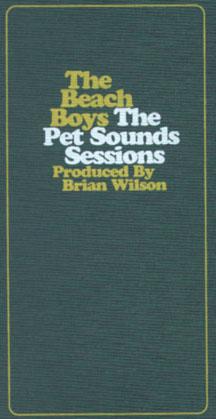
(Capitol 1997)
HIGHLY RECOMMENDED
This eagerly anticipated boxed set -- four discs, one in a mini-LP sleeve, handsomely packaged with two extensive booklets, which have some insightful notes but get a bit repetitive with their hallowed, hushed treatment of the project -- marked the first time a single rock album merited an entire, fairly extensive multi-disc collection devoted to its creation, similar to the exhaustive collections often afforded to landmark jazz recordings and performances. The title The Pet Sounds Sessions is slightly misleading because this isn't really four discs of process and refinement. Rather, it's an engaging, casual but always listener-friendly deconstruction of the Beach Boys' (and Brian Wilson's) most accomplished album that tackles multiple aspects of its elaborate, fascinating genesis.
The Beach Boys' standard recording methods in the mid-'60s were unusual for a rock band, at least one with as much creative control as they exercised, and bore more of a resemblance to the tactics behind Motown and Philles singles of the day. For a while after Brian Wilson became the band's producer, primary writer and musical leader, the records were for the most part conventionally crafted with actual Beach Boys playing most of the parts; Brian got early practice managing large rooms full of musicians on his outside productions for other artists, but even after he stopped going on the road with the band and threw himself into studio work full-time, the records were primarily oriented around the band itself up through Today! in 1965, with a few scattered exceptions. (Songs like "Our Car Club" and the unissued "I Do" that mostly consist of session musicians are in such a state because they were originally meant to be sung by other artists.)
Things changed after that; essentially, on portions of Today! and Summer Days and nearly all of Pet Sounds and Smile, Brian Wilson wrote and arranged the songs and then modeled their production on Phil Spector's Wall of Sound method, with the Beach Boys recording their vocal parts only after the tracks were otherwise complete and recording none of the instrumentation (except occasionally Carl Wilson on guitar). His own explanation many years later was that a greater number of musicians could create new and different sounds; a guitar and a piano together might sound unique, particularly if it became three guitars and three pianos, or even more via overdubs. Moreover, with the ambition wrought within Brian by various personal pressures and his own infatuation with Spector and the Beatles, the use of the merry band of studio musicians later known as the Wrecking Crew allowed him to work almost nonstop on new Beach Boys music without the rest of the actual Beach Boys needing to be in town. This later gave rise to the myth that the Beach Boys play on few of their actual records, but the methodology only really holds for the few albums noted. Pet Sounds is the extreme case; with the exception of "That's Not Me," all the songs are primarily played by session musicians. (Even Smile would have slightly more Beach Boys involvement musically.)
The story of Pet Sounds itself isn't really a Beach Boys story anyway; it's about Brian's own path to expressing his hopes and fears about relationships and his own alienation from his peers, helped along into verbal and musical clarity by lyricist Tony Asher. Asher and Wilson didn't just talk about lyrics during their time together; they would spend time discussing their past, future and families, and the women in their lives, and growing older. Brian was only 23 when he made Pet Sounds, an astonishing feat to rival or topple Orson Welles' creation of Citizen Kane at 26, but you can sense for the first time real, scary adult concerns taking over his writing. Part of this was surely by design -- the album functions very specifically as a song cycle of broken, breaking or fragile relationships, and of feeling alone among other people -- but it's also reflective of a more basic intention, to record an album unbroken in its mood and quality. Summer Days had been a masterpiece, the Beach Boys' first, but it was eclectic and varied and restless, whereas Pet Sounds sticks to its focused melancholy through and through.
Like all of Brian's "wall of sound" recordings and even some of the material he made with just the Beach Boys, Pet Sounds was recorded -- and is definitively heard -- in mono, where its sounds blend into a remarkably poetic collision of symphonic yearning, baroque despair and Beautiful Music-style lushness that would years later be known as chamber pop. As remarkable as Phil Spector's records were, Wilson's work of the period, and Pet Sounds in particular, marked the first time the Wrecking Crew wall had been used in so personal and idiosyncratic a fashion. Beginning with the song "Guess I'm Dumb" that he produced for Glen Campbell in 1965, Brian not only used the recording studio as an instrument, he used it as a personal catharsis. As good as other elaborately produced, intricate singles of the '60s were, none of them felt so emotionally alive as a song like "Wouldn't It Be Nice" did. Years later, these songs can still cause a jolt and a tear. This effect was achieved with great care and specificity by Brian, who worked out every note in every part and understood how they would all mesh on the final record.
By conventional wisdom, it would seem pointless to try to duplicate this experience in stereo, where the separation of elements inevitably creates an entirely different musical effect, but after years of requests for Pet Sounds in stereo (it showed up on vinyl in so-called "duophonic" form, a hideous rechannelling process favored by Capitol when Brian and other producers didn't turn in stereo mixes), Mark Linett went back to the master tapes and created an approximation, which opens this boxed set. The result is jarring in some ways but it does sparkle, and at the time it was reported that it was mostly intended for scholarly study. (It's since shown up on standard reissues of the album on CD and streaming sites, and it's hard not to have mixed feelings about that.) Some elements are missing -- here, the biggest exclusion is Mike's vocal on the bridge of "Wouldn't It Be Nice," a problem later corrected on subsequent releases, while the double-tracked vocal on "You Still Believe in Me" and Brian's initial vocal on the tag of "God Only Knows" remain absent -- and the effect is sufficiently different that the two experiences can't be looked upon as remotely interchangeable. But for someone who's loved this album for much of their life, the stereo mix is a revelation and a delight to hear... and fortunately, the fourth disc presents the original mono version in its entirety.
The remainder of the first two discs comes closest to justifying the box's title. The majority of the power that lies in this boxed set comes from witnessing Brian Wilson completely impassioned, dedicated and confident as he directs his musicians to duplicate the songs as they already exist in his head. You might be skeptical of any statement you've heard that Brian was a genius of both pop song form and pop recording; if Pet Sounds itself doesn't lay these doubts to rest for you, hearing Brian's meticulous work on it in real time should do the trick. It is honestly riveting. We get tracking sessions for all of the album's songs except for "Don't Talk (Put Your Head on My Shoulder)," plus a stunning demo and almost overwhelmingly sad string overdub for that song as well as the piano "intro" session for "You Still Believe in Me." The session tracks themselves range from just a minute or two to over nine ("God Only Knows") and they merely scratch the surface of the material that's been bootlegged, which really tracks the evolution of these songs bit by little bit, but we must remember that space is limited on this set which is meant for a more general audience, and unlike session bootlegs this package never gets repetitive or dull in the interest of archival listening. After each sample of the session tape we get the complete backing track for each song (including "Don't Talk"), so with a bit of programming you can create a complete instrumental Pet Sounds. We also get sessions and a master for the unreleased "Trombone Dixie" (likely discarded for its similarity to "The Little Girl I Once Knew" -- the omission of which from consideration here is a bit of a disappointment) and an early version of "Good Vibrations." Finally, for the two instrumentals that made the final album we get basic track versions excluding subsequent overdubs.
The third disc opens with what may be the highlight of the box -- credited on the sleeve as "Stack-o-Vocals," it separates the vocal tracks from the eleven non-instrumental songs on Pet Sounds so that we can hear them upfront and without any disturbance. You think you know these songs, and then you hear them like this; the Beach Boys' singing and harmonies have been analyzed and discussed more than any other aspect of their interplay as a band, but hearing this it seems fully justified. Hearing Carl's angelic lead on "God Only Knows" unaccompanied seems to drive home that something indescribably special was happening during the recording of this record; talking of Brian being so young when he made this album, consider for a moment that Carl wasn't even twenty yet when he sang this song! The vocal-only mix of the album is so impressive and moving it could justify release all on its own, easily as much so as the semi-revisionist stereo version. The only disappointment is that, given that the release as a whole is credited to the Beach Boys and not Brian, it sort of bristles that we don't get to hear the band working on their vocal tracks like we do with the Wrecking Crew, only the finished product, probably because most of the banter and discussion wasn't saved. But this section of the box justifies its entire existence.
Lastly, there is a conglomeration of alternate takes, only a few of which will be of great interest to non-hardcores. A few regular alternate vocal takes are nice to hear, and the snippet of a discarded harmony background on "Don't Talk" (released before as "Unreleased Backgrounds") is sonically stunning. A variation on "God Only Knows" with a saxophone solo in the break is less painful than it sounds, though as with most of these experiments it's a good thing the direction was changed. There is of course "Hang on to Your Ego," the clumsy original lyric of "I Know There's an Answer," and "Caroline, No" at its original slower speed with a brief diversion on the recording of the barking dogs afterward. It's fun to hear Brian try the lead on "God Only Knows" and "Sloop John B," excruciating to hear Mike try to make his way through "I'm Waiting for the Day" (little wonder he was given few leads on this record), and generally this Anthology-like journey through the record won't cry out to be heard more than once, unlike the remainder of the package.
So in essence, this isn't really a chance to hear Beach Boys recording sessions, or many recording sessions at all; it's much more just a way to hear Pet Sounds in several different, interesting ways, but because Pet Sounds is such an evergreen, sophisticated record with so much to offer, all of these oddities, works-in-progress, incremental changes and radical breakdowns of elements have a wide-ranging appeal to a much bigger audience than would typically be interested in a release like this. Pet Sounds is staggering in stereo, in mono, with the vocals removed, with the instruments removed, and to a lesser extent in the varying forms presented on the third disc. You can't break it. That may be more a testament to the original album than to this box, but the music given to us here is endlessly revealing and resonant and anyone who loves Pet Sounds will be richer for the chance to hear it.
The Beach Boys: Good Vibrations - Thirty Years of the Beach Boys (1961-88)

(Capitol 1993)
HIGHLY RECOMMENDED
The CD era with its high-capacity discs brought forth a new way for labels to rake in some cash while recycling older catalog material; by and large, boxed sets are a pet peeve for many because, apart from things like Miles Davis session boxes and "complete recordings" packages, they seem to cater to a nonexistent audience -- the person hardcore enough to want to spend a good deal of money (in the pre-streaming era, at least) on three or more discs of material, but casual enough that they still need the introductory package of career-spanning selections in lieu of the actual relevant albums and such. There's a reason the trend took off mostly under Christmas trees. There were exceptions, however, and with a complicated discography with lots of hit-and-miss albums but also a more gargantuan number of hits and classics than could fit on a reasonably sized compilation, the Beach Boys are the ideal band for the (now largely dead) format if anyone is. And unlike the many greatest hits packages put together for the Beach Boys over the years, the 1993 set Good Vibrations is well-balanced enough to provide a sampling of every significant period in the band's lengthy career; it's ideal for listeners who like the band already and want all of the best-known songs but are looking to branch out a bit as well. Now that you can listen to it on Spotify and the like (the beautiful physical version, which I really think is worth owning, is out of print but fairly affordable), its utility is even greater.
Even if one has almost everything, this set remains valuable, first of all because of its excellent gathering of unreleased material (they even dug up a decent outtake from MIU Album); it's almost as persuasive an introduction to Beach Boys bootlegs as it is to their catalog. But on top of that, to date Good Vibrations is the only compilation of any kind that can seriously claim to having "all" the hits; with the exception of the execrable "Beach Boys Medley" and the Fat Boys guest shot "Wipe Out," every song the band placed on the top forty in America is here. (International hits like "Lady Lynda" and "Tears in the Morning" are absent, alas.) Even more importantly, all of the Beach Boys' classic singles through 1967 are presented in mono -- and they sound magnificent -- which means that the first two discs here are genuinely the best place to take the journey of tracking Brian Wilson's evolution as an artist, from bashing out "Surfin' U.S.A." alone on a piano to crafting hit after hit after hit on the first disc to orchestrating the increasingly elaborate arrangements and 45rpm sonic miracles on the 1965-66 material on the second, peaking with Pet Sounds, "Good Vibrations" and Smile -- a half hour of the raw materials from which is finally given official release here, in what (apart from an indulgent, meandering set of "Heroes and Villains" - "Do You Like Worms" outtakes) remains the most enjoyable compilation of the very flawed material from those sessions.
One piece of that story tracking Brian at his impossibly youthful peak finally finds its definitive home here. "The Little Girl I Once Knew" can be heard as setting the stage for Pet Sounds with its sparkling instrumentation, elaborate vocal arrangement and genuine strangeness; the seconds of silence before each chorus add immeasurable drama to what's already an intense, exciting record. The song stalled at a fairly low placement on the charts and gives the first indication that Brian was pulling ahead of what had been almost a built-in audience for his creative work. Capturing the Beach Boys at the threshold of their most brilliant moments on record, it sounds despite its simple boy-girl lyric like a conscious attempt to capture how it feels to be steeled and focused on the unknown future ahead. Though the flow is interrupted by the inevitable "Barbara Ann," and an abridgement of Pet Sounds is bound to satisfy no one, this story has never been told in a more convincing, linear way than on these discs.
The band's eclecticism is surprising even on the earliest material; on disc one they swing effortlessly from the beautiful fragment "Little Surfer Girl" to jazz standards "Their Hearts Were Full of Spring" and "Things We Did Last Summer," all among classics like "409" and "Surfin' U.S.A." Later, they contribute a winning, funny take on "Ruby Baby" before flying into the depths of the Smile vault. The highlights are original complete takes of "Wind Chimes" and "Wonderful" that burst with warmth, romance, and clarity, and a startling solo piano version of "Surf's Up." The beauty of "Wind Chimes" -- "Now and then, a tear rolls off my cheek" -- and "Wonderful," with their playfully mysterious lyrics and sensual melodies, is undeniable, and they're among the most assured and gloriously perfect pop recordings you are likely to hear. Such elegance became rare in the increasingly elaborate Smile sessions, which eventually collapsed at the eleventh hour; the album was never finished or released, and the conventional wisdom has long been that the evolution of the Beach Boys ended at that point.
But we don't really hear the Beach Boys imploding. We just hear them moving in another direction across the third and part of the fourth discs of this set. It's true that Smiley Smile is radically different from the orchestrated "teenage symphony to God" that Smile was meant to be, but Brian's own impulse that a more pared-down (but not necessarily "simpler") take on some of these songs would be more fitting for the Beach Boys was undoubtedly correct. It's interesting to note that what was left pointedly behind was either fragmentary or almost painfully verbose, and Van Dyke Parks' pretentious lyrics on "Cabin Essence" and "Surf's Up," however much I love both of them musically, never sounded like they completely scanned to me, especially coming out of the Beach Boys' mouths; obviously this is a minority view among big fans of Brian and the group. Though it generated some incredibly inventive music, Smile still feels like a directionless failure to me, which again seems to have been a primary reason it was dropped. That's part of the lie -- Smile was left in the void because Brian and the band weren't happy with it and they started doing something else (something even stranger, initially) instead. The other part is that the Beach Boys remained an interesting, vital, even wonderful band for many years following that debacle.
I bring this up because a crucial part of the Smile mystique is the notion that the band stagnated after it was abandoned. That's why the third disc of Good Vibrations is the real gift; from the swooning beauty of "Can't Wait Too Long" to the erotic charge of Dennis' "San Miguel," it investigates the period in the Beach Boys' history most ripe for discovery, from the underrated Smiley Smile to the hardened resignation of Surf's Up through undeservedly forgotten singles, album tracks, and some astonishing unreleased material -- two new discoveries from Brian Wilson, "Games Two Can Play" and "I Just Got My Pay," are particularly potent in establishing his darkening mindset and increased focus on humor, always a big part of the Beach Boys' appeal but frequently ignored when compilers and biographers go to work, and impossible to ignore by the time of Mt. Vernon and Fairway (here presented without its narration), Love You and the unreleased health food store jingle "H.E.L.P. Is on the Way." The typically uncollected single "Break Away," a flop in the waning days of the Capitol contract but an incredibly engaging, beautiful record (cowritten by Murry Wilson!), seems to describe a mental breakdown and thus feels of a piece with the buried pain in a lot of Brian's often absurdist work from this period. All the while, the Beach Boys and especially Carl and Dennis step into the blank spaces left by Brian as they become a more democratic unit and prove their mettle, first as appealingly eccentric architects of ethereal, idiosyncratic pop in the studio and then as a properly functioning rock band with traces of weed-stoked soul. With every single or double-disc collection of the Brother Records years to date having been a failure, this disc of the box is an ideal summation of a complex period, and frankly one of the best and most truly representative hours of Beach Boys music in existence.
Disc four, on the other hand, is uneven because the final two decades of the band's career are uneven; it begins beautifully with the Blondie Chaplin/Ricky Fataar-era material, omitting any evidence of the brilliant live band they'd become by that point, before descending into "Rock and Roll Music" and a few of the salvageable tracks from the abortive 15 Big Ones. Nonetheless, the six cuts that follow are a highlight of the entire box. High enough praise cannot be lent for the two heretofore unheard cuts from the unreleased, Brian-produced semi-big band record Adult Child. "It's Over Now" and "Still I Dream of It" are two of the saddest, most beautiful songs he has ever written, unfiltered and bruising. Four spot-on selections from the last great Brian Wilson album Love You follow, but then the box becomes a document of demise. "Come Go with Me" is the only track included from MIU Album; "Baby Blue" and "Good Timin'" are hard to seriously dispute, but "Goin' On" and "Getcha Back" are featured strictly by necessity, with the '80s albums otherwise (and, for the most part, deservedly) ignored. The end of the disc does a semi-nice job of skirting the band's failings in their declining years ("Kokomo" is buried at the end and there's nothing from Summer in Paradise), but it could have done better, for instance by emphasizing Carl's work on the last few records, the only material that really redeemed the band after Light Album.
Rounding out the set is a disc consisting entirely of unreleased material that comes off mostly like an unfocused bootleg. It has a nice demo of "In My Room" and some fascinating instrumental tracks and session material, and its survey of the "God Only Knows" tracking session in particular probably gave rise specifically to the Pet Sounds Sessions box a few years later. Otherwise it wastes time with unnecessary radio spots, "separated" mixes (with vocals on the left and instruments on the right) of a few hits, and some scattershot live material. This supposed draw for fanatics is probably the box's weak spot, but it is, after all, a "bonus disc."
There are other big flaws to Good Vibrations; the liner notes aren't great, some aspects of the design are dated, and you can carp endlessly about the exclusion of certain songs. I personally miss "All I Wanna Do" from Sunflower and truly can't comprehend the skirting past Summer Days -- "Girl Don't Tell Me," "Let Him Run Wild" (apparently left off at Brian's insistence, as he disliked his vocal) and "You're So Good to Me" are arguably the three best songs in the catalog not to make an appearance, and it feels especially strange since they are all on the twenty-track Endless Summer, moreover that the tepid if enthusiastic cover of "Then He Kissed Me" stands in their place. All this is excusable, of course.
If I can briefly get personal here, the day this box came in the mail was a watershed moment for me. I'd rediscovered the Beach Boys in late 1997 and gradually became more and more fascinated, first with Smile and then with the catalog as a whole, until by the time I turned 17 I was full-on obsessed, but it was a few months before I could afford to get my own copy of this set, especially with the reissued twofers I wanted to hear around the same time. When it showed up at the post office and I opened it and saw that shiny booklet, I understood for the first time the sheer excitement described by so many upon finding With the Beatles or whatnot under the Christmas tree in 1963. The excitement didn't dissipate when I played the discs; the handclap instrumental break in "Catch a Wave," so huge-sounding in the mono mix I'd never previously heard, set me to an almost fevered joy. I remember sitting on our back porch listening to the third disc and coming to know new sides to this band I so loved (I had heard most, possibly all, of the albums as a child thanks to my brother, but it had often been well over a decade since I'd listened to them) and feeling like I was in the eye of a hurricane, that all chaos in my life couldn't affect my relationship with this band and this music. I like to think an immaculately judged, generous collection like this can still have such an effect on others, and now you don't have to lay down $70 to hear it. If you've heard Endless Summer and Pet Sounds, head here next.
***
[Expanded from a review first posted in 2003.]
The Beach Boys capsules: boxed sets
With the possible exception of the Who, the Beach Boys are cursed with a catalog that's been compiled, cut, sampled, mangled, chopped and screwed into more packages than any other band in the rock annals. The resulting packages vary wildly from consumer-friendly to desperate barrel-scraping to just plain weird. We covered most of these with any kind of lasting significance on our compilations page, but of course the CD era brought the new threat of elaborate multi-disc collections. The first two and still the best of these, Good Vibrations and The Pet Sounds Sessions, are covered in detail in long reviews in separate posts, as is the historically vital but plodding listening experience The Smile Sessions. What's left is here, and despite the quantity of material therein it's really not much different than the cruel, frustrating world of BB greatest-hits discs.
 The Beach Boys: The Capitol Years (Capitol 1961-69/1980/1999)
This is one of those mail order-only collections (via Reader's Digest!) gathering an enormous amount of material, initially put out as a set of six LPs or cassettes in the early '80s and eventually making its way onto CD in Australia. True to its title, it encompasses only material recorded from 1961 to 1969, so to its credit it doesn't pad out the narrative with dross from the Brother years. And it's quite exhaustive, containing every one of the Beach Boys' Capitol singles except "The Man with All the Toys," all but a handful of the b-sides, and most of the major album tracks. Collectors often like this set in its various incarnations because the sound quality is generally good, although it contains a number of weird mixes (duophonic versions of some of the mid-'60s material, for instance). Only thing is that if you're going down the road of wanting this much material, why not just go the extra mile and get the albums? You'll play them a lot more.
 The Beach Boys: The Platinum Collection (Capitol 1961-88/2005)
A glorified hits collection that functions as a European expansion of Sounds of Summer blows it up into an arbitrary three discs. Among other things it adds that collection's most egregious MIA cut, "The Little Girl I Once Knew," but omits some of the material from the regular CD (which is bewildering, frankly) and is still missing a few charting singles, though it does add the two most oft-elusive semi-hits, the Fat Boys collaboration "Wipe Out" and the turgid "Beach Boys Medley." One step forward, two steps back. An actual complete hits collection is apparently an impossibility. This is obviously geared toward Europe with the presence of most of the band's big non-U.S. hits, like "Lady Lynda," "Then I Kissed Her" and "Tears in the Morning" (ugh, no accounting for that continent's taste), so it's a more well-rounded grouping in that sense. It also has a couple of oddities: the single edit of the "Here Comes the Night" disco mix, never on an LP before, and the answer to a question no one asked: what it sounds like when the Beach Boys back up Status Quo. Concentrates on stereo mixes, making it all doubly useless.
 The Beach Boys: The Original U.S. Singles Collection (Capitol 1962-65/2008)
Speaking broadly, as much as I already tend to dislike CD boxed sets that don't serve a specific purpose in general, I'm particularly bothered by curiosity items like this that are basically fancied-up, inauthentic ways to sell the same old music all over again. This box of sixteen CDs gathers up the A and B-sides of the Beach Boys first fourteen Capitol 45s and adds a smattering of bonus cuts (mostly stereo versions of the original tracks) here and there, nearly all of them previously released. The project was evidently an outgrowth of a special CD5 of "Good Vibrations" put out for that song's anniversary in 2006, gathering the master as well as most then-commercially available alternate takes and mixes in one package. In both economics and as a use of raw materials, however, this unwieldy item seems strikingly wasteful, typically running barely ten minutes per disc. There were similar problems with the old Beatles EP and singles sets, which had at least a bit more purpose given the difficulty in the early '90s of hearing their music in mono (also, the Beatles' singles box used 3" CDs so I guess you could argue it was slightly more environmentally friendly?). I collect 45s and I love them, and my vinyl Beach Boys singles mean a lot to me, but the CD equivalent wipes away their historical novelty (and, often, their punchy, irresistible sound), especially because nearly all of this music is available in better, more sensible packaging elsewhere. As a practical matter, it's hard to picture anyone going to the trouble of yanking out one of these CDs when he or she wants to hear "Surfin' Safari" or whatnot. In the streaming era, this set makes a little more sense because it offers the only complete gathering of the Beach Boys' Capitol singles ("Surfin'"/"Luau," of course, is absent) including the b-sides, or would if the set hadn't sold poorly, stopping the plan to move onward in the discography dead in its tracks. Now that you can pull this up via Spotify, you might enjoy a few of the bonuses included: the enjoyable live version of "409," a few new stereo mixes, the only digital representation of the elusive Four by the Beach Boys (not a big accomplishment since all four of its selections are from the same LP), and a phony bonus single with "All Dressed Up for School" and "I'm So Young." This is all pretty tepid, to be quite honest, and despite its claims to authenticity doesn't seem to hold much more integrity than Made in U.S.A. and suchlike.
 The Beach Boys: Made in California (1960-2012/2013) [c]
Going on a decade and a half after the promised exhaustive set of Beach Boys rarities was nixed along with the promise of deluxe versions of the individual albums, the rich pool of unreleased material continues to trickle out to the public bit by little bit like so many garbage stereo mixes. The most annoying manifestation thus far comes aboard in the second career-spanning mammoth boxed set of Beach Boys material. There continues to be a wealth of untapped material of considerably more interest than a lot of the newly issued oddities included on these six discs, especially from the '70s; start with "Carry Me Home," "It's a New Day," "Hard Time," "My Solution," "Stevie," and well, there's plenty more. This does see the release of a few holy grail items like the outstanding, rare Dennis single "Sound of Free," the long-gestating "Sherry She Needs Me" (which is OK) and the Dennis song "(Wouldn't It Be Nice To) Live Again," which is lovely but hardly as stunning as advertised. The broader problems here come from the actual duties this box is meant to fulfill. I've only heard it via Spotify so cannot speak to the quality of its packaging, though it certainly looked clunky to me when I briefly held it, but a major reason it can't stand as the definitive introduction to the Beach Boys the way Good Vibrations did is the failure to use the canonical mono mixes for the many early classics. All the charting hits are theoretically here, as are very nearly all of the singles, period, but they are presented not only in stereo mixes where originally applicable but with newly created, badly phased and synced-up, "flown in" new stereo versions in the case of the songs from Today!, Summer Days, Wild Honey, etc. (or in the case of "Break Away," an entirely different revisionist mix); and even when this isn't too much of an offense, the remastering is wonky and overly harsh. The music sounds terrible, a far cry from the intense joys of the earlier box; to boot, it dismisses so many great and unique selections from that set, something the restoration of "Kiss Me Baby," "Lonely Sea" and "Let Him Run Wild" can't fully justify. But hey, there's the alternate mix of "Brian's Back" we were all clamoring for! All that said, it's worth extracting a few things from this via streaming or downloading, some of it bootlegged but not all. The 1963 version of "Back Home" is terrific, and in far better quality than on the unauthorized releases; two new Dennis ballads, "Barnyard Blues" and "My Love Lives On," eclipse "Live Again" to these ears; lovely stripped down Lei'd in Hawaii rehearsals of "California Girls" and "Help You Rhonda" (yes, that's you, not me) almost overwhelm with their laid-back charm; a couple of BBC recordings show off the band young, raw and tight; an extension of "Meant for You" that more than doubles its length is... interesting, to say the least. The genuine surprises come toward the end. Vocals-only mixes of "Slip On Through" and "This Whole World" are startling, invigorating in their sophistication; the intricacies of these songs are impossible to fully appreciate on Sunflower. The 1996 reunion track "Soul Searchin'," a castoff from the Andy Paley sessions, would have been the best Brian-penned Beach Boys song since Love You had it been released. Actually, it still is their best work since "It's Gettin' Late"; hearing Carl sing his last Beach Boys track, and gorgeously, is almost too much, and Brian and the band prove how strong they can be when commercial interests aren't their prime mover. It's exceptional just by virtue of not being embarrassingly backward-looking like almost everything else they did from 1980 onward. But ultimately, what redeems Made in California ever so slightly is the second half of the penultimate disc, an overview of the Beach Boys' stage career that deserves its own release. On top of "Little Bird" live and a set of Smile oddities trotted out on tour in the '90s, we get twenty minutes of vintage glory from the band's short-lived moment as a masterful live band in the early '70s. It does not disappoint. "It's About Time" and "I Can Hear Music" soar. "Only with You" brings a hush over a crowd that's never before heard it, and offers brotherly transcendence when Carl and Dennis switch off the vocal at the end. The crown jewels, though, are Dennis singing a countrified, hard-edged "Help Me Rhonda" and Blondie Chaplin tearing the roof off "Wild Honey" (which he can still do all these years later), possibly the single most searing live cut in the canon. It doesn't really help my opinion of the box that this live material is so good, as it really just points up how much we need a more organized vault-clearing program of some sort that doesn't require another trot through the endlessly reissued hits, which aren't even presented well: this time there's a lot of foolishness throwing in bits of sessions before songs properly start, and some sentimental "audio montage" claptrap of the sort that marred Hawthorne, CA. This wholly botched release is indispensable for the fragments of brilliance it contains, which only makes the whole state of affairs for this catalog all the more maddening.
The Beach Boys: The Capitol Years (Capitol 1961-69/1980/1999)This is one of those mail order-only collections (via Reader's Digest!) gathering an enormous amount of material, initially put out as a set of six LPs or cassettes in the early '80s and eventually making its way onto CD in Australia. True to its title, it encompasses only material recorded from 1961 to 1969, so to its credit it doesn't pad out the narrative with dross from the Brother years. And it's quite exhaustive, containing every one of the Beach Boys' Capitol singles except "The Man with All the Toys," all but a handful of the b-sides, and most of the major album tracks. Collectors often like this set in its various incarnations because the sound quality is generally good, although it contains a number of weird mixes (duophonic versions of some of the mid-'60s material, for instance). Only thing is that if you're going down the road of wanting this much material, why not just go the extra mile and get the albums? You'll play them a lot more.
The Beach Boys: The Platinum Collection (Capitol 1961-88/2005)A glorified hits collection that functions as a European expansion of Sounds of Summer blows it up into an arbitrary three discs. Among other things it adds that collection's most egregious MIA cut, "The Little Girl I Once Knew," but omits some of the material from the regular CD (which is bewildering, frankly) and is still missing a few charting singles, though it does add the two most oft-elusive semi-hits, the Fat Boys collaboration "Wipe Out" and the turgid "Beach Boys Medley." One step forward, two steps back. An actual complete hits collection is apparently an impossibility. This is obviously geared toward Europe with the presence of most of the band's big non-U.S. hits, like "Lady Lynda," "Then I Kissed Her" and "Tears in the Morning" (ugh, no accounting for that continent's taste), so it's a more well-rounded grouping in that sense. It also has a couple of oddities: the single edit of the "Here Comes the Night" disco mix, never on an LP before, and the answer to a question no one asked: what it sounds like when the Beach Boys back up Status Quo. Concentrates on stereo mixes, making it all doubly useless.
The Beach Boys: The Original U.S. Singles Collection (Capitol 1962-65/2008)Speaking broadly, as much as I already tend to dislike CD boxed sets that don't serve a specific purpose in general, I'm particularly bothered by curiosity items like this that are basically fancied-up, inauthentic ways to sell the same old music all over again. This box of sixteen CDs gathers up the A and B-sides of the Beach Boys first fourteen Capitol 45s and adds a smattering of bonus cuts (mostly stereo versions of the original tracks) here and there, nearly all of them previously released. The project was evidently an outgrowth of a special CD5 of "Good Vibrations" put out for that song's anniversary in 2006, gathering the master as well as most then-commercially available alternate takes and mixes in one package. In both economics and as a use of raw materials, however, this unwieldy item seems strikingly wasteful, typically running barely ten minutes per disc. There were similar problems with the old Beatles EP and singles sets, which had at least a bit more purpose given the difficulty in the early '90s of hearing their music in mono (also, the Beatles' singles box used 3" CDs so I guess you could argue it was slightly more environmentally friendly?). I collect 45s and I love them, and my vinyl Beach Boys singles mean a lot to me, but the CD equivalent wipes away their historical novelty (and, often, their punchy, irresistible sound), especially because nearly all of this music is available in better, more sensible packaging elsewhere. As a practical matter, it's hard to picture anyone going to the trouble of yanking out one of these CDs when he or she wants to hear "Surfin' Safari" or whatnot. In the streaming era, this set makes a little more sense because it offers the only complete gathering of the Beach Boys' Capitol singles ("Surfin'"/"Luau," of course, is absent) including the b-sides, or would if the set hadn't sold poorly, stopping the plan to move onward in the discography dead in its tracks. Now that you can pull this up via Spotify, you might enjoy a few of the bonuses included: the enjoyable live version of "409," a few new stereo mixes, the only digital representation of the elusive Four by the Beach Boys (not a big accomplishment since all four of its selections are from the same LP), and a phony bonus single with "All Dressed Up for School" and "I'm So Young." This is all pretty tepid, to be quite honest, and despite its claims to authenticity doesn't seem to hold much more integrity than Made in U.S.A. and suchlike.
The Beach Boys: Made in California (1960-2012/2013) [c]Going on a decade and a half after the promised exhaustive set of Beach Boys rarities was nixed along with the promise of deluxe versions of the individual albums, the rich pool of unreleased material continues to trickle out to the public bit by little bit like so many garbage stereo mixes. The most annoying manifestation thus far comes aboard in the second career-spanning mammoth boxed set of Beach Boys material. There continues to be a wealth of untapped material of considerably more interest than a lot of the newly issued oddities included on these six discs, especially from the '70s; start with "Carry Me Home," "It's a New Day," "Hard Time," "My Solution," "Stevie," and well, there's plenty more. This does see the release of a few holy grail items like the outstanding, rare Dennis single "Sound of Free," the long-gestating "Sherry She Needs Me" (which is OK) and the Dennis song "(Wouldn't It Be Nice To) Live Again," which is lovely but hardly as stunning as advertised. The broader problems here come from the actual duties this box is meant to fulfill. I've only heard it via Spotify so cannot speak to the quality of its packaging, though it certainly looked clunky to me when I briefly held it, but a major reason it can't stand as the definitive introduction to the Beach Boys the way Good Vibrations did is the failure to use the canonical mono mixes for the many early classics. All the charting hits are theoretically here, as are very nearly all of the singles, period, but they are presented not only in stereo mixes where originally applicable but with newly created, badly phased and synced-up, "flown in" new stereo versions in the case of the songs from Today!, Summer Days, Wild Honey, etc. (or in the case of "Break Away," an entirely different revisionist mix); and even when this isn't too much of an offense, the remastering is wonky and overly harsh. The music sounds terrible, a far cry from the intense joys of the earlier box; to boot, it dismisses so many great and unique selections from that set, something the restoration of "Kiss Me Baby," "Lonely Sea" and "Let Him Run Wild" can't fully justify. But hey, there's the alternate mix of "Brian's Back" we were all clamoring for! All that said, it's worth extracting a few things from this via streaming or downloading, some of it bootlegged but not all. The 1963 version of "Back Home" is terrific, and in far better quality than on the unauthorized releases; two new Dennis ballads, "Barnyard Blues" and "My Love Lives On," eclipse "Live Again" to these ears; lovely stripped down Lei'd in Hawaii rehearsals of "California Girls" and "Help You Rhonda" (yes, that's you, not me) almost overwhelm with their laid-back charm; a couple of BBC recordings show off the band young, raw and tight; an extension of "Meant for You" that more than doubles its length is... interesting, to say the least. The genuine surprises come toward the end. Vocals-only mixes of "Slip On Through" and "This Whole World" are startling, invigorating in their sophistication; the intricacies of these songs are impossible to fully appreciate on Sunflower. The 1996 reunion track "Soul Searchin'," a castoff from the Andy Paley sessions, would have been the best Brian-penned Beach Boys song since Love You had it been released. Actually, it still is their best work since "It's Gettin' Late"; hearing Carl sing his last Beach Boys track, and gorgeously, is almost too much, and Brian and the band prove how strong they can be when commercial interests aren't their prime mover. It's exceptional just by virtue of not being embarrassingly backward-looking like almost everything else they did from 1980 onward. But ultimately, what redeems Made in California ever so slightly is the second half of the penultimate disc, an overview of the Beach Boys' stage career that deserves its own release. On top of "Little Bird" live and a set of Smile oddities trotted out on tour in the '90s, we get twenty minutes of vintage glory from the band's short-lived moment as a masterful live band in the early '70s. It does not disappoint. "It's About Time" and "I Can Hear Music" soar. "Only with You" brings a hush over a crowd that's never before heard it, and offers brotherly transcendence when Carl and Dennis switch off the vocal at the end. The crown jewels, though, are Dennis singing a countrified, hard-edged "Help Me Rhonda" and Blondie Chaplin tearing the roof off "Wild Honey" (which he can still do all these years later), possibly the single most searing live cut in the canon. It doesn't really help my opinion of the box that this live material is so good, as it really just points up how much we need a more organized vault-clearing program of some sort that doesn't require another trot through the endlessly reissued hits, which aren't even presented well: this time there's a lot of foolishness throwing in bits of sessions before songs properly start, and some sentimental "audio montage" claptrap of the sort that marred Hawthorne, CA. This wholly botched release is indispensable for the fragments of brilliance it contains, which only makes the whole state of affairs for this catalog all the more maddening.
The Beach Boys: Sounds of Summer (1962-88)
(Capitol 2003)
HIGHLY RECOMMENDED
It's not quite comparable to Rubber Soul giving rise to Pet Sounds which begat Sgt. Pepper, but the complex give and take between the Beatles and the Beach Boys continued long after either band ceased to be a functioning unit. While the Beach Boys were supposedly solidifying and standardizing their complex back catalog during a rollout of reissues and compilations from 1999 to 2001, the Beatles singles compilation 1 hit and was an unexpected monster success, scoring new multiplatinum numbers on a body of work the label had already been mining for decades. Similar all-encompassing greatest hits sets for Elvis Presley and the Rolling Stones (and, well, Wings) followed, heavily advertised on TV and designed to renew the respective artists' places on the charts and in the public consciousness. Particularly because they shared the Beatles' label, it was inevitable that Capitol would cash in on their other huge property, the Beach Boys' classic hits, in a similar manner.
The resulting disc, Sounds of Summer, stands out from earlier greatest hits packages in the sense that it not only purports to be a definitive collection of the band's work for casual fans but it actually accomplishes that. Thirty songs isn't really nearly enough space to more than scratch the surface of the Beach Boys' most beloved material, but by confining the focus to songs that charted in the top forty, the collection can make some claim to being "complete" after a fashion. As a listening experience it's nearly as successful as Endless Summer but thanks to the qualifying criterion for entry it's generous and impressive on rational and specific rather than hazy, emotional grounds.
The feeling of being overwhelmed by the sheer number of gigantic hits here, one after another after another, is welcome even for seasoned fans, tempered only by the insistence on including the handful of semi-successful post-Capitol singles; while it's nice that they ("Getcha Back," "Come Go with Me" and "Rock and Roll Music") are carefully stacked together in the middle of the sequence with the exception of "Good Timin'" and "Kokomo" (an inevitable inclusion given the product's aims), it's impossibly jarring to exit "Wouldn't It Be Nice" only to be sent directly into the dregs of "Getcha Back" with its icky, leering lyric and horribly canned sound. The two covers are worse. "Good Timin'" is the best track from the '70s or '80s to find a place here, which is depressing since it barely qualifies as a half-decent song. Except for "Kokomo," it seems the more logical choice would have been to ignore the later material altogether, or to give it a compilation of its own. (Sounds of Summer did get a sequel several years later, The Warmth of the Sun, but it went in a different direction.)
The rest of this material is infallible, and with complicated rights issues no longer separating the discography, it's terrific to hear the Pet Sounds, Wild Honey and 20/20 material joined up with the Endless Summer masterpieces. Eight out of twenty cuts from that finest of Beach Boys compilations are missing from this one, two of which ("Wendy" and "Girls on the Beach") not many people are likely to miss; although the absence of "Let Him Run Wild," "The Warmth of the Sun," "You're So Good to Me" and "Catch a Wave" hurts the vibe a bit, Sounds of Summer has one big leg up on its older sibling: the presence of "Good Vibrations," a psychedelic anthem that with its entrance into the pantheon now seems to define summer as perfectly as "California Girls." Even with the top-40 restriction and the darker, more soulful late '60s material, the Beach Boys' canon attains some dreamlike cohesion as a summertime concept record.
The notion behind 1, Forty Licks and the Elvis 30 #1 Hits sets was to rebuild the idea of consensus music: you put these on at a party and everyone's hearing music they love, and a whole lot of it. Indeed, it's difficult to imagine anyone raising many objections to most of these songs, the likes of "Surfer Girl" being among the few rock songs with a universal appeal, a simplicity and elegance to which most of us can relate. Even if this is only a one-sided sampling of a multifaceted artist, it's a more complete than usual (for a single disc) overview of Brian Wilson and the Beach Boys' progression throughout the '60s and the more optimistic, muscular and populist side of their legacy.
Unfortunately, perhaps because of length, the album isn't quite a complete set of Beach Boys top 40 hits. It's missing two; the absence of "It's OK," a pretty good and very catchy Mike Love-led tune from 1976, is forgivable except insofar as it's a much better sampling of Brian Wilson's brief resurgence as a producer of hit records than the draggy "Rock and Roll Music." But given that there are more than three minutes to spare on the disc, the omission of "The Little Girl I Once Knew" -- a top twenty hit in 1965 and a non-LP Beach Boys hit that's never been compiled in a space really worthy of it outside of the boxed set and the Today!/Summer Days twofer -- is hard to look past. One can also bristle at the use of stereo mixes, many of them newly created for this collection. Some are OK, some ("Shut Down") aren't, but the larger point is that the stereo versions of these songs are not the "hits," and moreover that the historical revisionism is rendered harsher by the fact that mixes created long after the fact frequently have major imperfections and differences when compared with the canonical versions, like the missing Brian vocal line before the tag of "God Only Knows." It's fine for these new stereo mixes to exist out in the world, but not fine -- and contrary to the original intentions behind their existence, frankly -- for them to "replace" the original mono mixes as the "real" songs in the public mind.
But apparently we've lost that battle, and the sound quality is at least very good. Needless to say, a new fan isn't likely to care about that, nor is a non-obsessive one. If you're looking for the best way to get a fairly complete set of the Beach Boys songs most people remember most fondly, the hits you know with a welcome hint of something more, this is probably the one to load up. Without the potentially off-putting size of 50 Big Ones or the various limitations of the other hits sets, it will satisfy most listeners and might even be the only Beach Boys record a lot of people will ever need to play (or own, if they still do that). But I hope the hints of deeper things on "In My Room" and "Sloop John B," or the unexpected depth and enthusiasm of "Wild Honey," "Darlin'" and "I Can Hear Music" are enough to start people off on a deeper exploration. Even if it doesn't, singles were and always will be the real essence of the Beach Boys, and these records will live longer than any of us.
Subscribe to:
Posts (Atom)