Friday, September 6, 2019

The Best Albums of the 2010s

A storm rages outside my house as I scramble to finish this post that was, in many ways, the entire original impetus for this weblog's existence. As end-of-decade chatter was heating up in 2009 I, being a guy who loves lists for some reason, especially when I'm the one who makes them, threw my hat in the ring; but while I had no trouble thinking up fifty records that had staked their claim on some part of my life during that hectic period, something didn't sit well with me about how erratic it was. Not that I had especially great taste as a teenager in the '90s, but broadly speaking, there was something comfortably systematic and careful about the way I found and digested music -- it had been an actual hobby, no matter how much I relied on radio, MTV and various periodicals to find anything. In the 2000s, not only was there a substantial period of roughly four years in which I listened to almost no new music whatsoever (when successive fixations on synthpop and '50s rock & roll took me over), surveying my end-of-the-line favorites it was clear that what modern albums or songs I did love I had come about haphazardly, almost incidentally, and while there's nothing actually wrong with this, it did make me wonder how much wonderful stuff I had inadvertently skirted by being quite perpetually Out of the Loop.

So in 2010 during a conversation about the sort of annoying Boomers who stand in denial that any possible cultural experiences had manifested after 1975, I made a pact with a musician friend that he and I were going to spend the 2010s very much In the Loop. The process of achieving those ends has changed over time, much as the way that we broadly as a culture consume and enjoy music has radically changed in that time, and I think my methodology in the first year or so was maybe a little too simplistic (I kept up with every artist that made a record I loved sometime in the present century, and kept up with three particular publications' most highly praised items, regardless of whether I knew anything about them going in); but in essence, while there are gaps here and there and while no one in their right mind is ever going to look upon my eccentric tastes as some barometer of what constitutes Canon, one thing I don't think anyone can deny is that I listened to a whole fucking lot of new music in the 2010s, and that I heard or at least sampled virtually every release that was considered by the popular press to be of significant importance. Math, like brevity, isn't my strong suit, but I can tell you factually that I graded and wrote up (though not necessarily at considerable length) 1,274 albums or EPs in this decade. I don't think I had opinions on half that many albums in all of human history before I started this project, and that does not consider the estimated 3,000 additional LPs I sampled or heard in full and chose not to review, a habit I picked up when I briefly had a professional gig as a music critic from 2011 to 2013 and have kept ever since.

I won't tell you that I didn't enjoy this process, but I also won't tell you that I adored every second of it. The 2010s brought me from my mid-twenties to my mid-thirties, thirty being an age at which I have discovered the impulse to not really a give a shit really takes over, and a major hurdle I had to overcome was my obsessive need to live up to my original goals for this place by weighing in on just about everything (except metal, on which I give myself a pass because I sincerely do not understand and almost literally can't hear the genre, the same way that cilantro tastes like soap to some people), including stuff that I frankly didn't give a shit about. That's half the story; the other half, as I've mentioned here, is that painstaking discovery work is just that: work, and after a certain point it does become exhausting. I do not regret trolling aggregates and publications intensely throughout these ten years to try and make sure I wasn't missing anything -- I can think of at least three artists now major to me, and many others I like very much, that I probably would not have found by any other means -- but I do not plan on continuing to quite the same extent in the future. For one thing I've made my point: if you put your hand under the running water long enough, you find an embarrassment of riches. For another I want very much to shift back toward longform writing in this space, specifically longform writing about music -- new, yes, but particularly old -- that I'm really deeply passionate about, before I completely run out of time to do that.

Talking of running out of time: I did just that, when preparing this list. List-making is something of a sacred process to me in the sense that I get a huge kick out of it and am relatively precise in my methods. Basically I saw the lead-up to this moment as an excuse to listen to every record in my collection, to revise my old decade lists before moving onward to the new one, and at that point I planned to re-listen to everything new this decade that I rated highly in this blog. I got up to the '60s before I realized I wouldn't finish this at any conceivably appropriate moment if I continued with that, and upon skipping straightaway to the '10s, I got through 2010 before I realized that even the smaller task of taking on all of my highly recommended records from '10 to '18 would in no way be possible if I wanted this posted by the end of the summer, which was always my intention.

So in some ways, this is an abbreviated and maybe inaccurate list in a couple of ways. Firstly, in order to make it I essentially only listened to the albums that I had privately given "A" or "A+" grades on my annual lists, leaving off the many very special LPs that fell slightly below that arbitrary index, some of which undoubtedly warrant reappraisal -- I'm sure of that, since systematically reexamining these 71 albums, many of which I've come to know very well since they were released, I already found my original opinions changing in small and large ways. Secondly, it leaves off anything that was released in 2019, when I'm confident that Big Thief and Ibibio Sound Machine and Andrew Bird at the very least have a strong claim to placement in it. The second issue will be rectified in an abbreviated but revised version of the list to be posted at the end of 2019; my primary reasoning is that I don't want to disturb my usual end-of-year list by trying to settle it now, and I also don't want to distract from it (a huge risk since the eyes of the world are obviously on my blog at all times) by posting both projects simultaneously. The first problem will have to wait a bit longer; I'm going to crawl my way through the '70s and '80s etc. first and then rummage back through the lower reaches of my annual 2010s lists again; it will not be for a couple of years, but I will offer a "final for now" version of the whole shebang eventually.

Throughout these years, when I thought about what this mammoth post would look like I had high hopes of constructing some thought-provoking narrative about the story that the music of these times tells us, and how it's mutated; you don't have to be more than half-awake to notice that the critical perspective from which we were generally working in 2010 has been almost completely replaced by now with an altogether different kind of social branding -- arguably forecast a bit by the poptimism movement -- and one that carries considerable benefit as well as detriment to music criticism as a craft. I figured I would talk about the "zeitgeist" without using that dreadful word; that I would tell you what I thought about the long-advertised Death of Indie Rock (chiefly, the people at the shows I go to seem not to have gotten the memo), and maybe I would tell you that I thought Heems -- whose upending of the culture itself was as radical and violently world-expanding as what Johnny Rotten did in the '70s, or would have been if he'd been able to get the public's attention -- was the defining artist of the decade, or that the Dreiser-scale narrative of the Palm Beach band Surfer Blood, who began the decade poised to ride an unironic wave of Guitar Hero splendor on into a ripe old age that seemed so far away, really told the entire story about our interactions with art and pop in the teens: derailed by their status as a band led by an abuser and populated and enjoyed by implied abuse-defenders, stymied in their hyped major label bid, beset by health problems and eventually death, and more than anything, haunted by the reality that the music they played -- music that seems as innately appealing at first blush as Alex Chilton's or Paul Westerberg's, if not nearly as crafty or intelligent -- was becoming a niche.

Except what the fuck am I talking about? Chilton's music in its heyday, Box Tops notwithstanding, was less than niche -- absolutely no one listened to it except rock critics, even if that was strictly because of Stax's failing distribution at the time. The Replacements were a hype of sorts, on the other hand; they signed to Sire, they upheld a specific image, they deliberately trolled on MTV, but they too were never more than a specialized secret-menu item in the 1980s, reduced on some occasions to a lifestyle symbol, albeit in time when big labels happily subsidized such ventures. What I was actually doing by dreaming about forming all this shit into an intricately woven web of interrelationships and inter-interrogations was the very thing I'm so sick of, reducing the depth of disparate things by constructing a narrative out of them. You're not stupid. You don't need me to tell you that we used to torrent and now we stream, and that oddly a growing number of us started buying vinyl again just to put a tactile piece of this stuff back in our hands; it seems only right to mention it, but in practice I can't fathom anything more banal. What specifically makes it banal is that it doesn't actually do any work to explore why we care about any of this shit. I've said a few words about the top fifty records below and not about what they tell us about this or that, or certainly not what the response to them tells us about the world they occupy. You can figure that dross out yourself; I'm interested in what is moving and overwhelming and feels timeless, and what I think lends it those qualities. This was a wonderful time for music, an abundant time. I want to engage with the work, to celebrate what is simply good and not confine myself to the context around it, or else this blog would have a very different format and subject.

In other words I am not a culture writer, and this is probably the last time I will be talking about "modern music" in any broad sense, though I will be reviewing the remaining important releases of 2019 and will keep checking out new releases and reviewing those that strike me as significantly worthwhile... but broadly, I think everyone reading this "gets the idea" and I run the risk now of just repeating myself. So this venue from now on will be more a further digging into the past century of recorded art than it will be any attempt to stay on top of What's Happening -- monthly posts will continue but will be a good deal shorter -- as at this point I think I have a good feel of what that's like, and while it was occasionally rewarding, I don't think overall it's the direction I want to go in with this unpaid hobby, not least because the way the internet at large seems to want to engage with art as a set of ultra-woke instructions for day-to-day conscious living is abhorrent and deeply uninteresting to me, and I say that as someone who generally hates when people say shit like that.

The only overarching point I'll make about the list below is that I surprised myself at times by how I worked the rankings out; there are records down in the twenties and thirties on which I think nearly every song is brilliant, and a few in the upper reaches that don't contain any songs I would genuinely call Great. It was more a matter of consistency, but on some level I also corrected myself a bit on the temptation to second-guess certain albums that I love because they just became an inextricable part of my life. I wanted to get away as much as possible from the idea of listing records that made the most of their form or their cultural context or whatever else, even though many of these I think do accomplish that, and switch back to just sharing the things that I loved the most and made me happiest (or saddest, this being music) in these strange years. So at the end of the day, I ended up essentially doing the same thing I did in 2009... except now with a much larger pool to choose from, and I am glad to have had the chance. Summarizing all this is going to require me to return to that storm outside ("I hope my grass stays green"), barreling around with wind gusts in a house where I live with my wife, with whom so many of the moments now immortalized for me by this music have been shared. The associations that have formed in these ten years, since a time when this relationship was new and when so much was different, are what really informs the essence of this whole project. Maybe that limits the audience of these observations strictly to myself; but what was that thing I said earlier about not giving a shit?

***

71 records were reevaluated for this project; I'm writing quickly about fifty of them, but I ranked them all and so 70 of them are here because that's a nice round number. But let's have a moment of silence for clipping.'s CLPPNG, which would have been #71 but came in just under the wire even though I love it to bits and especially enjoyed dicking around with the 100 locked grooves on side 4 of the LP. And also, a moment of fully engaged cheering for Kelela's Hallucinogen, an EP I have re-graded to A+ that would be near the top of this list if I chose to let us have EPs on it. (A "top ten EPs" list would be rounded out by both of Courtney Barnett's that are collected on A Sea of Split Peas, Sheer Mag's II and III, the Tallest Man on Earth's Sometimes the Blues Is Just a Passing Bird, Swet Shop Boys' Sufi La, Ezra Furman's Songs by Others, Holy Fuck's Bird Brains and PAPA's A Good Woman Is Hard to ind.)

VERY HONORABLE MENTIONS
Why "very"? Because this hurts the heart! These are all verified to fully deserve higher placement, if only I'd heard fewer records I loved in the 2010s.

70. Ciara (Epic 2013)
69. Yo La Tengo: Fade (Matador 2013)
68. The Wave Pictures: Look Inside Your Heart (Moshi Moshi 2018)
67. Danny Brown: Old (Fool's Gold 2013)
66. Nadine Shah: Holiday Destination (1965 Records 2017)
65. PJ Harvey: Let England Shake (Island 2011)
64. Ezra Furman: Day of the Dog (Bar/None 2013)
63. The Julie Ruin: Run Fast (Dischord 2013)
62. Whitney: Light Upon the Lake (Secretly Canadian 2016)
61. Rhye: Woman (Republic 2013)
60. Courtney Barnett: Tell Me How You Really Feel (Mom + Pop 2018)
59. Surfer Blood: Astro Coast (Kanine 2010)
58. The Wave Pictures: A Season in Hull (s/r 2016)
57. Thao and the Get Down Stay Down: A Man Alive (Ribbon Music 2016)
56. Vince Staples: Big Fish Theory (Def Jam 2017)
55. Slowdive (Dead Oceans 2017)
54. Tirzah: Devotion (Domino 2018)
53. Yo La Tengo: There's a Riot Going On (Matador 2018)
52. The Mountain Goats: Goths (Merge 2017)
51. Robyn: Honey (Interscope 2018)

***

50. The National: Trouble Will Find Me (4AD 2013)
Bloated to an extent its predecessor wasn't even though it probably wasn't a lot shorter, this failed to register initially, but it is the music of drunken bleak parking lots and wet streets, and opens up an avenue to raw expression that they've been trying and only sporadically succeeding to rediscover ever since.

49. Hospitality: Trouble (Merge 2014)
You start ignoring guitar music, you start ignoring bands that write songs that could totally turn your whole outlook upside down, and albums like this that run such an unheralded gamut of feeling, joy and introspection, and with a hook to die for in nearly every cut.

48. Deerhunter: Halcyon Digest (4AD 2010)
It has come to my attention that I'm not, in the end, that huge an acolyte of Bradford Cox, but only a misguided fool would deny the roll he was on in the early part of this decade; this record is gorgeously constructed, capturing and transcending the indie-prog moment and concocting a mood as dimly lit and sophisticated as on an I.R.S.-era album by his fellow favorite-son Georgians. But no, Cox didn't write the best song.

47. Vampire Weekend: Contra (XL 2010)
I have been bored of talking about this band for nearly twelve years now and suspect I will remain so until the end of my days, but it's not even their fault, it's the totally decrepit manner of shallow interpretation that seems to be all many outlets have at their disposal. Did you know that they are #influenced by African music!? Well, did you also know that you can get paid to wring your hands about that for 5,000 words, all while knowing less about a whole continent of culture than Ezra Koenig does?? Except for the ones you're sick of, these are genuinely lovely, often gorgeous songs, even the ones you're sick of actually, and even the ones like "Giving Up the Gun" that seem at first glance to fulfill every stereotype about who they were then.

46. Pet Shop Boys: Electric (x2 2013)
By my estimation, no more than six years have ever flown by without a terrific Pet Shop Boys album, even though their track record has grown spottier on the whole since the mid-'90s; they gave us two extraordinary dance records at the middle of the decade. There's not even the faintest feeling of aged-out throwback to this return to the floor; even the blissed-out power pop romance "Thursday" with its cornball Example interlude means the world to me, perhaps because around 2013 I really was only able to see my lover on the weekends, and if there's any longtime PSB fan who isn't shaken to their bones by "Vocal" I don't think I want to speak to them.

45. Beach House: Bloom (Sub Pop 2012)
Beach House albums are practically interchangeable to me except Teen Dream, which I checked on and do in fact still mostly dislike; but either this or Depression Cherry is my go-to, music that fills the house and drones with beautiful imperfection.

44. Arcade Fire: The Suburbs (Merge 2010)
I really didn't expect this to find its way here; even at the time as a certified Fan I was a little skeptical of it and found it overlong, but when I was running through my A-minuses for 2010 (making this a good example of why this list may look different once I've had time to do a full reevaluation of everything) I found myself almost moved to tears by a good amount of what it contained about the growing disconnect of early-thirties adulthood, something I couldn't have really grasped when I first heard it -- and before I, hilariously, moved back to you guessed it. Plus, fuck it, the songs are really good.

43. The Tallest Man on Earth: The Wild Hunt (Dead Oceans 2010)
Seeing Kristian Matsson live with Amber (who introduced me to his music) just after this was released, on folding chairs at a run-down church for a campus event that was $5 for non-students, with no one but him on stage and nothing separating us from the alcohol on his breath and the erratic, singular way he kept time with himself was one of the most magic things that happened to me in these years... and I had a splitting migraine all the way through it, which reminds me: fuck Lemonade or whatever, the defining moment of the 2010s in this household was when my doctor prescribed Nadolol. Anyway, lovely album!!

42. tUnE-yArDs: Nikki Nack (4AD 2014)
I never remember how wonderful this is until I play it loud again. It would have been hard for any record to follow up on one that so deeply inspired me in the early years of the decade and I think it was natural to register some disappointment at the time. But even if just in light of where Merrill Garbus chose to take the project after this, I honestly long to return to this moment. Hearing it today, it sounds buoyant, plagued, and most of all, free.

41. David Bowie: The Next Day (Columbia 2013)
It is completely fucking unfair how good Bowie's last two albums are. There's no precedent, even; I've been listening to his pre-hiatus stuff and, while invariably charming, none of it has this energy or passion at its center. Hearing this and Blackstar for this cycle I have to confess, my head was genuinely spinning as I remembered how much excellent material was contained on both. Rockers his age don't just recharge like this. Even Prince couldn't have made a record that would sit this interchangeably with something from his golden period, ditto Dylan, etc. How in fuck did he do it?

40. Bassekou Kouyate & Ngoni Ba: Jama Ko (Out Here 2013)
Malian near-masterpiece is an impassioned, angry, vibrant response to repression that gets as close as any music does to actually defining the feeling of being alive, human and full of fire -- labeling this as rock & roll, and powerfully feminine rock & roll at that, isn't reductive, it's a testament to the universality of the music that enlivens and explains modern life.

39. Beyoncé (Columbia 2013)
I would eventually get as sick as everyone else of the tiresome shorthanding of Beyoncé as not just the one cultural signifier we mostly agree on but the only cultural signifier we're willing to prop up as untouchable, and damn you to hell if you don't worship her. But in one sense we're lucky, since this is a Zeitgeist-Approved artist whose work is actually for the most part very good... and in this case, brilliant, and weird too. You've almost certainly forgotten how weird this album is. Jay-Z's verse on "Drunk in Love" is as jarring as the Police song stuck in the middle of their most beloved album where Andy Summers rants incoherently about his mother and girlfriend, who are -- not irrelevantly -- the same person.

38. Yoko Ono: Take Me to the Land of Hell (Chimera 2013)
I try not to be That Guy about anything but I am deeply suspicious of anyone who hears any of Ono's recent work (or almost any of her albums, really, though I will allow that POB and Fly aren't for everyone) and honestly doesn't catch its winning genius. This sly, funny, philosophically blunt celebration may be the best-ever synthesis of her intimidating skill set. I don't think there is anyone else left alive who's been recording consistently good music as long as she has -- Dylan's hopeless by now, sorry -- and at this point, ignorant dismissals of her grate me so much that I'd almost rather hang out with a Beatles hater than a Yoko hater. But I'd prefer neither!

37. Janelle Monáe: The Electric Lady (Bad Boy 2013)
Very marginally the least of her three full-lengths, and of course a vivacious shot of absolute pleasure from beginning to end. There just isn't much to say -- it's such a visceral and purely good time that only a total square would try to explain it. The black and white vinyl looks like your electric meter spinning from the side.

36. Twin Shadow: Confess (4AD 2012)
George Lewis has turned out to be such an irksomely small-minded performer since this point that I'm tempted to pretend this isn't one of the albums I listened to most voraciously in the years after its release, one of the scattered records I genuinely couldn't get enough of and practically had memorized. Maybe it's coated with arrogance, but it also captures every bit of the night-driving Captain EO-with-relationship-problems vibe it aims for, and if you corner me about it I will admit to you that I don't know if I can name half a dozen songs I love more than "Run My Heart." Seeing his band play that and "Old Love/New Love" live totally redeemed a show filled with schlock from his subsequent major label debut.

35. Lady Lamb: After (Mom + Pop 2015)
The sort of record that sneaks up on you. Aly Spaltro has made a lucrative career of wild time signature changes, bizarro arrangements and undiluted guitar heroics, but her second proper album throttles because its songs are so phenomenally elegant, walking a line between intimacy and confidence, between the pure joys of sound and melody. Years after I first heard it, moments I never even thought about are still suddenly embedding themselves in my head, like currently the seductively operatic opening verse of "Ten." The cunnilingus-as-birth-control metaphor "Penny Licks," meanwhile, is one of the anthems of the decade for me -- and I admit disappointment when I found out she never plays it live.

34. Cut Copy: Zonoscope (Modular 2011)
Once again, if we were measuring in frequency of plays, this would be in the first or second spot on this list, though in this case it would be because of about half the songs; I actually think Cut Copy's virtually ignored subsequent albums are more consistent, but the peaks this one hits, especially out of the gate with two of the most glorious dance-pop constructions of my lifetime and later on with the ecstatic one-two punch of "Hanging on to Every Heartbeat" and "Corner of the Sky," are all but undeniable, and for me at least, they eclipse the perfectly lovely singles the band was first kicking the door in with around 2008.

33. Atlas Sound: Parallax (4AD 2011)
To my mind, Bradford Cox's magnum opus -- a shimmering procession of subtle, moody grooves and hooks and sounds full of hiding places and strange interludes but also a palpable, irresistible humanity. When you take it apart and examine it, it has almost no recognizable consistency of sound, yet all of it hangs together marvelously -- it's honestly one of the best-sequenced and designed, and most lovably morose, rock albums in recent memory.

32. The New Pornographers: Brill Bruisers (Matador 2014)
This was another case in which I remembered placing this very high on my year-end list and recalled certain songs that had stayed in constant rotation -- this is really one of my favorite modern-ish bands so I listen to their stuff on shuffle a lot -- but only upon cuing it up again did I remember what a cacophony of pleasure it is, and as each track blared out I found myself amazed to realize that I knew all the songs pretty much by heart and had somehow lost the awareness that they all were part of this same release, which now feels like a greatest-hits to me, a tower of joy, which is doubly impressive since I don't think they had made an exceptional record in a good while by this point.

31. Janelle Monáe: Dirty Computer (Bad Boy 2018)
I'm still pissed off at the forum posters I saw proclaiming that Monae, a rocker-approved Real Musician, had sold out by spending a whole album proclaiming and discussing her sexuality and its place in the universe -- as if a certain breed of fan can only handle self-exorcism when couched in sci-fi metaphor. Meanwhile, this didn't go over hugely with the sort of writers who seem to build their careers on memes, presumably because on top of being righteous, clever and sexy it's actually fun... and, perhaps more importantly, fun in an often specifically primal way.

30. Hot Chip: One Life Stand (astralwerks 2010)
Most of the key artists of the 2000s for me wasted little time in proving the old axiom that our faves really get one decade to shine bright and that's about it, and Hot Chip wasn't really an exception, but it's easy to forget that their best album actually did hail from 2010 and not earlier, and for me it's a classic: a perfectly sustained expression of dancefloor romance that almost overwhelms in its sincerity, and at times forgoes beat entirely to foreground its more complex reflections (the stunning "Alley Cats") but I especially dig when it balances both instincts (the stunning "Take It In").

29. Shabazz Palaces: Black Up (Sub Pop 2011)
Like Nikki Nack, a record that sounds mostly like an odd curio until you spin it at top volume, at which point it takes you to Neptune and back -- Ishmael Butler has continued to innovate and tease as a producer, but his achievements under this name all seem to follow up from this one, and its metallic, disorienting mood is all but impossible to explain or duplicate as an avenue for musical expression.

28. David Bowie: Blackstar (Columbia 2016)
If The Next Day was Bowie proving he could toss out gobs of material in his sixties that engaged every longing we'd ever had fulfilled by his era-defining work in the '70s, Blackstar reasserts his status as a creator of sustained, carefully considered albums: shorter than The Next Day but no less diverse or vast in ambition, it's sufficiently smart and focused that it nearly renders its author's identity beside the point. From anyone, it would be a feat; from someone at death's door, it's an act of love.

27. Anthony Joseph: Caribbean Roots (Heavenly Sweetness 2016)
Not sure I have thus far successfully convinced anyone to listen to this -- maybe put off by the rather bland-sounding title -- but let me use this opportunity to try again: listen to this. All Joseph's albums are good; a poet by trade, he has a splendid speak-singing style that finds infinitely engaging nuance and dimension in his own words, so skillfully you wouldn't mind listening to these songs a cappella if the music weren't so terrific. But this one has bite, despite its considerable emotional grace. If you've only got time for one track, go with "Neckbone," one of my favorite musical moments of the decade.

26. Kate Tempest: Let Them Eat Chaos (Fiction 2016)
Its luster is retroactively diminished by the contrivances Tempest uses to string its narrative together, which weren't necessary on her first album and were limited to arbitrary chapter titles in her novel, and I think one reason it stung on this round is that her new record is nothing but the strings. But when the music kicks in and Tempest takes on her litany of characters and lays into these stories and observations that seemed to lead directly into one of the most harrowing events of any of our lives, it's still impossibly powerful. We drove six hours to see her perform it live in 2017, blocks away from the White House.

25. Courtney Barnett: Sometimes I Sit and Think, and Sometimes I Just Sit (Mom + Pop 2015)
What makes Barnett heir to whatever throne of great rock & roll storytelling you feel like naming is not her lyrics or her phenomenally powerful, emotive guitar playing, both of which complement for sure, but rather her ability to leave exactly enough blank space in her words to make her delivery of them the entirety of the story, so that a straightforward-on-paper narrative like the earlier "Avant Gardener" or even a mundane one like "Depreston" is given a whole narrative thrust thanks to the obviousness of the pain, empathy, longing, anger or curiosity that she brings with her singing. She is the full package and I'm so glad she exists.

24. Ezra Furman: Perpetual Motion People (Bella Union 2015)
Best pure rock & roll album since, I dunno, probably one of Lou Reed's!? And like Reed, one of his idols, Furman harnesses the sonic language of early rock & roll to weave poetry, and does so not as an intellectual exercise but because rock & roll is what reached him, and he wants it to reach you. Across these songs, the purity of expression and honestly never falters, but they also are the words of a heavy reader and a wordsmith, someone who gives a shit about how he's going to tell you about his pain just as much as he cares about the very act of expressing said pain. This time I couldn't stop thinking about the two ballads, "Watch It Go By" and "Hour of Deepest Need," both worthy of Gram Parsons.

23. The Wave Pictures: Great Big Flamingo Burning Moon (Moshi Moshi 2015)
Maybe the biggest thank-you I owe to this blog is that my routine procedure of trawling through new release lists brought me to this album, and in turn to what has become probably my favorite guitar band running (ex-faves the Walkmen went on hiatus in 2012, and I don't know if Yo La Tengo fully qualifies as a guitar band anymore) and one with a marvelous wealth of material to discover. My introduction to them is very unlike the rest of their work, in that it boasts the frenetic production work and songwriting assistance of Billy Childish and thus has a cleaner, harder sound than their typically raw and unkempt material. But the constant is the warmth and humor in their work, the unapologetic sophistication, wit and poetic yearning of Dave Tattersall's lyrics, and the seemingly bottomless well of inspiration from which they draw; they're not just one of the best bands in the world, they're also one of the most dedicated and prolific. And I really can't say enough good things about them -- there's so much to hear in their work, so much to draw from it, and its generosity is staggering. And no one in the U.S. has heard of them and they never tour here. Hooray for idiosyncrasy!

22. Titus Andronicus: The Monitor (XL 2010)
It seems redundant to even explain why this is a brilliant album. It's also the only time that any of Patrick Stickles' cockamamie "concepts" has really worked, though I really think it's mostly incidental to the power of some of the rawest, most unapologetic punk songs I've ever heard, though in the manner of London Calling this is punk that sometimes leans hard on classicism of the sort that can spawn the heartbreaking Jenn Wasner guest shot "To Old Friends and New," and the remarkably bleak country anthem "Theme from Cheers." What renders this so hypnotic and cathartic is its absolute conviction, which could only come from either a damaged soul or one with deep empathy for the damaged. But I believe him when he yells to his dad in the middle of a rant about wanting to die that, at least in the moment, he's not making it up.

21. The National: High Violet (4AD 2010)
"Terrible Love" isn't much. But everything after that drives its hooks into you whether you want them there or not -- and these minor-chord anthems become the haunting rhythms of the everyday before long, until you find that you're never going to shake them again. It's a record that justifies clichés without leaning on any. Beautiful ugliness and all that. At times Matt Berninger's unredeemed-brooding lyrics can be annoyingly obtuse, but sometimes he hits on just enough telling detail and open-endedness to say a great deal: "Bloodbuzz, Ohio" and "Lemonworld" are the kinds of bad moods and difficult memories I can never resist poring over one more time.

20. Das Racist: Relax (Greedhead 2011)
For just a sec, forget that Kool A.D. turned out to be a dickhead or that Das Racist are to this day almost completely misconstrued as a novelty act thanks to their methodology for noteworthiness, a video that went viral before most of us knew what viral meant. Sometime when you have a chance, go to Youtube and track down every Das Racist interview you can find from 2009-11, when their mixtapes were coming out and they were trying to get in everyone's faces with their anarchic message. This wasn't some artificially constructed intersection of music and comedy, this was an incredibly well-articulated and passionate rebuke to the cultural tide that I don't think most who would've cared took the time to fully understand, and now all these years later they'll probably never bother. But there was much to learn from the tepid response to this magnificent record on which Heems, Kool and Dap roll up their sleeves and go for broke on all their impulses from avant garde to protest music to heartfelt R&B to indie rock irony, shitposting before Soundcloud, waking up before woke, and generally creating a kind of fabric-tearing menace evocative of the actual Marx Brothers, not the facile comedy teams that are always getting compared to the Marx Brothers by people who've never seen Duck Soup. When you get ambitious, you make enemies. And then you break up. And then no one ever knows what the hell to do with your legacy. They should probably buy it.

19. The Walkmen: Lisbon (Fat Possum 2010)
The most consistent American rock band of the 2000s never had time to prove that they weren't going to hold it together for another decade because they unceremoniously split (not permanently, they once claimed) after one more album past this, the underrated Heaven. You and Me from 2008 had been a rallying cry for sheer loveliness, the optimistic and romantic flipside to the National's equally expansive misery. Somehow Lisbon doubles down further on mood while producing at least seven or eight utopian ideals of guitar-based indie pop, rendered with a confidence, kindness and dimension that you feel could knock you down if they wielded it in a certain way. But from the open-armed opening notes of the Van Morrison-like "Juveniles" to the final yearning strains of "Lisbon," this record maintains delicacy and engagement as a life's mission, and there's simply no analysis that will mean more than simply indulging in its open spaces and glorious minimalism.

18. Danny Brown: Atrocity Exhibition (Warp 2016)
Might've been the rap album of the decade if he didn't get stoned before deciding how to end it. I'm reminded, anyway, of what Lester Bangs said about the Stones being dirty and the Doors being dread. Lots of music in the mid-to-late 2010s seemed to build itself on the idea of looking into the void (Yeezus, for instance), but this album -- this is the void, an existential nightmare that's perversely exploding with life, all the identity-crisis chaos of Remain in Light and all the perplexing bluster of Aphex Twin, but with Danny Brown yelling about threesomes over the top of it. I said I wasn't going to talk about how these albums defined the times, but...

17. Nicolas Jaar: Sirens (Other People 2016)
An immersive composition as much as a pop album, this would probably be compelling as a sample-based procession of collages and moods or even a straightforward follow-up to Jaar's incredible semi-ambient debut Space Is Only Noise, but the moments when it periodically bursts into traditional songcraft are so wildly invigorating that it lends the whole record an almost diabolical structure, whereby every little piece of its marginalia seems to fit almost magically, and when "The Governor" pops into place, everything else in Jaar's world and yours disappears... but only long enough for him to weave his next web.

16. Leonard Cohen: Old Ideas (Columbia 2012)
Before we lost Cohen in 2016, he was my favorite living artist and another of the catalysts for my trying to engage more fully with music news -- when I found out from a Barnes & Noble cashier that I'd missed him playing a show in Durham; as it panned out, I never did get to see him -- and when rumors were afoot of his first new record in nearly a decade (his second such lapse), I badgered my editor at Metro Times as well as Cohen's label to get a chance to review it professionally. And the humiliating thing is, I did so but completely got it wrong; I actually complained that I missed the angry Leonard Cohen of The Future and the wickedly reflective pervert of Dear Heather. Hearing the record today, it's already astonishing how much of it is comprised of what seem like instant entries into the Great American (well, Canadian) Songbook or some such hallowed canon. By the time Marianne Faithfull covered "Going Home" a few years later it sounded like she was visiting a standard; "Amen," "Show Me the Place," "Anyhow" and "Different Sides" at the very least enjoy the same quality of grace and out-of-time wisdom. The master still had so much to teach us, and even some of his most devoted students weren't truly ready.

15. Kate Tempest: Everybody Down (Big Dada 2014)
A blistering, vibrant, funny and heartfelt story of heists, jealousy, dead culture, dead cities and all but unnoticed opportunities for connection in a city teeming with life, later adapted by Tempest herself into an excellent novel (The Bricks That Built the Houses), but here functioning as the setup for the second-best LP-length hip hop narrative of the decade. And what makes it work is that each of the songs, full of keen observations and ferociously quick-witted delivery of them, operates completely on its own terms whether you go on to parse out the entirety of the story or not. The characters Tempest creates, and our muddled sympathies toward them, have a complexity that no lesser artist the world over could synthesize into music this appealing.

14. Fiona Apple: The Idler Wheel Is Wiser Than the Driver of the Screw and Whipping Cords Will Serve You More Than Ropes Will Ever Do (Epic 2012)
Our less than prolific poet laureate of neurotic music-hall conundrums was as fired-up as ever the one time she graced us with her presence in the 2010s; her fourth album seemed to build and build on itself, its carefully worked-out but audibly impulsive melodic fears and private confessionals finally attaining nirvana with the two closing love songs. I didn't know Apple's music very well until after this came out; hearing it again now, in the context of her entire catalog, it's simply breathtaking -- once again, each song had lyrics and hooks and melodies I didn't even realize I'd committed to memory, but she snapped her fingers and I was right there again.

13. Janelle Monáe: The ArchAndroid (Bad Boy 2010)
The loose construction of an Afrofuturist-revival album around the basic plotline of Fritz Lang's Metropolis serves only to prove that even two great artists like Lang and Monáe can't make Thea von Harbou's hackneyed novel and script any less silly... but both use it merely as a springboard, and for Monáe, it prompts a head-spinning but remarkably effortless-sounding journey through what seems to be the entire history of American popular music, from Mancini to Stevie Wonder to gentle folk-rock to P. Funk to lite-FM, and after dozens of listens, the surprises continue to surprise, and most fascinatingly, the emotions continue to wholly belie their conceptual context, which for Monáe is just a way of talking about the same out-of-sorts alienation that figures in all of her work, and she does herself proud in carving out a cultural space for herself, on her own terms, with endlessly thrilling results.

12. The Wave Pictures: City Forgiveness (Moshi Moshi 2013)
Part of me wants everything to be short. Singles over albums (2010s song list coming this fall!), short stories over novels, 80-minute movies over massive epics, etc., but there's a certain threshold that gets passed in which prolonged indulgence feels like the only correct thing, and the experience of sitting back while this ridiculously gifted Leicestershire trio works out twenty new ones from a seemingly endless supply of lyrics, hooks, tunes and riffs is so immersive that the scattered weaker songs, or the ones that just don't go much of anywhere, seem only to add to the experience, to the sense of journey. And when they pull it all together -- which is most of the time, but especially on "All My Friends," "Before This Day," "Better to Have Loved," "The Inattentive Reader," "Atlanta," "Golden Syrup" and "Like Smoke" -- they weave such magic from such modest context that it makes a teenage fan out of the listener: you hang on to every word of the songs, to every solo, and when you pause and let it wash over you passively, the experience is somehow equally profound. One of the best of all rock double albums.

11. Vampire Weekend: Modern Vampires of the City (XL 2013)
Here's a musical regret from these times: when I went to New York City for the first time in my life, this had come out and I hadn't heard it yet -- which surprises me now because I associate the record so strongly with that trip. This is one of only three albums released this decade that I immediately recognized as what I'd consider a classic, an album I knew very quickly that I would be listening to forever and that I would feel safe casually calling it Great. It isn't soured by Ezra Koenig's later banality either, even if I did play it too much for too long to be able to truly hear it anew again just yet. The songs are consistently stunning, but more than that, the moments are so charged-up and inspiring, like the building up of the chants on "Ya Hey" or the closing hook that Koenig later stole from himself on "Finger Back." It's a brief shining moment of absolute confidence that whatever remains of the band will never be able to recapture; age is an honor, it's still not the truth.

10. Love Is All: Two Thousand and Ten Injuries (Polyvinyl)
I didn't let myself grade this an A+ at the time; it just seemed too modest in scope and execution, as lively as it is. Truthfully, if I'd known how much I was going to obsess over it for the next ten years, I probably would have changed my mind, but now, it's here at this level because I can't imagine wanting more out of music than what this gives me. This is one of those bands that gets forgotten because they come from the same place we do: they're nice people who listen to rock & roll to give their demons a place to escape and now they're making fast and furious music to serve the same purpose for themselves and for others. But the thing is, they're also perfectionists -- this manifests in how much is clearly poured into every explosive guitar riff or saxophone break, and especially into the thoughtful ways that leader Josephine Olausson expresses herself: disappointments, private dreams, private rages, and numerous bits of comical bitterness. As explosive as the band's X-Ray Spex-derived sound is, its ragged edges and subtleties make it profound, and make it sing with life. I miss this band a lot.

9. Kanye West: My Beautiful Dark Twisted Fantasy (Def Jam 2010)
This album is really really good.

In all seriousness, the day this came out I had to drive like sixty miles with no heat on a really cold night and I loaded it onto my MP3 player and even now I feel cold when I hear it. The music West and his engineers constructed around these songs is some of the most evocative ever heard in pop music. Listen particularly to "All of the Lights" and "Hell of a Life."

8. SOPHIE: Oil of Every Pearl's Un-Insides (Future Classic 2018)
Something that I guess marks my taste is that I like music a lot of people tend to find "difficult" (annoying) in some ways, which I don't say for some kind of bragging rights or to be a cool goth teen but because I want to reassert here that stuff like SOPHIE and Yoko Ono and Crystal Castles or whatever else is truly and basically automatically pleasurable to me, and it doesn't register to me as especially off the wall. Fine, I acknowledge that SOPHIE's album and singles are outre -- apart from the moments when she specifically aligns with trad club or pop music -- but every second of wild sounds and weird panning is riveting to me, and exciting, like a transmission from a world in which music, at least dance music, conforms to a very different set of expectations. I'm not going to pretend this is the future or whatever, but I love the way it carves out the idea of imagining the future, and I deeply appreciate that I didn't hear anything remotely like it in these last ten years.

7. Kanye West: Yeezus (Def Jam 2013)
This record was inescapable the year after its release in a way that none of West's albums had been since the mid-2000s; for one thing, I played it incessantly in the summer of 2013, but I also heard it everywhere, and it was actually exciting that something so unorthodox seemed to briefly be gaining that degree of mainstream acceptance. Like his previous record, it was one of those rare moments when an artist meets advance hype with full self-justification. West's sheer audacity as a performer has probably increased since this point, but he has also become less and less inspired in his writing and conceptual work, so this is the lone impeccable moment we probably get with West the provocateur and West the immensely gifted rapper-producer. It's actually more abrasive and shocking and edgy than I recalled, a record that doubles down on eccentricity, a record that rewards attention, and probably the zenith of a man who was then one of the most fascinating artists in the country.

6. Joanna Newsom: Divers (Drag City 2015)
Quite frankly I wrestled with which of Newsom's masterpieces from this decade to put in which position -- the logical thing would've been to string them together right in a row, but something felt gauche about that. I unabashedly worship this individual, and I don't think there's an artist working today I trust more, nor one whose work I love more, and in a lot of ways I think this is her most perfect release because it discovers the intersection between her love of pure emotion and melody via folk tradition and her more ambitious conceptual impulses -- plus it gives the people who whined about her pre-surgery voice their own Milk Eyed Mender without three discs to scour for a way in, but more than anything it's crushingly moving because of what it tells us about love, loss, death, and the frayed, wounded sensibilities of someone who in our conception should by all rights be invincible. But none of us are.
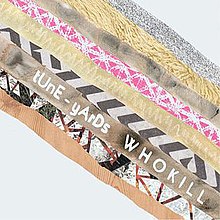
5. tUnE-yArDs: w h o k i l l (4AD 2011)
It just immediately sounded right, from the first moments of the first song; Merrill Garbus doubling down on her range and her abrasiveness simultaneously, conceiving and executing a series of exciting, provocative, rhythmically tricky and thematically thorny songs with steely resolve. The ten tracks seem to bounce off one another like game pieces, and while there are peaks that undoubtedly burst out of the frame -- "Doorstep" is an absolute soul-stirrer, "Powa" one of the most sensual songs in the annals of indie, to say nothing of the obvious "Gangsta" and "Bizness" -- each seems so desperate to impart its message that it shuts out the rest of the world in that moment, as though all that can matter is Garbus' pure exuberance and what she is saying to you. And on top of its element of protest and alarm-sounding, it's really a record about living in your own skin and refusing to question your creative muse, a skill Garbus knows better than anyone can be absolute hell to put into practice. When this came out I thought it was one of the most exciting, jolting things I'd ever heard; knowledge of the future -- hers and ours -- tempers that, but why shouldn't it, and why should that hurt it?

4. Saint Etienne: Words and Music by Saint Etienne (Heavenly)
This wasn't an A+ until recently, when it dawned on me that I can no longer imagine my life without it. A kind-hearted self-examination in which we are all meant to participate, this song cycle about learning, knowing, discovering, living inside music is the sort of thing I have a hard time imagining someone not loving... but even I didn't appreciate it to the extent I now think it deserved from the first. Today all of the longing that inhabits it, all the knowing glimpses backward and forward in Sarah Cracknell's miniature narratives, provide it with one of the most judicious, unmistakably sincere perspectives on youth from an adult perspective that I've ever witnessed in any medium, and the band is fully cognizant of the way that music like nothing else can create its own sort of time travel, or can stop time altogether. It's one thing for songs like "Tonight," "Over the Border" and "DJ" to talk about that feeling, though, and another for them to achieve it musically all on their own, which the entire record consistently does. I think the key to the whole operation may actually be "When I Was Seventeen," which is about the feeling of youthful invincibility, but never once accuses that feeling of being naive. Like the Beach Boys, longtime favorites of theirs, Saint Etienne look upon youth as a fact of life, not as a particular time or place. But they know they'll often stop and think about them.

3. Kendrick Lamar: good kid, m.A.A.d. city (Interscope 2012)
I have continued to admire Lamar's work but he hasn't done anything else that gripped me like this lyrically and sonically intricate narrative of misguided youth, which plays out with such immaculately cultivated empathy and complexity that the only problem with his "short film" declaration on the cover is that an actual short film probably couldn't handle this much plot without bogging down. As usual when concept albums work, which is rare, it's music rather than words that deliver the narrative -- and on revisiting the record, it was the apocalyptic, immersive production on tracks such as "The Art of Peer Pressure" and "Sing About Me, I'm Dying of Thirst" and the way that Lamar controls, mitigates and dispatches his various avenues of storytelling -- while never causing any song to drag or to lose its purpose as music, even when that music is deliberately expressing a naive or satirical idea as part of the story -- that brought this above and beyond every other hip hop album of the decade for me.

2. Joanna Newsom: Have One on Me (Drag City 2010)
My one regret ranking this sprawling triple-discer above Divers is that it seems a little too much like the Default Position, when I think Divers is both a truly great work of art and managed to feel underappreciated in the final analysis, whereas the sheer heft of Have One on Me could make its high placement feel almost predetermined. I'm too scared to go back and see what I wrote about this at the time, but what I can tell you now is that just about every one of these eighteen songs is now tied to a memory: some good, some bad, all rendered three-dimensional by the presence of Newsom's songs in my life; and what I may be most attached to -- which has also become increasingly true of her prior record, Ys -- is the manner in which the longer, more intricate cuts that take some time to fully know gradually and beautifully unfurl themselves, until eventually hearing each of them with full concentration becomes an event, something to witness and treasure. Like Divers, this record has intimate origins, in this case apparently the story of the last 24 hours of a dying relationship; and there is something beautifully masochistic about those 24 painful hours providing the soundtrack to ten full years. But what cannot be denied is that the record's utility and presence has not diminished one iota with the loss of youth, with the advance of time, with the change of mood. It sits, and it doesn't change, but we do... and then it does too.

1. D'Angelo and the Vanguard: Black Messiah (RCA 2014)
I genuinely didn't know what was going to be at the top of this list. I had several candidates, this among them, but when I actually listened again, there was basically no question. It isn't the only record here I think of as a masterpiece by a longshot, but it is the one that I think sits at the greatest cross section of kinds of appeal -- for pure aesthetic, for genre-bending, for brilliance in composition and production, for variance of mood, and for lyrical messaging. The dense layering of sounds coating it, the obscurity of D'Angelo's current vocal technique, the way the entire concoction so skillfully avoids easy streamlined interpretation... and of course, the outrageous riffs and shots of unhinged pleasure that populate its dark, textured grooves... it is the makeup of a record that I feel will prove timeless, and a missive from someone whose sense of quality control doesn't let him speak out loud unless he has something to tell us.

I have expressed disgust at the expectation that we must make lists like this, and write about music in general, strictly through the prism of how it's informed by the times in which we live. However, in the liner notes for this album -- which is the best funk LP, I think, in nearly forty years, and is also probably the best new album issued this century -- D'Angelo decries any temptation to ignore the record's political and racial text and subtext. I won't. There is no way to engage with new music, certainly not music this passionate and vital, while ignoring the larger world (forum moderators be damned). But what makes Black Messiah transcend the idea of a political work of art is the same thing that let There's a Riot Goin' On, which directly inspired it, do the same thing: like every other record among these top ten, it is a personal exorcism, a spiritual outcry, a release from the heart and soul that badly needed to happen. Years from now when the landscape is hopefully very different, it will take no great effort for us to understand the emotions at the core of it. We will change. But this record doesn't need to.

Thursday, August 22, 2019

Joanna Newsom: The Milk Eyed Mender (2004)


(Drag City)

HIGHLY RECOMMENDED

Those with cynicism can view it as a California story through and through -- Joanna Newsom came up as the privileged offspring of two hippie-ish doctors who forbade her from most modern media and got her classically trained on the harp. She was a Waldorf student and went to college for composition, joined a band, then dropped out and drifted and, moving to ever more elaborate harp-based folk songs, recorded a couple of crudely formed but ambitious EPs that circulated among friends and colleagues and got her a deal with the renegade indie Drag City, who released this debut album; and at barely 22, playing songs she'd been working up since she was a teenager, she managed to make a cultural splash not just in folk but in indie rock circles and generally managed to quickly become rendered as a sort of lifestyle brand by those who understood, and (just as loudly) by those who didn't. What a story, the "special" reasserting their special-ness.

Except that the record is also, thanks in part to the practice runs of those two private CDRs, an instance of everything coming together -- musically, vocally, melodically, lyrically -- in the hands of a master, and I will not apologize for calling her one nor will I ever regret doing so, whose assurance comes from not just seemingly limitless technical capacity but from a degree of maturity that isn't frequently heard in the lyrics and music of those many times her age at the time. Hers is not an intellectual, stuffy music that conjures up thoughts of purist classical ambition or (at this stage) prog rock; it is, to its core, human and fragile -- but also uncommonly poetic and emotional in ways that mine a certain richness that calls back to the basest, purest feelings of ancient songform.

Much of it is her voice: an unorthodox, colorful instrument undaunted by its technical limitations, and rendering all of her early music incredibly distinctive by default. (While more nuanced and in some ways equally powerful today, her voice has inevitably taken on a different, less strident character since she undertook surgery on her vocal chords in the late 2000s.) Like few other singers of her generation, her evocative work as a vocalist fully reframes the ideas she carefully establishes in her writing; to even call it an acquired taste is missing the point, because like that of Bjork or Yoko Ono or even Bob Dylan, that voice is part and parcel with her storytelling craft. A version of "Bridges and Balloons" sung by an ordinary, conventional singer wouldn't make any sense, because it earns so much of its power and grace from every crack and harsh modulation Newsom generates, mutating and enhancing her own stunning melody. But her generosity and singularity as a performer asserts itself elsewhere as well, as it would continue to in the remainder of her output to come; it is the brand of music, like Dylan's or Leonard Cohen's, that invites the most personal kind of relationship, and is specifically fashioned both to immensely delight its creator and also to leave enough space for highly specialized deliverance for those who are invited into it.

The almost mystical experience conjured up by "Bridges and Balloons," one of many songs on this and future records to lean upon ocean imagery, is as heavily controlled by Newsom's very consciously naive, unchecked vocal articulation of Bridge to Terabithia childhood fantasies as it is by the artful, eloquent words themselves; years later it could still be her most instantly stirring and kind recording, suffused with longing and a strange variety of wisdom to emanate from such a young person whose early life had, by all outside indicators, been relatively sheltered. Yet that very conflict seems in some way to tell the full story: it is by looking outside herself into an unfamiliar, unexplored, nonexistent worlds that Newsom acquires the experience to tell her strange, cockeyed folktale, and to hopefully include us as "the ones to've seen."

For me personally, "Bridges and Balloons" was the introduction, back in the days when I discovered music by leaving browser windows from internet radio stations open, and like everyone else I immediately found the voice jarring and compelling -- it seemed that it could be as likely that of an old woman or a young child, and part of me was disinterested in finding out which. More importantly, I was haunted by its unashamed sense of genuine beauty -- which I believe is also one reason that The Milk Eyed Mender captured the indie rock zeitgeist at the time, the fatigue from years of disaffected sneering, by then co-opted by corporate labels with the Killers and such, giving way to material like this and Funeral that opened so-called "college music" up to heretofore uncool moments of unfettered expression. It also called to mind things like Elizabeth Cotten and the Carter Family, without really resembling either (although you should notice that a version of the British-to-Appalachian folk song "Three Little Babes" is buried on this album) except in the sense that they found such beauty in an ethereal, earthy conglomeration of music and pure sound that could feel almost accidental -- as though the songs could only come from the earth itself, devised by no human, but also couldn't possibly be part of the world we knew. And it additionally seemed infinitely, wistfully, desperately sad. The song is under four minutes, but there were whole universes contained in it: glee and passion, but regret and seclusion too.

The Milk Eyed Mender thus became for me (though not until sometime in 2008) what Noah Baumbach once remembered David Bowie's Let's Dance being for him: a record on which I initially couldn't even hear a single one of the songs apart from the first one. I just couldn't get over "Bridges and Balloons," as occasionally happens to me (most recently with "Cattails" by Big Thief, and concurrently at the time with "For the Widows in Paradise, for the Fatherless in Ypsilanti" by Sufjan Stevens), and played it until I all but knew it backwards, before I could even think to move along to the other songs; and no matter, they were there when I needed them.

Once I did make it to the second track, there was more reason yet for me to celebrate. "Sprout and the Bean" immediately reasserts how far this album pushes beyond folk music into its own stunning, cordoned-off variety of soul, even as the pure pleasure and beauty of Newsom's harp playing, the curling elegance of the rhythm and melody she has written for it, and the infinite nuance in her voice represent perfectly well the outgrowth of deep inspiration from minimalism. Like many of these songs, it exclusively features herself and her harp, though her voice is tracked several times on the chorus; and like just as many, it is purely mesmerizing. The songwriting is flawless, not just the perplexing but deeply troubling lyric -- full of white coats, miserable sleeps and danger -- that's interpreted by many fans as a predecessor to her more direct abortion song "Baby Birch," but in the rhythmic trickery of the voice's intricate meddling with the harp, with the drama extracted from each careful word, with the heart-stopping downward chord shift on the second verse an unlikely peak. And, of course, Newsom's unapologetic strain that betrays so much.

It felt at the time like this was some of the most private music I'd ever heard, like a true self-exorcism, right up to the sense that some of Newsom's words had a meaning that only she could possibly reach or comprehend; there were other singer-songwriters who had done this, but nearly all with more conventional instrumentation or less elaborate compositions that lent themselves almost naturally to a more communal experience. Yet simultaneously, Newsom's records have never had the distancing effect that "fussy" music from Scott Miller to King Crimson to Dirty Projectors tends toward, more like the curious, off-kilter intensity of Brian Wilson's work, which would create new populist excitements by finding new detours, would even create new instruments by merely combining them. What's more remarkable yet is how, like Wilson, Newsom seems to render all consciousness of her ingenuity moot, in favor of the sheer joy and warmth of listening -- that's what makes this pop music rather than an intellectual exercise.

And in turn, nearly all of these songs feel now like classics, and frankly did not take long to feel like that in the first place, certainly not to me; I suppose the joys of "Cassiopeia" (like many of these songs, a reprise from one of her CDR demos) are comparatively limited, and its lyric feels atypically slight, and that the best moment of the ghostly "Swansea" is its rabbit-friendly paean to chewing. Otherwise, from the quizzical and tough "Book of Right On," exploring the contradiction of dominance and submissiveness and thereby overflowing with sensuality, to the echo chambered, impeccably judged melody "Calm, Crab, Cockle, Cowrie" that contains yet another of Newsom's subtlest, most gorgeous hooks at the end of the verse, these are songs that operate at a level of shocking confidence and virtuosity, as shown by the pride and ease with which they now stand beside much of the material of three subsequent and increasingly grand albums by the now-veteran.

Confronted with something like the lullaby "Sadie," with total unfiltered vulnerability in its vocal and lyric about death and loss, you wonder -- much as you do when hearing the melody swell up on "Cosmia" from Ys -- how a person writes stuff this beautiful. How does a person write "And all that we built, and all that we breathed / And all that we spilt, or pulled up like weeds / Is piled up in back, and it burns irrevocably / And we spoke up in turns till the silence crept over me"? That is Cries and Whispers in a couple of seconds; that is bereavement, all too well-defined. Even at her earthiest and most playful, on the vaudevillian "Inflammatory Writ," she sings about a lack of creative confidence and you just have to laugh. It all has such a supernatural, overwhelming force. The arrangements, the recording, all that is simple -- would never be so simple again, in fact, starting with the recruitment of Van Dyke Parks for strings in 2006 -- and maybe that's the essence, that the closeness we feel to these songs is born of their intimacy, which also renders it impossible to deny their nearly magical, hypnotic pull.

"This Side of the Blue" is my favorite Joanna Newsom song; it saved my life sometime in 2009. That may be a slight exaggeration; I don't think I was that close to the brink -- but I still instinctively finding myself wanting to credit it, because the night it suddenly reached me felt very very important. Without having a close line-by-line understanding of its sly commentary on existentialism (Newsom dropped out of college; I didn't go in the first place), its basic point still got through and throttled me: its laughing over the sheer absurdity of reality while accepting its limitations and the limits that handicap every one of us in embracing the totality of our weird experience of life, the shrug in Newsom's voice when she announces that "it's all that you can do." It felt like it transcended day-to-day life while somehow processing, digesting, challenging every bit of it. Like the art for which I felt the most gratitude as a teenager, it penetrated an apathetic bubble and completely refocused me. I was inarticulate in the face of it, but deep down I knew what it was telling me. It is the kind of work, like a Hopper painting, that causes you to see the banalities of life altogether differently, or to approach the source of one's despair with a kind of philosophical fearlessness. The song felt smarter, braver than everything; and its relative modesty made it more so. ("'En Gallop" betrays a similar fixation upon acceptance -- in contrast to the later desperation to preserve and persevere on Divers, an album in which the fact of love is present over and above the wondering about it -- and also boasts one of Newsom's most beautiful pieces of rhythmic experimentation, but there's an odd sense that thanks to that extra flourishing, it can't quite compare.)

Newsom's albums always come fitted with handy climaxes, although this one may come slightly too early: "Peach, Plum, Pear" is perhaps the most immaculately constructed of all her creations in the sense of arrangement and recording, advancing leaps and bounds over her earlier, much more tentative demo of the same song; on 2002's Walnut Whales it's keyboard-driven and functions as a bit of a simpler (and rather amateurishly sung) distraction between two more elaborate compositions, but in its revised form -- with a hypnotic, high-pitched, cheerfully strange chord progression repeated endlessly on her harp, and with vocals audibly overcome with the very emotional openness carefully sidestepped on "This Side of the Blue" -- it is, for an artist to whom language remains so important, a recording that renders language nearly obsolete. You needn't study its witty, sharp, erotically suggestive and eventually quite raw lyric to uncover its yearning for a long-gone love affair, whose origins are clearer -- as they always are -- than its evolution and murky finish, despite the nursery-rhyme irony of the title and closing phrase. Every misplaced use of "childlike" or "elvish" or whatever else in armchair analyses by outsiders to Newsom's work disappears in any kind of relevance when presented with the enthusiastic pain and directness of every word she sings roughly from "I am blue / and unwell" onward; and to this day, her low, wounded, melodically heartbreaking reading of "you've changed / soooome" may be her greatest moment as a singer -- and for me, one of the most deeply touching moments in music of this century.

Beyond these rationalizations, The Milk Eyed Mender conjures up these memories -- as does all of Newsom's music, but none of it with this degree of built-in nostalgia and pining -- because it is designed to cultivate that kind of a rapport. It's extraordinary because nearly all of its tracks are rendered as simultaneously sophisticated, infinite in their depth of curiosity, and tremendously pleasurable and immediate in their impact; the sizable cottage industry of lyrical analysis that's sprung up around Newsom is amusing because, as with Bob Dylan or John Darnielle, it serves a worthy purpose while also kind of missing the point: that the cornucopia of words and music, the way these words are sung, tells us infinitely more than any annotation could. Newsom delivers her imagery as much through sound, voice, music as through her words, as fiercely provocative as those words can be. As a result The Milk Eyed Mender is mysterious and alluring but never distancing or pretentious; more importantly, to return to it is to experience a whole cycle of evocative thrills, with so much still yet to discover, so much life left for it to illuminate. As if I weren't already grateful enough.

Thursday, August 15, 2019

I gotta be there, I wanna do something: July 2019 music diary

Note #1: I will not be grading or reviewing Purple Mountains as I had planned to, because as an outsider to the Silver Jews and David Berman's work it strikes me as strictly gauche to conceive of attempting to put his final album into a capsule review-sized box which would inflict nothing of any significance upon the world in the context of an entire human life that touched a great number of people I personally know. Friends who have been impacted by Berman's death speak with the most moving sincerity of an artist whose work meant the world to them, and the sheer fact of that means more than anything anyone who approaches this with greater distance could possibly say. Moreover, the intimacy of Berman's rapport with people I like and/or love makes it impossible to approach this with the necessary neutrality anyway. Seeing someone greeted by much of the world with open arms but still in so much pain that he would make a move of such crushing finality, and knowing the intricacies and unknowable things that would be involved in such a decision (if it can even be classified as a decision, something of which I'm skeptical) just leaves me wanting to say nothing less trite than: if you are hurting, or grieving, please don't try to do it alone. No human heart can take it, even a weathered one.

Thom Yorke: ANIMA (XL) [r]
The first thing to say is how much better this is than the last Radiohead album, while also being much more of a piece with his day-job band's output (therefore more appealing) than any of Yorke's prior solo material save the surprisingly enjoyable Suspiria score. With nine songs in 47 minutes, it's not particularly discursive, and amounts to the most playful electro-pop Yorke has put his name on in a great many years, with a decent bit of synthetic jamming and few signs of the insanely worked-over pretentiousness of Radiohead's worst work, plus plenty of the lovingly off-the-cuff beauty of their best. The beautiful, disorienting "Dawn Chorus" is stargazing shit that would leave Brent DiCrescenzo drunk and stoned and babbling, while "Not the News" achieves enough of a narrative to evoke Yorke emerging from some sort of gorgeous ethereal murk. The record does meander some, serving more as good atmosphere than anything more or less than that, with little spikes of humor (a song called "I Am a Very Rude Person"; accounts differ) and menace ("this is when you know who your real friends are") but it's not easy to imagine a typical Radiohead fan failing to get a kick out of it all.

Freddie Gibbs & Madlib: Bandana (RCA) [r]
Gibbs races through this faster than Wile E. Coyote; "Freestyle Shit" and "Crime Pays" sound like fun thanks to the sensory-overload combination of Gibbs' gleefully amoral rhymes and Madlib's head-spinningly restless production. The latter track in particular ingeniously combines '70s quiet storm and lite jazz with the feeling of a pedestrian sitcom about day to day lives and coke dealing in the Midwest, or something. The only shit is that Madlib isn't really ahead of the pack anymore, he's mostly twisting knobs for his own (and Gibbs') benefit and not stretching anyone's ideas of what this music does. While the throwback is charming, it's also obviously regressive in a variety of ways (the stoner rap of "Cataracts" could've been on a Curren$y tape ten years ago), and the brightest spots toward the end are Anderson .Paak's Kendrick-infected verse on "Giannis" (not that Kendrick is New School either at this juncture) and the apocalyptic gigantism of "Education." It's a great night out, at any rate.

MIKE: Tears of Joy (10K)
Respectable and creatively restless but not the least bit entertaining, because MIKE simply doesn't have enough of a personality to carry its sonic ambitions. You have to be more than half-awake to be good at this kind of thing.

Rhye: Spirit (Loma Vista EP) [r]
An extra half-hour of the godly horniness that flows out of Mike Milosh and whoever's turning the cranks like so many obscene bodily fluids. I've heard it all before but I still love it to death.

Jesca Hoop: Stonechild (Memphis Industries) [r]
This Santa Rosa native was swept up in the late 2000s indie folk revival but is only now, at age 44, really getting her moment. Her voice doesn't seem as singular as it once did, content now to vacillate between a traditionalist singer-songwriter posture with a militantly twee, art-teacher quality and an occasional specific resemblance to Joanna Newsom. But the songs and the atmospheres are a great leap forward here, starting out spooky and ethereal but also utterly confident on "Free of the Feeling." At its loveliest ("Passage's End," the sweetly propulsive "Outside of Eden") it's fragile without becoming sentimental, and if not for Big Thief recording a whole album transcendently fusing haunting, desolate forest tones with tough-minded indie rock, "Footfall to the Path" would be the fake Appalachian folk song of the year.

Moodymann: Sinner (KDJ) [r]
Veteran Detroit DJ's latest fine batch of club digressions sometimes has the crate-digging enthusiasm of Donuts, sometimes sounds like a Deee-lite album, both highly agreeable ambitions.

Mannequin Pussy: Patience (Epitaph) [r]
Verbose, riff-heavy Philadelphia punks offer nothing you've never heard before, really, but nothing you'll be sorry to hear again.

The Flaming Lips: King's Mouth (Warner Bros.) [r]
Warner still lets these cats do whatever the hell they want, including this storybook concept thing with Mick Jones, of all people, in the Jack Rieley role and a lot of chilled-out soundscapes similar to the last LP. You won't listen to it much but you'll feel all right whenever you do, especially if you're not in any condition to drive. God bless them.

Maxo Kream: Brandon Banks (RCA) [r]
A Texan and a former Crip, which informs the hedonistic, harsh quality of his second album -- which, from our angle as rap consumers, is lovably chaotic and playful, engaging and lively in a way that can't help but evoke nostalgia for a carefree time when we were all watching cats threaten each other on TV; but regardless of thematics, don't underestimate what a rush it is to hear someone still totally high on the rhythmic thunder of his own voice, a hypnotic drive you can feel down to your core. Emekwanem Biosah's note of lyrical distinction is that he's reflective and brash in pretty equal measure (listen to "Bissonnet"), writing letters with a pen and telling comparing stories while indulging in violence as burlesque, violence as obligation to an audience, boasting "i ain't a fuckin' rapper I'm a fuckin' gravedigger." (Important note: that's rhymed with "masturbator.") Oddly, he falters the most when he attempts to combine these impulses into the Lou Reed-like sob story character sketch "Brenda," about a single mom mistreated by every man in the phone book whose life gets harder every day; inspirational sentiment: "Brenda been through a lot / now she sellin' her twat / she's a prostitute thot." A huge well of producers conglomerate into a mid-'90s mush ("Change" essentially is Bone-Thugs) that's appealing up to around the 2/3 mark, with the occasional shot of dissonant psychedelia. In other words, there's nothing modern about it -- that's why Schoolboy Q, such a bore on his own stuff, sounds like he's set up shop and found his home at last on his verse. But no question about it: "She Live," with a supreme guest appearance from Megan Thee Stallion and a gigantic, stark bass beat evocative of 1980s dub riddims, is a fucking titanic blast; and this verse of "Dizzy Draco" is, as the kids say, giving me life: "I had a job at Panera Bread, I took that work to work / I was sellin' niggas bagels, I was sellin' niggas Percs." Not even Pusha T could make it sound so romantic.

Peter Perrett: Humanworld (Domino) [hr]
It's deeply unfair that a guy like Perrett can sound like he's never even laid down since his heyday, after 67 years of ruthless attack upon and abuse of his own body, and over three decades after the dissolve of his definitive vehicle the Only Ones, an all-timer for fans of alternative pop at its most melodic, witty and sincere. The second record from a refreshingly celebrated and assured comeback hits a bullseye as these things go; it's not an exaggeration to say it stands proudly with the best work in his veteran master's history, and frankly, it's impossible to fathom how in the hell he does it. The legit full-on rock production on "I Want Your Dreams," riddled with thorny backing vocals and towering, ringing guitars certainly helps the sense of timelessness and, to be honest, ingratiating eccentricity. The rocky relationship chatter on "Once Is Enough" isn't the most inspired, but the pleasingly apocalyptic production more than takes hold, and Perrett's voice -- both literally and poetically -- is consistently challenging and provocative, full of the nuanced observation of someone who is absolutely not at rest. His protest riffs on "War Plan Red" make fiery power out of neutered cluelessness about how to improve the world we're living in. "Walking in Berlin" sounds like an immediate classic, a treasure worthy of the Only Ones; "Love's Inferno" is chaotic and beautiful. Some of the songs sound conventional. Some of the words ring slightly false. But some of them are "I'm gonna sleep on a bed of nails never to wake up" ("Believe in Nothing"). And some of the conventional songs, like "Master of Destruction," conjure up nothing so much as jealousy that any aged-out rocker asshole is able to make ancient texts sound fresh and totally engaging again. Where on earth did this come from!?

ALSO RECOMMENDED:
Lee "Scratch" Perry: Rainford (On-U Sound) [grandpa still knows more about the groove than we do; "Makumba Rock"/"Cricket on the Moon"/"Autobiography of the Upsetter"]
Sacred Paws: Run Around the Sun (Merge) [Scotland's own Katrina & the Waves (or Bow Wow Wow) lays claim to Eurovision for the next dozen years; "Brush Your Hair"/"What's So Wrong"/"Shame on Me"]
Bedouine: Bird Songs of a Killjoy (Spacebomb) [in the words of Leonard Cohen: "That's pretty... That's pretty too."]
Dylan LeBlanc: Renegade (ATO) [Louisiana alt-country boy whose songs all sound the same, and are all beautiful, and I'm a sucker; "Lone Rider"/"Born Again"]

ALSO RECOMMENDED FOR THE AMBIENT FILES:
Kevin Richard Martin: Sirens (ROOM40) [Novant Health Care continues its reign of terror taking over every nonprofit medical facility in the Southeast]
Sarah Davachi: Pale Bloom (W.25th)

FURTHER INVESTIGATION TO COME:
* Andre Bratten: Pax Americana
Night Moves: Can You Really Find Me
Felicia Atkinson: The Flower and the Vessel
Trash Kit: Horizon
Pere Ubu: Long Goodbye
Ada Lea: What We Say in Private
Beyonce: The Lion King- The Gift

REJECTS
Julia Shapiro: Perfect Version
The Black Keys: Let's Rock
Kokoko!: Fongola
The Soft Cavalry
Mark Mulcahy: The Gus
Banks: III
Tony Molina: Songs from San Mateo County [NYIM]
Ider: Emotional Education
Sum 41: Order in Decline

ORPHAN TUNES:
Julia Shapiro "Shape" [Perfect Version]

Note #2: This weekend was scheduled to bring us the first draft of my Favorite Albums of the 2010s list plus a nice little essay about the whole confusing mess of a decade. However, even slightly cutting back on how much re-listening I was doing (I will do a more complete pass at a later date, when I can actually incorporate 2019 stuff) hasn't prevented me from falling behind on it. So this weekend you'll get a different post I meant to write and publish a million years ago and got sidetracked, and hopefully about a week after that I will have the big list post ready. End transmission.

Friday, August 2, 2019

The Beatles: Complete Home Recordings (1963-69)


(bootleg [4CD])

!! CAUTION !!

A hodgepodge for completists only despite the presence of a few errant moments of sublime beauty, this collection -- which technically has two additional discs, made redundant by the bootleg Strong Before Our Birth and the 2018 official release of the Esher demos -- tidies up one of the main categories of Beatles music or semi-music missing from the Purple Chick compilations, namely their various private home tapes and amateur recordings spreading from the beginning to the end of their career. If you've been exposed to the lovely John Lennon demos of "I'm in Love" and "Bad to Me" via Youtube or on Apple's Bootleg Recordings 1963 release, or to Paul's stunning version of "Goodbye" that remains the greatest unreleased recording in the catalog as of 2019 (it's an obvious candidate for release and was up for inclusion on Anthology 3 but got vetoed for not being Beatley enough), you may expect to be treated to a bunch of gorgeous if muddy-sounding stripped down takes on classic Beatles and ancillary material. Unfortunately, this really is a scraping-the-barrel situation; not many of the Beatles' home demos that would actually interest most of us have escaped into the public sphere, and many of the scraps that did emerge were of such abysmal quality as recordings, as music, even as history that they constitute some of the least worthwhile Beatles bootleg material in existence.

Kicking off in 1963, we quickly find "Bad to Me" and "I'm in Love" to be by far the highlights of the early Beatlemania-era recordings on offer. Those are accompanied by a tape made by John of his wife Cynthia and infant son Julian interacting; it's inconsequential and creepy, and much better than what follows: an interminable gathering of inexplicable goof-offs from the lads and one Gerry Marsden from the summer of '63, which has them bouncing off the walls foolishly, reading Bible passages ironically and singing gospel tunes -- and all in a barely audible condition such that you can't actually make out the content of what's being said, only the procession of hammy "funny voices" delivering it. Then, prepare to be riveted with several minutes of Marsden and Paul McCartney wandering around asking strangers for directions; it's truly fucking fascinating, geez I hope they found the "parallel road." (John, stripping away all celebrity mystique once and for all and turning into your nervous dad on the road: "we should've been there at 4:00 and it's twenty to five!") There's a little more clarity in a recording of Paul reading nursery rhymes to an unknown child, plus a long sequence -- interrupted by random fragments of recorded-over stuff -- of the gang hanging out, listening to what sounds like Herb Alpert or similar mondo-lounge music and chit-chatting. Probably a fun time, and nothing we ever needed to hear.

Back to music, sort of, with Paul wailing over a radio blaring "Over the Rainbow" and "Tammy." Some fragments and instrumentals follow on from there; there's a Mediterranean-style single guitar instrumental, a generic Chuck Berry ("Havana Moon") burlesque, a weird amateurish Greek thing, a bad attempt at jazz with Ringo in tow, and something uncopyrighted the compilers have called "Rockin' and Rollin'" that seems to consist of Beatles jamming to celebrate someone's acquisition of a new tape recorder that will allow them to play around with overdubs at home. It's dreadful but kind of fun; they're certainly better at this kind of haphazard chaos than they were in 1960, and the really stupid lead vocals are enjoyably unguarded. Plus somebody's got a horn!? The only other songs from this mess that can be identified are a very hard to recognize demo of "Michelle," a poor take on the Academy Awards antique "Three Coins in the Fountain," and from August, some interesting rudimentary demos of "Don't Bother Me," terribly recorded and unfinished (only the bridge is close to done) and eventually overtaken by guitar noodling, but still intriguing and well worth hearing. For the record, all this is sourced from tapes that were auctioned off on seemingly shady pretenses by a chauffer named Alf Bicknell. We should thank Bicknell for bringing our heroes back down to earth; it was once hard to imagine anything tangentially related to the Beatles being so dull.

'64 fares little better. The tail end of the Bicknell tapes does offer some sweetly minimal Lennon runthroughs of "If I Fell," on which he audibly strains his voice while trying to figure out the vocal melody and tosses in an unconscious precursor to "Imagine" plus a fragment of "I Should Have Known Better." A Paul acetate demo of the tremendously bad "One and One Is Two," ultimately recorded by the Strangers, prompted Lennon's remark "Billy J. [Kramer] is finished when he gets this song," though indeed it turns out the tune was below even Kramer's standards. "Talking Guitar Blues" is out-of-tune skiffle via Ernest Tubb. Otherwise from this year we just have some radio appearances -- amusing as ever, with George gagging on Ringo's line and John emphatically promoting a Top Gear episode with "we gotta keep telling them, you know what they're like!" plus George reading out in German on Radio Luxenbourg -- and Paul goofing on Bach. The offerings for the next year are even more scant; 1965 provides only a lovely but cut-short fragment of "We Can Work It Out," 45 seconds of Paul's work in progress before Lennon added his input, which also goes for the minute-long instrumental demo of "Michelle," a song whose earlier genesis is already heard on the prior disc of this compilation.

It all gets a little more interesting in 1966; some fans will be worn out by the sheer quantity of John Lennon homemade wackiness on this disc, but in contrast to much of the Bicknell pap this is truly significant material in a historical sense. First of all we get to hear the switch from "He Said, He Said" to "She Said, She Said" and the attendant progression of a quizzical folk-rock number becoming something much harder and more ambiguous, with adventurous chord changes and considerable enthusiasm, plus some juicy tossed-off lines like "you're making me feel like my trousers are torn." Next up is a long collection of recordings of John playing with his brand new Mellotron, and he behaves about the same as all of us when we get a new toy, which means the whole thing is pretty insufferable but also suggestive, in that it makes you want to play around with one of the old machines yourself. And where better than an off-the-wall Beatles bootleg to make a strange discovery about a completely different band? We learn here that the Kinks' "Phenomenal Cat" ('68) opens with a straight recording of one of the factory-included Mellotron samples! Most enigmatically, John at one point pulls out and plays with a tidbit of the "Think for Yourself" vocal recording that was later used in Yellow Submarine and famously slipped out on boots in the 1970s, almost surely via Lennon, who clearly had a copy in his possession for some reason as early as 1966. The question is why, but we should know better than to harp on that.

The remainder of the second disc is comprised of lots and lots of "Strawberry Fields Forever," preserving what seems to be the complete collection of demos John made of the song; and while it's a taxing experience in terms of time and quantity, the song itself never gets old, perhaps the definitive example of a durable Beatles composition that's undiluted by any sort of repetition or -- on the master recording -- studio trickery. The evolution is stunning, John's performances are beautiful (there's even electric guitar on some of the demos) and it's privileged moment to witness this moment of inspiration occurring. Heartbreaking at the outset in its sheer intimacy and articulate anxiety, it gets dreamier later when he employs the Mellotron. He also experiments with everything he's learned so far about backwards talk, tape loops and overdubbing. (An intrepid bootlegger attempted to mix one of these to stereo, but the results are just odd.)

Disc three, and 1967, open with further documentary audio of John Lennon playing and writing at home, and this of course remains the best variety of material you can find amid the junk-shop pilings. His early "Good Morning, Good Morning" is modest and likable, driven by piano and what apparently is a Mellotron percussion sample. "Across the Universe" is very skeletal at this stage, just the "j'ai guru dev" bit but with no lyrics, again on piano and Mellotron. "You Know My Name," which he can't seem to get the hang of, apparently sprang from the ashes of an unfinished piece called "She's Walking Past My Door," which sounds similar to some of his solo work but is in such early stages that it's hard to tell what he was up to. "You Know My Name" is just a dirgelike chant, and it seems he never intended it very seriously, which isn't surprising given what it turned into. Paul's only demo this round is for "Step Inside Love," recorded at his Cavendish house, which is elaborate enough to be double-tracked and seems quite lovely despite the slightness of the composition -- but the terrible recording quality, likely several generations removed from a tape or acetate, does it in.

The next strange detour is music that actually was officially released in a fashion; the Beatles composed and performed the soundtrack to Magical Mystery Tour themselves. Obviously it consisted largely of their own new songs plus a few external tidbits by the Bonzo Dog Band and Arthur Wilkinson & His Orchestra, but the group or some configuration of the group also crafted some incidental music that seems to have been made at someone's house, probably John's (in addition to "Shirley's Wild Accordion," produced by John Lennon at EMI). This is mostly electronic meandering that reinforces the inescapable truth that the Beatles were not George Martin, nor Ken Thorne for that matter. But the most prolonged of these tidbits, "Jessie's Dream" (from the famous and atypically inspired "spaghetti sequence"), is somewhat interesting, credited to the whole band like "Flying" and similar in its reliance on oddball vocal exercises and the Mellotron -- though it's most appealing largely because of the genuinely funny and weird Lennon dialogue from the film that's laid over it. Speaking of weird, from this period there is a radio skit labeled "All Together on the Wireless Machine," but its origins are dubious and in most hardcore circles is no longer presumed to be Beatles-related at all.

The 1968 portions of this collection overlap a bit with the Christmas and Kinfauns tapes reviewed elsewhere. Only about a third of what remains will interest most fans. For the devoted few, there is a lengthy freeform home tape (which may not even be from 1968 but it is in the neighborhood) from John, again playing around with the Mellotron and this time with Ringo occasionally in tow, but it's a little more amusing than the drudgery of some of the earlier recorded samples of his and the others' dicking around. Collected under several different titles but really comprised of one long session of toying with the synthesizer's samples and improvising vocals (spoken or sung) on top of them, the highlights here include Ringo's narration about "the Edgehill Country Club" and John's impromptu emceeing of a "Cuban music" recording: "we've got a swinging little trio... bass, maracas and bass." More historically significant but even less listenable is the famous and oft-booted "India tape," some hippie-dippie stuff periodically interrupted by Wolfman Jack narrating the proceedings years later, with the Beatles (sans Ringo) gathered round along with Mia Farrow, Mike Love, Donovan and others singing public domain faves like "Jingle Bells," "She'll Be Comin' Round the Mountain" and, perversely making its second appearance in the Beatles' recorded legacy, "When the Saints Go Marching In." They also jam out "Blowin' in the Wind" and, after scaling down a bit, a stupid rock & roll Brian Wilson pastiche called "Spiritual Regeneration" (its fusion of Beach Boy harmonies and phony relevance reminds one of nothing so much as that band's embarrassing "Student Demonstration Time," had it been written in time for Beach Boys' Party!) then -- once John's safely out of earshot -- they sing Happy Birthday to Mike Love. I have no real basis for this but I strongly suspect that Love's memory of "cowriting" "Back in the U.S.S.R." is drawn from a vague recollection of "Spiritual Regeneration," which is like a very dumb version of "U.S.S.R."... but may draw some attention from new fans since it's something akin to a lost Beatles original (plus Donovan and the Lovester). Speaking of false memories, Geoff Emerick's claim that "Blackbird" was recorded (later in 1968) outside of EMI Studios with actual real bird sounds is newly amusing in light of this take that's absolutely awash in the sounds of wild fowl.

But as for the stuff you actually want to hear from '68, meaning the legitimate demos: "Hey Bulldog" is faint and tentative (it sounds like a child is crying in the background, but I have no clue who that would be) and embodies only the "you can talk to me" portion, here "she can talk to me." There's a sequence dedicated to "Cry Baby Cry" in the process of being composed, with John picking out the melody on piano and trying several approaches with it; oddly enough, one quickly abandoned version is arranged on an electric guitar with the words screamed out, which is potentially interesting, but he doesn't get more than a few seconds through it each time and quickly gives up. "Julia" is a heavy presence (different from the Esher demo), but already polished despite the early absence of lyrics, and its chords apparently fascinated John as he used them on three different songs he started writing in this period, the others being "Look at Me" and (his half of) "I've Got a Feeling." "Look at Me" is quite raw here, with John's vocal more obviously pained than on the double-tracked master from John Lennon/Plastic Ono Band (1970). Inevitably, "I've Got a Feeling" consists only of the "everybody had a hard year" bit, which sounds almost mournful in this context despite light accompaniment from Yoko Ono -- though at one point I swear he says "everybody got a soft drink." Lastly from John's department, there is "A Case of the Blues," the rare Lennon song that never quite got finished despite a lot of potential; the lyrics are rudimentary but the performance is solid and engaging, a nice bit of stripped-back rock & roll.

John dominates the remainder of this compilation, save the diverting George-Bob Dylan collaborations "Nowhere to Go" and "I'd Have You Anytime," but there's one extremely important exception. If Complete Home Recordings were the only context in which you could hear Paul's beautiful "Goodbye," an acoustic demo for Apple artist Mary Hopkin, that would be plenty of reason to seek it out. Thankfully, it's so famous and popular that its unreleased status is nearly beside the point; it's as ubiquitous on the web as if it had been a hit single, and it easily would've been given the opportunity. Hopkin's stilted, gaudy version may as well not even exist. "Goodbye" is prime White Album-era Paul McCartney, lilting, deceptively simple, gorgeously sung -- he may not have a more moving, controlled vocal on record -- and all but undeniably touching. Totally absent of the winking ironies and self-conscious cleverness of so many of his Beatles songs from this era, this is a pure expression of love that sounds absolutely unforced; in some ways it feels as sincere and unguarded as John's "Julia." Perhaps "I Will" is close to its peer as a love song from Paul at a turning point of his life, but somehow this one feels deeper and more substantive. That it was a private tape of a song intended for a woman to sing has unintended positive effects as well; surely the fact that it wasn't meant for mass consumption contributes to the track's feeling of spotaneity, which only emphasizes what a masterful composer, singer and guitarist he was as a young man, giving ammunition to the theory that Paul's worst enemy was his eagerness to please everyone. Secondarily, even though it's matter of practicality that the "lover" in the song is a man, there's something moving about hearing Paul McCartney belt out what amounts, in letter if not spirit, to a same-sex love song. Of course that soldiarity is unintentional, even if Paul may agree with the resulting sentiment, but then again this is the band that covered the Shirelles' lusty "Boys" without changing most of the words.

Nothing else on the entire compilation stands up to "Goodbye" (or "Bad to Me," which I'm disregarding as a point in its favor since it's since been released), much less anything that follows in the run through 1969, which is exclusively Lennon-related material, very little of which is noteworthy. It's interesting to hear demos of "Don't Let Me Down" (only the "nobody ever loved me" section at first, then a recording built around "I'm in love for the first time..."), "Cold Turkey" (on which John Lennon sounds totally broken, like a starving, braying animal), "Because" (haunting but very incomplete, and showing off Ono's heavy involvement in its creation since it comes from one of the Bed-Ins), "I Want You" (very raw and limited, almost scarily intense) and especially "Oh Yoko" (just busking but kind of fun, already a lovely song, and capping with an out-of-nowhere reference to A Hard Day's Night, the film: "why don't we do the show right here??"). But these are very short extracts; the bulk of the 1969 material comes from the Lennons' publicity-heavy trips to Amsterdam and Montreal and doesn't have a lot to do with the Beatles, though as audio verité I suppose it has some purpose. I quite appreciate the performance-art aspects of John and Yoko's public persona in the late '60s but the emotional limitations of that corner of the Beatles' legacy certainly becomes apparent when laid against material like "Goodbye," and although Lennon would craft some stunning music in his shatteringly brief solo career, the demo of "Woman Is the Nigger of the World" just points up all the shortcomings and indulgences that would hinder him in the absence of the other band members; it's a lame version of a lame song, delivering a lack of judgment in such a brilliant figure that's worthy of some variety of existential despair. There are bright, funny moments too, but rarely are they musical; someone pesters John to play a bit of his "new song," and in response he coughs and hacks his way through the one-line chorus of "Don't Let Me Down" before admitting he "can't remember" the rest of it, a wonderful moment of anti-humor. And hey, he also busks through the already-released "Happiness Is a Warm Gun" and works out the basics of "Give Peace a Chance." However, far more of these tapes are occupied by weird nonsense like Akiva Nof belting out "Jerusalem" as if it's the ashram all over again, John and Yoko leading a horrendous singalong called "Radio Peace," more unlistenable Kenny Everett bullshit, and an eight-minute ball of nothing called "Message to Japan," which is nothing but John playing Beatles songs on his acoustic guitar (no singing) while Yoko stumbles through a speech in Japanese.

This bootleg is the kind of item that, when you first hear about it after entering the world of underground Beatles minutiae, sounds like it must be a holy grail of sorts, and actually hearing it is always a quick trip down to earth -- that excludes "Goodbye," sparklingly clear (tape drag notwithstanding) and a buried treasure that might be the only non-canon Beatles track that actually brings back that inscrutable feeling of hearing their classics for the first time and then somehow loving it more every time one listens to it again. But it's obviously the exception; nothing else here even comes close in its quality of presentation, and only the low-quality (and available elsewhere) "Bad to Me" is nearly as inspired. In some ways the whole shebang is an object lesson for those of us who've been crowing for years that everything should be released; in the absence of the restraint and curation that comes with official Apple product, should we be careful what we wish for? If we're being honest, though, even consumer-conscious (?) bootleggers who want only to organize the backdoor catalog for the masses are limited by what's made it "out there." We're thankfully no longer in an age when we all risk being ripped off by our fandom, at least by anyone besides the Beatles themselves. If we really were to hear the "complete" home recordings of the Beatles in the '60s, I suspect we'd find a lot of things that would, to put it technically, blow our fucking minds. In essence, it's good that this is out there, but for anyone who's enough of a completist to download and archive it, just don't get your hopes up. But as we've already said, if you haven't heard "Goodbye," get thee to Youtube or your torrent service of choice immediately, and let's all hold our hands and hope that it finally gets out into the marketplace in 2019.

Friday, July 26, 2019

The Beatles capsules: remixes

As if the exhausting number of "alternate mixes" of Beatles music actually released in the '60s wasn't enough, we now have the revisionist history to contend with; below we've chronicled the compilations that have tried to correct flaws of vintage stereo mixes and give the Beatles' work a modern push, though what we find over and over again (as with the '70s remixes on Rock & Roll Music) is that the tastes that give rise to these altered versions tend to date more quickly than the scrappy but durable '60s mixes. That said, I'm not opposed to the idea in principle, and I think Yellow Submarine Songtrack and bits and pieces of Love work pretty well. I do think it's interesting, however, that the widespread urge to remix older music seems to concentrate almost exclusively on the artists that demonstrably need the least amount of help to appeal to new generations of fans. At any rate, these alternative approaches are generally fun and interesting to hear, if nothing else.

Please note that I've reviewed Rock & Roll Music, the American edition of which contains some songs remixed by George Martin, as part of the general pre-'87 compilations page, while the Pepper and White Album remixes (and probably any subsequent remixes of the albums in a similar format) are acknowledged as part of my pages on those respective Super Deluxe boxed sets.

***

The Beatles: Help!/Rubber Soul - 1987 Remixes (EMI 1965/1987)
During the 1987 campaign issuing the Beatles' catalog on compact disc for the first time, George Martin was displeased with and put a stop to the use of the stereo mixes of Help! and particularly Rubber Soul, which admittedly is one of the more half-assed mixing jobs in the Beatles' catalog, with a lot of hole-in-the-middle "wide stereo" mixes that hard-pan vocals to one side and instrumentation to the other for no clear reason. His objections to the stereo Help! are harder to understand, but in any case, rather than issue these CDs strictly in mono as he'd insisted on for the first four LPs, which in the case of Rubber Soul would've been ideal -- and Martin said in an interview that he wanted to release the entire catalog in mono only and only did otherwise in a bow to commercial pressure -- he took the extra months leading to the second wave of CD releases to completely remix these two albums. The resulting "alternate versions" are not so alternate all these years later; in fact, they've completely replaced the original stereo mixes in the Beatles' canon, despite their low sampling rate and very 1987 attachment to now-dated reverb and aural cushiness. Meaning to emphasize the virtues of the CD format, Martin went too far for that particular brand of slick appeal; the clarity and shimmer are nice, but the tracks lose a great deal of life in the translation. It would have been wiser to leave things alone, or better yet to push for a complete catalog release of both mono and stereo mixes to begin with. The 1987 remixes remove the edge from these recordings and excessively "modernize" them; they're better than nothing, sure, and we all lived with them for a long time, but it's absurd that after all these years, these two key albums -- including one of the band's undisputed masterpieces -- are primarily sold in lower-quality versions than everything else they released. We're quite lucky that Martin deemed the mixes from Revolver onward "good enough."

The story should end there, but doesn't; on the otherwise competent 2009 CD remasters, Martin's increasingly antiquated remixes remained the widely available versions of Help! and Rubber Soul. It turns out that this wasn't the fault of the team of engineers in charge. During one of his various Beatles-related projects, Martin's son Giles sent an inquiry to Apple about using the original tapes of these albums as a source rather than the low-bitrate digital remasters, but was told Apple's policy dictated that because George Martin had considered these mixes definitive, they were now "the" only official mixes that could be utilized. Giles checked with his dad to find that he himself, twenty years down the line, did not even recall constructing the remixes! But the "policy" remained immobile, so across every streaming service and just about every Beatles disc or new vinyl record you can buy that contains this content, apparently Help! and Rubber Soul are doomed to be stuck in 1987 forever, and for no good reason. One pleasing sideline, however, is that the 2009 remaster campaign did manage to find a place for the original 1965 stereo mixes, flawed as they may be: tucked onto the tail end of the CDs for Help! and Rubber Soul housed in the boxed set The Beatles in Mono. So ironically, these most flawed titles among the '87 catalog now are the only Beatles albums to have received what should have been the uniform idea all along: single discs with the mono and stereo mixes presented consecutively. Is that so hard? Apparently. When you have the rights to literally the most valuable catalog of pop music in the world, is it really that hard to put it out in the world without issues? Again, apparently, yes.

The Beatles: Yellow Submarine Songtrack (Apple 1965-68/1999) [r]
Commemorating the DVD release of the film in 1999, this revision of the Yellow Submarine album removes the score and adds every Beatles song heard in the film, even those -- like "Think for Yourself" -- that only appear for a few seconds. The recordings have been brightly remixed (the first time such a project was undertaken for general audio release rather than a video or DVD) and sound quite good; for new fans, at least, this is the ideal way to get the four new songs from Yellow Submarine, though the original LP is not without merit (as noted in my review, the score is itself very good), and of course these aren't the "canon" mixes for whatever that's worth. Honestly these 1999 mixes sound a bit better to me than some of the more deliberately divergent Giles Martin retakes of the catalog currently making the rounds, though the purpose is obviously different.

The Beatles: Let It Be... Naked (Apple 1968-70/2003) [c]
This is the most pointless of all official Beatles releases promoted as containing "new material." Ostensibly it's a case of the remaining Beatles finally "finishing" the Get Back album that became Let It Be, nixing Phil Spector's editing and overdubs and streamlining and cleaning it up as if it were a canonical Beatles album (not a "new phase" one as described on the back of the original LP). The issue is that this task was already undertaken quite well by Anthology 3 seven years earlier, and it did so while bringing a wealth of actual new music into official release; that expansive set allowed us to hear most of the key tracks from Let It Be, often in better performances and uniformly with none of the extraneous distractions that marred canon tracks like "The Long and Winding Road" and "I Me Mine." Still, an official release of one of the Glyn Johns assemblies of Get Back might have made sense; what we get instead is simply a rearrangement of Let It Be that uses the exact same performances as the original releases with three exceptions: "The Long and Winding Road," "Don't Let Me Down" and "I've Got a Feeling" (the latter two edited from multiple performances from the Apple rooftop on January 30th, 1969) but excludes the Spector overdubs as well as the incidental dialogue. For the most part, this makes the record totally arbitrary, a vanity project that, apart from the one complete new performance ("Road") really provides nothing new and isn't genuinely true to the Beatles' mission of the time, since its wonky mastering takes pains to make these songs sound "of a piece" with other Beatles recordings rather than distinctively raw as the title seems to promise. There's a second disc of "fly on the wall" material meant to throw a bone to that spirit of live-in-the-studio mayhem, but it's just an incoherent mess. You'd think that, by 2003, Apple would've gathered that this sort of half-measure wouldn't be well-received by fans; it's now on the streaming platforms, but still sits awkwardly in the band's discography. On most of the recordings the compilers have taken more away than they've added, which they seem only have done to be able to call all of them "previously unreleased." I'm willing to concede two points, though: the new "Road" is nice, as actual new Beatles music nearly always was and is; and the inclusion of "Don't Let Me Down," the finest song from the sessions, even if in an inferior version, corrects one of the most misguided choices Spector made for Let It Be. This does also boast probably the most flattering mix of the canon version of "Across the Universe"... but the song still doesn't belong with the Get Back material, and the Anthology 2 version is far superior. At a total of 54 minutes spread across two discs, the whole thing feels like a waste. Thankfully, it was one of the last times the Beatles' catalog would suffer such a strange indignity.

The Beatles: Love (Apple 2006)
I don't really care for mashups, but this elaborate soundtrack constructed by George Martin and his son Giles for the Beatles-oriented Cirque du Soleil show in Las Vegas does have its moments of clever interpolation: a deconstruction of "Lady Madonna" actually finds previously obscure hooks in that everpopular chestnut, and the magical progression of "Strawberry Fields Forever" from demo to final stages compressed down into a five-minute montage coheres impressively. The first time you listen, there's something revelatory about hearing the "Tomorrow Never Knows" drums underneath "Within You, Without You," but that miracle seems to fade with repeated exposure as the experience totally undercuts the brilliance of both songs, and the fit isn't as snug as the Martins want it to be. That sort of overreaching ambition is a bit of an outlier, really; the generalized problem with Love is that it's unexpectedly boring, with many songs (like "Help!", "Eleanor Rigby," "Yesterday" and "A Day in the Life") left nearly untouched, while at other points the thing becomes an unbearable cacophony of cross-referenced gibberish (the insane fusion of "Drive My Car"-"The Word"-"What You're Doing" sounds like a nightmare of the Beatles collectively having a stroke, and fusing "Come Together" with "Dear Prudence" almost couldn't be more of an obnoxious idea). The best of what Love offers to the world comes out of its more tasteful experiments: we finally get the second half of "I Am the Walrus" in glorious stereo (it was mixed as such for the Anthology DVD as well, but not quite so adventurously), and George Martin's new string arrangement for the Harrison demo of "While My Guitar Gently Weeps" is unorthodox and lovely. It all probably sounds fine at the show, but as a listening experience, it seems to pander a little and fills the needs of neither a glorified greatest-hits package or of a cop to "modernizing" the Beatles, in which case its DJing goofoffs already sound more dated than the original records anyway. (Note: the digital releases of this album add a couple of bonus tracks. I've never heard them and don't much care to seek them out, making them the only officially released Beatles recordings I feel comfortable skipping, because I don't see this as a really important corner of the Beatles' output in the first place.)

The Beatles: 1+ (Apple 1962-70/2015) [r]
The greatest hits package 1 was originally issued in 2000, switched to a digipack format shortly after the 2009 remasters were released, and finally made its way to the streaming services with this new version in 2015, which had the stereo tracks (all but the first three) remixed by Giles Martin. This is easily the best version of the disc, in whatever form you hear it; Martin's tasteful mixes effectively modernize the flawed stereo versions of these songs, giving them a fuller, more enveloping and detailed sound that makes you wish you could hear his take on the rest of the catalog, and of course he's subsequently begun that process with Pepper and the White Album. (It should be noted, however, that Martin's improvements are less substantial in those cases; most of the Beatles' singles weren't mixed to stereo at the time of their original release, so the afterthought mixes made later frequently tended to lose some of the distinctive flavor of the songs in question.) Martin is well aware of the central fallacy of this compilation in the first place, that the mixes it included weren't really the Beatles' hits, and he does his best to approximate the intensity of the mono mixes while spreading them to two channels (or to six, on the DVD/Blu-ray editions). He succeeds moderately on most of the tracks; his will probably remain the best in the very poor stack of "I Want to Hold Your Hand" stereo attempts, but he really shines on the likes of "Paperback Writer" and "Eleanor Rigby," vastly improving on those deeply inadequate stereo tracks, centering the vocals on "Eleanor Rigby" and regaining the psychedelic effects of "Paperback Writer." The only jarring mixes are those of "Hey Jude," which distractingly fusses with the levels of the singalong chorus on the fade, and the Spector-enhanced "The Long and Winding Road," which couldn't have been salvaged anyway. Not all of the changes seem necessary but very few are distracting, and along with the more flamboyant Yellow Submarine Songtrack, this overall is probably my favorite of the Beatles' remix projects to date.

Tuesday, July 23, 2019

The Beatles: The Beatles [White Album] 50th Anniversary Super Deluxe (1968)


(Apple 2018)

RECOMMENDED

Unless you count a few extra acoustic strums on "A Day in the Life" and various video tidbits, no "new" Beatles music of any significance appeared legally between 1970 and 1994, at which point there was an outpouring in the form of Live at the BBC and the three Anthology albums plus their attendant CD singles. We had bootlegs, of course, with all the caveats of quality, inconsequentiality and dubious origin thereby implied. But according to those who would know, Anthology was meant to be the cap on the story; the barrel had been scraped, the lid was back on and never to be removed again. Afterward we received bits and pieces; Let It Be Naked boasted about one and a half performances new to disc and Beatles Rock Band a few fragments mostly of dialogue, while in the meantime, discarding the sudden appearance of a strange version of "Yellow Submarine" in the early 2000s, several Sgt. Pepper multitracks in 2007, and various bits and pieces of horribly recorded but rare live shows, even the unofficial well had dried up sufficiently that the 2009 discovery and leak of a clean recording of take 20 of "Revolution" -- previously audible in the background of Yoko's tape-recorded rants and musings -- was not merely the stuff of hardcore fan discussion but made actual headlines.

That sea change in the way the Beatles' music has been processed and appreciated probably plays a role in how their catalog has been treated since 2013. For all the scattered and mostly absurd talk about whether their "legacy" will survive the dying off of their original fanbase (as a millennial silent film buff who knows people ten years younger than me with crushes on Buster Keaton, I have to admit rolling my eyes a lot at this nearly psychotic overprotection of cultural totems), Beatles ephemera is now hallowed ground as their work has come to be seen as major art of the twentieth century if not the legendary soundtrack, with built-in criticism, to a stymied but full-hearted revolution. You could argue on one hand that transferring Beatles appreciation to college classes robs the whole enterprise of much of its point, and much of its freshness, but you can't really blame people: sometimes you're faced with something truly undeniable, and the Beatles have been that thing now for half a century, and their constant presence in Our World is unlikely to fade even as we lose the men themselves. (We've already lost, in the past twelve years alone, so many in their periphery: Neil Aspinall, George Martin, Geoff Emerick, Cilla Black, Allan Williams; hell, Alex Mardas!)

At some point in the mid-2010s, with the help of George Martin's son Giles and Apple's new president Jeff Jones among others, Apple Records finally caught up with this perception and began to venture out with the kind of archival releases they once claimed would never happen. Bootleg Recordings 1963, while a modest and barely publicized release, presented a fascinating and surprisingly complete portrait of the early Beatles in sparkling quality. On Air brought the raw rock & roll of their BBC sessions back to the foreground. Sgt. Pepper got its lavish boxed set at last and treated diehards to the meticulous deconstruction they'd yearned for ever since the Beach Boys' records started getting such scholarly dedication in the '90s.

But none of this quite stood up to the Super Deluxe edition of the White Album, issued to mark that watershed record's fiftieth anniversary in 2018. The Beatles' label had thus far mostly been doing more or less what had long been expected and demanded of them: everything on streaming services, check. Mono records finally on CD and (maddeningly briefly) vinyl, check. Hollywood Bowl back in the marketplace, check. The Christmas records commercially released for the first time, albeit in appropriately small quantities, check. And Pepper with a remix and a modicum of interesting session material, check. But in the case of this White Album release, suddenly the crew got generous. This is a six-disc collection, and if you don't count the audio Blu-ray that includes the uncompressed mono mix, it's devoted almost exclusively to material that has never been released before: a full remix of the original album itself, the beloved Esher demo tape in its entirety, and then three full discs of outtakes, almost none of which has ever been heard even by hardcore bootleg collectors. And unlike Pepper, this record wasn't recorded piecemeal, so these are real and complete performances. In other words, this is easily the largest collection of "new" Beatles music we've ever gotten at one time. Having lived through the Anthology releases and waited for each of them excitedly, I can verify that there quite simply was never a more exciting time to be a fan than the White Album reissue campaign, short of being there for Beatlemania itself.

Like his Pepper remix, Giles Martin's revised take on the stereo White Album caught lots of flack among some fans, especially the sort of older grouches who are very uptight about the fact that the U.S. Albums box didn't incorporate all the old "fake stereo" mixes. I know the White Album like the back of my hand and to my mind, the remix is excellent and stunningly immersive (listen to "Dear Prudence"): it's respectful and detailed and underlines the record's brilliance as an eclectic cycle of ideas, a documentary about a band that can perform and enrich any kind of music it dreams up. The only gaffe is "Long, Long, Long," which is made too loud and upfront here; and it's slightly disappointing that we didn't get a truly batshit new take on "Revolution 9," obviously a very difficult track to remix, though I understand it's quite a trip in 5.1. (I'm sadly not equipped to check.) I don't understand the protests to the new mix, especially because on the many occasions in which I pulled up this version to consult while working on this review, I don't think I successfully accessed it on Spotify a single time without first accidentally reaching the standard version. If you're seriously worried about this, please go to bed.

Following this subtle reimagining of the Beatles' best album, the third disc offers what was formerly more than likely the best Beatles bootleg, and certainly the most historically significant aside from Get Back. Sampled heavily on Anthology 3, the May 1968 Esher demos long served as a whole lost Beatles album of sorts, recorded at George's house and comprised of acoustic performances of the songs (mostly written in India) that would eventually comprise the White Album as well as a few that would appear on Abbey Road and some eventual solo albums. These are more than simple runthroughs thanks to the presence of subtle overdubbing, stereophonic sound and multiple takes. To us as listeners, they provide spare beauty as a listening experience as well as a fascinating alternative interpretation of now-intimately familiar classic songs. In the same way that George's solo acoustic versions of "Something" and "While My Guitar Gently Weeps" completely twist around our emotional responses to those touchstones, these demos reveal the infinite possibilities that surrounded almost all of the music the Beatles were writing during this period, together and (mostly) separately.

In other words, these songs are astoundingly durable, which is made more impressive by the audibly off-the-cuff nature of the recordings; they know no one's listening, and yet they're still this good, which is horrifying for us mere mortals. The highlights are innumerable. Thankfully, this disc covers all of the songs that were brought out at the sessions so we can hear early stages of their progression. (A couple of tracks are lifted from different takes than the old bootlegs of the Esher demos, but the differences are mostly minor, and the recording quality is a quantum leap above what we previously had.) John Lennon has the most trouble taking the scenario seriously, as you will note when the otherwise ethereal "Dear Prudence" bursts into a spoken-word explanation of how Prudence Farrow went "completely berserk under the care of Maharishi," or when he's unable to hold to any serious pose during Paul's beautiful rendition of "Junk," which otherwise sounds better here than it would on his solo debut McCartney. But he does rein it in eventually, and this does sound overall like a group recording rather than a series of individual solo ballads.

Paul is the consummate professional, of course; "Blackbird" is almost identical to the studio version -- though, to be fair, so is "Julia," double tracking and all. More intriguing, though, are the songs that actually achieve emotional depth that the masters don't. "Ob-La-Di, Ob-La-Da" and "Bungalow Bill" gain a lot from spontaneity, "Honey Pie" from being straightforward and not such a throwback, "Rocky Raccoon" from an unexpected sincerity; they're not so smarmy here, even though said smarminess would help the album find its identity as leaning heavily on burlesques of various musical genres. "Piggies" too is almost gentle in this guise, and "Yer Blues" -- again, seemingly before it was arrived at as a potential satire of blooze-rock -- sounds like completely straightfaced country blues as sung in an unadorned setting.

There are a lot of Harrisongs brought out to play on the demo tape; on top of the aforementioned we get a stark rendition of "Sour Milk Sea" and the creepy organ-driven "Circles," which -- almost as afterthoughts -- therefore become the first new Beatles "originals" released in over two decades. "While My Guitar Gently Weeps" has a busier riff at this point that would be wiped in the solo Abbey Road recordings then fussed with again for the record. "Not Guilty" also shows its face here before its ill-fated Abbey Road sessions, which would result in hours of unused takes that would go nowhere, as likely as not because of resentment and jealousy on the part of his bandmates; George didn't release the song until 1979.

Except for "Cry Baby Cry," "Julia" and "Revolution," John's songs do not seem quite as fully formed as Paul's, but less because of inefficiency than because he expects to complete them as a matter of course within the studio walls. (One exception, the lovely "Child of Nature," was never fully recorded by the Beatles and instead got rewritten brilliantly as "Jealous Guy," one of the finest ballads from his solo career.) "Happiness Is a Warm Gun" is a bare skeleton of its eventual final form, with only the "I need a fix" and "Mother Superior" sections already in place; interestingly, "I'm So Tired" at this stage embodies what would become the climax of "Warm Gun" plus a bridge that sounds like John's humorous spoken interlude on the old 1960 home recording "You'll Be Mine." And "Everybody's Got Something to Hide Except Me and My Monkey" is little more than a chant. All that said, "Revolution" may be the best of the demos and improbably offers us a third distinct version of a song that one wouldn't necessarily think of as quite so malleable; actually, its spirit may be somewhat incongruous with its lyric, a tension Lennon would experiment with unsuccessfully on Some Time in New York City. It's a bouncy delight all the same, a sort of campire version of the song that in-the-know fans have long treasured.

Across the remaining three discs, there is very little that has been booted; in fact, a fun side effect of the Super Deluxe set is that it doesn't even actually render the underground Purple Chick twelve-disc collection of White Album odds and ends remotely obsolete. There's been a lot of talk about how this set presents the White Album sessions in such a good light, as if it was all fun and sunshine when we know for a fact that tensions were mounting (largely, not entirely, due to external pressures growing out of the band's founding of Apple) and there was open hostility between the band members and further open hostility directed outward toward the EMI crew. (Geoff Emerick quit working with the Beatles altogether during the sessions.) Really, the outtakes -- which, remember, can't possibly reveal everything that was happening -- serve to fairly counterbalance the conventional wisdom about the White Album's origins, and maybe it swings too far in the other direction. But what the new-to-us material proves beyond a shadow of a doubt is how fucking great the Beatles were, even at "rest."

The session material is offered up basically in chronological order, as indicated by the fact that it doesn't flow particularly well. I would divide it all roughly equally into "good," "essential/interesting," and "superfluous/redundant." Not surprisingly, there's almost nothing I'd call bad, and the only potential exception is an off-the-cuff jam so I'm really not casting shade at the Beatles but rather the compilers in that case.

We'll start with the good stuff. "Revolution 1," which kicked off the sessions, begins the story; fans demanded the now-legendary take 20, which leaked out to the internet in 2009 and is a truly remarkable recording providing an account once and for all of how the track devolved into the nightmarish "Revolution 9," but instead they got the slightly earlier take 18 which is missing a few backing vocals and some other interesting experimental elements. The essence is here though, and so are John's immortally creepy repetitions of "it's gonna be alll riiiight," a sentiment it was never more difficult to believe, and this performance makes us doubt he does either. This is the Beatles' adventurousness and eclecticism in ten-minute microcosm.

Ringo appears on the microphone soon afterward for "Good Night," which improbably offers some of the biggest surprises on the entire set; in addition to Ringo's charming foul-ups on the vocal ("Daddy went a bit crazy!") there are variants that exhibit it as a much prettier, more delicate song than, once again, John and George Martin's deliberately over-the-top Hollywood treatment on the LP. Take 10 has a lovely guitar bit and improbably lovely vocal harmonies -- all this is likely to really turn around many opinions of this song, which always gained much of its meaning and importance strictly from its placement on the record. (Take 22 is the same one from Anthology 3 but now unedited, and with a good perspective offered on everyone's participation.)

Of the many moments of brilliant band interplay across this compilation, the highlight might be the instrumental backing track of "Me and My Monkey," which reveals the song underneath the bells and screaming as an incredibly propulsive piece of prototypical New Wave. Second to that is the legendary twelve-minute "Helter Skelter" (this arrangement is said to have stretched to twenty-seven minutes in one performance), which seems like indulgent wankery at first but really soars as an extremely tense slow burn and a fine jam, if you're attuned to it; it's made sublime by the Neil Young-like guitar trickery and, especially, Paul's killer vocal performance, which is electrifying every time he hits his guttural peak on the chorus.

There are moments that allow even those of us who count this as our favorite Beatles album to mourn the sweeter, less sardonic record we now find hiding in these songs. Not that "Martha My Dear" is a bitter song at all on the White Album, but it's calmer and sweeter here sans production adornments and general busyness. Before a wonderful alternate take of "Long Long Long" that has George's vocal more intimate and direct and is derailed only by some dicking around on his part during the bridge, he conjures up memories of the band's gentle welcoming of Donovan this same year: "here we go lads," he says. "We're not really what we make out to be." Of course the sweetness doesn't hide on "I Will" -- one of the most sincere and lovely moments in the band's catalog -- but in the spirited, stripped-down session that produced it, with Paul, John and Ringo in high spirits, we get a glimpse at the mood and cooperation that was possible when they still worked at it, giggling even at the lamest of Paul jokes. (Emerick once said that one, two or three Beatles was a dream scenario, but as soon as all four were in the room starting in late 1967, the tensions became unbearable.) Paul slips at one point into an ancillary "Blue Moon," his voice heavenly right up to the point where he fucks it up. And we can also mourn the album Get Back/Let It Be could have been if they'd really been able to commit themselves to the original idea behind it, which was never more arrestingly captured than on a blistering version of Elvis' "(You're So Square) Baby I Don't Care" that's so energetic and vicious you absolutely yearn for it to go on longer than a minute.

In contrast to Paul and George, John's songs seemed always to be still finding their place and essence by the time during the Beatles' studio time, but the evolutionary process demonstrated here -- as usual -- produces some incredible abandoned notions and works-in-progress along the way. There's a great "Revolution" rehearsal resembling the demo; "Cry, Baby, Cry" acquires extra, human character in this performance, which leans into a ponderous bluesiness and a loose feeling replete with John fumbling the lyrics (there's a "seance... for a seance"). "Dear Prudence" is the master stripped to just singing, drums, guitar and a bit of piano, with no bass or production sheen, and it remains a breathtaking performance; it's truly amazing to hear John's vocal in relative isolation.

As contemporary as a lot of the White Album still sounds, the Beatles and especially John periodically stumbled during the sessions on some remarkably innovative sounds, many of which have remained in the Abbey Road vaults all these years. "Glass Onion" is just a backing track with guide vocal, but that muddle of motivations gives it a very contemporary, "college rock" feeling. Take 19 of "Happiness Is a Warm Gun" sounds like Lennon entering Lou Reed territory through very rough, contemplative singing that changes the whole character of the song and gives it a mournful quality entirely missing from the master, along with the harder-rocking abrasiveness, no longer hidden behind the vocals, in the instrumentation. "I'm So Tired" is rawer and looser here -- listen for some engagingly warm communications between John and Paul -- and one remarkable take adds answering guitar and backing vocals, plus, well, a bit more of John's fake drunk chatter that was mistaken for him mumbling "miss him, miss him" in regard to the supposedly deceased Paul McCartney. (There is an outtake on bootlegs with further embellishment that's quite odd and unsettling and I wouldn't have minded hearing it in better quality.) Finally, "Across the Universe" is heard here in its sixth take -- halfway between the second take from Anthology 2 and the two masters -- and it's not as lovely as take 2 but still better than either of the "official" versions or even the long-abandoned mono would-be single mix.

All that by itself would make this set worth the purchase for enthusiasts, but there's even more, although what follows is unlikely to really capture the interest of casual fans; the above would all be worthwhile listening for just about anyone, but here is where things get a little more intricate and where a number of readers will start skimming.

Again, part of the purpose of this session material is less to offer impeccable new music than to present the case that we've interpreted the Beatles' White Album era all wrong. Now that the two surviving Beatles and most others involved are in their twilight years, they seem to want to present a redemption narrative; and of course, given what we're allowed to hear in this context, there's obviously truth in it. The Beatles are depicted as cooperative and interested in improving things, and a lot of these moments also have a nice, humanizing effect on people we're tempted to see at this point as sort of distant and godlike. For example: during the representative sample of the long "Blackbird" session (which you can hear a lot more of on bootlegs), you get Paul speculating on "which voice" he should use; or there's George humming "Getting Better" just before an unrelated session; and John, ever the showman, requesting that the others "feel it" when they get started on "Sexy Sadie." Or best of all, George Martin informing Paul after a few runthroughs of "Mother Nature's Son" that there were "a couple of nice ones, and a lot of ones where you fucked up." Cheeky bitch, indeed!

Lots of outtakes here are either mostly interesting in a historical sense or are less than radical variants obviously placed to represent songs that didn't need a lot of "working out" at EMI. Take "Sadie," which is heavier on drums and has dryer instrumentation but is identifiably mere steps away from the canon. An alternate take of the Clapton-soaked arrangement of "While My Guitar Gently Weeps" breaks down because of George's vocal when he, in his words "tried to do a Smokey and I just aren't Smokey" but it's close to fully realized as it exists on the album. "Helter Skelter" gets a solid, almost-there performance and boasts some clips of Paul having fun with the vocal slapback. The unedited mix of "Yer Blues" with the guide vocal throughout -- so that the whole song sounds like the end of the master, on which John's vocal eerily seems to continue from a considerable distance, a moment I always loved even though it was evidently a mistake -- is the kind of archival curiosity that would never have made an official release twenty years ago, but it's fascinating to hear the mild secrets it unfolds: the lyrics being unfinished at this stage, some extra guitar that later got mixed out, and the ending proceeding without the intentionally jarring edit on the master, a longer jam in its place. And "Julia," which was already quite polished at Esher, is here in a brighter, strummed variation featuring nice interplay between John and George Martin. We also receive proof at last that the orchestral extract "A Beginning," rumored to have been tossed onto Anthology 3 to give George Martin a piece of the pie on songwriting royalties, really was once intended as an intro to "Don't Pass Me By," where it doesn't work at all. It's the same performance as the master with faders up so there's fiddle all over it, weird prominent bassline, and Ringo's spoken portion which provides its working title "This Is Some Friendly."

Among the more intriguing departures, there's probably nothing that will strike anyone as much as the wilder excursions on Anthology 3. The acoustic "While My Guitar Gently Weeps" reappears, as if even the Beatles themselves now realize it's the only proper way to hear this song, now with harmonium. There's another very raw early attempt at "Hey Jude" with Paul's inspirational sentiment "unnnnngh unnngh unnngh ungh-ungh-ungh-unnnngh." Along similar lines Paul leads the band through an extract of "St. Louis Blues," and I like this kinda hot kinda music but it's pretty innocuous. Paul's pretty modest on the alternate "Why Don't We Do It in the Road?" but it's pretty much identical in its approach to the outtake from Anthology. And in John's corner, we get a sloppy "What's the New Mary Jane" on which he's far too impressed with the humor of his own lyrics (it sounds like something off one of the later Christmas flexis here, and I love the more complete version issued before) plus a mostly acoustic "The Continuing Story of Bungalow Bill," which has a bit of peaceful back-and-forth among the band, producer and Yoko Ono, likely included just to prove such a thing was possible.

When the tracklist for this release slipped out onto the web, fans were most psyched up about the inclusion of a 1968 version of "Let It Be," dating from earlier than anyone knew it had been attempted. It's extremely rough around the edges but quite a privilege to hear, coming off as more of a rock song -- really, just a jam -- and featuring the "brother Malcolm" (referring to Mal Evans) lyric in lieu of "mother Mary." This too feels like something that would've been rejected from Anthology and dismissed as slight if it had somehow made it, but now it feels like a modest revelation, though it's not likely to become a regular part of most fans' Beatles repertoire.

Elsewhere, Martin and the gang do a bit of housecleaning on this deluxe set, for which I'm quite grateful; they offer up cleaner mixes of the previously released alternate version of "Ob-La-Di, Ob-La-Da" (which, when it was scrapped and remade, became the first unreleased Beatles track to use session musicians) and the outtake "Not Guilty," whose exclusion from the White Album never did make sense in the first place. Both songs sound better and fresher without the echo-laden rechanneling done for the aborted Sessions album that made it onto Anthology 3. Surprisingly, one of the few other moments of anything like overlap with that release is "Rocky Raccoon," and that's a case in which the alternate take is no longer edited, now featuring a lost coda with further extemporaneous lyrics from Paul; that they're pretty desperate -- Paul could be funny, but not on the spot like John -- doesn't detract too much from the chance to hear a complete performance finally.

Lastly there are some items that, in my heart of hearts, I don't think we really needed... and it's this that keeps me from thoroughly recommending this package to casual fans despite the presence of maybe two discs of splendid material out of four. I've never felt that "track-only" mixes of Beatles songs were particularly revelatory; there are exceptions, but most of these are not -- they are occasionally interesting ("Back in the U.S.S.R." heard at the original speed with George muttering along, the single version of "Revolution" showing off its searing velocity, "Birthday" showing off a chiming character we didn't know it had, and "The Inner Light," included prior to this on a Harrison compilation, offering a rare portrait of George as gifted arranger) but feel too much like filler on a release that hardly needed it. Also: from one of the many moments of idle tomfoolery of the "I Will" session comes the off-the-cuff medley "Step Inside Love"/"Los Paranoias," heavily edited on Anthology and now presented in painstakingly complete form -- unfortunately, "Los Paranoias" is insufferable, already bad enough on the old release and here staking a claim now that it goes on for fucking ever as perhaps the lamest thing the band has ever actually released. Speaking of "goes on forever," while I understand being curious about "Can You Take Me Back?", the semi-song by Paul that joins "Cry Baby Cry" and "Revolution 9" together on the LP as a thirty-second fragment, we really are given nothing new by its full 2:22 expanse because it's so painfully repetitive and obviously wasn't intended for release at full length.

Still... now we've heard it, I suppose, and I certainly don't want to discourage Apple from doing just what we've long wanted them to do: dump out the archives. I'm extremely pleased with this set and the way it was done, which I think is totally correct and commendable. My only point is that this isn't exactly a Beatles record you'd ideally throw on at a party, it's really something for the true believers to pore over. With that in mind, I had a bit of a giddy moment when traversing through this the first time and making it to the "Lady Madonna" sessions (which don't seem to properly belong, but oh well) only to find that holy shit, people, the Marmite exchange made it to an official release!. I wanted to call everyone I knew and tell them, even though it was 3am and almost none of them would know what on earth I was talking about. A month before this deluxe collection hit the stores and the streaming services, I described the Marmite conversation in my review of the bootleg Magical Mystery Year as follows:

We're treated to a complete vocal overdub session for "Lady Madonna," capturing the full process as well as some now-iconic (among bootleg collectors) excess, the famous "Ringo vs. Marmite" exchange whereby, on the first backing vocal track, George munches on chips and discusses "Marmite-flavored ones," an idea which Ringo decries because he dislikes the product. Because subsequent overdubs use playback of this same tape, we hear that same conversation about half a dozen times, along with a bit of goofing off from Paul melodramatically jumping in with the first line of the song in full-on nightclub mode before bursting into laughter. This is a great example of something that separates extremely hardcore Beatles fanatics from the more healthily obsessed; you can know the catalog back to front but it takes a special kind of weirdo to know Ringo's Marmite secret, yet there have been inside jokes about it in the outer reaches of the community for decades now. [...] Beatles fandom is often a source of amusement as much as transcendence, and I have a certain love for strange little objects like the Marmite discussion.

Now, none of that is quite true anymore, and I kind of love that: as of 2018, you can pull up the Beatles' Marmite debate on your streaming service of choice right now, anytime and anywhere you want, in perpetuity; once a calling card of obsessive fandom, it's now part of an officially licensed piece of Apple Records product. The whole world will hear Ringo mumbling "I don't like Marmite" just as in 1994 they thrilled at him announcing that he "like[s] grapes." This weird quirk we all grew so familiar with in our sequestered private worlds isn't so private anymore, even if it's really just a graduation of visibility from frighteningly devoted obsessives to slightly less fanatical obsessives. The world is coming around to our point of view, ladies and gentlemen; soon maybe they'll even put out a limited chrome cassette copy of the Rumitape. It's history, folks, and you just never know.