Sunday, August 26, 2018

What is this crap about 'you've got to live your life while you're alive'?: July 2018 music diary

RIP to a real American hero, Aretha Franklin; I feel satisfied with stuff I've said here over the years about her, and I feel incapable of approaching her legend properly, but I'll most likely post something modest in a few days at my other blog.

Beyoncé & Jay-Z: Everything Is Love (Roc Nation) [hr]
Love, as usual, as an act of salesmanship with a strange sense of brand responsibility -- they only escape coming across as plastic because half the couple is so talented and charismatic and the other half generates nostalgia for the talent and charisma he once emitted. It's not exactly Ashford & Simpson; Jay-Z is a bit player, and in contrast to the closing track "All Night" on the record's narrative predecessor Lemonade, they're belaboring all these points about their infallible relationship -- and the continued lyrical redemption of a now-legendary infidelity -- with such intensity it's as though they're really trying to convince themselves. Still, how can you help but love them? They are America's true first couple, and the millions pay for the best beats in the business. Cool & Dre's "Summer" and "Black Effect" return to the well of classic soul production and the appeal is instantaneous, which may be ironic when laid against lyrics declaring uncharted territory ("never been this far from the shore") but truly can give a sense of relief when you realize some powerful people in this business are out to give the people what they want, and in a healthy dose. Jay is hit and miss, as he's been for fifteen years; "Apeshit" contains his best verse in a while, but he's awkward when interpolating modern club music that's beyond his grasp ("and I'm nice nice nice nice nice nice nice") and evidently his notebook isn't stuffed with enough ideas to prevent him interpolating a whole verse of Common's "The Light." (And why the fuck does he talk about his will so much?) His wife, of course, is light years beyond him and this is her album: she out-Migoses Migos on the black album-like "Apeshit," crafts characters and moods from a voice that contains multitudes, freestyles credibly on "Nice," and on the whole demonstrates a control and authority that remain something to behold. In less well-practiced hands, the specially ordained glimpses into Jay and Yoncé's world could be embarrassing or misguided, but they have a way of making you feel like they're inviting you to share a private moment with them, even though the entire subject of "Heard About Us" is the fact that we really none of us know jackshit about 'em -- which is one of the two statements on the entire record, however delightful it is, that I'm fully inclined to believe. (The other is when Jay announces that being a celebrity "has its perks.")

Kamasi Washington: Heaven & Earth (Young Turks)
Isn't the rattle of your neighbor's garbage can lids enough without having to listen to freaked-out music? Pull yourself out of your old radio routine and get into something nice and sweet. They say many young people will be deaf by the time they're 30. Their own music is doing them in. Life has gotten louder for the rest of us, too. The song bird, the cricket, the soft crunch of snow underfoot are all becoming lost in the roar of the Seventies... Fortunately, there's still one place where you can hear something Beautiful. Hours and hours of it.

The Wave Pictures: Brushes with Happiness (Moshi Moshi) [hr]
Possessed of an eerie calm that can make it seem underwhelming (likely because they're issuing another album in a few months presumed to contain rockers), this almost silenced-to-a-hush cycle of ballads nevertheless gives vent to the usual secrets and passions, gorgeously articulated. It's music of patience: requiring it and dispensing it. Like their vinyl-only A Season in Hull, the album was recorded in a single night live to tape, with all the inherent flaws and distortions, and rarely was the character of an evening so persuasively captured. Catchiest: "Jim," which sings of music itself and slightly bounces; "The Burnt Match," with builds into a singalong. Most atmospheric: "Rise Up," "Volcano," whose stillness is tense and alluring but also completely calming. Best: "The Little Window," a spoken ramble about a wandering through town to recover something lost and an encounter with women boxers in the ring, as evocative as a Hopper sketch, as lonely and full of life as film noir, as grimy as Jerry Lee Lewis live and dangerous.

Let's Eat Grandma: I'm All Ears (Transgressive)
Experimental duo -- childhood besties -- from Norwich, UK who are worth a glance in part because of their association with SOPHIE, who coproduces and cowrites two songs on their sophomore LP, and both are excellent: "Hot Pink" is a balls-to-the-wall triumph, "It's Not Just Me" is moodier, and both are a strong complement to Oil of Every Pearl's Un-Insides with the skittering, charmingly tentative and unfiltered vocals an intriguing contrast to the producer's own vocal work. The rest is much more ordinary dance stuff, most charming when it goes for Berlin-style atmospherics but often sludgy, annoying and slightly on the wrong side of being excessively radio-friendly. "Donnie Darko" is an eleven-minute synth piece peaking with a tranced-out hook that will either be the saving grace or will finally cause you to move on. The whole affair feels like two mismatched records, the first and shorter one more interesting by far.

Lotic: Power (Tri Angle) [hr]
At the current moment it's difficult not to see every piece of fractured electronica in the light of SOPHIE's remarkable breakthrough a few months ago; that's the kind of record that reassigns the role of everything that surrounds it, including music (like the most recent efforts of Jlin and Iglooghost) that appeared prior to it. Lotic is a great example, a Berlin-based producer and DJ whose thoughtful, challenging blend of genres has defined the decade in the dance underground of the German capital. Their debut -- after a few EPs and mixes -- scratches a similar itch to SOPHIE's record, but the differences are telling, namely that Lotic's record is less manic, more focused, more generous but altogether no less impassioned. It is the brilliant, adventurous professional architect to SOPHIE's unpredictable abstract painter. Power gets more accessible as it goes on, bowing out with a group of softly persuasive ballads that are justified wholly by the puzzlingly instinctive rhythms and fragmented eccentricity of what comes before. Its intensity is knowing, complex, intimate, but it will still blow you up and put you back together again differently, no matter what else you've been grooving on this year.

Luluc: Sculptor (Sub Pop)
Third album from this folk-rock duo out of Melbourne, heavy on melody and meaning, low on variance and vitality, but the songs strike you as more felt and crafty than the work of most similar groups that are presently active. I love the very short opening track and admire the pleasantness of the rest, even if I don't really have a place in my life for more of this sort of thing.

Deafheaven: Ordinary Corrupt Human Love (Anti-) [c]
Has no business being reviewed here; another metal band that's strangely often classified as something else, presumably because they're thought to have crossover appeal to non-headbangers, but nah.

Laurel Halo: Raw Silk Uncut Wood (Latency) [r]
Am I allowed to be disappointed here, verging on a sense of betrayal? Laurel Halo's Dust now sounds like it was trying to tell us something, and this is a complete sidestep: an album-length ambient dirge. But its suddenness, its appearance off her regular label, and the description of it as a "mini-album" probably speaks to the possibility it just has a totally different narrative, and it's certainly above-average as atmospherics, full of intrigue... but I hope there is more brain-melting wild shit in her future.

The Internet: Hive Mind (Columbia)
It's not just acoustic strumming singer-songwriters who know how to simultaneously impress us with their competence and bore us to death! The vibe serves its purpose for the most part, but it's in one ear out the other and as Neil Tennant sang long ago, I want to wake up.
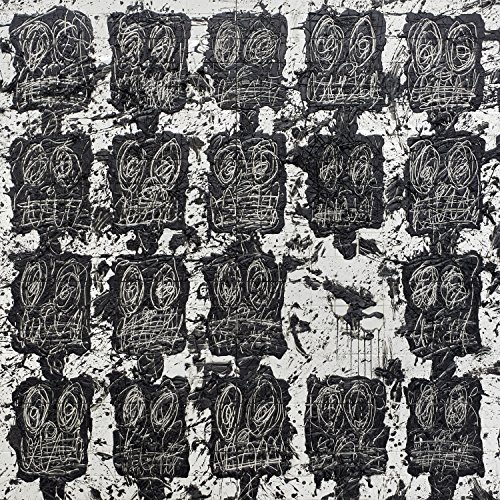
Black Thought: Streams of Thought: Vol. 1 (Human Re Sources EP) [hr]
My friends get kind of quiet when I say this out loud but I've long thought Black Thought may still be the best MC currently working: his lyrics and delivery are tough, mature, confident, and wide-ranging -- in fact it's hard to listen to this seventeen-minute download and not just fawn over his flow on a purely technical basis. It's been frustrating as a fan of rap itself how the musical arrangements and, frankly, showboating have overtaken the last several Roots albums -- I often just wanted to hear Thought spit. And this gives him a perfect opportunity, intermingled with a great verse from Rapsody and a reasonably good one from Styles P, but mostly just offering rapid-fire, unstoppable insight and rhythm from Thought himself. The best lyric is on the first cut "Twofifteen" (Philly's area code), with a wizened "what does it all mean" exploration of Kim and Kanye, the election, some references to Hunter Thompson and Sarah Vaughn served with breathless mastery, and the chilly last lines: "So smile and say cheese, we in 2018 / in a pyramid scheme, nightmares and day dreams / from the runaway slave to a modern day king." Musically the standout is "9th vs Thought," half-named for the record's unmistakable producer 9th Wonder; this is heavy jazz, and has some of the first braggadocio Thought's been allowed to expend in a decent while, sick as he's ever been, still speakin' his mind in a different dialect. There's apocalypse in this, as always, but it's an immense relief and a thrill to hear.
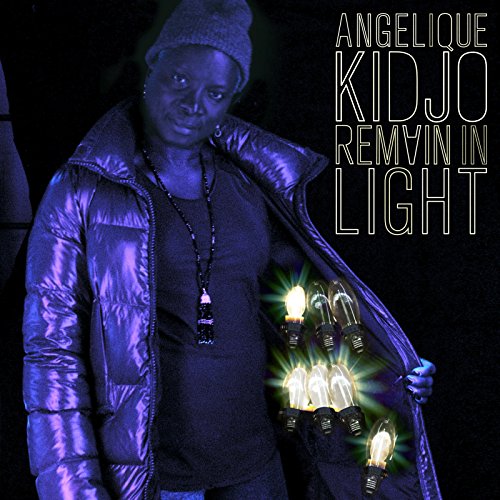
Angelique Kidjo: Remain in Light (Kravenworks) [hr]
To my knowledge, the first full-on cover of an album that completely works, thanks to its radical but sympathetic rearrangements of the eight songs on Talking Heads' (and Brian Eno's) most ambitious LP, bringing them -- as if by magic -- back to their roots of African influence while sending them skyrocketing into the present, the future. My first thought is, my god, I hope the band's heard this and realizes how much it affirms what they were going for all along. Few white rock bands' work is as exhilarating and liberating as theirs, largely because of its gradually broadening range of ideas and influences, and the tracks they wrote in 1980 prove durable and gain an extra layer of passion from Kidjo's tough, impassioned performances. Her work on "Crosseyed and Painless" is perhaps the most striking, while her band does their deepest dive into the pure mechanics of "Once in a Lifetime" and "Born Under Punches," and the song that gives you a chill you just can't shake is the prophetic, terrifying, deeply humanistic "Listening Wind." It feels like there couldn't possibly be a more ideal moment for this to exist; shifting David Byrne's words, reinterpreting them, translating them, standing on top of them and exploring them, Kidjo proves herself a maverick and pushes the music in completely new directions, affirming the seriousness and durability of the band's work while wholly recasting it into a new work of art. Simply extraordinary.

***

ALSO RECOMMENDED
- Tracyanne & Danny (Merge) [it's just like a Camera Obscura record: swooning melodies, gorgeous singing, and the perfect opportunity for bathroom breaks when the dude starts singing; "Alabama"/"Home & Dry"/"It Can't Be Love Unless It Hurts"]
- Jenny Hval: The Long Sleep (Sacred Bones EP) [flooded out with beauty; "Spells"/"The Dreamer Is Everyone in Her Dream"]
- Shannon Shaw: Shannon in Nashville (Easy Eye Sound) [premature grandeur; "Freddies 'n' Teddies"/"I Might Consider"/"Goodbye Summer"]
- Lykke Li: so sad so sexy (RCA) [hot '97; "Deep End"/"Hard Rain"]

ALSO RECOMMENDED FOR THE AMBIENT FILES
- Proc Fiskal: Insula (Hyperdub)
- Tangents: New Bodies (Temporary Residence)

FURTHER INVESTIGATION TO COME
* Teyana Taylor: KTSE
* The Essex Green: Hardly Electronic
* Pram: Across the Median
* Buddy: Harlan & Alondra
Arp: ZEBRA
Blawan: Wet Will Always Dry
R+R=Now: Collagically Speaking
The Innocence Mission: Sun on the Square
Charles Lloyd & the Marvels: Vanished Gardens
RP Boo: I'll Tell You What!
Miss Red: K.O.
Pariah: Here from Where We Are

REJECTS
Chvrches: Love Is Dead
J Balvin: Vibras
Aisha Burns: Argonauta
Norma Waterson & Eliza Carthy: Anchor [NYIM]
Jamie Isaac: (4:30) Idler
Erin Rae: Putting on Airs
Lily Allen: No Shame
John Parish: Bird Dog Dante
Olivia Chaney: Shelter
Christina Aguilera: Liberation [NYIM]
Melody's Echo Chamber: Bon Voyage [NYIM]
Sami Baha: Free for All
Nine Inch Nails: Bad Witch
Gang Gang Dance: Kazuashita
Self Defense Family: Have You Considered Punk Music
The Rock*A*Teens: Sixth House
Florence + the Machine: High as Hope [NYIM]
Gorillaz: The Now Now
Jim James: Uniform Distortion
Years & Years: Palo Santo [NYIM]
77:78: Jellies
Bodega: Endless Scroll
Body/Head: The Switch
Cowboy Junkies: All That Reckoning [NYIM]
Lori McKenna: The Tree [NYIM]

ORPHAN TUNES
Luluc "Spring" [Sculptor]
Chvrches "Get Out" [Love Is Dead]
J Balvin "Mi Gente" [Vibras]
Jamie Isaac "Maybe" [(4:30) Idler]

Sunday, August 19, 2018

The Beatles: Purple Chick deluxe- Revolver (1966)


(bootleg [3CD])

Revolver doesn't have a properly overarching theme the way Rubber Soul does, nor does it try to sell a "concept" the way the Beatles' next album would, but it does possess a certain unity of purpose (and mood); no two consecutive songs feature the same lead vocalist, hence only two ("Here, There and Everywhere" and "Yellow Submarine") share a composer. There's also the fact that it's extremely weird, at least given that it's an album from the mid-1960s by what was then the world's most popular rock group. Even John Lennon's middling, well-played rockers -- the record's weak link, generally -- have a strange and discordant quality about them, and on his better numbers, he sings very openly about death. "She Said She Said" isn't nearly as thrilling and strange musically as "Tomorrow Never Knows," but it's strange to realize the tormented extremity of what its lyrics (based on a bad trip with Peter Fonda) are saying: "You're making me feel like I've never been born" offers a darker angle to psychedelia than almost anything in, say, the Doors' catalog.

Because the album is so fascinating in musical and production terms, you would hope for a big uptick in the unreleased marginalia presented by Purple Chick at this point; unfortunately, Revolver's outtakes have turned to be among the most adroitly well-mined on official releases, so there is very little here that will not already be somewhat familiar to listeners of the multiplatinum selling (and now widely streaming) Anthology 2 release. That also means this will be a relatively short review, but it's still essential to quickly break down the material presented here for completeness.

As usual, the set opens up with the various mix variations of the album's songs and its attendant single ("Paperback Writer"/"Rain," which preceded it by a few months). The mono mix of Revolver is a carefully considered work of art, strange and off-center and druggy, something that's really emphasized when you compare it to the clarity of something like the Kinks' Face to Face and its touches of more polite eccentricity. (Only the unhinged, raga-like "Fancy" quite approaches the Beatles' blackened intensity.) And talking of open, celebrated, mainstream weirdness, "Paperback Writer" in its mono single version has a compressed, psychedelic, dreamy sound filled with effects, pushing forward the fact that it was (sonically, at least) their strangest single so far, unseating "I Feel Fine." Of course the b-side, "Rain," upstages it considerably, but they're clearly of a piece. In both cases, the now-canonical stereo mixes are like different songs entirely than what sold at the time, and in the case of "Writer," it's to the track's obvious detriment.

Across the album, there are small mono-stereo variations you'll pick up on if you're very familiar with the record (the longer fades on "Got to Get You into My Life" and "Love You To," the earlier percussion on "Taxman"), but in fairness the stereo mix is one of the better ones, and in fact superior in at least one case ("Here, There and Everywhere," which pushes the guitar up a little too much in mono). Still, as usual, the Beatles' and Martin's closer involvement in the once-rare mono mix is amply clear. "Eleanor Rigby" is less haphazard-sounding, Paul's voice coming down from a great height like John's on the album closer; the dream seems heavier. "I'm Only Sleeping" has a real sense of claustrophobia, "Yellow Submarine" is more complete (though its edits are a bit more obvious), and "And Your Bird Can Sing" attains an urgency that helps it.

Next come the officially released alternate mixes, which are interesting if not revelatory; the most endlessly futzed-with cut of all is "I'm Only Sleeping," whose pesky backward guitar lines move around to a different place (like the cowbell on "I Call Your Name") on no less than four mixes: UK mono and stereo, and the U.S. mono and stereo mixes prepped for the stopgap release Yesterday and Today earlier in 1966. Y&T is also the source for a surprisingly divergent version of "Doctor Robert"; the vocals are different (especially on the "well, well, well" interlude, with John much more prominent), the guitars are harsher and the edit goes all the way to the cold ending of the performance. It doesn't do a lot to improve such a lackluster song, but it's at least interesting to hear. (PC somehow misses the U.S. mono version of "And Your Bird Can Sing," unlike the stereo, which is the only time such a major variation gets skipped on one of their releases*; Capitol later rescued it for their boxed set The U.S. Albums but somehow dropped the ball on all three of these unique stereo mixes, which admittedly -- "Sleeping" aside -- are less interesting.)

The most fascinating of the alternate mixes by far is the withdrawn "matrix I" version of "Tomorrow Never Knows," which was strictly used on the first day's worth of UK pressings of Revolver only to be replaced abruptly, with the result that copies of the LP holding it are outrageously rare and expensive. It's not exactly a radical variant, but it's more than subtle -- the effects (tape loops) are very different, there's much more emphasis on the vocal, and more piano at the end of the track. It's neither better or worse than the canonical mono mix, but its almost hostile removal from the catalog is a good little mystery, and it's a privilege to be able to hear it; this is easily its ideal context. (One last oddball item: an unused monitor mix of "Yellow Submarine" with a different dropped-in "performance" after the line "the band begins to play." This surfaced in 2002, making it one of the last "new" bootlegged Beatles items to show up, and for this and other reasons its legitimacy is hotly disputed, but it's appropriate that it shows up here.)

As noted, all of the big-ticket moments on the outtakes disc have been officially released, and with good reason -- they're by and large among the best and most interesting and radical variants we've heard from the Beatles. The droning first take of "Tomorrow Never Knows" -- then labeled "Mark I" -- in heard in the released mix and through a '90s monitor mix wherein George Martin is discussing the track and manipulating it with three Beatles. The Rubber Soul-like pot-stoked take 5 of "Got to Get You into My Life" appears in slightly more complete form than on the Anthology CD. The ridiculously Byrdsy take 2 of "And Your Bird Can Sing" is heard with and without the flubbed vocal track on which the very high Beatles can't stop laughing, extracted here very simply by omitting the main vocal track. (You can do this yourself with Anthology 2 by half-unplugging your headphones.) The slightly different "Taxman" with the "anybody got a bit o' money" vocals and the instrumental track of "Eleanor Rigby" are dutifully included, plus rehearsal and bizarre acoustic version of "I'm Only Sleeping." Then there is the material from the "Real Love" CD5: "Yellow Submarine" with faders up and a silly spoken intro by Ringo, and an alternate performance of "Here, There and Everywhere" with a more relaxed lead vocal. The only bootleg-only stuff here comes from "Paperback Writer" (an interesting sequence of an instrumental false start -- that is one powerful guitar line -- and a nearly complete version of the master) and "For No One," offered in poor quality monitor mixes reconstructing a few in-progress takes, lots of piano and the progressing master. Even hardcore fans will have trouble getting through the raw monitor mixes that close out the disc, which are dedicated to "For No One" and "Here, There and Everywhere" and don't provide much in the way of pleasure or coherence.

As mentioned in the regular review of Revolver, this album's recording process was so spirited and ambitious it's no wonder it was so liberally sampled for the Anthology project, so we can't get too upset that there isn't much left for PC to track down and present to us; this set is most valuable for its presentation of a few '60s alternative mixes, and even those -- with the exception of the "matrix I" edition of "Tomorrow Never Knows" and the lost numbers from the U.S. stereo Yesterday and Today -- are fairly easy to find elsewhere.

[* = Note: The only other two cases of mixes supposedly missing are the U.S. mono version of "You Can't Do That," which sounds no different; and the American stereo "Paperback Writer," which seems to just be a rechanneled and slightly rebalanced mix. PC intentionally disregarded rechannels, fold-downs and fake stereo mixes, as well as mixes and edits made for compilations such as Reel Music that didn't use the original tapes; and George Martin's various '70s and '80s remixes. So "And Your Bird Can Sing" is the only glaring oversight.]

Tuesday, August 14, 2018

The Beatles: Revolver (1966)


(Parlophone)

!!! A+ RECORDING !!!

The Beatles' creativity during the mid-'60s was unstoppable -- undeniable, even, and within the rock & roll idiom it had virtually no precedent, not least because no one had reached the point in their career when such restlessness was matched with such automatic validation of ideas. The Kinks, the Beach Boys and Bob Dylan, among a few others, reached the same point in their careers around the same time but somehow, then as now, the Beatles' work feels different: it's even more confident, controlled, effortlessly inventive than that of their peers -- and yet, even stranger (in the context of pop) as well. What makes an album like Revolver happen? If we knew for sure, they'd be more common, but a few things are worth diving into when we look at the record.

Each of the Beatles' albums up to this point had been a step forward from the last but a reasonably smooth transition at that. Rubber Soul was surely the best of the first half-dozen, and arguably their best ever, but even it wasn't entirely an upheaval of its predecessor, Help!. The folk-rock predictions were there, John Lennon and Paul McCartney's lyrics and melodies were already reaching their height of sophistication on songs like "Help!" and "I've Just Seen a Face," and sure, the songs were stronger and certainly more mature on average on Rubber Soul, but the production values and overall sound remained similar. Not so for Revolver, their seventh LP. It is, it seems, an effortlessly huge stride into orbit, both in composition and recording, and can now be seen as the beginning -- and best example -- of the band's psychedelic period; in addition, to this day it remains the greatest showcase ever of the talents of one Paul McCartney.

There is little doubt that more experimentation went on with the sheer sounds of recording during the Revolver sessions than at any other point in the history of studio-driven rock music. It's the first Beatles record, and probably the first record by anyone, that was considered by the band impossible to play live and as such was looked upon as something entirely separate from their live act; concerts had come to bore and fill the band with dread anyway, so the idea of laying down songs that relied heavily on varispeeding and other trickery would no longer have seemed a hindrance to them, and as always happens when a medium is in its formative years, the sheer excitement of playing around with the format as no one had previously thought to still retained its novelty for even so intelligent and creative a band as this. Drugs were undoubtedly a factor too, but so they were on Help! and Rubber Soul; to go back briefly to the mention of the Beatles' artistic peers, none of the other landmark albums of 1966 approached the material in quite the same way, with the Kinks' Face to Face coming closest at least in the deceptive sense that its songs are equally ambitious and inspired, if more skilled than emotionally honest. Brian Wilson's theme was the ornate abandonment of rock instrumentation to cast out demons; Bob Dylan's was exhaustion; the Stones' was grit; but the Beatles' goal seemed strictly to be to find a new approach to their music that would excite them, and their solution was to use the studio and what then felt like its limitless possibilities (despite the creative impositions of four-track tape) as their primary instrumentation, and to do so mostly as a unit (discarding "Love You To" and "Eleanor Rigby") -- a natural expansion, but a radical and arguably sudden one.

As noted, no Revolver songs were performed on the Beatles' American tour that coincided with the album, which would turn out to be their final series of live performances. Truth be told, it would have been possible to present a few of the album's songs on stage, primarily Lennon's: "I'm Only Sleeping," "And Your Bird Can Sing," "Doctor Robert," perhaps even "She Said, She Said." But what would the response have been? The band seems to be several steps ahead of their audience here, and together with Rubber Soul, the sense one gets is of a band that's grown past their original objective, so much so that a schism between artist and fans would seem almost inevitable; except somehow, the Beatles are the one band whose followers seemingly grew up along with them, and vice versa. Pet Sounds would be misunderstood and would sell poorly; and while Blonde on Blonde was celebrated, it marked the end of the first phase of Bob Dylan's career; and the Byrds and the Kinks would never resume their early commercial success as their music bloomed outward. The Beatles, however, managed to mark the point at which the idea of "rock" became something for the sophisticates, something people "wrote about" and thought about, and did so, it seems, without missing a beat. It was luck, for one thing; luck was the great theme of the Beatles' career. Despite their brilliance, they enjoyed an uncanny knack for meeting the right people at the right time. And their ruthless quality-control dictated that the silence after Revolver -- which was, unusually, accompanied by a single comprised of two left-field and nevertheless wildly successful songs from the album -- would increase its gravity, build anticipation and prepare the audience for a change in the way they were thought of, a trick that wouldn't have worked if Revolver in particular had not set the stage so well.

Because of the wild sonics it brings forth, it is the sound of Revolver that sticks to you initially, not so much the songs; in this respect Revolver is reminiscent of the Beatles' most universally celebrated longplayer, Sgt. Pepper's Lonely Hearts Club Band, released a year later. From this point onward, every Beatles recording sounds as if it could very easily burst from the radio today. Such is the innovation of George Martin and his four faithful soldiers. Indeed the person who is most on a creative roll throughout these tracks is not any of the Beatles so much as it is their producer. Revolver is a masterpiece, but it may well be his more than the Beatles'. He gleefully puts hard rock into claustrophobic compression in "Taxman," and evokes the creeping, crawling electronic unknown in the droning "Tomorrow Never Knows." Never before was every single track on an album so far into a world of its own, lending the record an almost circular feel in its two divisions (hence the title, perhaps?). Klaus Voormann's beautiful drawing-collage adorning the cover of Revolver is black and white, but thanks to Martin every single note of the music inside is shimmering with brilliant color. Somehow he puts into his aural textures things that logically can't be expressed in audio: the drowsiness of "I'm Only Sleeping," the warm ecstasy of "Here, There, and Everywhere," the drug-induced misery of "She Said She Said," the oceanic simplicity of "Yellow Submarine," the triumphant bliss of "Got You Get You into My Life" and "Good Day Sunshine." The notion that George Martin was merely an interpreter is disproven here, for Revolver demonstrates that he is a musical genius himself, matched only by Brian Wilson in his ability to render pop music as an unfathomable kind of singular expression that can't be duplicated in any other medium.

However, the main difference between Revolver and Pepper is that you could completely strip the production away from Revolver, making it a sequel of sorts to the much more simply arranged Rubber Soul, and still have outstanding music. These are classic songs beyond any doubt. Just as Soul was John Lennon's finest hour, with his heart on his sleeve in "Norwegian Wood," "Girl," and "In My Life," Revolver is full of utterly mind-blowing work from Paul McCartney, whose own prowess as a songwriter is given a phenomenal monument here that could never be undone by decades of "My Love." His most famous contribution to the record, "Eleanor Rigby," paints a convincing character portrait that could in some universe feel right at home on Face to Face, except that rather than capture his characters' plight -- and the plight, it seems, of loneliness in general -- with some sort of cheeky ironic distance, he lends it a poetic urgency. No Beatles song to date had sounded so adult, so pressing, so important, yet with a real kind of feeling and empathy at its center. Paul genuinely does seem to look outside himself for these stories of the isolated Rigby and the silent priest Mackenzie, even if he did take the name from a grave he recalled seeing, and each time he slightly falters in his lyric, the melody and the raw feeling of John Lennon's backing vocal rescue it, make it a piece. In addition, the song goes beyond even "Yesterday" in abandoning the rock-band structure, choosing instead a startling, Bernard Herrmann-inspired string ensemble that completely avoids the saccharine nature of so many orchestral pop arrangements; the stark cleanliness of the recording and of the band's vocals circumvent any charge of pretension. The song is simply too direct, and too elegant, to allow for such accusations.

If anything, however, McCartney's other song about loneliness here is even more of an achievement. "For No One" is a sequel of sorts to "I'm Looking Through You" and conversely to "We Can Work It Out," purportedly about "another argument" (his words) with then-girlfriend Jane Asher. But even set against an outstanding cut like "I'm Looking Through You," which is one of the greatest breakup songs in rock & roll, he demonstrates several leaps forward here, at least lyrically, in the sense that the words seem to reflect a far more advanced age than Paul's (23 at the time of recording). The couple in the song, one desperate to communicate and the other desperate not to, are as persuasive a portrait of a crumbling marriage or affair -- despite the spareness of the words -- as a pair from an Albee play. Ray Davies would experiment in years hence with this sort of slice-of-life drama about fallings-out and misunderstandings across years -- "Two Sisters," for instance -- but the ingenious economy of Paul's lyrics, which manages to put across a great depth of pain with very little extraneous information, and the perfection of his weary vocal on the track, again render it unique with the help of Martin's baroque arrangement, performed strictly by Paul (on several instruments), Ringo Starr (percussion) and Alan Civil (the oddly devastating French horn solo).

In instances like these it's harder than ever to reconcile the Beatles' recorded output with the "mop tops" out on the road; indeed, the U.S. cover of the "Eleanor Rigby"/"Yellow Submarine" single seems bizarrely ironic: a symbol, however lovely, strictly tied to the '60s set against music that -- in the former case, at least -- now exists above and beyond any notion of time or era. It's as though they were continuing to evolve but sending out old husks of themselves to perform, and it's little wonder that the practice would very soon come to an end. (Ironically, largely because of the Beatles' own influence, rock audiences would soon be ready for the kind of concerts that would have better suited to the Beatles than their slavish twenty-minute runthroughs of the old hits; they never enjoyed this as a band, perhaps more than anything because of a reluctance to revisit the trauma -- and, from the books I've read, it really was trauma -- that they'd endured as a massive chaotic touring act.) All the same, it should be recalled that in 1966, the Beatles -- and certainly Paul McCartney -- were on the absolute tip-top of the world, were at their peak as artists and arguably were well aware of it. This is reflected in Paul's other three truly great songs of the album, which capture a moment of blissful, loving optimism that retains its power to charm and infect across all the intervening decades.

You could turn just a few knobs on "Good Day Sunshine" and probably make it intolerable, or at least cutesy in exactly the McCartney way that would bring us the likes of "Bip Bop" and "Mary Had a Little Lamb" and, well, "My Love." But it's another case in which the Beatles' slightly oversized ambitions make their work truly sublime; with no one besides themselves to determine what is and isn't acceptable, they find some in-house way of beautifully conveying absolute joy (in a way John Lennon on his own, for one, never could) without cloying; and because the rest of the band still has a say, the song has a mild, psychedelic weirdness, especially in the fade, and a complete absence of smirk. In this song, showtune piano and all, the act of being happy-go-lucky (and probably high) is serious business, not to be mocked. The Lovin' Spoonful's "Daydream" and the Young Rascals' "A Beautiful Morning" can only wish in vain; they're fine songs, but do you ever really think they're truly serious about the lovely sunny times they're promoting?

More powerful yet is "Got to Get You into My Life," a Motown-inspired flip-side of sorts to "For No One." The story's gone around for years that the song is about weed; maybe, fine, whatever, but its profundity certainly doesn't come from that. Again, so much of the power here is in Paul's singing: he sounds positively infected with love, or lust, and a drive to pursue it -- the simpler, prettier "I've Just Seen a Face" found this same voice in him, but on this song there's no reason to hold back behind a folky arrangement. Martin provides horns and the band's as loud as can be, and at last his unhinged soul voice finds its proper place: in a song about the absolute, insane glee of falling for somebody, rendered with a poetry and eloquence that wouldn't have felt possible in the Beatles' music just a couple of years earlier. (Not one of Paul's tracks, performances, productions on Revolver could have existed on any prior Beatles album, nor any of George's; and only a couple of John's could've.)

That same eloquence then captures a more adult topic yet: that of enduring love. "Here, There, and Everywhere" is Paul McCartney's best song -- not his best song on Revolver or his best song with the Beatles, just his best song. It's a strange, hypnotic recording that yearns to evoke early doo wop in its simple, almost claustrophobically ghostly arrangement -- Paul's vocal is dry, intoxicated, the others' backing smoky and enigmatic. Lyrically, it's as wise beyond its years as "For No One" with the opposite frame of mind, exploring the comfortable, continued miracle of a long-term relationship -- arguably before he'd experienced any such thing or had any great reason to romanticize it. It's likely his best lyric, its repetition of the three title words somewhat evocative of Lennon's brand of wordplay, but altogether unmistakably Paul's work and nobody else's. (Lennon's own well-justified admiration of the song was something Paul long treasured.) Paul would always cite the Beach Boys' "God Only Knows" as his inspiration, but his own song is less angsty, more unconditional.

Unfortunately, while the Beatles' two primary songwriters were both operating at their highest level on Rubber Soul, in the interim John Lennon seems to have regressed just as much as Paul McCartney has advanced. His songs for Revolver are not bad, but in comparison to Paul's, they tend to stumble aimlessly and sound, for lack of a better word, drugged. If Paul's embrace of substances causes him to expand and "turn on," so to speak, John correspondingly, well, tunes out. His often droll, odd compositions are livened up, though, by Martin's playful tinkering, which sets alight a dryly lethargic, cynical lullaby ("I'm Only Sleeping") and a pair of terrifying rockers that display the mental agony of substance abuse: "She Said, She Said" and the one-chord "Tomorrow Never Knows." In both cases, the songs would be lesser works without the producer's bells and whistles, but that doesn't make them less impressive as records. But "And Your Bird Can Sing" is charming, nonsensical Byrdsian filler, "Doctor Robert" a tepid, directionless drug song (literally; it's about the dentist who slipped him LSD), and with the exception of the sublime "Rain," relegated to a b-side, even the best of John's songs from this period sound like the works of someone who desperately needed a break, particularly when looked upon in comparison to Paul's Revolver material, or to his own triumphant songs from Rubber Soul or of course almost any of his earlier songs for the band. (Fortunately, a vacation was just what he and the band would be given in the latter half of 1966, and he would return with one of the finest songs in popular music, though he would never again dominate the Beatles' records the way he once had.) John and Paul wrote "Yellow Submarine" together for Ringo to sing, and it's another instance of a throwaway rendered oddly infectious by George Martin's input, which must assuredly be the reason they thought enough of the novelty to make it a single.

In addition, elsewhere on the disc, George Harrison reaches an early peak with his sardonic "Taxman," a rocker that sounds bold and forward-thinking as the album opener, and while "I Want to Tell You" is well-sung, well-recorded (incredibly modern-sounding, in fact) gibberish, he also offers one of Revolver's most impressive moments of innovation with "Love You To," another song that foregoes rock music almost totally, here in favor of classical Indian instrumentation (Harrison had been learning the sitar since the previous year, audible on "Norwegian Wood") for a recording that, even more than the otherwise superior "Eleanor Rigby," sounds audacious and improbably stimulating in the context of a rock album -- not the last time the Beatles (and Martin) would pull such a stunt.

Glorious as it all is, the magic of Revolver is all in its multifaceted, more artful than psychedelic, soundscapes that seem to stretch forever in all directions and have no qualms about letting you in on their Technicolor secrets; as ever, the Beatles render even their highbrow and hotly ambitious impulses universal by the feeling of warmth and invitation they bring to their records -- they ingratiate at exactly the points that a lesser band would alienate, and it's hard to name another rock band of any era with such a capability, precisely what would carry them through so many brilliant records from here to the end of their career. A lot of this, again, is George Martin. As when he took Lennon's requests for "Tomorrow Never Knows" to heart -- that it sound like the terrific announcement of some impossibly distant voice from on high -- Martin approached the Beatles' material with immense sympathy. He knew that great records are made with production as an embellishment to wonderful music, not music written solely for its production. In some ways, though, he was merely keeping pace with the Beatles' ever-progressing talent in making their music accessible even in its oddest moments, and Revolver manages to be avant garde without overriding the band's staggering immediacy. In other words, it's weird, yet it's pop. Hell, it's more than either of those simple terms can describe. You can call the next record their signature acheivement in the LP form if you like, but Revolver is the Beatles' most accomplished piece of art.

Of course, the specific and heady logic of the day -- swinging London, the drugs, the encroaching of genuinely new ways of thinking within and without youth culture, and the misshapen allure of the creepy tape loops on "Tomorrow Never Knows" or raga sounds on "Love You To," so unlike anything heretofore declared "rock" -- dictated some of these impulsive responses. As noted above, rock music was now something to be taken seriously, and is there not something deeply troubling about that? For all the Beatles' obvious exhaustion and impatience to "move forward," there's a kind of surrender in the push away from rock & roll and toward art. It's not that Revolver isn't great and profound, it's that With the Beatles and A Hard Day's Night were equally so, and the logical conclusion of the elevation of the Beatles' mid-'60s output moves in one direction toward the drudgery (Genesis, Yes, etc.) and liberation (Bowie, Roxy Music, etc.) of "art rock," in another toward a strange dismissiveness of black music -- the music that specifically inspired the Beatles to perform in the first place and would remain their touchstone, obviously outside of the 1966-67 period and more subtly so even then -- that, for whatever sonic modesty it may possess compared to the studio trickery employed here, has more to say more eloquently than can be provided for by any number of tape loops. This was by no means the Beatles' intention, at least I see no reason to think it was; their experimentation is not a rejection of the supposedly simple and carnal -- in some ways their later songs are simpler, in composition terms, than their "teenybopper" numbers -- but a restless probing much akin in some ways to, if far less adventurous than, John Coltrane's Ascension and Om, or to the passionately confrontational avant garde of Yoko Ono that would soon be issued on the Beatles' own record label. They did not make it exclusionary or snobby, the press and audience did that; they only expressed what they were feeling at the time, and sunshine or not, in the moods and doubts of some of the songs of Revolver, you can hear that the world is starting to come crashing in: not the world of 1967 and flower power, but the world that would consume and destroy it, which they -- or John, at the very least -- seemed to hear before anyone. The Beatles' best work had been vibrant, ecstatic, a boundary-smashing embrace of freedom. Revolver is varied in its moods, but on balance it is unnerving -- and somehow no less vibrant, honest and inspirational than what had come before.

***

[A second revision of a review first posted in 2000 (!), then updated in 2003; almost certainly the oldest thing I will *ever* post here]

Sunday, August 12, 2018

Yoko Ono: Between My Head and the Sky (2009)


(Chimera)

HIGHLY RECOMMENDED

After John Lennon's death, Yoko Ono released three albums in quick succession: her masterpiece Season of Glass (1981), then the slick, new wave-influenced It's Alright (I See Rainbows) (1982), and in 1984 the collaboration with her husband that had been in progress at the time of his murder, Milk and Honey. Afterward her work became more sporadic: the anti-Regan conceptual record Starpeace, and ten years later the alt rock-flavored Rising; then finally, for Capitol Records, the mostly ignored Blueprint for a Sunrise (2001). Everything else was a packaging of older, unreleased material (A Story) or a remix record (Yes, I'm a Witch) until Ono's son, producer-performer Sean Lennon, elected to reactivate the Plastic Ono Band name and take a new, modern approach to Ono's recent compositions for his own Chimera Music label. Between My Head and the Sky, the first result of the new arrangement, feels like a new beginning, or at least a new run of ideas, for Ono. For the first time, it seems as if music has transformed itself to meet her ideas rather than the other way around, and for the first time since the early 1980s, she here presents a completely successful and well-executed album: not part of a musical, not an art piece of some sort, a forward-thinking, avant garde-leaning rock record that, were it released by someone fifty or more years younger, would have been hailed as a riveting new voice.

Sean's clever approach is essentially not to apologize for his mother's music, but also to give it the audience it fully deserves by really engaging with it in production and performance terms. "Waiting for the D Train" is both a pure, searing guitar workout and a direct fuck-you to anyone who tunes in and immediately decides they don't like Ono's voice. He immediately nods to Ono's enormous club audience with "The Sun Is Down," with its "Born Under Punches"-like synth line, and defies you not to hear accessibility, excitement, enrichment in what she's doing. Ono goes to town on both songs, but clearly the rejuvenation is in this astoundingly perfect sonic home she's suddenly been given: you wonder why it's taken so long for somebody to record her properly again. And then, not wishing to dominate, Sean gives Ono the entire stage for one of her best songs ever, "Ask the Elephant," a philosophical and adventurous, and infinitely charming, Q&A session that effortlessly parades the great artist's open-armed freethinking. It's as if the years since Fly and Approximately Infinite Universe have evaporated, or -- as brilliant as those albums are -- as if they never happened in the first place, for even the scant evidences of apology and bids for commercialism on Universe, or the evidence of her collaborators on Fly and Plastic Ono Band, aren't here: on this record everything revolves around Yoko Ono's own sensibility and skill set, and if it's less confrontational than Fly, that's only because the music is moving with her even more proficiently.

Talking of confrontation, though, this is one, but not in the way one expects if one isn't familiar with Ono's previous music -- and that seems to be the primary audience she and Lennon have in mind, even if the record's also a pleasure for those of us who find riches in her catalog. The confrontation is her age, and the fact that it fails to stop her from proceeding with unflagged energy. The confrontation is her very presence, and that her music requires no accommodation -- that, in some sense, she was right from the beginning and that her art has now obviously proven itself ahead of its time. But "confrontation" still seems like a rude word for such great thrills as are on offer here. Several of the songs Ono wrote for the project are ballads and atmospheric pieces, albeit striking ones, but when it snaps back into gear it really commands the attention: "Hashire Hashire" brings the funk like nothing on Double Fantasy ever could. The title track, filled with her delightful grunting (her vocals throughout the record are uncompromised, ageless, brilliant), is a bass-driven fuzzed-out Led Zeppelin idea taken to a sublime conclusion no lumbering classic rock group could allow. "Watching the Rain" starts out with what seem to be keyboard effects inspired by a Pong arcade before falling into one of the most ambitious and lovely songs in her catalog, and one that fully demonstrates the awe-inspiring efficiency of her collaboration with her son -- the song becomes rain, becomes the moment she wishes to explain and capture.

After everything settles, there are still shards of the past: the hypnotic piano on "Higa Noboru" evoking "Mrs. Lennon," the abstract, Fly-like "Moving Mountains," and the unbroken optimism and acceptance of "I'm Going Away Smiling" and "Ask the Elephant!", the hints of despair and grief that come through in Ono's harder-edged vocal performances. The surreal thing is, unlike nearly everyone else who was releasing records in the '70s, Ono's music's "past" and "future" seem like a continuum -- her work hasn't become less ambitious or risky with time, it has simply become more refined and focused. In this third act of her career, she can only be declared an international treasure -- yet there's no reason to give this any kind of allowances for her legendary status. It's a record that bubbles over with youth and excitement. And while "rock & roll" once seemed so reductive a descriptor for her unclassifiable, genuinely innovative work, it now seems like the only word for it... because it's a medium that has, as John Lennon predicted, expanded to incorporate her and her immense influence. But has it "caught up" with her? Of course not. Never.

Sunday, August 5, 2018

The Beatles: Purple Chick deluxe - Rubber Soul (1965)


(bootleg [3CD])

RECOMMENDED [grade for this bootleg, not the album Rubber Soul]

In 1965, the Beatles grew up. It surely wasn't a sudden, abrupt movement for them -- not the way it felt, or feels, to us. There is of course evidence earlier in their recorded output of what's bound to happen: the traces of anguish throughout the album A Hard Day's Night and the song "Help!", the intoxicating, poetic romance of "I've Just Seen a Face," the melancholy textures of Beatles for Sale. But after a career of incremental evolution, Rubber Soul is such a massive, stunning leap away from what then was the perception of who the Beatles were and what they did for a living, bearing almost no superficial resemblance to any of their previous work on LPs or singles, that it can feel like a line drawn in the sand.

The Beatles themselves, consciously or not, reinforced that sensation with the help of George Martin and (to a lesser extent) EMI. In the United Kingdom, it was the second Beatles album entirely free of covers, and Help! would remain the last LP they issued with any non-originals (unless you count the brief extract of the traditional "Maggie Mae" on Let It Be). Apart from the possibly satirical "Drive My Car," it's also free of any "teenybopper" extracts, moments of simple catchphrase-driven pop along the lines of their previous hit singles. For the most part, the album is comprised of heartbreakingly sincere, captivating original portraits of love and loss -- sometimes acerbic, sometimes warm, always deeply compelling -- by John Lennon, for whom the record is an unqualified triumph (discount "Wait," whose stilted urgency evokes Motown, and "Run for Your Life," a nasty confession of abusive tendencies, at your own risk, for without them "In My Life" and "Nowhere Man" cannot be truly authentic); and stark depictions of relationship turmoil by his partner Paul McCartney, who seldom let an audience of millions see directly into his soul the way he did on "I'm Looking Through You" and "You Won't See Me," his two big showpieces here ("Michelle" be damned; it's excellent, but not a spot on those two). Even George Harrison contributes a credibly plaintive expression of unrequited love on "If I Needed Someone," even if the arrogance so often imbuing his lyrics doesn't entirely go away even then; and Ringo, for his part, sings more sweetly on the country music homage "What Goes On" than anywhere else on record.

The change of image goes beyond the album's content to its promotional and supplemental ephemera: the cover, the four of them glowering down from some untouchable height (actually distorted from a normal photo into a psychedelic yet minimalistic pose that's somehow evocative, in colors and facial expressions, of the record's largely muted but incalculably inspired acoustic content), couldn't be farther from the mugging of Help!. Serious as they'd looked on Beatles for Sale, they still looked like boys -- boys who'd seen a lot by now, but boys all the same; now they appear just barely human, separated from us by more than mere fame and experience, and John's stare directly into the camera serves as an oblique challenge. They still played it relatively safe on the radio, with a simultaneous double-A of songs excluded from the record, and yet you could tell a major difference even from the markedly sophisticated singles they'd issued prior in 1965, "Ticket to Ride" and "Help!"; "Day Tripper" is a brilliant but classically structured rocker, even if its sneering confidence obliterated most everything else on the charts at that moment, while "We Can Work It Out" provides a stark preview of the unsettlingly specific but curiously universal conflicted-love songs Paul was to spend the next two years laying out and exploring. In America, the division was made clearer still, with "What Goes On," "Nowhere Man" and "Drive My Car" excluded from the running and an even heavier emphasis on quiet acoustic pop music interrupted by sudden bursts of Elizabethan beauty (George Martin's piano solo on "In My Life," of which more in a moment) and unrepentant anger (the electric guitar breaks on "I'm Looking Through You"); there, the progression from frivolity seemed even clearer, with the album preceded by a goofball soundtrack record and some nutty concoction called Beatles VI, which hardly could have seemed less coherent as an artistic creation in comparison to this.

What we learn from Purple Chick's deconstruction of Rubber Soul, though, is that the division is more organic than it seems from all outward appearances then available; the contrast with the band's stage act, slogging through old material night after night to crowds that can't hear them, is indeed shocking... but there's every reason to believe that the frustrations of playing live fed into the need for the Beatles to find far more creative fulfillment in the studio than was available to them elsewhere, and the sheer radicalism of unleashing such a remarkably mature and intelligent album on a market in which it had very little precedent outside of Dylan is now hard to fathom as something they might just elect to do, and as something the public would be so quick to accept and embrace (indeed, it directly inspired Brian Wilson to begin work on Pet Sounds, and while Ray Davies denies paying much attention to what the Beatles were doing at the time, it's extremely difficult to imagine Face to Face existing without Rubber Soul). The sessions for the record on this collection depict a band still in transition, still not quite convinced it's okay not to constantly goof on everything, still just kids (all 25 and younger), but kids at the helm of something that feels -- tantalizingly, now -- bigger and more powerful than any of them. And identifiably, by the way, the same kids that killed it every night in Hamburg five years earlier, now still tirelessly ambitious and finding new ways to express it.

The definitive version of the Beatles' most beautiful album is the mono mix -- now, always, forever. There has never been a satisfactory stereo mix; the original 1965 stereo album suffers from the same bizarre balancing as Please Please Me, except now without the excuse of being a twintrack recording. In 1987, George Martin remixed the record and unfortunately added layers of reverb and now-dated "modernizing" effects that, while subtle, color the now-canonical version as a failed experiment; unfortunately, this is the version of the album that streams everywhere and is most widely distributed on CD and (now) vinyl. To those of us who grew up with Rubber Soul in stereo, mono is an absolute revelation, and not just because of weird quirks like Paul's single-tracked, intimate vocal on "You Won't See Me," the coughing in "Norwegian Wood," the longer fade on "I'm Looking Through You" and little flaws on "What Goes On" and "Michelle." Rather, it's because the entire record is vastly more enveloping, a major achievement of George Martin's in rendering its largely skeletal arrangements into room-filling lushness that never overreaches with the kind of schmaltz he fell back on for "Yesterday" one album earlier. "Nowhere Man" suddenly surrounds you more than it ever could with the separation of elements wrought by multiple channels; and the crunching, grinding guitar on "Think for Yourself" isn't cut at the knees by being shoved over stage left. The only distraction with the mono Rubber Soul is the piano part on "Drive My Car" sounding distinctly spliced-in, like a transmission from a different room; that aside, it's truly definitive. "Day Tripper" too is lovely, warm and organic in mono (though there is also, included here, an alternate stereo mix for the U.S. Yesterday and Today album that exhibits these same qualities, and better balance and sound than the canon stereo version), but the same can't be said of "We Can Work It Out," which is nearly drowned out by a tambourine overdub that sounds like a cricket and is easier to cope with in stereo. That song's U.S. stereo mix (prepped, it seems, for the Yesterday... and Today stopgap LP) is also a bit of a curio, with the harmonium bumped up and sounding strange.

The first two discs offer the usual mix oddities gathered from around and about: the American stereo mix of "The Word" is surprisingly different from what we're familiar with, rebalanced in a way that changes the song's character, and not to its detriment. We also get the famous "false starts" on "I'm Looking Through You," which were long seen as adding to the off-the-cuff charm of the American stereo Rubber Soul; and, from the same release in mono, a bit of extra echo on Paul in "Michelle." And among the modern DVD remixes are great versions of "We Can Work It Out" and "In My Life" (the latter is perhaps a bit too slick), and a dreadful one of poor "Day Tripper," which can't seem to be left alone. (We also get -- superfluously -- what are evidently early mono mixes of both sides of the single from the BBC, with an audience present, for a special program on John and Paul's career as songwriters.)

The lone unreleased song to surface on these sessions is the "Green Onions"-derived instrumental "12-Bar Original," which was eventually issued in severely truncated form on Anthology 2, where it seemed to stop the fun dead in its tracks; the original track is four minutes longer and, while one can appreciate the accusations that it's a terribly dull failed jam session, at least the presence of the loose jamming justifies the song's existence more cogently than an attempt to cut it down to the size of a 7" from the period. Besides, Anthology edits out the best part, a great, wildly distorted guitar solo evocative of Dave Davies (I can't seem to conclude whether this is John or George; I lean toward the latter, though it's alleged that John did play some lead guitar at this session). The session disc offers two additional takes, one an unnumbered excerpt in a monitor mix and one a false start that John openly addresses as his own fault, in a bit of personal progress from earlier sessions.

As for that third disc, the available sessions for Rubber Soul are only out in the world for our perusal in strange fits and starts, but with the rightly tuned ears they're deeply intriguing at their best. By this point the Beatles were, with scattered exceptions, laying down basic tracks and then recording on top of them, so except for songs that were wholly remade after being nearly complete -- and we have two examples of that here -- there aren't really a lot of "alternate versions" to hear per se, more slight variations and brief extracts of material unintended for public consumption. Start with the first session, for "Run for Your Life," where we get a bit of John playfully chatting about overdubs before we're given about half a full take of the song (the fifth), the main point of interest of which is an echo-drenched, single-tracked vocal on John that sounds like an attempt to pay homage to the song's inspiration, Elvis Presley's "Baby Let's Play House"; like Elvis on that track, Lennon here is manic, and significantly less cold-blooded in affect than on the master.

"Norwegian Wood" -- at this point simply labeled "This Bird Has Flown" -- is one of the two Rubber Soul songs that was drastically remade after being fully recorded and overdubbed. Take 1 of the song was later issued on Anthology 2 but does bear analysis as a fascinating, more sardonic dry run for the more reflective, sad master recording. (That first take is exhaustively documented here, with its dry original mix as well as the Anthology version on top of the "ASP mix" -- what is ASP, you ask? Why, it's an obscure bootleg called Another Sessions Plus that apparently boasted a slightly different mix dutifully canonized here by PC.) Less renowned is the unreleased second take, an extremely weird sitar-heavy arrangement, the entire song bearing a resemblance to the rather crowded bridge on take 1. Finally, the master recording -- take 4 -- is included without editing, so that we get to hear charming guitar false starts and the song tracking all the way to its actual conclusion, one of a number of such privileges on offer here.

The other vast diversion we can hear, as on Anthology 2, is "I'm Looking Through You" in its (now-beloved) intimate, slightly psychedelic alternative arrangement, presented in a rawer mix with leader, hard-panned stereo and weird volume issues... but boosted here by the amazing scream-laden finish by Paul, along the lines of his wilder "She's a Woman" takes, which the Anthology 2 compilers inexplicably faded. This is both one of Paul McCartney's finest songs and one of the most mature, knowing breakup songs in rock & roll, in terms of its flawless verbal and emotional presentation of what a betrayal feels like, a case in which Paul's more sophisticated, carefully engineered, even cerebral impulses as opposed to John's brazenly impulsive ones (the cartoon of a wife-beater on "Run for Your Life") allows him to sound like more of an adult than his partner; because in either version, even if the released master is considerably more passionate and well-considered, its resignation speaking volumes, the experience of losing someone and something previously beloved is palpably rendered as a source of anger and disappointment, sharply contrasted to the pop song's (and Paul's) typical morose lament. The absence of the bridge hurts a bit, but then again, the re-entrance of "the only difference is you're down there" after the instrumental break may provide more emphasis, thus resonance, to that verse in the song. As noted in the Anthology 2 review, I understand why this song was remade and this version discarded, but it's really a pleasure. (Once again, PC also provides both the released mix of this take, prepared for the unissued 1980s disc Sessions, and a very full-sounding sample of the song from a 1980s exhibit at the Abbey Road studio.) The complete recording of take 4, iconic false starts included, is also present here, and once again the absence of a fade lets Paul go on a surprisingly credible R&B tangent. It should be reiterated here: both of Paul's vocal performances on this song are sublime.

Next up chronologically is "Day Tripper," kind of an interesting case; it's another piecemeal recording, but one unusual element is that the bootlegged sessions imply that the master is an edit of two takes: take 1 sounds nearly identical to the released single sans vocals and tambourine (and you can get a full sense of how rocking and tight the performance itself is), with their absence giving an opportunity to hear the distinctive guitar line in all its glory, but the band breaks down at just the point when -- on the single -- you can hear a brief dropout covered up by tape trickery, typically thought to have been a masking of an error on the guitar track. But a close listen to take 3 -- the vocal and percussion overdub, here unfaded -- reveals what sounds like a tape splice at the dropout point. Lewisohn makes no mention of this in Recording Sessions so maybe it's just my ears, but if so, that just points up to how well-rehearsed the Beatles were, since I honestly can't tell that take 1 is a different performance from the familiar one. ("Day Tripper" is also on offer in an alternative monitor mix, which isn't really anything.) The other side of the single seems to have enjoyed a particularly smooth recording process; on the take 1 backing track of "We Can Work It Out," you can really hear how ambitious and unusual the acoustic guitar-heavy arrangement of the song is without vocals distracting. Take 2 provides a dry vocal overdub, and a separate overdub track adds the harmonium, mixed rather loudly with a funeral-like sustained note at the end.

One of the best songs from the Rubber Soul sessions, and one of the best compositions in the Beatles' catalog, is "In My Life" -- arguably the last great, true collaboration between John and Paul, if we're to believe musicologists and McCartney himself that he played a large role in writing its music -- which unfortunately is represented here strictly by some modest delving into the Bach-like piano solo by George Martin, which can here be heard at its original speed, or as presented on the record but isolated, or in an entirely different recording on a Hammond organ. It's interesting but dispensable. (Only the second descriptor applies to the presence here of "Nowhere Man," which is just an isolated instrumental version made very crudely, and "Girl," an instrumental monitor mix which does reveal how hypnotic the song is musically, a precursor to "I'm Only Sleeping," but is quite possibly not genuine and just poorly fan-made.)

Rounding out the third disc is the weirdest Beatles outtake yet, an eighteen-minute fly-on-the-wall document of a vocal overdub session for "Think for Yourself" that captures frequently vulgar conversations among the band -- or at least John, George and Paul -- though they are not entirely unguarded, as they were aware that George Martin was recording this for potential future use, possibly for one of the band's Christmas flexidiscs. (As it happened, a portion of the tape -- rehearsing the "you've got time to rectify" line -- was used in the film Yellow Submarine three years later. It's what the Beatles sing to wake up Sgt. Pepper's Lonely Hearts Club Band.) You'll gobble this up if you're a certain type of person; if you're a certain other type of person, it will monumentally frustrate you that the tape cuts out every time actual music starts. The most interesting moments are when the Beatles experiment with a major-key version of the vocal. The ugliest is John's unfortunate remark about being shot. John, broadly, is extremely aware of the microphone. He makes some ribald comments about his wife as well, but I've always loved the moment when he rewrites an old chestnut from the Beatles' first album as "Do You Want to Hold a Penis?". Very often in the endless discussions and conversations, they seem to be referring to films they've recently seen or events they've recently attended, and some of their jokes ("I would be pleased to see the earth men disintegrated") are downright impenetrable, though don't underestimate the strange delight in the three of them exchanging renditions of the Woody Woodpecker catchphrase. George tries to keep everyone on task but isn't generally successful (he refers bemusedly at one point to a portion of the song as "that bit that John finally got"). If you've ever wanted to hear the Beatles make dadaist, stoned dirty jokes and say "fuck" a lot -- and who hasn't? -- this is the tape for you. Just don't trust that it's a totally pure documentary moment.

I'll take any opportunity to talk about Rubber Soul as long as anyone will listen to me, and this bootleg has given me an excuse to delve into it some more. I've listened to the album something like four times this week. It never seems to grow old. And these fascinating angles from which to explore it, from which to hear how modestly the Beatles -- the same old Beatles, goofing off as always -- fell into creating such an out-of-nowhere masterpiece, only reinforce the power of the original record. These alternate takes and mixes just make you want to hear the record itself again, which is as good a reason as any to recommend them.

Sunday, July 29, 2018

Green dreams were folding over: June 2018 music diary

The age-old question -- what's an album and what's EP, really? -- gets a considerable workout this month, with multiple "albums" clocking in under half an hour, and one at just two minutes longer than the EP at the head of the post. My only canonical answer is: it's whichever the artist says it is. So All Delighted People (59 minutes)? EP. ye (23 minutes)? LP. The artist creates their own moral universe.

***

Wussy: Getting Better (Shake It EP) [r]
A modest band whose best work can pack unexpected power, much of it in the singing: listen to Lisa Walker's cynical resignation on the titular Beatles cover, and Chuck Cleaver's terrified, shaky but articulate passion on "Nomenclature." And the Walker-led "Runaway" is just a beautifully brisk stab in the heart, but it can't redeem the extremely bad idea "Retarded." For those of us who appreciate Wussy more in small doses, three of these four will be just the thing.

Pusha T: DAYTONA (Def Jam) [hr]
In the spring of 2018, an increasingly divisive public figure named Kanye West holed up somewhere in Wyoming and produced five seven-song, twenty-minute albums in rapid succession, each with a different credited artist; this odd format lent itself to the most confident work West has produced in five years. The first and -- by universal consensus -- best of them is Pusha T's bare, stark third LP, which isn't the long-awaited Big Statement that T's been promising for half a decade but might be stronger than that less modest creation ever could be. Push still talks the guff about dealing more than any rapper of his generation who isn't currently behind bars, and some of his lyrics are as confused and embarrassing as his current producer's -- I'm still trying to understand the verse about janitors and Matt Lauer -- but the brutality and brilliance of this shot in the dark is tough to shake. It opens with a rant and rave set against Halloween party store sound effects and holds its grip thereafter as we're led further into the mire, though as vividly and confidently as Push delivers his celebrations of That Life (and you can sense that self-satisfaction is soon to become a problem with this one), you can be forgiven for barely hearing him over the infinitely evocative music: "The Games We Play" transforms a noodling guitar sample into outrageous backwoods funk, "Hard Piano" is like zombie Late Registration with strings and a half-snoozing Rick Ross, and "Infrared" offers a creepy-crawly fade to black well matched with its apocalyptic subject matter (the continued, inexcusable success of Drake). At worst, West's work here is merely an adventurous building up of old techniques, but at best, it's simultaneously ominous as hell and impressively elegant, defying (or maybe demonstrating the virtues of) its slapdash creation. But let's not make this a Kanye lovefest; his guest verse here is nothing special, despite a long-awaited NKOTB reference, and Push himself is what keeps me coming back to "Come Back Baby"; after a bit of "King Heroin"-style sampled addict pep talk, we get one of the most belligerently amoral drug songs in hip hop history, with a trademark yeuuugh and "We buy big boats, bitch I'm Sinbad" and "Dapper Dan" rhyming with "Zatarain's," and Kanye would never tell us any of this because how could he? But it's rock & roll indulging us yet again in the fantasy of total irresponsibility, and you won't understand why that's so liberating if you're determined not to but if you know you know.

LUMP (Dead Oceans) [r]
The premise here is that heretofore average singer-songwriter Laura Marling has recorded an album of baroque pop arranged and produced by Britfolkie Mike Lindsay; I can't speak for the latter but the result barely resembles any of Marling's previous work as far as I can tell, and I'm hesitant to declare Lindsay's instrumentation as the reason Marling's relatively thin voice suddenly sounds sumptuous and overwhelmingly communicative (one precedent is her older lullaby "Always This Way"), but whatever has ping-ponged the two into this level of inspiration is welcome. The dirge-like "May I Be the Light" is made hypnotic by its tense electronic undercurrent (later there's "Hand Hold Hero," which could practically be Venetian Snares), and there are Echo and the Bunnymen and Shakespeare's Sister and even Eurythmics textures (see the aptly titled "Curse of the Contemporary") that don't violate the half-hour's general timelessness. And Truffaut nerd that I am, I like that they put the credits in as spoken word on an actual song, an overdue cop to common decency in the streaming era that sounds very Black Box Recorder and futuristic to boot.

Oneohtrix Point Never: Age Of (Warp) [r]
This doesn't sound as good in the cold light of day as it did when I drove through a lightning storm while playing it, mostly because our boy Dan can't resist throwing in the hideous vocodered James Blake shit at several intervals. Neverthless, I appreciate the opening callback to the Orb, and I like the way Lopatin uses samplers and keyboards to deconstruct familiarity so that the songs attain their off-kilter quality by being very close to comfortingly nostalgic: soft rock pulled apart on "Toys 2," roller-rink arcade pop on "Warning," electrified worldbeat on "RayCats," and an ITT Tech commercial on "myriad.industries."

Natalie Prass: The Future and the Past (Caroline) [r]
A massive 180-degree move away from Prass' older work; if you're cynical you say "new label," or you're more honest with yourself and say she's been listening to Michael Jackson and Adele and Sade a lot, and maybe we all should try that. Major hooks everywhere ("The Fire"), and the pacing is solid (one of the euphoric highlights, "Ain't Nobody," is held off for the end) with plenty of well-crafted pop intricacy ("Short Court Style"). On the whole it swings a little too heavily toward power balladry for my tastes but even at that I dig the lonely intimacy in the way Prass' vocals are performed and recorded.

Neko Case: Hell-On (Epitaph) [r]
Case may be the artist I respect most who hasn't actually put out an album that I especially liked; the biggest problem is that I routinely come in expecting the unchecked passion she lets hang out on the New Pornographers' records, and for one reason or another she's reluctant to cut loose that way on her own stuff. In terms of its sound, her latest record is a step down from The Worse Things Get, the Harder I Fight (2013), despite the fact that things have gotten worse; it's just a little more bland and conventional, but as always, there are gems to be discovered among the songs themselves. There are two A.C. Newman cowrites, and one of them -- "Gumball Blue" -- soars thanks to a great, reassuringly sad vocal and arrangement; I wish they'd collaborate so closely more often. The rest seldom gets beyond the wall of restraint she puts around herself on these records, but the towering "Bad Luck" is a triumph because it doesn't hedge like most of her attempts at full-on country. The rest is uniformly decent and pleasant, with "Last Lion of Albion" catchy enough to rise above and her lyrics (especially on the other Newman collaboration, "My Uncle's Navy") an asset everywhere; indeed, maybe the solution to both these artists' problems is for Case to take over on the Pornos' lyrics, at least as an occasional antidote to Newman's word-salad surrealism? Just a thought.

Kanye West: ye (Def Jam) [r]
Trained to expect the worst not only by reviews but by West's erratic behavior over the last few years, I ended up being relatively pleased at first; most of the lyrics are more baffling than full-on embarrassing, and despite being increasingly cocooned from normal day-to-day existence he still occasionally delivers a divine moment of sarcasm, a solid joke (the one about focusing on two things at once is pretty good) and the apt description of his "shaky ass year" that suggests more than a modicum of self-awareness. Plus, as others have said, it's foolish to try and pretend any of us are up to the task of a comprehensive interpretation of West's mind or what he's trying to do with it, not least because the other music he issued this month (see above and below) implies he's still perfectly capable of a kind of artistic focus he now chooses to deny for the records under his own name. My inclination is to believe that the shoddy, extemporaneous nature of all this is the point, but that doesn't make it successful -- and sadly, it seems more hollow once its provocations are more familiar. "I Thought About Killing You" begins as confrontation, fizzles into slam poetry; clearing the cache enough to hear it on its own terms again is impossible, and at the record's too insubstantial to offer any rewards for trying (though not in terms of length; its brevity is actually welcome). West continues his recent interest in recapturing the old trademarks with a couple of classic soul experiments ("No Mistakes" and "Ghost Town," the latter of which is probably the best cut thanks in large part to the excellent guest vocals by the young rapper 070 Shake, who also partly redeems the horrendously misjudged "Violent Crimes"), and one weird groove ("Wouldn't Leave") that sounds actually new even as the song gets mired in relationship bullshit. West's state of mind and his attempts to mold it into traditional storytelling are at least interesting if not actually strong -- his contention of mental illness as a brand of superheroism is both timely and disgusting -- and there's something highly comic about his implicit insistence (belief?) that the bizarre situations he's narrating are some sort of universal yeah-we've-all-been-there parable, as when he raps about his wealthy in-laws getting uptight over his incendiary, senseless statements to the media. It's tone-deaf rock star shit rendered as avant garde performance art. The beats are often as good as ever. The songs don't wear out their welcome. Even his vocals are probably as impressive as they've ever been. But either he's slumming it, or he's taking an extremely long view that we can't yet understand, which does us no good right now.

serpentwithfeet: soil (Secretly Canadian)
Baltimore's Josiah Wise is a literal child of the Gospel who uses the traditional textures of religious music as an act of self-discovery, and his experimental songs explore sexuality with almost unheard-of frankness, at least for a gay R&B singer whose directness and complete recasting of ideas about sensuality have little precedent in pop music. His delivery rambles, a sort of cross between Xiu Xiu and Michael Stipe circa "Hairshirt," over songs that often feel incomplete, which for me is more of a block to hearing the appeal than the well-wrought themes, which include some of the most beautiful lyrics and singing about ejaculation that I can recall. It can be operatic and wacky ("cherubim"), and it can sound like a Disney movie ("waft"), and it suffers from a good deal more boredom than you hope it will.

Jorja Smith: Lost & Found (Famm) [r]
British R&B star in the making collaborated with Drake and Kali Uchis; her debut album carries pleasant echoes of the latter's Isolation, though it's more relaxed, professional, very much a late-night-at-the-bar record. A large gang of producers and writers do their stuff on Smith's perfectly toned singing (she sounds more than a little like Rihanna), discovering the loveliest sounds on the kalimba and bass thump-driven "February 3rd," the frayed and beautiful "Wandering Romance," and the major hook-ridden "Teenage Fantasy," the best part of which may be its charming fade on which Smith abruptly drops her defenses. And while I rarely see call for such optimism these days, the fact that such an unguarded element made it in makes me wish we'll hear more like "On Your Own," a Dido-like big urban UK romance wherein Smith makes no bones about showing the full cornucopia of her origins. By default, though, the attention-grabber is "Blue Lights," a strong, assertive, absorbing protest groove: "better run when you hear the sirens come" is really the thesis statement of the decade.

Virginia Wing: Ecstatic Arrow (Fire) [r]
With propulsion right out of the gate, this Manchester synthpop duo hedges on nothing. Their music dares to imagine an unfettered feminist society the way Yoko Ono did on Feeling the Space, so no wonder "Glorious Idea" sounds like a throwback to Ono's dance records of later years, with spoken vocals that will -- depending on your scope of influence -- remind you of "Vogue" or a Whatchamacallit ad from the late '80s. The immersive, tricky, beautiful "Relativity" futhers along the '80s alienation, and "Pale Burnt Lake" calls up one hazily remembered Depeche Mode remix or another. Along with U.S. Girls, this new fashioning of synthesizer pop as a new realm of political music makes an intriguing, welcome twist that could easily be a movement. And somewhere out there I hope Rob Sheffield is thrilled that his favorite format of band-unit is making an assured comeback, only now with direct protests against the idea that the voiceless male involved is calling all the shots from far in the rear of the stage.

Snail Mail: Lush (Matador)
The second half of the 2010s has pretty well flooded us with dirgey singer-songwriters with an extremely narrow range of vocal approaches; somehow I'm tempted to at least partially blame Jens Lekman, Josh Ritter and Sharon Van Etten, but without the oversized praise handed to the likes of Julien Baker or Snail Mail's Lindsey Jordan, it's unlikely anyone would even connect any dots here, unless you're the kind of asshole who just doesn't want women to play guitars and sing anything. Jordan's music is modest, clearheaded in its approach, unassuming even. It also gets old very, very quickly if you're not in its target audience; and let me remind you quickly that I don't tend to be super-fond of the wave of "classic" singer-songwriters of the 1970s either. There's a certain whiny lilt in these vocals that sounds like a million other people, just like the affected, faux-sensitive croon of the Cat Stevens-Jimmy Buffett-James Taylor-John Denver-Jim Croce class. Like so many others, Jordan's songs and lyrics sound a lot smarter than they really are when you examine them closely; the most passionate, crafty selection "Pristine" offers little real insight in its perception of a broken relationship, perhaps because -- gulp -- it's written by a teenager and is, let's face it, written for teenagers. Were I someone else entirely, I might find something I needed in it, and I don't think it's Snail Mail's fault I'm not someone else, but it's not mine either.

Kadhja Bonet: Childqueen (Fat Possum)
A lush California pop album, nothing groundbreaking but pretty dreamy, all flutes and mysticism and hushed urgent vocals and mild Enya vibes, though it's ominous that the most groove it kicks up is on a lite-jazz song called "Mother Maybe."

Gruff Rhys: Babelsberg (Rough Trade)
Surprised to be telling you that this is somewhat enjoyable, at least as long as you turn your brain off and remember it's goofball cotton candy for people who dug Britpop the same way Them Crooked Vultures were for people who dug sniffing glue. It's all orchestral swinging London mod shit, readymade for a character in an early 2000s Wes Anderson picture to have very pointedly spinning on a turntable. Unlike a lot of throwback pop, this at its best -- "Same Old Song," "Limited Edition Heart" -- has a certain directness in its "classic" sentiments and hooks to avoid copping to irony or sentimentality. If Belle & Sebastian released it (and you bet they'd build up to a duet with an actress -- Lily Cole -- called "Selfies in the Sunset") you'd file it away as part of a continued decline; it's all so relaxed and lazy in the end, right? Or am I just writhing in negative vibes?

Kids See Ghosts (Def Jam) [hr]
Kid Cudi and Kanye West have been perhaps the biggest rappers in history to open up about their own struggles with mental illness, dramas that have played out in uncomfortable proportions on the public stage. This collaborative album of Prozac anthems, dramatic stagnation and joyous woe -- another seven-track twenty-minute opus from West's Wyoming cycle -- is about as productive a reclaiming and revisionist narrative of the resulting tension as can easily be imagined. Cudi has traditionally been a serviceable rapper whose verses continue to be solid and professional here, but the star inevitably is West; yes, he follows up his verse earlier this year about park beautification with one in which he rhymes "brrr-ah-da-da-da" with "brrr-ah-gat-gat-ga" (only Pusha T actually delivers a coherent verse on the opener "Feel the Love"; read that again: Pusha T provides the most coherent verse on a song) but his production is routinely breathtaking and may justify the usual lofty all-timer claims if you disregard all the collaborative credits. "Fire" deviates brilliantly from off-the-wall sea chanty to ethereal finale; "4th Dimension" and "Reborn" are both hot, addictive beats in the most forward-looking, classically appealing sense; and the unhinged, unsettling title song is the freakiest and most impressive psycho-minimal construction of West's career since Yeezus (and it boasts his best verse since that era to boot). It seems that Cudi's ambitions, for all his more modest gifts, have brought out the thirst of the new again in Kanye, much as the opportunity to construct a complete mythology and odyssey on Pusha's album resurrected his best impulses. The record really doesn't have time to get indulgent ("Reborn" runs 5:25) and given West's public image of recent years, its ideology is remarkably consistent: "through with mixed messages," "might need an intervention," "keep moving forward," "I don't feel pain anymore / guess what baby, I feel freeeee." It's troubled, haunted, a mess. It sounds real.

Leon Vynehall: Nothing Is Still (Ninja Tune) [r]
British downtempo house DJ's debut full-length is like emerging from underground after a rainstorm, then slowly retreating.

Rolling Blackouts Coastal Fever: Hope Downs (Sub Pop) [hr]
The characters, thoughts, chords and melodies put older bands trading on the same scope of jangle pop influence to shame; they already break my heart three minutes in with the painfully vivid lost-love-and-complacency ramble "Air Conditioned Man," followed on with the wisely frightening pre-apocalyptic "Mainland." The three gifted songwriters feeding off and competing with one another all sound like they're home. The riveting guitar interplay, minimal, seamless and razor-sharp but barely shy of miraculous, makes Real Estate sound like a lengthy joke somebody played on you. Yes, they betray the strong influence of fellow countrymen the Go-Betweens; and yes, their music will be well-nigh irresistible to that group's dogged acolytes. (The Pavement fan in me sneers at everyone who tries to sound like Pavement. The Go-Betweens fan in me swoons whenever anyone cares enough to try to sound like the Go-Betweens, and perhaps no one has ever sounded as much like them -- like Robert Forster specifically -- as they do on "Exclusive Grave" and "How Long?".) But they have the chops and they have the songs, two elements that transcend some phony notion of authenticity or originality. In just 35 minutes, there's so much to explore. It's tougher than the EPs; it's better too; even if it can offer nothing as bold and stunning as "Tender Is the Neck," its pleasures are more indefinite, hazier, heftier. Deadpan ferocity here, Replacements-like urgency there, unresolved riffage here, the faint touches of impassioned punk ("Talking Straight") there, and then wildcards: totally unexpected syncopation ("Bellarine"), and the middle-eight of "Mainland" by itself could merit the buzz. Craziest of all, it gets stronger as it goes (and that's even before you listen repeatedly and get totally seduced by innumerable nooks and crannies), so that the reflective, pretty pop of "Cappucino City," absolutely assured and present, opens the fraught tension up like a rose. The record's a gift from rock & roll itself, and simply gorgeous.

SOPHIE: Oil of Every Pearl's Un-Insides (Future Classic) [A+ (originally hr)]
Music can sound old and still deeply compelling, as above; or it can sound like nothing you've ever heard before -- like nonverbal free association -- and make you suddenly conscious of what a privilege it is to live in a future that would permit it. SOPHIE's a producer whose work for various mainstream artists (freaks like me might remember her for Vince Staples' "Yeah Right," which was the sound of being put through the same kind of wringer) gave faint suggestions of her LP's ruthless unpredictability. It is an immodest revolution; it means to startle, beginning with the hilariously jarring jump-cut from the deceptively gentle pop "It's Okay to Cry" to the hostile and mad "Ponyboy" and the mocking hyena beat of "Faceshopping," which fuses the itch-scratching intensity of Crystal Castles with the infectious hyperspeed of Iglooghost. Somehow it gets stranger from there, slipping once in a while into a docile moment that's then yanked from under you like the mattress in a post-coital eviction notice. There's even a Kate Bush song, kind of ("Is It Cold in the Water?") and a moment of immersion therapy ("Infatuation") before "Pretending" shoves us through the feeling of blacking out into an uneasy ambiance, rife with crying and horror. A good indication of how little we can trust this music is that "Immaterial" sounds as though Outkast's "B.O.B." is trying to bust out of it before it goes drugged-out speed addict balls to the wall. "A Whole New World" beats you into submission with its childlike hi-NRG, terror and obnoxiousness, until your only choice is to marvel at the sheer glory of it all. The pacing of the entire album is wild, up to its broken down disappearance into the walls at the conclusion; it's tense precisely because it isn't relentless. Demanding, progressive, brilliant -- this is the sound of 2018 that we don't want to admit we're all hearing.

Nas: Nasir (Def Jam) [hr]
Even more of a conceptual grab bag than ye, but maybe more than any of the other albums in the Wyoming cycle this plays to the strengths of both West and his star attraction of the moment: Nas can run self-evident circles around Kanye West as an MC even today -- he's both more eloquent and more formidable as a performer -- and even when he's on his most tiresome bullshit (the goofy anti-vax verse on "Everything," which isn't the first time he's gone on that particular rant) he's still compelling, commanding and even funny. The messaging isn't always on the other side of Mars, either, with the confrontational opener and closer "Not for Radio" and "Simple Things" stepping further into America's state of political insanity and its systematic disenfranchisement of its people than West would dare without someone holding his hand. But West more than pulls his weight; the skittering, stark, terrifying "Cops Shot the Kid" is one of the most innovative recordings in the whole month of recordings -- and, improbably, this album's biggest hit despite its flagrant middle finger toward commercial appeal (West would do so much better if he shunned the outside world consistently, not just for show); "White Label" takes the opposite tactic, resembling something from the Blueprint era, but is no less impressive. Even the frustrating "Everything" has a magical hook provided by West and The-Dream, who also trills a piano and croons through "Adam and Eve." Low-key but compelling, the record rewards continued attention and comes off as a surprisingly successful mutual pushing forward by two masters of their form, who for the most part seem aware of their heights and limits.

Tierra Whack: Whack World (s/r) [hr]
Pink Flag and Maurice Williams & the Zodiacs fan that I am, nothing's nearer and dearer to my heart than the idea of a quarter-hour of tantalizing grooves, each immediately ending at the one-minute mark; no repetition, you want to hear that part again, you gotta rewind. Perhaps the element of a specifically ordained time for each song -- the stopwatch factor -- makes it a little more mathematical than spontaneous, but the question is how does it pan out? Some of the songs admittedly are overstuffed -- you can hear this Philadelphia magician almost lose her breath a few times trying to get all her ideas out in the alotted space -- and some are too wispy to fill the full time without padding. But when it works, it works perfectly: a succession of blink-and-you'll-miss-it treasures fully putting across a new voice's entire eccentric, individualistic personality; she talks about creating a world around her ADHD, and she generally succeeds. The opener "Black Nails" sounds like a song that never starts -- a la "Revolution 9" -- but that's quite appropriate if you think of the entire record itself as a song, and an adventurous and enlightening one. The complete creations ("Bug's Life," with intro, buildup and funny, revealing lyric; "Cable Guy," which Frank Ocean would have turned into a throwaway but which Whack infuses with grace, passion and surprising detail; "Hookers," a killer beat that should by all rights be longer except the whole point is it's not) carry the ones that don't quite work, like the Jamiroquai-like "Hungry Hippo" or the vaguely funky but indistinct "Dr. Seuss." That list is short, though, and while things get goofier in the back half -- the playful "Pet Cemetery" toying with sound effects and sporadic bass, sounding a bit like a mutated Sidney Gish outtake, is the top of a heap that includes deliberately terrible Casio country and a "Starfish and Coffee"-like interlude called "Silly Sam" that namedrops Mario and Luigi -- there's a remarkable amount to discover in this scant timeframe. And note that while Whack is credited far and wide as a rapper, what she really is is a singer-songwriter, and a creatively restless one whose every impulse can be cultivated into a highlight; she so rarely employs her MC skill set here that it's jarring when she steps into her low-toned delivery on "Sore Loser." There's new music and there's new music, and Whack (along with SOPHIE) is fully carrying the flag for the latter right now.

The Midnight Hour (Linear Labs)
Lush collaboration between psych-soul producer and multi-instrumentalist Adrian Younge and A Tribe Called Quest DJ Ali Shaheed Muhammad seeks a chill jazz NPR crowd much more than either the fun-loving mischievous nostalgics of the Foreign Exchange or the high-minded experiments with hip hop and jazz by Flying Lotus and the like. Rap is limited to a few selected intervals (one almost drunkenly robotic verse by Ladybug Mecca early on is most memorable) and the goal is mostly texture and mood. It can be pretty (the Karolina vocal "Smiling for Me" is Judy Garland stuff) and sometimes catchy (the Cee-Lo guest vocal "Questions," which you'll remember from Kendrick Lamar's untitled unmastered.) but an hour of it gets pretty old, especially when there's no real break in its polite, shiny mood.

The Last Poets: Understand What Black Is (Studio Rockers) [hr]
The collective that can lay credible claim (if anyone can) to having invented hip hop in the late 1960s, Harlem's Last Poets return here with their first studio album of the current century, almost simultaneously with the death of founding member Jalal Mansur Nuriddin. It's amazing to compare this to the type of material that tends to be issued by veteran rock musicians: a desperate clinging to the past, a humbled bid for retained affection. None of that shit here -- these battered souls expect you to come to them on their terms and they have much to impart, all from occupying the same unprotected world as any of us. Poets Abiodun Oyewole and Umar Bin Hassan, and poet-percussionist Baba Donn Babatunde, carry the legacy on as if they never stopped, fully prepared and fully resigned for the myriad ways in which they're now performing to a different world, telling the story of all of us with flawless words and infectious music. The engrossing, beautiful record that results is challenging and righteous, never mincing words, but fully allowing for redemption, if nothing else than in the form of music: on the Prince tribute "North, East, West, South" and the valentine to form "The Music," the past and future are a beacon of mutual admiration and respect in all directions; but if you want the world defined with a wisdom and distance unachievable by millionaires like Kanye West and Nas, "Rain of Terror" will get you there and well past it, an unbearably funky rattling off of America's centuries of crime.

ALSO RECOMMENDED
- Modern Studies: Welcome Strangers (Fire) [omg it's Locust! no no, the other Locust!; "Mud and Flame"/"Disco"]
- Cut Worms: Hollow Ground (Jagjaguwar) [Herman's Hermits doing Beach Boys harmonies, with carnival-ride sounds; old world woes made new and lilting, and Max Clarke sounds a little like Gram Parsons, but it's all a bit sugary; "Coward's Confidence"/"Don't Want to Say Goodbye"]
- Fatoumata Diawara: Fenfo (Shanachie) [Malian singer-songwriter performed in the film Timbuktu and imparts a message that means to unite more than it means to confront, but inevitably the small helpings of the latter come strongest; "Negue Negue"]

ALSO RECOMMENDED FOR THE AMBIENT FILES
- Venetian Snares x Daniel Lanois (Planet Mu)
- Simian Mobile Disco: Murmurations (Wichita Recordings) ["Hey Sister"]
- Mary Lattimore: Hundreds of Days (Ghostly) [she plays, the harp]
- Gas: Rausch (Kompakt) [heavier than the blackest black metal, and somehow sillier than the proggiest prog rock]

FURTHER INVESTIGATION TO COME
* Tracyanne & Danny
* Chvrches: Love Is Dead
* Black Thought: Streams of Thought: Vol. 1 EP
* Angelique Kidjo: Remain in Light
J Balvin: Vibras
Jenny Hval: The Long Sleep EP
Aisha Burns: Argonauta
Norma Waterson & Eliza Carthy: Anchor
Jamie Isaac: (4:30) Idler
Erin Rae: Putting on Airs
Proc Fiskal: Insula
Shannon Shaw: Shannon in Nashville
Lykke Li: so sad so sexy
Lily Allen: No Shame
Tangents: New Bodies
John Parish: Bird Dog Dante
Olivia Chaney: Shelter
Christina Aguilera: Liberation
Melody's Echo Chamber: Bon Voyage
Sami Baha: Free for All

REJECTS
Speedy Ortiz: Twerp Verse [NYIM]
Charles Watson: Now That I'm a River
Bernice: Puff! In the Air Without a Shape [NYIM]
Wooden Shjips: V.
Ben Howard: Noonday Dream
Roger Daltrey: As Long as I Have You
Uniform: Mental Wounds Not Healing
Eartheater: Irisiri
Boy Azooga: 1 2 Kung Fu!
Matt Maltese: Bad Contestant
Flasher: Constant Image [NYIM]
YOB: Our Raw Heart
Howlin Rain: The Alligator Bride
John Hassell: Listening to Pictures
Petal: Magic Gone
Fantastic Negrito: Please Don't Be Dead
Protomartyr: Consolation EP
Onyx Collective: Lower East Suite Part 3 [NYIM]
Johnny Marr: Call the Comet [NYIM]
Mike Shinoda: Post Traumatic
Culture Abuse: Bay Dream

ORPHAN TUNES
The Midnight Hour "Questions" [The Midnight Hour]
Charles Watson "You've Got Your Way of Leaving" [Now That I'm a River]
Ben Howard "Towing the Line" [Noonday Dream]

OLD RECORDS RATED (NOT REVIEWED) THIS MONTH
Albert Ayler: Spirits (Debut 1964/1966) [r]
Albert Ayler: Spiritual Unity (ESP-Disk 1964/1965) [hr]