This post (incorporating some reviews that were originally posted in 2003, 2004 and 2007) gathers the most significant of the ungodly number of compilations released by the Beach Boys over the years, including greatest-hits sets, rarities collections and assorted arcane material that doesn't fit elsewhere.
Separate posts will cover Endless Summer, Endless Harmony, Sounds of Summer, Summer Love Songs and the "twofer" bonus tracks. This is by no stretch of the imagination a complete list, but it does include most of the more commonly seen and remembered items in this category. Most of what else exists is either budget-line nonsense or any number of variations on what's below. My own interest in the Beach Boys was sparked by a whole run of cheapo cassette compilations, generally with about 7-9 songs apiece, and while I'd love to entertain you with my thoughts on the likes of
Do It Again,
Golden Favorites,
California (And Other) Girls, etc., there are already too many boring, fine distinctions in the rundown presented here.
 The Beach Boys: Best Of (Capitol 1963-65/1966)
[c]
This infamous compilation was released mere weeks after
Pet Sounds and has been widely blamed for stunting the classic album's rise on the charts. Indeed, this was a hugely successful LP and is so widely known that it made it to CD format.
The Best of the Beach Boys is a horrible collection, though, with just twelve songs (and less than a half hour in length), and selections that defy logic. The Beach Boys had two number one hits by now, "I Get Around" and "Help Me Rhonda," and of course neither is included, because smashes like that sure don't belong on a best-of. As much as I love "Little Honda," what is it doing here? (Though it was a Beach Boys original, it wasn't a single and barely charted as an EP cut; the "hit" version was a cover by the Hondells.) "Warmth of the Sun," same question. And "You're So Good to Me" and "Catch a Wave" and "Wendy" and the real puzzler, "Louie, Louie." The hell? Then again, it is historically significant, I suppose. I picked up the CD (for a while the only place you could buy the mono mix of "Louie, Louie"... uh, wow) for less than a buck on eBay and it's kind of an interesting curio to own... you have to actually sit down and listen to realize how poorly these songs stack together. It makes you appreciate
Endless Summer all the more. Followed by two sequels, which have not been so long-lived. Highly specialized nostalgia aside, there is absolutely no reason to seek this out. But any record with "Kiss Me, Baby" can't be all bad, right?
 The Beach Boys: Best Of, Vol. 2 (Capitol 1962-65/1967)
[c]
A clone of the first compilation, this stacks a few more hits with another mysterious addition, in this case "Long Tall Texan." It sold well, unlike the band's great albums from the period. Jarring and pointless, with virtually nothing to redeem it except the good music, which you can find in packages that won't make you want to scream. There's just no excuse for hopping around from "409" to "Let Him Run Wild" or from "Surfin' Safari" to "Little Saint Nick." Worthless. No CD release, thank god. Biggest mystery here is what's going on with Al's feet on the cover.
 The Beach Boys: Best Of, Vol. 3 (Capitol 1961-67/1968)
[c]
It has some good selections and the first LP appearance of the haunting pre-
Pet Sounds single "The Little Girl I Once Knew," but this mostly is a mind-boggling compilation, poorly executed, poorly packaged, and with the songs seemingly selected at random -- "God Only Knows," "409" repeated from
Vol. 2, "Surfin'," "Frosty the Snowman," and "The Little Girl I Once Knew," all right in a nice little row? Complete insanity. This one is quite rare, and like
Vol. 2, never released on CD.
 The Beach Boys: Stack-O-Tracks (Capitol 1963-68/1968)
[r]
This bizarre release was probably meant as a cash grab in 1968, but I can't imagine a stranger way to try to earn profit.
Stack-o-Tracks is an accidentally (?) brilliant collection of Beach Boys classics with vocal tracks removed to reveal the incredible depth of the instrumental backings and the fascinating degree of Brian Wilson's production genius. The individual performances on these cuts, an errant "Little Saint Nick" excused, are part of a greater whole that illustrates the band's use of the studio itself as its chief instrument. With good track selections (including obscurities like "Salt Lake City") and a healthy dosage of fifteen cuts, this makes for a wonderful listen. Even tracks that don't offer much without the stellar vocals, like "Surfer Girl," "In My Room," and "You're So Good to Me," are at least interesting. The
Pet Sounds cuts, not to mention "Little Honda," are truly immersive sonic experiences.
 The Beach Boys: Spirit of America (Capitol 1962-69/1975)
[r]
Put together almost as brilliantly as
Endless Summer, this sequel to the smash 1974 LP is also a fabulous introduction to the band, particularly when used in conjunction with the other collection. Despite its continued focus on fun-in-the-sun optimism,
Spirit actually provides a cogent exposure to just how many gems are scattered in the Beach Boys' early catalog, and although only one song post-
Party! is included ("Break Away," in its first LP appearance; the other uncollected '60s single, "The Little Girl I Once Knew," is here too), the focus on a three-year period actually makes the eclecticism even more striking. Much of the comparatively obscure material here is luminous -- "Hushabye," "Hawaii," "This Car of Mine," "Custom Machine," "Salt Lake City" -- but there are still plenty of classics like "Little Honda," "Do You Wanna Dance," "When I Grow Up," and "Please Let Me Wonder" rounding it out and giving just as full and emotionally complex a picture as
Endless Summer. I think I would have added "In the Parkin' Lot" and a few things from
Surfin' U.S.A., but why carp?
 The Beach Boys: Good Vibrations - Best Of (Reprise 1965-72/1975)
[c]
A brief and deeply unsatisfying collection of Beach Boys singles from
Pet Sounds to
Holland, compiled by the band in an attempt to harness the goodwill of the
Endless Summer period through the later material to which they owned the rights, this has even less reason for existing than the Capitol best-ofs, since every cut comes from an album worth owning. Fully a third of the material included is from
Pet Sounds; the rest skims the surface of the other late '60s / early '70s albums, almost invariably with exactly the song you'd expect. (Only
Smiley Smile among the rest gets doubled up, with "Heroes and Villains" in addition to the title cut.) "Friends" is a jarring choice, emphasizing how hard it is for the "little art band" stuff to coexist with the bona fide "classics." There's not a single weak cut here except "Add Some Music to Your Day," but there's absolutely no point to gathering or hearing these songs in this fashion. And in one last insult, albeit a telling one, in documenting the band's most democratic period it manages to include
only songs that were written or cowritten by Brian.
 The Beach Boys: 20 Golden Greats (Capitol 1963-69/1976)
An enormously successful release in the UK, where the Beach Boys' popularity remained consistent for a much longer stretch than in their own country. This is sort of the British
Endless Summer, only not nearly so well-sequenced or conceptually sound. It's arranged chronologically except for an errant "Then I Kissed Her," and is admirably lopsided in favor of the second half of the '60s. There's nothing particularly unique about it in retrospect, though thanks to the rights situation in Europe it's actually the first proper greatest hits set that spans the Beach Boys' entire Capitol career.
 The Beach Boys: Ten Years of Harmony (Caribou 1970-80/1982)
The first compilation of the Beach Boys' Brother Records period, this is now out of print but served in its time as a decent, although not ideal, introduction to the band's 1970s work up through
Keepin' the Summer Alive. All studio albums are represented, as is
In Concert with the live "Darlin'." Despite spanning two discs it only adds up to a skimpy 92 minutes, and while some track choices are commendable -- the inclusion of Dennis Wilson's "River Song" from his brilliant solo album
Pacific Ocean Blue is a wise move -- there's generally too little material from the strongest albums of the period (
Sunflower,
Holland and
Love You) and too much dross from
MIU,
15 Big Ones and such. It doesn't even rescue the best songs from the worst albums; no "My Diane" or "Just Once in My Life." There also is a smattering of new and rare material here. Dennis' song "San Miguel" -- sung enthusiastically by Carl -- from the
Landlocked/
Add Some Music period is a propulsive jewel, but it's readily available in other places now. The iffy 1979 non-hit "It's a Beautiful Day," from the soundtrack to something called
Americathon, has since appeared on the
Made in California set and is only notable in that later Beach Boys singles make it sound incredibly competent. A cover of the old standby "Sea Cruise" dates from
15 Big Ones and comes off about how you'd expect given that pedigree, though since it's never been reissued it's probably the main reason for a hardcore to shell out $25 for this collection. On that note, various odd mixes and edits abound, at least on the CD version, most significantly a misfiled variation on "Come Go with Me" recorded two years before the master on
MIU. (This is an ironic error since the
MIU version ended up seeing release as a single in conjunction with this compilation, and became a sizable hit.) For the casual listener, though, it seems slick and lumpy and joyless. There has yet to be a really definitive paring-down of this era of the Beach Boys, probably because the band wants such a release to have each band member's spotlight evenly distributed, which is impossible since Carl and Dennis (and Brian, to a lesser extent) truly owned this era.
 The Beach Boys: Sunshine Dream (Capitol 1964-69/1982)
[r]
After a seven-year gap, Capitol finally followed up
Endless Summer and
Spirit of America with a third and much less famous double-album collection, this one concentrating heavily on the late-'60s material (
Pet Sounds on up) that had to be left off the earlier sets. Once again, this actually lends this a pleasing focus and depth and these three records in conjunction offer one of the strongest overviews of the Capitol period. It can initially be strange to hear the raw
Wild Honey songs blended in with the lush, baroque splendor of
Pet Sounds along with the sheer madness and humor in evidence on the
Friends and
Smiley Smile songs, but it's no more of a confused mass of impulses than some of the Beach Boys' better '60s albums (
Summer Days in particular), and as a listening experience it offers an engaging reminder of how much diversity exists in this band's catalog. Only problems: a misguided overemphasis on the band "rocking out" ("Bluebirds Over the Mountain," "All I Want to Do," "How She Boogalooed It") and the presence of the godawful "Beach Boys Medley," issued as a single at the time. This never made it to CD but is all over the place in thrift shops and such; it doesn't hold anything unique but makes a nice companion to the other two doubles.
 The Beach Boys: Rarities (Capitol 1962-70/1983)
[r]
The
Rarities series was one of Capitol's strangest projects in the early '80s. The Beatles' volume was a cobbled-together replacement for their aborted
Sessions album, making much of minor mix variations of interest only to hardcore fans, a strange choice for a commercial release in those days. The Beach Boys, meanwhile, didn't have enough obscure released material to warrant an entire LP, so the label sent archivist Brad Elliott into the vaults to recover some previously unheard tracks. Only four songs are previously released, and all can be found elsewhere now: the b-sides "You're Welcome," "The Lord's Prayer" and "Celebrate the News," and the Jardine-produced single version of "Cotton Fields." The fact that a number of the rest have been released on much easier-to-find packages since ("Land Ahoy," the German "In My Room," the Dennis-free "Auld Lang Syne," an extended "I Was Made to Love Her" with a short a cappella section, and yet another alternate mix of "Good Vibrations") makes the compilation even less valuable, and in fact, the only still-unique item here isn't particularly interesting: a foreign edition of "Bluebirds" with hideous percussion overdubs. The two oddball covers that open the disc (from the
Wild Honey/
Friends era) are unexpectedly sublime: the Box Tops' "The Letter" is slapdash but endearing, while the Bruce-led version of the Beatles' "With a Little Help from My Friends" is one of the best performances of a non-original in the Beach Boys' catalog. These days you can find "The Letter" on both the
Made in California set and on the 2017 release
1967 - Sunshine Tomorrow, while the Beatles cover appears on just the latter collection. As of '17, the only
Rarities track uncollected elsewhere is the eccentric "Bluebirds" remix, while the CD adds "Beach Boys Medley," and neither item is remotely worth the going price for this disc. [Review updated in 2017.]
 The Beach Boys: Made in U.S.A. (Capitol 1962-86/1986)
The money train enters the CD era. This 25th anniversary set (with 25 songs, naturally) uses all the right mono mixes, save the weird replacement master of "Wouldn't It Be Nice" that showed up for a few years in the late '80s, and has a tiny bit of '70s material (but only the obvious shit), but now should prove dated and useless to most. With the band newly back on Capitol, they contribute two new songs, both released as singles at the time. A cover of the Mamas and the Papas' "California Dreamin'" actually originates from a cassette sold at Radio Shack (in rawer form, supposedly) and has subsequently shown up as a rote inclusion on a long succession of hits packages -- it was a megahit in the USSR -- but "Rock 'n' Roll to the Rescue" (which is better, but still not exactly "good") remains MIA outside of its appearance here and on 45. It's not worth the trouble. At any rate, this is the kind of fairly uninspired chronological progression of hits that exists in mass quantities for this band. It'll work if you have nothing else handy, full of surprising inclusions ("Caroline, No") and omissions ("Little Deuce Coupe") and obviously superseded at this point.
 The Beach Boys: Lost & Found (1961-62) (DCC 1961-62/1991)
[r]
In 1991, this gathering of the Beach Boys' earliest sessions for producer Hite Morgan and related rehearsals and demos was a crucial document for fans, being the most complete and highest quality reproduction of that oft-reproduced material to date. Twenty-five years later, though, the package was wholly superseded by the band-sanctioned package
Becoming the Beach Boys, which includes all of the contents from the relevant tapes. That said, this compilation still has some appeal if you're overwhelmed by the sheer quantity of material (and the repetition) on that one. There had been an attempt at a similar release in 2001 that resulted in the implosion of one Brad Elliott's reputation when it failed to materialize, the stuff of legend in fan circles. You can read all the intrigue in the back pages of Jim Murphy's fabulous book.
 The Beach Boys: Greatest Hits Vol. 1 - 20 Good Vibrations (Capitol 1962-88/1995/1999)
With the opening of the second big CD-era Beach Boys reissue program in 1999 came a push from Capitol and the band to standardize and simplify this gargantuan, unbelievably confusing catalog. Among the initiatives thus taken were to try and get the glut of best-ofs off the market and replaced with a simple three-volume set spanning the full career. This resulted in the repackaging of this somewhat generic-feeling, horribly illustrated 1995 set of twenty hits, originally called just
20 Good Vibrations, with a new "Vol. 1" emblazoning and -- somewhat uniquely -- a commitment to including the correct single mix for every cut. For collectors, that makes this sort of a treasure trove, as it's one of the few times the 45s are duplicated with precision on a digital format, but the tracklist concentrates on the surf and car songs to the exclusion of even the mildly melancholy temperament of
Endless Summer. The only songs that even begin to imply any real deviation from the toothpaste-ad cheeriness of it all are the three from
Pet Sounds, which by 1995 had become too much of an institution to dodge even on something like this. The thing is, these are almost invariably great songs -- excluding "Kokomo," the Tom Cruise soundtrack, Brian Wilson-free offering finally making its ominous entrance to the canon seven years after it unexpectedly shot to #1 -- but they're exhausting in this context. On the Beach Boys' actual studio albums and on the better greatest hits packages, there isn't that feeling of a roller coaster constantly climbing higher and higher without relief. Perversely when you consider that the target audience is the band's first-gen fans who by now were well into middle age, it has the quality of dulled, instant gratification that's always getting attributed to
my age group. But this catalog is nothing if not malleable, and this certainly does indicate where the cash grab impulses sat as of '95-'00.
 The Beach Boys: Ultimate Christmas (Capitol 1963-77/1998)
[r]
The concept here is to gather
Christmas Album in its entirety plus the bonus tracks from the original CD release of same (sans "The Lord's Prayer," for some reason) as well as the Beach Boys' strangest single of all, 1974's "Child of Winter (Christmas Song)" with Brian in full Pied Piper / "Amusement Parks USA" mad scientist mode, and -- most interestingly for longtime fans -- the existing outtakes from what was meant to be the band's second Christmas album in 1977 before it was scrapped, its backing tracks weirdly used to form the bulk of
MIU Album. Along with
Endless Harmony, this disc optimistically opened Capitol's three-year Beach Boys reissue project, which quickly went off the rails. If you ever wonder why fans gripe about the way it all turned out, just pull out
Ultimate Christmas. The title is the worst thing about it. You can just flip through the booklet (look at those photos!!) and tell that it was a labor of love for everyone involved -- Andrew Sandoval, Brad Elliott, etc. The set is all-inclusive, brilliantly executed, and intelligent, with great liner notes. The reissue sounds amazing, too, correcting the problems that the original
Christmas Album CD caused. (Mark Linett mismatched mono and stereo tracks on the old disc, while inexplicably remixing other ones; it remains well-nigh impossible to find a complete mono version of the album on CD, which would bother me more if I actually liked the album much.) For the most part the 1977 material is awful, the major exceptions being Brian's clever "Winter Symphony" and Dennis' majestic, pained "Morning Christmas," a real find, evoking his
Pacific Ocean Blue peak in the same year. The songs that became
MIU are no better in this form, though there is some unintentional comedy, and one must admit that "Christmas Time Is Here Again" is an improvement on the sterile cover of "Peggy Sue." (That track is omitted from the more recent edition of this release, retitled
Christmas with the Beach Boys.) The speech-only cuts that close the disc are unnecessary. I would probably be hesitant to recommend this -- I'm not a fan of Christmas music generally, and Beach Boys don't improve it for me much -- if this golden treatment had become uniform for the catalog; instead, this is a bittersweet picture of what might have been.
 The Beach Boys: Greatest Hits Vol. 2 - 20 More Good Vibrations (Capitol 1963-70/1999)
[r]
One of the few compilations that actually gets the Beach Boys right, this still isn't as good as
Endless Summer because it skirts past their quirkier side save "Friends," and because it won't attract casual fans, but it is a bracing, wonderful listen even for the seasoned follower, and it has the ultra-rare 7" version of "Don't Worry Baby" plus some equally scarce edits and mono mixes.
Greatest Hits Vol. 2 concentrates mostly on the ballads in the band's '60s catalog, but it's certainly no less exciting than its predecessor, and is more compelling by a mile. It even takes a major risk by venturing past
Pet Sounds into the entirely different world of
Smiley Smile,
Wild Honey,
Friends and
20/20, collects the two absolutely wonderful non-album singles, "The Little Girl I Once Knew" and "Break Away," and corrects the twofer's erroneous omission of Al Jardine's production of "Cotton Fields." Major flaw: the chronological arrangement. Hopping from "Darlin'" to "Friends" to "Do it Again" will do nothing but confuse a new convert, and stacking "In My Room" and "The Warmth of the Sun" side-by-side at the beginning makes the band seem like a one-note presentation. Still, a collection of virtually perfect songs.
 The Beach Boys: Surfin' (Varese Sarabande 1961-62/2000)
[r]
Every Beach Boys fan needs a good ripoff Hite Morgan compilation, just like every Beatles fan needs a straightforward disc of Tony Sheridan material or Decca auditions. If you don't want to seek out the more extensive collection Steve Hoffman mastered in 1991 or the sparkling new one from 2016, I recommend this one. To begin with, it uses all the right mixes and edits, is cheap, has great liner notes (from Brad Elliott), has fine sound quality and is on a decent label. The sound quality is fine, and it throws in a bonus -- four Gary Usher tunes with some of the Beach Boys as backing musicians. The main interest, of course, is in the standard Candix/X stuff, and each of the nine songs recorded is represented here, including both sides of the debut single, plus "Barbie" and "What is a Young Girl Made Of" in their original mono guises, and "Karate" and "Judy" slightly edited. There's an extra version each for "Surfin' Safari" (the laughable stereo mix) and "Surfin'" (the acoustic demo). If you have
Becoming the Beach Boys you'll find this unnecessary, but if you've been looking for a good, succinct, no-bullshit disc of the pre-Capitol tracks, this is it.
 The Beach Boys: Greatest Hits Vol. 3 - Best of the Brother Years (Capitol 1970-86/2000)
The second attempt to compile the Beach Boys' Warners/CBS material falls as flat as
Ten Years of Harmony but in different areas. In fact, the two tracklistings are so similar, this collection is almost redundant, but it would be impossible to reprint
Ten Years because of rights issues, so this is a, um, acceptable substitute. It succumbs to two fatal flaws: the decision to include all charting singles of the era, and the lack of any evidence of Dennis Wilson's emergence as a brilliant composer. Couldn't we have been spared the rather worthless "Susie Cincinnati"? "Forever" would be a shoo-in, but it's not here, while "Peggy Sue" and "Rock 'n' Roll Music" make it. Of course, for collectors this is nice, like the other two volumes, because it uses rare single mixes, but overall this is a slanted and irritating portrayal of the Beach Boys' '70s and '80s output. Sorely disappointing. And by the way, why do both the Brother comps include only one track from
Love You, the one '70s Beach Boys album that actually stands up to their best '60s output? And why the hell would anyone (particularly the casual fans targeted here) want to hear the Beach Boys play "California Dreamin'"? Nice artwork, anyway.
 The Beach Boys: Very Best Of (EMI 1962-88/2001)
Another UK-targeted mishmash with a fairly rote tracklist. It's as good as any other, really; the only point of distinction is the presence of the sizable European hit "Lady Lynda," giving Al a bit of wallet padding. Interestingly, the same song didn't show up on
Best of the Brother Years, and the British smash "Tears in the Morning" (no, really!) isn't on either. The package claims to be the first single disc to survey the band's entire career, but that assumes that two songs from after 1970 constitutes "entire career," and anyway
Made in U.S.A. got there first. It gets pretty monotonous keeping track of these compilations, but you have to figure that some of them will be as formative for a new fan out there somewhere as
Endless Summer was for kids in the '70s.
 The Beach Boys: Hawthorne, CA (Capitol 1960-99/2001)
When Capitol announced plans to revamp the Beach Boys' catalog in 1998, mammoth deluxe editions of each individual album were planned, with stereo and mono mixes, outtakes, session material, and other goodies, including some unreleased songs. When this didn't pan out and the twofers were released instead, a two-disc set of rarities, mostly from the Brother era, was announced and the myth of it became a sort of holy grail for fans -- very little unreleased material from the '70s has surfaced officially. What we ultimately got was something else entirely, and in that sense the grab bag of
Hawthorne, CA was yet another disappointment from a record company and band clueless about how to deal with the fan base. With time having passed and acceptance of the lack of a Brother rarities set taking over somewhat, this can now be heard as an inoffensive set of odds and ends, but one that is far too short and spotty to justify its two discs and cost. Much of it, truth be told, is just unnecessary -- the "speech" segments are almost invariably boring -- but some of the other uncovered material is nearly as strong as that found on
Endless Harmony. Highlights: a staggering piano demo of "Little Deuce Coupe" on which Brian cuts loose and rocks out, such a welcome and rare display from him; several new stereo mixes, since added to the digital versions of the canonical albums save "Let the Wind Blow"; vocal tracks for "Add Some Music," "Kiss Me, Baby," "I Went to Sleep," and "Forever," topping the regular version in that last case; some lovely session material for "The Little Girl I Once Knew"; a clean cut of "Devoted to You" without the
Party! overdubs (since superseded by a whole album of that stuff); instrumental tracks for "Good to My Baby" and Dennis' perfectly orchestrated "Be with Me"; an insanely funny bit of "Vegetables" ad libbing from Hal Blaine and Brian, plus a marvelously overblown introduction of Carl by Dennis; revelatory outtakes of "With Me Tonight," "The Little Girl I Once Knew," "Breakaway," and particularly "Time to Get Alone." The problem, again, is just that there's not enough here -- only fifty-odd minutes per disc -- and some of the included material is worthless: who wants to hear vocal-free renditions of "Surfin' U.S.A." and "Fun, Fun, Fun"? What are "The Lord's Prayer," "Happy Birthday Four Freshmen," and "Their Hearts Were Full of Spring" doing here? Did they really think "Old Man River" belonged? Why is the overall tone so sappy? And why the self-indulgent coda? It doesn't matter. What does matter, and what takes precedence above all else, are the two new songs. Dennis' "A Time to Live in Dreams" is distant and chilling but still beautiful, lyrically and musically. The mysterious "Lonely Days," composer unknown, from the
Wild Honey era, is one of the strongest and shortest tunes in the catalog -- with its heartbreaking melody and vocals from Bruce and Carl, in less than fifty seconds it defines the band with grace and subtlety. This track alone justifies the album's existence.
 The Beach Boys: Classics, Selected by Brian Wilson (Capitol 1963-2002/2002)
[r]
Released for seemingly no reason, after Capitol had claimed that they were done throwing out stuff like this, this skimpy twenty-song collection benefits from wonderful liner notes by Brian and a smart track selection that touches on hits like "I Get Around" and "California Girls," acknowledged classics including "The Warmth of the Sun" and "Don't Worry Baby," and utter obscurities from "Busy Doin' Nothin'" to the off-the-wall
Friends-era outtake "We're Together Again." Brian insisted stereo mixes be used when available, so you do get "God Only Knows" and "Heroes and Villains" in stereo with startling clarity, plus the single edit of "Caroline, No" (no train, no dogs) in stereo for the first time. Otherwise, there's nothing unique here unless you count the error-ridden Mark Linett remix of "California Girls," which suffers from a sync discrepancy that makes my ears bleed. Fifteen demerits for that, and also for the pointless addition of a Brian Wilson solo take on the unreleased "California Feelin'," a mediocre song to begin with that is practically unlistenable here. A Brian Wilson solo song simply does not belong on a Beach Boys compilation; in its own way that's as bad as Mike and Bruce recording their own Beach Boys album. Anyway,
Classics is a passable introduction with the novelty of Brian's personal touch, and the music is great of course, but you can find far better.
 The Beach Boys: The Warmth of the Sun (Capitol 1962-86/2007)
[r]
This followup to the mammoth hits collection
Sounds of Summer -- issued four years later; nothing like striking while the iron is hot! -- does a serviceable job of investigating the Beach Boys' second tier hits. There inevitably are a few annoying omissions, and a number of bizarre inclusions ("Then I Kissed Her", "Why Do Fools Fall in Love", and especially "Don't Go Near the Water") that don't belong at all. But the two discs in combination make, I'd imagine, for an introduction nearly on a par with the classic
Pet Sounds /
Endless Summer combination (which is no longer possible, with
Summer, still the best greatest hits collection for the band ever, long out of print). The formula of "big hits" and "fazed cookies" has been tackled before, of course, but these two discs taken together offer more songs and far more bang for your buck than their predecessors.
Warmth does gloss over too many of the band's characteristic eccentricities, however; despite the full scope attempted of the group's songwriting ("Feel Flows" from Carl, "Forever" from Dennis, "California" from Al), their lively, occasionally surreal sense of humor is ignored, so the picture isn't really complete. Also, several marks come off for the use of the alternate "fuller" version of "Breakaway". But there's a ton of great music here, with several songs offered in new stereo mixes, some bad ("You're So Good to Me", "Kiss Me Baby"), some good ("All Summer Long"), a few wonderful ("Please Let Me Wonder", the stunning "Let Him Run Wild"). The remixes are the primary incentive for hardcore fans, and they're now easily available in more sensible contexts. But you'll want to listen to this all the way through regardless and you'll only have to hit the skip button once or twice, special emphasis on ignoring "Don't Go Near the Water", which is the type of thing I feel the fragmented remains of the Beach Boys should work to shield from the public, not bring to their attention. Overall, a pretty good album; who knew that you could put together a good quality single-disc collection that encompasses both "409" and "The Little Girl I Once Knew"?
 The Beach Boys: Fifty Big Ones (Capitol 1962-2012/2012)
[r]
We ought to know better than to expect Capitol and the Beach Boys to keep their word about anything, but it vaguely stings that we're
still on this Möbius strip. Not only have plenty more best-ofs ensued after each "definitive" collection, not only has the old twenty-track rule gone to the dogs, but now the emphasis is on new stereo mixes rather than the actual hit versions of these songs. This is all right in the sense that it provides a chance to hear a few errant
Wild Honey tracks in stereo, and the tracklisting on this behemoth collection is fairly good at least ("Kiss Me Baby" and "Please Let Me Wonder" both show up!), but the quality of these mixes varies wildly, and anyway it's a false representation of the Beach Boys' actual hit singles, which live and breathe in mono. It's hard to object to much that's here, though it remains incredible that a compilation can include this much stuff and still have obvious omissions that some people will really miss ("Surfin'," "409," "Break Away," and while I have a hard time crying over this, "Be True to Your School"). The '70s are under-represented, but when you get down to it, the material from that era just isn't as essential and the casual fans to whom this is geared aren't looking for it anyway. The world's changed, but the Beach Boys' appeal hasn't; load this into your Spotify playlist and go to town.
 The Beach Boys, Brian Wilson, et al.: The Big Beat 1963 (Capitol 1963/2013)
[r]
The problem of copyright extension in Europe -- whereby any unreleased songs that have been bootlegged slip into the public domain after fifty years if a record label doesn't do something with them first -- has led to an influx of archival releases from several major '60s artists in the last few years, especially Bob Dylan and the Beach Boys. This is one of the strangest and most interesting collections to result. Issued only in digital formats, it's more a companion to the splendid Brian Wilson compilation
Pet Projects than a proper Beach Boys release, gathering the lion's share of discarded material he worked up for other artists in 1963. The Honeys dominate the package -- including five demos Gary Usher, intertwined as ever, made that don't have a big Brian connection -- but there is a great deal of fascinating material here for Beach Boys hardcores, including a number of songs that later were rewritten and released under other titles. First we have Bob & Sherri, a short-lived duo for whom Brian initially wrote "The Surfer Moon" (issued as an impossible-to-find single in 1962, available in abysmal quality on Youtube), performing a weird nostalgic number called "The Big Beat" that eventually became the listless, vaguely sardonic "Do You Remember?" on
All Summer Long. Bob Norberg isn't much of a singer and the arrangement is strange, but right out of the gate that cut indicates why this is such a great historical document of Brian circa 1963: the
weirdness is there already, before he really started letting it run rampant on the public stuff. He immediately upstages himself with an almost atonal, "Surfin' USA"-derived instrumental called "First Rock and Roll Dance" and the legendary discarded Beach Boys rock-out "Gonna Hustle You," in poor quality (sourced from an acetate or cassette) and deeply sexist but kind of a buried gem; Jan & Dean released it as "The New Girl in School" the following year. Other basically finished Beach Boys songs include the even wilder "Mother May I," which starts out as a conventional enough ballad for the verse then devolves into sweet insanity when Brian takes on his screeching "Mom" voice for the genuinely bizarre chorus; a lovely demo of "I Do," one of the best of all formerly unreleased Beach Boys songs; and the lilting ballad "Thank Him." Brian also sings lead with the Honeys backing him up on "Marie," another solid early ballad. No less than three tracks show up that later formed the basis of the personal favorite "Our Car Club": the Honeys' awkward "Funny Boy" provides the backing vocal ("we'll start a car club" = "he thinks it's funny"), the Boys' own "Mother May I" has verses that were recommissioned as the later song's bridge, and the unfinished Honeys outtake "Rabbit's Foot" uses the entire, memorably jazzy and rhythmically unorthodox backing track. Make no mistake, there's a lot of stuff here you won't listen to more than once or twice; hearing Gary Usher sing is always an endurance test, especially on a soppy slow one, and only strong advocates for Beach Boys' stripped-down early sound are likely to understand the appeal of instrumentals "Bobby Left Me," "Side Two" and the sweetly swaying demo of "Ballad of Ole' Betsy," though I find myself glad to hear all of them... and in all honestly, this delving into Brian's creative psyche in the early days is a more complete portrait of his impulses than many of his albums, excluding stuff like
Love You and
Pet Sounds. For a certain subset of fan this is just a polishing of bootlegs (though it has several things I'd never heard before), but it's so well presented that the only objection you can raise is wishing it was longer.
 The Beach Boys: Keep an Eye on Summer - Sessions 1964 (Capitol 1964/2014)
The second Beach Boys copyright extension set is a bit more conventional than
The Big Beat 1963; it's a fairly straightforward collection of session material and alternate mixes with only a few actually unreleased songs (the instrumental "Let's Live Before We Die," the bleak rockabilly cover "Endless Sleep" with Larry Denton on vocals, a couple of orchestral fragments left off
Christmas Album), but it's fun to hear the vocal arrangements taking shape, to have the wind taken out of the tired, outdated theory that the Beach Boys didn't play on their own records, and to witness fly-on-the-wall conversations (Dennis: "Murry's gone so that gives us a chance to screw around all we want, you know") and Brian cursing at a xylophone on his 43rd attempt at the intro to "All Summer Long." Most of this material has been bootlegged, with the significant exception of a few tracks from
Shut Down Vol. 2 that were long thought lost, but it's nice to have this sort of obsessive-targeted material readily, legally available -- even if the only reason it exists is to secure Universal's future copyright stake. Some live-in-the-studio and solid BBC takes round out the generous, 156-minute collection; a pity that an equivalent release for 1965 never happened.
 The Beach Boys: Party! Uncovered and Unplugged (Capitol 1965/2015)
[r]
My god, the record industry has changed drastically, even in just the eighteen years since Beach Boys bootlegs became a part of my life. Not very long ago it was truly unthinkable that this sort of exhaustive set of outtakes for a relatively forgotten Beach Boys album would ever be put out officially by a major label. Now we get two and a half hours of material dedicated not to
Today! or
Summer Days (And Summer Nights!!) but to
Party!, of all things. Thereby, the slapdash Capitol-satiating collection of acoustic covers with artificial "party" sound effects added becomes only the third Beach Boys LP to be granted its own full-fledged archival dump that you can buy from real retailers with real money. The copyright extension packages being prepared by Universal seem to be diminishing slightly in ambition each year and this
really is getting deeply into the obsessive fans-only sector, incorporating the majority (though not quite all) of the material thrown at the wall during the extremely disorganized, informal sessions for the album that seem to have been largely shepherded by Carl. That's not to say it's a bad time by any means; though the multiple takes get repetitive, it's oddly fascinating -- if creepily voyeuristic -- to listen to the band's conversations about pot, girls they know and records they like; and their mocking of the fake-party concept provides more laughs than anything on the actual album. You're also afforded a chance to hear just how skilled Carl and Al were as guitarists; even their noodling never sounds as listless as Mike's endless schmoozing and the plainly uncommitted vocal arrangements. None of the unreleased material, bootlegged or otherwise, is a revelation; as with the unofficial Sea of Tunes boxed set of sessions, one's major takeaway is wonderment that Brian managed to edit down a functional album from all this mess. The most interesting outtake is Al tackling "Blowin' in the Wind"; it's a mystery that this wasn't used instead of "The Times They Are A-Changin'." Other discarded covers of the Coasters and the Beatles aren't bad either. The entire package opens with the original record in its entirety, presented sans overdubs for the first time (officially), and this is enough of an improvement to be significantly worth hearing for even casual fans. In fact, it deserves to supersede the original record entirely. As noted in our review of
Party! itself, it features several lovely covers and the absence of the superfluous chit-chat and cutting up takes the entire experience up a notch, especially Dennis' heartfelt "You've Got to Hide Your Love Away," newly rendered something of a treasure. You can get this undubbed
Party! on vinyl, or you can just pull the set up on Spotify and tune out after track twelve unless the genesis of this
extremely minor Beach Boys album is incredibly alluring to you. Looks like we're still stuck with the illegitimate collections of outtakes from the two proper 1965 albums for now.
 The Beach Boys: Becoming the Beach Boys: The Complete Hite & Dorinda Morgan Sessions (Omnivore 1961-62/2016)
[r]
The Beach Boys' first recording sessions for Hawthorne small business owner and semi-pro record producer Hite Morgan (no stranger to brushes with fame -- Sam Cooke recorded in the Morgans' living room, and Dorothy Parker was a family friend) have been released on a seemingly infinite number of counterfeit LPs since the mid-'70s, often on discs that claim to be greatest-hits packages. In fact, although "Surfin'," "Surfin' Safari," and "Surfer Girl" all were recorded at the sessions, the last two are unfamiliar, tentative versions never really meant to be heard by the public. The only material the Beach Boys actually released from these sessions is on their first 7", "Surfin'" backed with "Luau." The remainder, released in its greatest quality and quantity on this brilliantly executed two-disc set, will be of varying interest to fans. The disc is really a mixed blessing, because even though in theory hearing take after take of Beach Boys music is fun and interesting, the songs are so simple here -- and the band so surprisingly tight -- that it's often monotonous. What matters, though, is the music, and this is the best place to get most of it; the stuff you won't listen to more than a couple of times is still nice to have for archival reasons. These songs, many of them written by Morgan's wife Dorinda (though initially credited to their son Bruce), are actually quite good, particularly the two sung but not played by 3/5 of the Beach Boys and released under the "Kenny and the Cadets" pseudonym, "Barbie" and "What is a Young Girl Made Of." Both feature the Wilsons' mother Audree, the most the Beach Boys ever sold the reality of themselves as a stark family affair, the Californian equivalent of front porch bluegrass, especially on the chilling bridge of "Barbie." "Young Girl" is beefed up by one of Brian's most exuberant performances on record, including a spontaneous glide into falsetto that charms infectiously. "Lavender" is excellent, especially in the a cappella demo, and so is Brian's incredibly hard-rocking original "Judy." The instrumental "Beach Boy Stomp" (also released as "Karate") and early takes of "Surfin' Safari" and "Surfer Girl" aren't so hot; the band sounds uncertain and at times even more amateurish than you'd expect on their own material. The studio chatter is interesting to hear but will prove boring to many. If you're looking for a simple package of the Hite Morgan songs, I'd recommend Varese Sarabande's
Surfin', but you get more bang for your buck with this package, which does everything right -- especially taking into account the fascinating liner notes by Jim Murphy, author of a superb book of the same name. One only wishes for such lavish, niche-targeted treatment to be afforded the group's whole career, at least through the mid-'70s.
 The Beach Boys: 1967 - Sunshine Tomorrow 2: The Studio Sessions (Capitol 1967/2017)
[r]
A digital-only collection of leftovers from the physically released
Sunshine Tomorrow copyright-extension package, offering an implication that the earlier set could've been even more amazing. Admittedly this does head into fans-only territory, with vocal-only mixes and versions with lead vocals mixed out, plus even
more material from the
Lei'd in Hawaii debacle, but the dissection of the band's music from this period from so many angles is a pleasure and an education that's long overdue. If the standard
Sunshine Tomorrow CD demonstrates Brian Wilson's continued vitality as a producer on into the late '60s, this makes a similar point about the Beach Boys' tightness as a band, which you can hear in the oddest of places, like an unfinished Dennis song called "Tune L" and marvelously gritty takes on backing tracks for "Barbara Ann" and "Surfin'." The big revelation here, though, is the complete backing track of "Time to Get Alone," which is so thrilling and beautiful you could cry. If Capitol continues delving into the catalog in this vein in the years to come, we have much to look forward to indeed.
 The Beach Boys: 1968 - Wake the World: The Friends Sessions (Capitol 2018)
[r]
These godsend copyright dumps from Capitol continue unabated; if the
Friends volume isn't as revelatory as the 1967 collection, it's nevertheless a vital new document of Brian Wilson and the band's mastery of the studio far later than conventional wisdom would have it. This set is mostly recommended for those who deeply love
Friends; among its many alternates, early takes and expansions of the released cuts, the highlights include a more restless attempt at "Busy Doin' Nothin'" called "Even Steven" and am even more sensual interpretation of "Be Here in the Morning" which adds "Darling" to the title. Perhaps most remarkable, in my view, are the stunningly elaborate backing tracks for "Friends" and "Little Bird," which is clearly the sound of Brian and Dennis forging a close collaboration that it's heartbreaking they never got to fully explore. This is a grab bag, very much along the lines of a bootleg, but the deep dive is absorbing and rewarding for those who love this era of the band's music. Interestingly, it closes out with a few breaks in chronology: Brian's actual
Smile mix of "Child Is Father of the Man," from an acetate followed with a 1966-vintage fragment of "I'm in Great Shape" that somehow missed the flurry of
Smile vault extractions several years ago; and the 1971 revision of "Passing By" that bizarrely added lyrics, part of a weird initiative to make the Beach Boys' older work more "contemporary" or something. Capitol seems to be releasing pretty much everything that's at all salvageable at this point. Come at this archive of recordings with the right attitude and you'll be engrossed.
 The Beach Boys: 1968 - I Can Hear Music: The 20/20 Sessions (Capitol 2018)
[r]
Because
20/20 was mostly recorded in 1968, this came to us on the same day as the above
Wake the World; while
Friends is a far better record than
20/20, this collection is somewhat more interesting because of the myriad threads it has to follow since the album it chronicles was a hodgepodge rather than a specifically focused project. Again, revelations are thin on the ground, but pleasures are not: the beautiful demos of "I Can Hear Music" and "Be with Me" give the two "lesser" Wilson brothers a chance to show their growing abilities, the version of "All I Want to Do" with Dennis singing renders Mike's version obsolete despite Denny's own uncertainty, and it's fascinating as usual to hear the Beach Boys' songs pulled apart in such interesting ways. A very early version of the
Sunflower highlight "All I Wanna Do" is possibly the biggest treasure among the other new outtakes, but the glut of unheard Dennis Wilson material is exciting, like discovering a missing step in his progression to a master songwriter, and those who like to get their kicks from the band's sheer eccentricity will find much to digest, peaking with the bizarre proto-rap "Oh Yeah," with a random kid from the street on lead vocals, and Dennis' Manson-like rant "The Gong," which may somehow be weirder than Brian rambling about smog. The other big news here is Brian's obvious retreat from the hot seat in the studio, with comparatively little of his voice and almost no new compositions here, though we do learn that "Do It Again" could have been a much meatier song than it turned out to be, which might well have altered the band's direction entirely. Those with archival impulses will have a field day here, and as ever, a huge thank-you to Capitol for putting this stuff out for us to hear.
 The Beach Boys: 1969: I'm Going Your Way (Capitol 1969/2019)
That whatever's left of Capitol Records actually bothered not only to release these three songs in some form (albeit digital only) but to give it amusingly sketchy cover art and a title is welcome proof that we, the weirdo contingent in the Beach Boys fanbase, won in the end. We're a long way from
20 Good Vibrations. This isn't very consequential -- at this length, how could it be? -- but it does indicate a certain welcome commitment to continuing to mine the archives as the fiftieth anniversaries of the band's catalog milestones pass. (What will they do when we get to the late '80s?) This appears to have been a stopgap release in advance of a large-scale boxed set covering the
Landlocked (yes, I know it's not real)-
Add Some Music-
Sunflower period in considerable detail. If it's as extensive as rumored, it will probably be a superior release to
Sunflower itself. "I'm Going Your Way," an obvious candidate for inclusion on that box, is a solidly soulful Dennis Wilson number, heard here with a different vocal performance than the oft-bootlegged version of the track; it's also obviously much clearer here. If you like Dennis' sound in this period, the official reelase of this is the kind of momentous thing you wait for. (Will we ever run out of beautiful Dennis songs the larger public never got to hear? Sometimes I wonder.) Speaking of Dennis, the early instrumental version of his "Slip on Through" was floating around before but not with this kind of clarity; Al's oddity "Carnival (Over the Waves)" is a bootleg staple, but in much shorter and lower-bitrate form... not that it's anything you likely want to hear more than once. Still, if the idea here is to build excitement for the forthcoming box, it works.


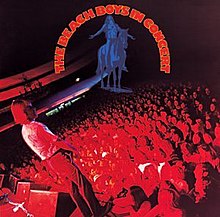
 The Beach Boys: Concert (Capitol 1963/1964)
 The Beach Boys: Live in London (Capitol 1969/1970/1976) [r]
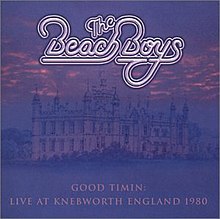 The Beach Boys: Good Timin': Live at Knebworth 1980 (Eagle 1980/2003)
 The Beach Boys: Songs from Here and Back (Hallmark 1974-2005/2006)
 The Beach Boys: Live - The 50th Anniversary Tour (Capitol 2012/2013) [c]
 The Beach Boys: Live in Sacramento 1964 (Capitol 1964/2014)
 The Beach Boys: Live in Chicago 1965 (Capitol 1965/2015) [c]
 The Beach Boys: Graduation Day 1966: Live at the University of Michigan (Capitol 1966/2016)
 The Beach Boys: 1967 - Live Sunshine (Capitol 1967/2017)
 The Beach Boys: On Tour: 1968 (Capitol 1968/2018)
 The Beach Boys: Still Cruisin (Capitol 1988) [NO]
 The Beach Boys: Summer in Paradise (Brother 1992) [NO]
 The Beach Boys: That's Why God Made the Radio (Capitol 2012) [NO]
 The Beach Boys: Four by the Beach Boys (Capitol 1964 EP) [r]
 The Beach Boys: Mount Vernon and Fairway (Reprise 1973 EP) [r]
 The Beach Boys: [Sub Pop Singles Club/Pet Sounds Sessions 7"] (Sub Pop [1966]/1996 EP) [r]
 The Beach Boys: Good Vibrations: 40th Anniversary Edition (Capitol 1966/2006 EP)