Sunday, October 9, 2016

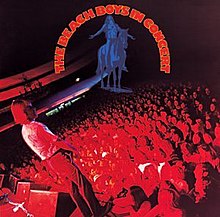
The Beach Boys: In Concert (1972-73)


(Reprise 1974)

HIGHLY RECOMMENDED

The Beach Boys are much more universally remembered for their vocal harmonizing and for Brian Wilson's writing, arrangements and production than for their pure musicianship. This is largely for good reason; in the first half of the '60s they were deservedly known as primarily a studio phenomenon, though there exists audio and filmed evidence that they were often a tight, skilled band on stage, they were just as often done in by both massive screaming audiences and the limiting conventions of stage shows at the time. Throughout the '60s, however, they gradually came into their own as a live band, especially in the years after Brian left the road, staying off tour to work up new material in the studio.

Each of the first three Beach Boys live albums presents a very different portrait of a working band. Concert, which unlike the others captures the original lineup prior to Brian's departure from the road, is all youthful energy and goofing off, the very opposite of their methodical records from the time. Live in London, recorded in late 1968, a time when they remained at their studio peak but were receiving little credit for it, has the band playing in a country that appreciates and respect them and feeds off the energy of a loving crowd; accompanied by a bass section, its performances of the Pet Sounds and Wild Honey material are sparkling and surprisingly exuberant, even romantic at times, but they're marred slightly by Mike Love's often painful emceeing.

They continued getting better and gaining a deserved reputation as a dynamic, endlessly surprising live act, with deep, varied setlists and versatile performances showing off a band willing to evolve dramatically without losing touch with its past, especially after new recruits Ricky Fataar and Blondie Chaplin of South Africa's the Flame joined up, rejuvenating and transforming the dynamic and breathing new life into old standbys. With Carl Wilson serving as a sort of ringleader during this period, which coincided with the fine albums So Tough and Holland, they almost feel like a fresh new group with simultaneous origins in California and British power pop and the more modest, less macho side of crunching, blues-infected stadium rock, with a bit of Stevie Wonder in the mix. They remained in most ways as idiosyncratic as they'd been in the late '60s and as effective at pleasing crowds as in their commercial peak, but they also were a group of musicians who were just plain great, and a thrill to listen to. In Concert captures them at their all-time stage peak, and it's an unmitigated joy to hear them attach reverence to their '60s work but to never be thoroughly stuck in it.

The unforced energy and depth of this performance owes everything to Ricky, Blondie and Carl, but the rest of the band slides in impeccably. Mike mostly shuts up for a change (or the compilers were kind enough to edit out his prattling), and Carl, Al and particularly Dennis have excellent chemistry with the audiences when they step forward. Though it doesn't achieve the intimacy of Live in London, this record honestly feels like it approximates the sensation of seeing a big band on tour in the '70s, only that band doesn't sound like the stagnant nostalgia act that the Beach Boys were soon to become, it sounds like a new band, one with so much potential in its future but mostly one that exists in a beautiful nostalgia-free moment of just reveling in the joy of performance. It's one of those rare times when a fan can be proud of this band for what they were once capable of.

The double album gathers up performances from a slew of different shows, not listed specifically on the package, so there's almost a Time Fades Away-like sense of life on the road chugging along within it. The best way to listen to it, though, is -- assuming you're already a big enough fan to know the albums of the period well -- to not look at the tracklist beforehand but rather just start playing the record and let the selections surprise you.

All twenty performances are exceptionally good, with the possible exception of a ridiculously fast-paced "Sloop John B," but the best performances are interestingly on the new material, much of which is superior to the studio versions, because -- presumably -- the songs have developed and loosened over time, the way a real band does. "Sail On, Sailor" soars without the wheezing Holland production; Carl sounds much more sure of himself when putting on "The Trader" live; "Marcella" and "Funky Pretty" become miraculously confident rock songs; the emotionally wrenching "Leaving This Town" slows down and sprawls out into a generous but not indulgent jam. An otherwise unreleased (except on certain rare copies of Holland) new song, "We Got Love," blends in nicely with these songs as well.

That's not to say that the Beach Boys sleep through their classics here; indeed, one of the strengths of In Concert is the way it builds to a climax of searing new arrangements of several of their most fondly remembered singles. The common denominator is that in this context, the songs still feel alive, not like the mere dredging up of past glories. It's also wonderful to hear the generally excited crowd -- who seem often confused but persuaded by the new stuff -- explode when "Wouldn't It Be Nice" and "Good Vibrations" start. There aren't a lot of lesser-known album tracks from the '60s here, but the beautiful take on "Let the Wind Blow" alone might be enough.

Brian's absence is felt here, but Al and Carl fill his vocal parts in nicely; it's especially moving, if a bit haunting, to hear Carl talking about his brother as though he's no longer alive then launching into "Caroline, No," a song you might never have known you needed to hear him sing but you did. It's hard to contemplate the Beach Boys as a complete unit without Brian -- this is the only essential Beach Boys release that doesn't somehow involve him as a performer -- but In Concert firmly demonstrates the tremendous skill and showmanship of the rest of the band, especially as they matured beyond their formative period. It certainly is the last word on how they fared as musicians, with Carl in particular demonstrating astounding range and restraint as a guitarist, something hard to get a sense of on the group's records. The biggest disappointment about this album comes from the knowledge of how quickly this mind-bogglingly creative, sensitive, ambitious period, when Carl saw a way forward for the Beach Boys in a radically changed landscape for rock bands, unceremoniously ended.

The Beach Boys capsules: live albums

This includes all of the Beach Boys' officially released live records with the exception of In Concert, addressed separately.

The Beach Boys: Concert (Capitol 1963/1964)
The band sounds pretty good, basically, and although their act is amateurish, their youthful performances here -- recorded at a couple of shows in Sacramento, with overdubs -- are exhilarating and charming, thronged by masses of screaming teenagers. It may not be as exciting as The Beatles at the Hollywood Bowl, but it still kicks. However, the setlist is a major drawback, consisting of a ratio of six covers to seven originals, and one of the originals ("I Get Around") is just the regular song with audience screams added. It's fun to hear Dennis sing Dion's "The Wanderer" -- that outrageous audience reaction after he grumbles the opening line, wow -- and Brian's introduction of Mike for "Monster Mash" is cute, but what the hell is the point? Why did a band with six albums need to dabble in the material of others? Why only one song from their newest release at this point? Didn't the band know that "Long Tall Texan" makes Mike sound like a complete idiot? (Probably.) I have to say, however, that the version of the Four Freshmen's "Graduation Day" here is lovely, warm, and funny, and defines much of what I love about this group. Of course, they negate it quickly with a flat "Johnny B. Goode," but hey. I would like to quickly note that of the actual Beach Boys songs here, "In My Room" and an energetic "Hawaii" come off the best. For some reason, this album was a blockbuster.

The Beach Boys: Live in London (Capitol 1969/1970/1976) [r]
Since they couldn't seem to scrounge up a second followup to Endless Summer, Capitol's 1976 method of competition with one of the most eagerly awaited releases of the decade (15 Big Ones) was to issue a formerly import-only live album in the States... and this is a damn good cash-in. This late-'60s show was recorded on a European tour with a full brass section that beautifully fleshes out late-Capitol material like "Darlin'," "Wake the World," "God Only Knows," and a gorgeous "Aren't You Glad." The relative lack of Friends material is lamentable, but the Wild Honey stuff is so good it's forgivable. In fact, every track here is worthwhile and shows the band as tight as they ever were on stage. Mike Love's schmooze-act is annoying and hard to ignore (and on the CD, difficult to skip), and this doesn't quite stand up to In Concert, but its brevity and those irresistible horns, plus the setlist, make it even more enjoyable in certain ways.
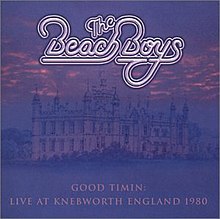
The Beach Boys: Good Timin': Live at Knebworth 1980 (Eagle 1980/2003)
With a beautiful package that contains long-archived, long-promised unreleased material, this obviously couldn't be Capitol Records product. Instead it's from a UK-based label; nobody pretends this show from arguably the twilight of the Beach Boys' creative era is any kind of a revelation. It's just an interesting artifact for fans. The band (in one of their last full six-man lineup performances, although Brian seriously doesn't do much), indeed, sounds unusually enthusiastic for the post-Endless Summer oldies revue era. The harmonies are top-notch, and pretty much everything about the performance is above average except the setlist, which of course concentrates mostly on the tired classic material. There's a nice "Do It Again," a lovely singalong of "Good Vibrations" (probably the disc highlight), and a stellar medley of "Cotton Fields" and "Heroes and Villains," but the band's most divine moments come from the newest material. "Keepin' the Summer Alive," "Lady Lynda," "School Days," and "Rock & Roll Music" all sound vital and energized, blowing the corresponding studio versions out of the water entirely. It's remarkable to hear firsthand how beloved they were in the UK; even with the band playing material that was ancient by 1980, they connect fully with their fans in a sense that is missed sorely. Dennis Wilson particularly is possessive here of an adoration of the crowd that is endearing and heartwrenching. He even makes "You Are So Beautiful" sound not the least bit trite. And when his brother Carl sings "God Only Knows," time sort of melts away. Worth a perusal for fans.

The Beach Boys: Songs from Here and Back (Hallmark 1974-2005/2006)
For the dad rocker who has everything, Hallmark briefly offered the chance to get a cheap and breezy CD compilation of haphazardly chosen live Beach Boys cuts plus three "new songs" (that is, one new track each from the three split-off factions of the band as of 2006). The live stuff -- dating from either 1974 or (mostly) 1989 -- is not spectacular but it's tight and enjoyable, Carl's presence constantly in evidence and permitting a tragic contrast to the live Beach Boys band as it now exists. Since this was a bit of an obscure release -- you had to buy three greeting cards for the privilege to lay down $7.99 to own it, and it's never made it to streaming sites -- Brian, Mike and Al don't contribute particularly cutting-edge material for the new studio tracks. Brian's "Spirit of Rock & Roll" has been floating around since the Sweet Insanity era (1990) and is a lazily performed take on an utterly inconsequential number. Al's "PT Cruiser" is a simplistic pastiche of '60s car songs, those of Ronny & the Daytonas ("GTO") and the Rip Chords ("Hey Little Cobra") as much as the Beach Boys ("Shut Down"); Al's voice is as strong as ever. Ironically, Mike provides the most inspired and ambitious new song, something called "Cool Head, Warm Heart" that actually won't make you cringe. It's a good capper to a fairly decent fans-only release that's very easy to find cheaply in bargain bins.

The Beach Boys: Live - The 50th Anniversary Tour (Capitol 2012/2013) [c]
The so-called "reunion tour" of the Beach Boys with Brian Wilson, Mike Love, Al Jardine, Bruce Johnston and David Marks puttered around the nation for much of 2012, playing generous setlists to large, appreciative crowds. Brian even played bass once in a while, apparently. Judging from this studio-sweetened document, it's all very stiff and vile, the same old tired nostalgia peddling of the Mike & Bruce show with the supposed magic of two to three extra discarded original members. The closest this gets to tolerable is when Dennis and Carl Wilson are beamed in through projection screen to sing their leads on "Forever" and "God Only Knows." (Carl, the glue holding the band together for much of its existence, isn't important enough to merit the beyond-the-grave singing of one of his own songs, obvs.) At least it's not as bad as that execrable studio album they issued. I'm sorry for being a grouch, but my heart dies a bit every time someone talks about hearing this or being at one of these shows and being so impressed or moved to be in the presence of "the original Beach Boys." Two of the three central creative figures of the band are gone; to pretend otherwise is an obscenity. Mike -- still schmoozing his way through the opening "wheeeeeen" of "Be True to Your School," still slobbering all over these old youthful lyrics as he trudges through his seventies, still helping distance us from the memory that this band actually mattered and could do beautiful things at one time -- dismantled the "reunion" group to continue his magical mystery tour with Bruce later in 2012. At least people already know that version of the band is a joke.

The Beach Boys: Live in Sacramento 1964 (Capitol 1964/2014)
A copyright extension set gathering most of the material from the two shows recorded for the Concert album above. That album had a lot of repairs done in post, so it's nice to have the chance to hear the band -- competent, if barely professional -- at their highest youthful energy level and no doctoring. Sadly, the setlist is still dreadful, with too much inexplicable filler for such short gigs and such a large body (already) of available material. This official release is also somewhat inferior to old bootlegs collecting the same material, though it does feature one of my favorite heretofore-unreleased items, a rehearsal of "Papa-Oom-Mow-Mow" that showcases how hard the group could rock when they wanted to, with a particularly searing lead vocal by Brian Wilson, whose "rock & roll" voice was so criminally underused by the band. This is a slightly better package than Concert overall, so it can be considered a succession unless the original (one of only two #1 albums the band had, don't forget) is too iconic to be laid to rest in your estimation.

The Beach Boys: Live in Chicago 1965 (Capitol 1965/2015) [c]
The Beach Boys were recorded on a special two-night stand in Chicago in the winter of 1965 with Brian Wilson temporarily back in tow, the goal being to release a second live album (probably intended to be used as the stopgap that Party! later became). The Beach Boys were now soaring to new heights and reaching their peak in the studio, but you wouldn't know it from this, a disaster despite the band's enthusiasm. On the first show the biggest problem is that they're poorly miked by some incompetent sound engineer -- he hid Dennis' vocal mike inside a shoebox, it seems -- but also there's the fact that they don't seem to know the words to their own songs and are terribly out of tune. Brian stumbles through "Don't Worry Baby" and "Please Let Me Wonder," one of the few new-ish songs attempted here, and while things do improve on the second night -- some listeners actually celebrate the slightly calmer revision of "Wonder" as one of the best versions of the song -- it's still not a level acceptable for general, recreational listening. The Beach Boys could be tight at times, but this was a couple of off-nights, and obviously they wouldn't come into their own as a live band for another three years or so. It's hard to determine if Brian's normal absence from live shows is one reason they sound so under-rehearsed here. Maybe it also explains why the setlist is so dreadful, and barely distinguishable from shows they were playing a year earlier. (To be fair, it's not like the Beatles were doing much better on either count during this same period.) For hardcores only; it's a pity Capitol didn't see fit to dip into the 1965 sessions vaults, Party! aside, as the Today! and Summer Days sessions would be a lot more interesting for fans who aren't bootleg-enabled.

The Beach Boys: Graduation Day 1966: Live at the University of Michigan (Capitol 1966/2016)
The most notable thing about this release is the degree to which Capitol Records essentially dumped it onto the marketplace with no advertisement or fanfare and not even any real announcement (at least, as far as I noticed). Despite my regular checks, I only learned of its existence when searching for something else on Spotify. There are no liner notes and no physical release. You can stream it or buy it on iTunes; but based on the fact that they bothered at all, it's an easy assumption that these Beach Boys archival thingos must be somewhat profitable, especially with such scant overhead as this one requires. The Michigan performances -- which are engaging and competent, nothing more really -- were collected before unofficially on a Sea of Tunes box that I never tracked down myself, the first one also on the infamous (for its title, not its content) bootleg Mike Love, Not War. In some ways Capitol's treatment is commendable -- this is a no-frills gathering of two complete Beach Boys shows, both (as far as I can hear) unedited. The band performs well but the setlists are as uninspiring as ever for the mid-'60s Beach Boys... except for the second and third ever live performances of "Good Vibrations," some lovely treatments of the two big Pet Sounds numbers (Carl sounds angelic as always), and Dennis' outstanding rendition of the Beatles' "You've Got to Hide Your Love Away." It's never easy to know how to grade these pre-'69 Beach Boys shows, when they were still clinging to their past (understandably, judging from audience reactions) when they could've rearranged more of Pet Sounds or Summer Days, but if you love the band as much as you probably do if you've read this far, you'll enjoy this, and it's not like it requires much of an investment. Evidently we will need to keep a closer watch on Capitol in the future, and if they keep it up with unexpected live releases, I'm wondering if we'll see some really remarkable performances make their way out in the years to come.

The Beach Boys: 1967 - Live Sunshine (Capitol 1967/2017)
The lack of a recommendation here shouldn't be taken as a rebuke of this set's existence; it's just a lot of material (105 tracks) and doesn't particularly reward casual listening due to the repetition of songs across multiple dates. A clearinghouse for every recording (of acceptable quality) that exists of a Beach Boys concert from 1967, it opens with Even More Hawaii Material (castoff from the aborted live album that was to see release late in the title year), in this case the two complete concerts with Brian temporarily in tow, Bruce temporarily gone, but instead of bass Brian plays organ, rather badly. In fact the entire band sounds under-rehearsed and generally awful on the two Hawaii shows; despite the intrigue of hearing them play "Gettin' Hungry" on a stage in front of actual screaming teenagers, no one rises to the occasion in any sense, even though the actual plan was to play a show worthy of release. Dennis gives a particularly inexplicable performance, barely working any energy up beyond keeping a steady beat, and Brian's belching organ sounds like a deliberate act of sabotage. (This led, of course, to the often lovely low-key Wally Heider sessions mostly collected elsewhere.) It was never more obvious, incidentally, that the main reason "Heroes and Villains" didn't break records on the charts is how lackluster its grafted-on chorus is; the song's delightfully propulsive at first then stops dead, and at a noisy concert that's hard to ignore. Note also that the band's setlists still seem largely stuck in the past (no wonder they didn't feel prepared for Monterey), a problem that recurs to a lesser extent across this entire collection, and you have a recipe for disaster or at least embarrassment. The rehearsals for those shows, organized better here than in the past and on boots, are a bit more interesting; they do seem reasonably energized, including Brian, and discuss experimenting with oddball numbers like "The Lord's Prayer" but don't follow through -- it all suggests that the Hawaii problem was both just the jitters of the personnel shakeup combined with a failure of imagination in regard to what they could play onstage. The band's competence is vastly improved on the rest of the shows gathered here; setlist problems are still inescapable, with "Barbara Ann" and "Graduation Day" and even "Surfer Girl," great as it is, sounding like relics of a different band. In Detroit they go deep on songs from the then-forthcoming Wild Honey, with "Country Air" (!) and "How She Boogalooed It" appearing and coming off quite well, but two days later they've retired all but the title track and "Darlin'," which is a pity. Carl is the MVP on all these performances, killing it night after night on those numbers as well as "God Only Knows." There are still tough spots, but the band performances are mostly tight and enthusiastic; you hear a difference with Dennis immediately when they launch into "Barbara Ann" in Detroit on November 17th. The Washington show suffers from a seemingly lethargic crowd, not ideal for a band that feeds so much on the electricity in the room; but the show in White Plains, NY on the 21st of November overflows with infectious energy and an audience that's absolutely in love with the band -- that's the set to listen to if you want a taste of this. The biggest problem across the set is Mike's inability to shut up; some may appreciate his humor, but to me it comes off as a violation of a number of potentially emotional moments, plus he tends to repeat the same stock jokes from one town to the next, some of which (like "forgetting" the order in which songs are to be played) aren't even obnoxious so much as inexplicable. But as a harbinger of hopefully similar sets like this to come, specifically for the Ricky-Blondie period, I hope this makes heaps of cash.

The Beach Boys: On Tour: 1968 (Capitol 1968/2018)
This 114-track collection, another digital-only release, tells a few different stories. One is about the Beach Boys' growing accomplishment as a live band by the late '60s, and particularly Carl Wilson's remarkable aptitude at stage management and arranging. The group is joined at these shows by a brass band that follows them on the road through the midwest in July '68 and then, in a more robust configuration, to London five months later. The setlists are mostly the same from night to night and, as always, the band has good moments and bad ones, but by the London shows -- another example of which was officially released by Capitol way back in 1976, with incorrect date attached -- they sound as if they've grown fully into themselves on stage, eschewing most of the now-ancient early hits (only "Barbara Ann" and "California Girls" predate Pet Sounds) and fleshing out beautiful recordings like "Wake the World," "Aren't You Glad" and even "Bluebirds Over the Mountain," which is vastly better as a live cover. But then, of course, there is Mike Love, whose insistence on mugging with bad jokes that aren't funny the first time already derailed the otherwise fine Live in London release, and becomes worse on these accompanying shows when you learn how little he varied his routine from one night to the next. I'm the kind of fan who can live with eight shows boasting very similar setlists, but I'm not the one who's ever going to have the patience to sitthrough Love's bullshit again. It's not the compilers' fault, but boy is it a real shame. (Even more of a shame: just at the point when the Beach Boys are starting to become a fantastic live band, it appears that we won't get a live release next year because nothing properly taped from 1969 is in the vaults. Honestly, a huge disappointment to me.) One really stark contrast between the U.S. and UK shows here: the crowd response in London is positively enraptured, which is a lot of fun to hear.
The Beach Boys capsules: final albums + EPs

This post includes the last three Beach Boys albums, followed by the short-form EPs released in various contexts and formats throughout their career. The reviews of Still Cruisin', Summer in Paradise, Four by the Beach Boys and Mt. Vernon and Fairway were originally posted in 2003.

ALBUMS

The Beach Boys: Still Cruisin (Capitol 1988) [NO]
After the Cocktail soundtrack item "Kokomo" -- a John Phillips / Scott MacKenzie cowrite that's undeniably catchy but only catches fire during Carl's falsetto on the chorus -- hit the top of the charts for Elektra in 1988, an equally slick album was quickly assembled (with car-company sponsorship, no less) back on the old Capitol stomping grounds. Brian's sole contribution "In My Car" -- evidently an outtake from his solo album -- is soaked in ultra-modern synth stylistics and thuds to the ground, his voice the only element that survives. The rest of the material is devoted in large part to "songs from movies," though Mike later claimed this "concept" was "diluted" by "politics," and is dominated by Terry Melcher and Mike Love. It would be one thing if the band was using all the new technology at their disposal to do anything unusual, as on Love You, or at least trying to make modern music to match the modern noises, as on the previous album. Instead they soak themselves in laboriously conventional arrangements and repeat the clichés of their youth without any of the truth that used to drive every note of their music; they couldn't have made it any clearer, going so far as to toss on three older cuts that emphasize how far Beach Boys now sit from their artistic peak. The title track is the most difficult Beach Boys "hit" to sit through, ever. It's sad enough that they're doing a midtempo rewrite of "Getcha Back" under a new title, but what's even sadder is that "Getcha Back" was a rewrite of a rewrite of a rewrite anyway. On "Somewhere Near Japan," Mike and Terry join with "Kokomo" mastermind Phillips again hoping for lightning to strike twice. It didn't, and like "Kokomo," the song is inoffensive and boring despite one of the most fascinatingly lurid back stories of any song in the canon (it involves Phillips' daughter, One Day at a Time actress Mackenzie, calling him to ask for drug money). Al brings us "Island Girl," which is even less offensive and even more boring. If you want offensive, check out the Fat Boys collaboration "Wipe Out," which belongs here even less than the three "old songs" that find their way to the back end: "I Get Around," "California Girls" and "Wouldn't it Be Nice." Leave it to Carl Wilson to save the day. On the final new cut, "Make it Big," he is working undeniably with subpar material, but he lifts it to oblivion with that angelic voice and turns a third-rate power ballad into something moving. One wishes he could have been the singer on all the songs. As it stands, Still Cruisin' is a half-assed hodgepodge that brings the Beach Boys to new lows in whitebread adult-contemporary worthlessness.

The Beach Boys: Summer in Paradise (Brother 1992) [NO]
The Beach Boys' only album without Brian (who'd more or less left the group by this point), printed independently of any major label because what would any of them want with the Beach Boys in 1992, this shunned (and now difficult to find) release lends some credibility to the somewhat unfair conventional wisdom that Mike Love is a hack. It's practically a Mike solo album, though Carl sings on it and Al and Bruce have some dull contributions. Covers of the Shangri-Las, the Drifters, and Sly & the Family Stone (!) all fall flat while violently destroying everything that made the respective artists' recordings great. That's nothing compared to the pure-horseshit originals. "Still Surfin'" is three times as bad as its title, and that's saying a lot; it's also the best song on the album. Mike Love attempts to "rap" on "Summer of Love" (pun intended) and the result is one of the most wrongheaded, worthless, horrible pop songs you are ever likely to hear ("Doing onto others is the Golden Rule / But doing it to you would be so very cool"). From the trite bohemia of "Strange Things Happen" (a sort of "Somewhere Near Japan" clone in that it attempts vainly to touch on adult emotions) to the title track, this stuff is obnoxious, lyrically irredeemable, and genuinely frightening. It's depressing to be confronted with so many attempts to have the "Kokomo" lightning strike again ("Island Fever," "Lahaina Aloha"), that single's success probably having been the catalyst for this album's existence, but I can't help but be even more offended, to a frankly appalling extent, by the idiotic "current" remakes of "Surfin'" and particularly "Forever," on which the band allows the inhumanely useless John Stamos to deface Dennis Wilson's most beloved composition. No grace, no restraint, no respect whatsoever. If you are thinking of seeking this out hoping for a "so bad it's good" treasure, I must kindly direct you elsewhere.

The Beach Boys: That's Why God Made the Radio (Capitol 2012) [NO]
After Carl Wilson's tragic death of cancer in 1998, the Beach Boys split into three factions -- Al Jardine fronting what amounted to a Beach Boys cover band, Mike Love still peddling the band's real name on the road but actually presenting something with far less integrity than Jardine's group (though it's alleged by many that they've improved in the last decade), and most improbably, Brian Wilson finally heading out on the road performing very successful shows as a solo artist despite a steadily declining voice and presence. It was only on the occasion of the band's fiftieth anniversary that they regrouped, with Bruce Johnston and David Marks in tow, but calling this a reunion is laughable; to my mind there are simply no Beach Boys with two missing Wilson brothers. Despite the fanfare, this horrific set of adult contemporary Joe Thomas mush is essentially "Winds of Change" and "Endless Harmony" stretched to forty minutes, not even rising to the rather lax standards set by Brian's own solo albums of the new millennium. His presence and Carl's absence are all that distinguish this from Summer in Paradise, because even if it's more carefully engineered to appeal to aged-out Baby Boomers it's equally goopy and insipid, and there's simply no way its flat cornball nostalgia could ever have any sort of innate appeal to anyone not predisposed to defend it. Even the celebrated closing suite doesn't sound inspired to me, and Brian simply no longer has the voice to put even his lazier ideas across. The rest is godawful cheese. I'm ashamed that a band I have stood by and defended for so many years would put its name on this, even with its supposed leading light back in the fold. The reunion stunt was over quickly; good riddance.

***

EPs

The Beach Boys: Four by the Beach Boys (Capitol 1964 EP) [r]
In Britain in the '60s, the EP was essentially what it later became in the indie underground: a chance to remain prolific without recording an album. The Beatles had a wonderful EP of non-album cuts, Long Tall Sally, in 1964; a large share of the Kinks' most enduring hits came not from LPs but from budget EPs. In addition, album "samplers" were often issued in this smaller format to satisfy those on a budget. The latter idea was attempted on the American market in one of Capitol's less fruitful stunts of the early '60s: the "4 By" series. The Beach Boys' entry gathered four of the most incredible cuts from All Summer Long -- "Wendy," "Don't Back Down," "Little Honda," and the completely jaw-dropping cover of the Mystics' "Hushabye" -- classics all. No point in seeking in this out unless you're completely obsessed (and you have lots of cash), of course. "Wendy" and "Little Honda" both charted as individual tracks.

The Beach Boys: Mount Vernon and Fairway (Reprise 1973 EP) [r]
A delightful curio indeed, Mount Vernon and Fairway was (and is) packaged as a bonus with the Holland album. It's Carl Wilson adding wonderfully imaginative production to a witty, surreal (and uniquely autobiographical) story by Brian, read aloud in side-splitting deadpan by Jack Rieley. Sarcastic art rock parody or straight-ahead weirdness from drugged-up madmen? You decide. It doesn't get much more obscure or just plain fun than this -- and it even holds up to repeat listens, amazingly. The rating above comes on the condition that the reader recognizes Mt. Vernon as the very definition of a "fans-only" work. From a neutral standpoint, temper the recommendation a little.

The Beach Boys: [Sub Pop Singles Club/Pet Sounds Sessions 7"] (Sub Pop [1966]/1996 EP) [r]
The most practical evidence of the Beach Boys' in-vogue period among scenesters, this rather nifty 7" from Seattle's most famous record label (in their long-running Singles Club format) provides a smattering of material from the then-forthcoming Pet Sounds Sessions boxed set. It also gave the first public taste of Mark Linett's Pet Sounds stereo mix with "I Just Wasn't Made for These Times," backed by the stunning vocals-only mix of "Wouldn't It Be Nice" and the "Here Today" backing track on the flip. To date it's the only vinyl appearance of any of the "stack-o-vocals" mixes, but it's an interesting item even if it doesn't offer anything unique.

The Beach Boys: Good Vibrations: 40th Anniversary Edition (Capitol 1966/2006 EP)
Cute but frivolous curiosity item is somewhat in the vein of the later, rather wasteful singles boxed set -- it duplicates artwork and the A- and b-sides of the original "Good Vibrations" 45, the biggest and nuttiest of the Beach Boys' three '60s number-ones, plus virtually every outtake construction or remix of the song that had been released up to 2006 as well as the Lei'd in Hawaii "rehearsal" version. There's nothing actually "new" or unreleased here, though one of the cuts was on the 1983 Rarities album and thereby hadn't been in print for decades. It's understandable that Capitol wanted to exploit the anniversary of such a landmark song but anyone interested enough to buy this had probably already heard the three discs of sessions illicitly issued by Sea of Tunes, rendering this package somewhat redundant. As an aside, this seems like an acceptably secluded enough place for me to state that personally, while I admire and enjoy "Good Vibrations," it means surprisingly little to me personally. I tend to prefer the Beach Boys when they're more emotionally direct and I find the song's fragmented nature and constant editing impressive but also a bit showy, even the tiniest bit empty, at least when compared to the prior single and album. It surprises me that anyone would name it as superior to something like "Strawberry Fields Forever" or "Eight Miles High," both of which are equally important to the evolution of psychedelia but seem far more emotional in the former case, riskier and more fluid in the latter. Still, the song's extraordinary and obviously a zenith for Brian Wilson and I wouldn't question that. It's just not my favorite. Hope I can still be your friend.

***

The Beach Boys (1985)


(Caribou)

Dennis Wilson's tragic death by drowning in 1983 was probably the one event that pulled the Beach Boys together and kept Keepin' the Summer Alive from being their final studio effort. The most fashion-conscious of their many comeback attempts, this last album for Caribou finds Carl Wilson back in the fold and the band recording for the first time without all three Wilson brothers participating in some form or another. Alas, the CBS Records-imposed producer Steve Levine is anything but a good match for them; the same goes for the weird commitment to technology, which leads to the group hardly playing a note on the album (most of the instruments are synthesized) and even their Fairlight-enhanced vocals are sometimes digitized and artificial. They sound excellent at times, but how much of it is even really them?

It should perhaps be a humiliation that the Beach Boys, a band encompassing one of the single greatest composers of pop music, are by this point accepting songs from outside sources, then-"hot" and luminary both (Boy George and Stevie Wonder), and despite that same composer's unparalleled production skills, that they are also being forced to use an outside producer. The music is the final word, however, and it doesn't suffer from this irrevocably, at least not if you have a tolerance for a sound derived from the Miami Vice theme and the Beverly Hills Cop soundtrack. Instead of sounding tired and without direction, the band seems to at least try to pull themselves together to put in serious effort following Dennis' loss, and even if it took some kind of force to get them in the studio, the fact that they are even attempting to rejuvenate themselves in a very contemporary fashion (as opposed to the nostalgic leanings of 15 Big Ones or Keepin' the Summer Alive) is worth cautious optimism.

To be honest, though, the album works due to one man and one man alone, and it's neither Levine (he syrups up what could have been a decent Bruce Johnston cut, "She Believes in Love Again") or Brian. It certainly isn't Mike Love, who kindly disappears for most of the record. Instead, Carl Wilson is the absolute hero of this album, and his compositions and vocal contributions don't just work, they simmer. With more from Carl this could have been an astounding record. Instead it is a hit-and-miss record with some astounding moments. The perverse fact that one of those moments comes from Boy George somehow makes it more endearing. Carl sings the rejected (?) Culture Club number "Passing Friend" and infuses its banal synthpop arrangement and dime-store girl group lyrics with a sense of passion that turns it into not only a genuine curio but a remarkable recording. It may be one of the most bizarre juxtapositions in pop history, and it works. So does Stevie Wonder's "I Do Love You," for the opposite reason. Carl sounds so much like Stevie it's chilling, and one tends to wonder why on earth Wonder didn't release this lovely composition himself (have you heard his '80s albums!?), but more power to him because this is a heavenly moment from Mr. Wilson.

Even from a modern standpoint, although Levine's production techniques have dated, the record rarely slips into comfortable MOR mode. "Maybe I Don't Know," for example, could probably be lite-jazz if handled in a certain way, but with the emphasis on its shuffle rhythm and the addition of a wonderful screaming guitar line, and of course Carl's voice, it is special, and on this and several other inclusions it's comforting to hear the Beach Boys grasping for a modern audience without resorting to nostalgia, those pangs of youthful recognition. Unfortunately, Brian's "California Calling," with Ringo Starr on drums, attempts such a connection and turns into the album's most blatantly flaccid moment. Brian's other songs are no better -- "I'm So Lonely," "It's Just a Matter of Time," and the terrible "Crack at Your Love" have their defenders, but to these ears he is only a liability on this outing. I doubt the aid of Eugene Landy, supposed "co-composer," helped much in these cases. The fact that four Brian Wilson songs pale in comparison to Mike Love's obvious throwback "Getcha Back" is a depressing comment both on Wilson and on the state of the band itself, but it may be important to point out here that the main reason "Getcha Back" clicks at all is a soaring falsetto line from Brian.

On the other hand, Carl seems to be growing as a composer with every passing year. "It's Gettin' Late" uses Levine's mid-1980s Loverboy stylings to its advantage so that Carl turns out a bleeding R&B number, infected with the Beach Boys' loveliest harmonies in years, that blends rather cogently with contemporary tastes even three decades after the fact. It's music with an obvious commercial motivation, shepherded heavy-handedly by Levine, but it still demonstrates Carl's underappreciated acumen with instantly appealing hooks and modern sounds. Wisely, Levine left "Where I Belong," one of Carl's most beautiful songs, relatively bare. In utterly flawless form, he belts out what must be one of the Beach Boys' most perfect love songs, never resorting to the obvious musically or lyrically. With Brian at the helm, it could have been one of the band's masterpieces. That is what makes the album so frustrating, but given what's come since it can be heard as a beautiful, and in a sense crushingly sad, swansong. You couldn't ask for a better ending to the story than "Where I Belong." If only for these two Carl songs, this record deserves some recognition as one last stab at longevity from a once-magnificent band.

***

[Originally posted in 2003.]

The Beach Boys: Keepin' the Summer Alive (1980)


(Caribou)

!!!!! AVOID !!!!!

The cover of Keepin' the Summer Alive says it all. The Beach Boys play inside a summertime-infected bubble while winter rages outside. If this is what they mean by the title, for god's sake, let it die. This album is something worse than dreck -- it's actually frustrating, because by all logic it should be somewhat palatable. All five original members are here, plus Bruce (who produces and thus has taken the majority of the blame for this debacle), and not a second of it is as boring as any given track from MIU Album. It's more like a train wreck, or maybe a ten-car pileup: one completely awful disaster after another. The last half of the album approaches "unlistenable" territory, without exaggeration.

A minuscule amount of this is worth salvaging. Carl Wilson's two collaborations with the Guess Who's Randy Bachman out-perform the rest of the material by far: much more than the usual obligatory "Do It Again" clone, the raveup title track has a slight sting the Beach Boys have typically lacked since around 20/20, and although it's just a diluted country-by-way-of-the-Byrds catalog of clichés, "Livin' with a Heartache" is beautiful and features typically affecting vocals from Carl. The track revisits the "adult" territory of "Tears in the Morning" and "Lady Lynda" but with stark intelligence and warmth lacking in another track clearly derived from those two smashes, "Oh Darlin'." Even that one has more to offer than the sole remaining half-decent composition, "Goin' On," a hot single that sounds almost exactly like the previous album's hot single, "Good Timin'."

The rest redefines "obnoxious." If the good songs are as derivative as those listed above, the bad ones are just plain shameless. "Some of Your Love" manages to musically rip off both "Child of Winter" and "Be True to Your School" while drenching them in trite high-school nonsense that makes the latter seem dignified and modern. "Sunshine" recasts an unfinished Spector cover as a plodding marathon of reggae posturing. Worse yet is Al Jardine's pretend-David Crosby ego trip, "Santa Ana Winds," made all the more difficult to sit through by his dumbass explanation at the outset of the title's meaning. Thank you, Merriam-Webster.

The band is treading offensive territory with a cover of "School Day" that turns all of Chuck Berry's heartfelt allegory about the life-saving truths of rock & roll into pandering whitewash; I think it may be the worst thing ever recorded, or at least I did think so until I got to side two. "Endless Harmony" skips offending rock & roll gods and moves straight to Beach Boys hardcores by sending every one of us into madness with an unbelievably pretentious, poorly written, incompetently performed rock opera (of sorts) about the band's history, written by semi-outsider Johnston at that. I don't think I've managed to listen to the whole thing more than once. I'm not sure which I hate more -- that song or "When Girls Get Together," which sat in the vaults for ten years... with good fucking reason! I don't know if they thought it was funny or enjoyably weird or what, but it's appalling, ponderous, neverending, impossible to like, etc. They're not even attempting crass commercialism; they just don't care, and it's no wonder Carl was fed up, once insisting around this time that he wanted no part of the band unless 1981 was as important to them as 1961.

At this point the Beach Boys have become shameless nostalgia merchants. Or have they? Carl certainly hasn't, as his pair of contributions prove. Maybe Brian hasn't; he's not on the album long enough for us to tell, although he did spend a couple of days in the production booth like old times. Dennis surely hasn't, but then, he too is mostly MIA. So is this Mike Love's band? Al Jardine's? Bruce Johnston's? Anybody's? No, no, no, and no. This band is a moneymaking machine. The second they get the balls to take a risk, they can't sell enough records to pay the bills so they go back to the obvious b.s., and you can't really blame them. This has been wrecking their career since Endless Summer, maybe since "Do it Again," maybe since Pet Sounds, hell, maybe since before that: the conflict between the Beach Boys that exist and the Beach Boys that audiences want to exist. On 15 Big Ones, MIU Album, and the majority of L.A., concessions were being made to the latter entity; Keepin' the Summer Alive finds them caving in to both temptation and necessity, and the result is music that wouldn't appeal to hardcores or neophytes. Carl is not happy (after this was released he left the band for a time and recorded two solo albums), Brian is asleep, Dennis is wrapped up elsewhere, and the money train rolls on.

***

[Originally posted in 2003.]

The Beach Boys: L.A. (Light Album) (1979)


(Caribou)

When the Beach Boys took risks, they were a decent band even in 1979. Unfortunately, they retain the slick MOR sound of MIU Album for about half of its follow-up, the first of their three LPs for obscure CBS subsidiary Caribou. Bruce Johnston, returning from his seven-year hiatus from the Beach Boys (during which time he'd joined the A-list of pop composers as a result of his dreadful Barry Manilow contribution "I Write the Songs"), produces and could probably be blamed in part for the way Carl's songs "Full Sail" and "Goin' South" descend into obvious Muzak power-ballad theatrics, though who knows whether it's the reason Brian is nearly absent apart from the single and a misguidedly sexual version of "Shortenin' Bread," a long-running obsession of his (your guess is as good as mine).

Generally, though, L.A. is a major improvement over its predecessor, and even if it is a document of new-record-deal confusion, the songs spilled out along the way are sometimes fair additions to the canon. Al's "Lady Lynda" was a major hit overseas; taking its oh-so-mature cue from Bach and applying the kind of lyrics grizzled former hippies seem to like, it nonetheless is engaging, and the harmonies are wonderful. Similarly odd yet compelling is Mike Love's "Sumahama," his only worthwhile solo composition aside from "Big Sur" and one of his few sort-of-sincere moments on record as a singer; Love has absolutely no understanding of Asian culture and certainly no grasp on its language (the faux-Japanese in one of the verses is gibberish), but the over-the-top production and Love's amusing display of his softer side (?) make it seriously fun trash, though it is about two and a half minutes too long.

A disco retake of "Here Comes the Night" (from 1967's Wild Honey) is over twice as long as "Sumahama" but actually remains fairly compelling for a full ten minutes, from the lengthy buildup to the body of the original composition. Johnston had managed a hit with a disco 12" cover of the Chantays' "Pipeline," and evidently he'd decided to carry the idea over for his Beach Boys resurgence. The beat is propulsive, the vocals incredible, the production perfect even as it dips into '70s cliché. You come away feeling impressed that they would try this, and moreover stunned that it works so well. Of all the Beach Boys songs suited for a house beat and dance backing, I would not have chosen one from Wild Honey, but it may actually be the band's last display of sonic chutzpah. It was not a hit, and the band was infamously booed when performances of it were attempted, 1979 being the height of the wrongheaded "disco sucks" movement. The only L.A. track with chart success was "Good Timin'," a collaboration between Brian and Carl that should damn well have been heavenly, but it gets loaded down with keyboards and soft-rock techniques until it sounds like a midtempo Little River Band hit. It deserves better.

The songs on L.A. don't stick together; they fall into sequence and travel into tangents seemingly at random. An aching ballad with virtually no percussion follows an eleven-minute rave of bass drum loops. The only moments that seem to belong to a group are Dennis', two years after his triumphant solo debut Pacific Ocean Blue. The low-key pastiche "Love Surrounds Me" is an outtake from his unfinished Bambu, and a good one. His gruff voice emits pain over a subtle ska beat; there's no other Beach Boys song remotely like it (though they would again attempt to be the white nostalgic Wailers on the next album's dud "Sunshine"). Though it's awash in Johnston's Carpenters stylistics, "Angel Come Home" is unquestionably indispensable because of Dennis' vocal (on a song by Carl). It's the Beach Boys' most desperate love song since "Let the Wind Blow"; Dennis' quietly nuanced, brilliant reading of the unusually fine lyrics show a faint glimpse of what the band could do this late in their career if they really wanted to, not to mention how much better off they'd have been without the loss of Dennis four years later. In some sense, it's through Dennis that a Beach Boys embrace of the static adult-contemporary sound actually works, sounding like a mark of troubled maturity rather than sheer pandering.

He provides the album's centerpiece, too. The last truly classic Beach Boys song, "Baby Blue" is the moment on L.A. when everything is working correctly: his melody is not of this world, its beauty intangible and chilling. Carl's vocals seem to glide in from another universe, and Bruce's technicolor production reinforces the impression with glee. Schlocky? Maybe, a bit. Gorgeous? Absolutely. That's a microcosm for the album: the Beach Boys are making the most of what they've got, and despite the distance they can't quite surmount, there's still something respectable entrenched in this.

***

[Originally posted in 2003.]

The Beach Boys: MIU Album (1978)


(Reprise)

!! CAUTION !!

In 1967, the Beach Boys followed up their masterpiece Pet Sounds in the least predictable fashion imaginable, a move that kept them alienated from audiences for years to come. Eleven years later, after regaining their following and recording one of the most brilliant albums of the '70s, they repeat their mistake. Smiley Smile, the album after Pet Sounds, was a truly weird, stoned pastiche of endearing but seemingly incomplete songs, full of barbed humor and hidden elegance. MIU Album, the polished release following the raw, uninhibited Love You, removes all subtlety and bombast from the band's formula, perversely creating a half-hour of synth-heavy adult contemporary mush. It is their first complete failure as a band, and what a failure it is.

The transition boggles the mind, but it's easily explained: Brian Wilson gave up his production helm after Love You bombed, leaving Al Jardine to take over. Jardine is joined by Ron Altbach, who becomes the first outside producer on a Beach Boys record since Nik Venet and imposes a godawful "mature" sheen, a slick professionalism, to what handled differently could have been a fair enough Beach Boys LP. So it's no wonder that "She's Got Rhythm," the opening track, sounds like watered-down Love You, Brian's usual idiosyncrasies with all the energy drained; those are the ground rules for an album that never really compensates for its awful production. Altbach and Jardine manage to turn the Beach Boys' exceptional harmonies and a cast of state-of-the-art synthesizers as well as the usual easy-listening penchant for exaggerated string sections into one big trebly mess.

Instead of taking any kind of a risk in any direction, the band is standing firmly in the middle of the road; MIU frequently sounds like Barbra Streisand or Bread or some such sad-sack excuse for pop music, circa 1978: bland music for "adults" who are far too elite for the down-to-earth wonder and lust of the last album. Ultimate irony is that Brian's songs, mostly written in the interim between Holland and 15 Big Ones, although lesser compositions, are still in the quirky Love You mold. "Sweet Sunday Kinda Love" (horny), "Matchpoint of Our Love" (stupid) and "My Diane" (wonderful, broken) all clash with Altbach's sugary Muzak so terribly that the juxtaposition is almost a rebellious statement in and of itself. And how many "mature adults" buying this album with its pseudo-sophisticated cover for an evening of relaxation would relate to the lecherous lyrics -- sung with truly creepy gusto by Mike Love -- on track number two, an outtake from Brian's rejected semi-big band Beach Boys record Adult Child, that verge on pedophilia? "Hey little tomboy, come sit on my lap / I've got things that I've got to tell you." Yeah, sit on Mike's lap. Sounds healthy.

Brian's melodic gifts are more than intact; every single one of these mildly annoying songs creeps into your head without so much as a third, or in some cases even a second, listen. That doesn't mean they're good (see also: Wings). A major chunk of MIU was recorded in conjunction with an aborted Christmas album made to fulfill the Reprise contract, with vocals rerecorded and lyrics varying in the interest of seasonal ambiguity. Thus, "Bells of Christmas" becomes "Belles of Paris" or vice versa, etc. In whatever form they appear, these songs are nothing special. "Kona Coast" crosses some kind of line, though, when it revises the chorus of "Hawaii" verbatim, only backed by grating MOR soundscapes instead of an infectious young rock band. Indeed, the nostalgia that sent 15 Big Ones crashing down is still in evidence everywhere. This time the surfin' revisionists have a crack at the Dell Vikings' "Come Go with Me" and, worse yet, Buddy Holly's "Peggy Sue." The purpose of this is somewhat elusive on paper, and once you hear the recordings it is even more so; why turn a rock chestnut into indigestible sap in which the only audible energy is simulated? Why would anyone listen to this when they could easily buy a Buddy Holly record? Whoever can answer that must have been the people who made both "Peggy Sue" and "Come Go with Me" minor hits.

In its better moments, MIU Album still feels strained. "Pitter Patter" and "Wont'cha Come Out Tonight" almost rock but can't thanks to Altbach, who goes so far as to contribute a song of his own to the collection; "Winds of Change" is even more antiseptic than most of this fluff and simply does not belong on a Beach Boys album. Hiring the man was clearly futile, as despite sizable adult-contemporary airplay MIU Album was no more successful than the last effort and was roundly panned in the media. What no one understood was the pointlessness of hiring an outside producer to clean up the sound of this band; mass appeal bypassed the Beach Boys years ago. The simple truth is their sound was no longer commercial and hadn't been for a decade; if their classics were released in 1978 or later they would go nowhere, and their continued success in concert is due more than anything to the ruthless nostalgia that has been swallowing Baby Boomers in mass quantities since around 1974. No amount of production sense can change the fact that the Beach Boys' particular brand of rock & roll has been out of style for generations. They may glaze their work until it glows with half-hearted glitter ("Kokomo") but it will not be the work of the same band that made "409" and "Little Deuce Coupe" and "All Summer Long," and anything they do create specifically to please a larger audience is bound to be impossibly dated within less than a decade of its creation. The ignorance of that audience is what made Love You so fabulous; the pandering to it, or the attempt thereof, is what makes MIU Album so pathetic.

***

[Originally posted in 2003.]