Sunday, October 9, 2016

The Beach Boys: Love You (1977)


(Reprise)

!!! A+ RECORDING !!!

Maybe it's the way the futuristic keyboards that open "Let Us Go on This Way" seem to evoke the Righteous Brothers and Devo simultaneously, or maybe it's the way lyrics like "Well, oh my, oh gosh, oh gee" suddenly seem like the most important things ever uttered by a human mouth; the point is, something strange is going on here, and Love You is not only unusual or unique, it's otherworldly. It's also the most blatantly honest statement made by any rock band in the '70s, and for that reason it is bound to make people uncomfortable in large numbers -- indeed, it has, and what could be more rock & roll than that? Sending some into blissful oblivion while causing others to shift nervously in their seats; what more could you want as an entertainer? Love You is not a chronicle of freedom or romance; what makes it timeless is its ruthless desire for what it cannot have, whether it's a good lay or a trip back twenty years when things seemed to make so much more sense.

It is an album that could be created by no one but Brian Wilson. That includes others in his band who, until 1976's 15 Big Ones, had slowly swept control of the Beach Boys away from him. Love You is the most personal statement made by the band, and certainly Brian, since their acknowledged masterstroke Pet Sounds, and the truth is that it's a "last gasp" (to use Brian's own phrase from "Cabin Essence"), the sound of a man desperately struggling to regain his identity. On many of these songs and "Let Us Go on This Way" in particular, he is begging to be heard and understood, and there is no Van Dyke Parks to dilute his vision in purple, no Tony Asher to organize it into a series of greeting cards. "When I leave you I'm so depressed / 'Cause you're my only happiness."

These fourteen songs are raw, barely produced, and sung with little of the falsetto fire that lit, say, "Don't Worry Baby," but a kind of perverted gusto unheard of in nearly all '60s rock; despite the teasingly elaborate writing and tricky arrangements, by and large Brian's best since "This Whole World" and "Til I Die," it all coalesces nicely with the New York punk movement and was, indeed, praised to the skies by Patti Smith among others. The bubbling synthesizers and general goofiness disguise the fact that as a composer, Wilson is as ambitious as he ever was, and is still playing with pop conventions, both celebrating and defying them within a single two-minute work. "I'll Bet He's Nice" is a head-spinning example -- the three Wilson brothers sing, Carl with unparalleled sweetness, while a wall of sound seemingly made from beeping, gurgling Atari 2600s surrounds them. There's only a hint of percussion, even as the electronics and humans seem to be part of an inescapable rhythm. Another track finds keyboards being used to a chilling effect, rising and falling with haunting minimalism that recalls fragments of Smile; Brian elects to match this with a lyric singing the praises of Johnny Carson, who is "a real live wire" -- "When guests are boring, he fills up the slack / The network makes him break his back."

"Roller Skating Child" and "Mona" both pose gleefully with ordinary pop structure but are rendered astonishing by the unrelentingly bizarre instrumentation, the always-potent vocals, and sly lyrics that seem to tell a million stories at once and show no embarrassment whatsoever for their banal, skeletal lyrics. The former, the album's most joyful love song, is a tower of glory that simply doesn't care what you think of how "we'll make sweet lovin' when the sun goes down" and "we'll even do more when your mama's not around." Brian's newfound clarity only makes his work more touching -- "Well, oh my, oh gosh, oh gee / She really sends chills inside of me." Although "Child" may be among the most lovable songs he's ever written, it's hard to imagine anything could be a match for the circular "Mona," which has Dennis excitedly playing Phil Spector records for a potential girlfriend. Such valentines to idols exemplify an ability Brian and the Beach Boys seem to share with no one -- to step backward while careening forward. It's no wonder "Good Time," a Sunflower outtake that must have seemed completely out of place at the time, fits in beautifully here; a sensibility has been acquired that is both universal and oddly focused. It seems almost that these songs would sound completely different, and maybe less impressive, in another context. That's why this is a once-in-a-lifetime experience.

I find it hard, however, to proclaim Love You as a record of joy. It feels vital and desperate for a reason; Brian understands the things he has lost but he's not happy about it -- it was claimed in the '70s that he only motivated to make the record by crazed psychotherapist Eugene Landy, later that it was the one time he didn't carefully filter himself after the onset of his mental illness -- and the frustration is everywhere. The release date in the year of Jonathan Richman, Television, and Talking Heads is probably an accident, but it doesn't seem so -- the paranoia that marked those times and has marked all the times since is affecting Brian just as it affected Richman, Verlaine, and Byrne, but he reacts differently, crawling into a shell ("There's a world where I can go...") but expressing himself through memory, through youthful exuberance, and most importantly through song, which is his foremost line of communication (the magic transistor radio). Perhaps the album's title is as ironic as Surf's Up; loved ones are mentioned but they're usually absent or at least distant ("If Mars had life on it / I might find my wife on it"), and sometimes the void is extremely painful. "The Night Was So Young" is Brian's most intense ballad since "Let Him Run Wild"; you can't imagine how much the words "She'd be so right to hold me tonight" can hurt. On "Airplane," the lover is waiting at the airport, yet the cry to "carry me back to her side" seems more hopeful than certain. The brief collaboration with the Byrds' Roger McGuinn, "Ding Dang," speaks volumes; in less than a minute it describes an unrequited affection that is destroying the protagonist, balancing the pain with nonsense, which may be as fine a form of therapy as any.

Mystique was never Wilson's strong suit, but this is a song cycle with subtle undertones of an internal crisis that goes beyond mere directional confusion ("That's Not Me"): on the single, "Honkin' Down the Highway," how could the perfect girl who "loves me only" and is "used to runnin' away from guys," with whom we're treated to a play-by-play of a parent-sanctioned sexual encounter, be real? Why does the mad journey to "get past them cars" seem like an endless struggle, and why such brash modesty (assurance?), in appropriate squeaky voice from Al Jardine, that "I guess I got a way with girls"? Love You is focused on love and lust to the point that it seems to suggest, in a fashion not dissimilar to Today! and Pet Sounds, that human relationships sometimes function correctly only in brief, spontaneous spurts ("Maybe it won't last, but what do we care?"), but that in these cases someone is bound to be left behind and hurt ("Is somebody gonna tell me why she has to hide?"). The skepticism with love is contracted, of course, by an all-encompassing faith in simple happiness ("The woman sitting next to me tells me 'bout her guy / And I tell her all about you and I"), but Love You's fixation is the insane difficulty with which such bliss must be obtained. Brian duets at one point, on "Let's Put Our Hearts Together," with his wife, but the result is sterile and contrived, maybe intentionally; sometimes the best laid plans turn sour. Confronted with disappointment, Brian finds solace by escaping into other worlds, gleefully explaining the planets on "Solar System" or nuzzling his children on the impressively unfiltered "I Wanna Pick You Up."

In the end, however, the message is simply that life is tough shit, the little things make it worth living, and, perhaps most importantly, "love is a woman, so treat her tenderly tonight." Pure poetry, of the highest order, from the most humble of origins. Brian Wilson may never make a record this good again, but he doesn't have to. Certainly no one else in pop music can or will churn out anything remotely like this. After over a decade of meandering, the Beach Boys found their voice again: Brian Wilson, undoctored and uncompromised, the conditions under which he always creates his best work. What a shame they would never let him run amok like this again.

***

[Originally posted, with some slight differences, in 2003.]

The Beach Boys: 15 Big Ones (1976)


(Reprise)

Sadly, this marks the moment when the Beach Boys' evolution basically halted. They had given up in the studio, for the first of many times, after Holland was released and Brian's condition deteriorated. Their only new release in 1974 or 1975 was a strange Christmas single, "Child of Winter," which to its credit did employ Brian's terrifying Nonetheless, all eyes were on the group; Capitol released, with perfect timing, a brilliantly-sequenced greatest hits album called Endless Summer that hit #1 and catapulted the Beach Boys back into full-fledged stardom. It should have been cause for celebration (live audiences did pick up considerably, and the band's critical and popular reputation was cemented for a long time to come), but it led to what became a tiresome conflict -- the shadow of the Beach Boys' past lurking behind them, and its stranglehold on their new material from this point. Time and time again, they released a half-baked effort that spawned a hit or two, then regained the courage to make a bolder album that subsequently bombed, sending them back to step one. As the years rolled on, the good albums became slightly less revelatory and fresh, the bad ones increasingly unlistenable.

15 Big Ones marks the beginning, and Endless Summer's effect is felt everywhere. With Ricky Fataar and Blondie Chaplin gone by this point and the band back down to the classic five-man lineup, the sincerity of the group's explorations in the early '70s is incredibly distant. 15 Big Ones seems to pretend the last several records never existed. Additionally, Brian has been forced back to the booth to work some of his old magic, so the album is his first "official" recording as sole producer since Pet Sounds; his production here resembles a tinkertoy variation on his mid-'60s accomplishments. Even the large number of tracks -- more than any other Beach Boys album -- seems to have been influenced by the mammoth Summer.

The concept, given the wave of escapism and nostalgia that embraced the mid-'70s, was to record an album of covers of early rock and roll plus some originals cut from the same patchwork. It's not inherently a bad idea -- John Lennon did it well, and the exuberant spirit of the energetic classics was exactly what the decrepit monster that mainstream rock music had become was lacking. Of course, these things always work better on paper than they do in execution, and in his production, arrangements and specific selections Brian plays it safe almost from beginning to end. "Chapel of Love," "Talk to Me," "A Casual Look," "Blueberry Hill": the oldies come one after the other and all are state-of-the-art, lush, and plastic. Covering these songs is pointless if you're not going to bring anything to the table except a sterilizing polish. A hoary, butt-stupid take on "Rock and Roll Music" became a major hit, suggesting again to the Beach Boys that the public's appetite for recycled waste was limitless. It's more than a little disappointing considering the independent spirit that just three years before had been such an inseparable part of their work, their appeal, their legacy.

That's not to say the band has nothing left to offer; some of the originals here are wonderful, particularly those that foreshadow the masterpiece of the following year, Love You. "Had to Phone Ya" shares that album's quirky genius, while "Back Home," a Beach Boys outtake from the early '60s rerecorded with infectious enthusiasm, is one of Brian's most charming compositions. Al's long-in-limbo "Susie Cincinnati" is agreeably brash, the hit "It's OK" is far more fun than it probably should be, and while the gospel-hybrid "That Same Song" stretches their limits as a band and doesn't work too well, at least they give it a shot. Even some of the covers are worthy: Carl turns "Palisades Park" into a wistful but lovably boisterous workout, and it's one of the few times Brian's production comes close to his former genius. It's a blast just to hear Dennis have a go at "In the Still of the Night," too, but the undeniable treasure -- and album highlight -- is the version of the Righteous Brothers' "Just Once in My Life," which not only tops the original but is among the Beach Boys' most sublime moments on record. Carl and Brian duet on the track and exhibit a remarkable emotional range in the space of four minutes; Carl's desperate "Baby, don't leave me" is spine-chilling, and it's in these interludes of confidence that it almost feels the way it used to.

Unfortunately, they just can't sustain something like that for fifteen tracks. Aside from the awful covers mentioned before, originals like Mike's ludicrous "Everyone's in Love with You," which perhaps might be impressive coming from a three year-old, and the unbearable "TM Song" (it's as cringey as "Cassius Love vs. Sonny Wilson," especially the fake arguing at the beginning) make the Beach Boys sound so out of date you wonder how prepared they ever would've been to court full-fledged commercial success after the '60s. 15 Big Ones isn't awful, nor is it that much more compromised than Sunflower; it's just that they can do so much better. Thankfully, they soon would.

***

[Altered version of a review posted in 2003.]

The Beach Boys: Holland (1973)


(Reprise)

HIGHLY RECOMMENDED

The centerpiece of Holland, one of the most expensive albums of its time, is a ten-minute collage of wanderlust called "California Saga"; theoretically and partially it's the kind of pompous crap that bogged just about every mainstream act down in the '70s, but underneath its self-importance lies a thing of beauty. This is, after all, the Beach Boys, and they among few other pop groups were able to embrace the high-minded experimentation of progressive rock while maintaining their simplistic grace. Named ironically (for its recording location) given its subject, it's (gulp) a concept album about civilization's beginnings, more specifically America's beginnings, even more specifically California's beginnings. Pretty much any other band could have attempted something like this and fallen flat on their faces with a permanent blotch on their career record, but the Beach Boys take a personal approach and relate the artful intellectualism of their subject to the theme that penetrates their entire body of work: unforgiving contradiction. Discovery is marred by displacement, a new life destroys someone's old one, love is tempered by memory, lust and faith by loss.

It's a lot to tackle, and the result isn't perfect. The lyrics, especially those contributed by manager Jack Rieley, sometimes stumble, and one can't help but hear Holland and think of what Smile, Brian Wilson's botched LP about American dreams and realities, could have been. Brian is nonexistent on this record except on the single, "Sail on, Sailor," and the closing track, "Funky Pretty." In fact, the band at this point is moving farther and farther away from the sunny pop of Brian's heyday and toward a more soulful, crunching rock style, still tempered by shimmering harmonies but undoubtedly influenced by the two newer South African members, Ricky Fataar and Blondie Chaplin.

The band, for all intents and purposes, seems to belong to Carl at this point, and it's a good thing because his creative ambition is as restless as Brian's, even if as a songwriter he is neither as skilled as his brothers nor anywhere near as prolific. Even when the cracks show, the music is sometimes thrilling, and the more one listens to the album, the richer its textures become. "The Trader," for example, may sound crowded and clumsy and a bit too politically correct for its own good on first exposure, but Carl's sympathetic, bitter ode to the casting off of Native American culture is as heartfelt as any of the Beach Boys' peak work, and the second portion of the song, with its enveloping harmonies, percussive rhythm, hushed compassion, and brilliant vocal and instrumental work, are a highlight of his career as composer.

Dennis Wilson, though he doesn't sing much on the album, contributes a pair of classics in the foreboding "Steamboat" and "Only with You," which deserves to be a standard; as Denny love songs go, it's up there with "Forever." Ricky and Blondie, however, are the stars of the show, and it seems undeniable that their artistic and musical contributions were a guiding light in this era along with Carl's. Unlike their pair of sublime songs on So Tough, the Elton John-like "Leaving This Town" is a true group effort, co-written with Carl and Mike, and despite an instrumental break that goes on a bit too long, this stark ode to loneliness amid the passage of time is among the truly arresting moments in the Beach Boys' latter-day catalog. If only these two eternally gifted musicians had been able to remain with the band longer, we might have continued hearing wonderful, original music from the Beach Boys for much longer.

The objects of the most scrutiny, of course, are Brian's songs, and of course, with his near-total isolation from the band, they have the most tenuous connection to the remainder of the record, and thus are placed where they belong, opening and closing it. "Sail on Sailor" has become a minor classic, and Blondie's vocal is certainly arresting. Jack Rieley's lyrical contributions are a different story, leaving the singer to weave his tongue around oddly structured phrases that have none of the relative grace of Van Dyke Parks' work (though he had a hand in the writing of "Sailor" as well, along with seemingly half the people listed in the L.A. phone directory). That doesn't stop the song from being enjoyable, but it does call up major misgivings about how much of a blessing Rieley was for the Beach Boys. "Funky Pretty" is looser and more fun, but it's a case of a track that never truly came alive until it was pulled out onstage, decent though the album cut is.

Indeed, the strain of an arduous, lengthy series of recording sessions is clear on an album that occasionally seems rather muddled; many of the songs here are blown away by the live versions on In Concert, which are able to reveal their intricacies and stellar arrangements. However, the "California Saga" is strictly a studio triumph, even though the middle section, a bizarre poetry reading called "Beaks of Eagles," is the one moment on Holland that collapses under the weight of its overblown ambition. Mike Love's "Big Sur" makes up for it; easily the best song he ever wrote on his own, it's a jaw-dropping piece, a beautiful waltz that feels more timeless than almost anything else the band released in its faux-prog, faux-country rock, faux-soul, faux-whatever era. Al's "California," though it can't stand up to that, makes for an excellent single, sharing the wistful nostalgia and sheer elegance of "Big Sur."

The Beach Boys were certainly at a peak of some kind, able to attempt nearly anything and make it work, and Holland is unique both in the context of its time and otherwise. The album marks the moment when their democratic, post-Capitol period finally hit its stride, fulfilling the promise of Sunflower and Surf's Up with a much more cohesive but still varied statement. It's a pity that as soon as they felt comfortable enough in their new skin to release an album like this, the adventure unceremoniously ended within a little over a year. In the studio and live, they were such a well-functioning unit in the 1973-74 period you could easily picture them writing and recording four or five more modest albums like this in the decade, with or without Brian's input. Their new direction would, of course, be halted first by the departure of Fataar and Chaplin, then by the mass public embrace of their older work. Holland will live forever, though, as a testament to what this criminally underappreciated band could do.

***

[Expanded from a review posted in 2003.]

The Beach Boys: Carl & the Passions - "So Tough" (1972)


(Reprise)

RECOMMENDED

So Tough is the most off-putting Beach Boys album, at first glance anyway. To begin with, Warner Bros. made the ridiculous error of packaging it initially with a reprint of Pet Sounds, in limbo since Capitol had deleted it in 1969. No album could possibly live up to a comparison like that. Moreover, So Tough frequently sounds nothing like the Beach Boys. In essence, it must be heard either after or in conjunction with Holland, which refines the raw southern funk of So Tough into a coherent statement.

Once it becomes familiar, it can be heard as a surprisingly strong collection, if a bit short when divorced from its original context. The leadoff single and opening track, the rough-hewn, fiddle-infected "You Need a Mess of Help to Stand Alone," doesn't even remotely resemble any other song in the band's recording history. It recalls Little Feat, sort of. The second song is the brilliant "Here She Comes," but it sounds like the Band covering Sly & the Family Stone, sort of. The reason for all this is simple -- Carl Wilson saw a South African band called Flame in the early '70s, produced their debut album, and eventually two of its members, Ricky Fataar and Blondie Chaplin, both exceptional songwriters and musicians, joined the Beach Boys and, in the studio and particularly on stage, became an integral part of the band's everchanging sound during their most musically dynamic years as a functioning band. It could be argued that their songs, two of which are included here, don't belong, at least in retrospect, but the fact is they're damn good. Just because they aren't conventional Beach Boys numbers doesn't mean they're not worthwhile, and you've got to give the group points for taking such a chance. "Here She Comes" just plain rocks, and "Hold on, Dear Brother" is a sublime stab at soulful country that must count as one of their finest slow performances on record.

The expansion of the lineup -- and, perhaps, the departure of Bruce Johnston around this time -- also brings a renewed energy to the inevitable revisit to the "classic sound." Brian's exquisite "Marcella," his most ecstatic upbeat love song since "Good Vibrations," has an energy and edge never heard before on a Beach Boys record; it made one hell of a single, and in a live version on In Concert, it was pure bliss. The same goes for the studio cut; it's just that after hearing it live, performed so brilliantly, it's a bit hard to go back. Then there's "All This is That." The lyrics, centering around meditation, don't make much sense, and the melody and structure seem confused, but all is well thanks, as has been the case so many times before, to Carl Wilson in what must be one of the most assured, heartbreaking vocal performances in history. His long, nearly unbroken falsetto tag could leave anyone stunned.

Brian seems content to leave "Til I Die" as his final word for the time being, as "Marcella" is his only significant contribution to So Tough. But what of Dennis? His pair of songs, written with Daryl Dragon of the Captain & Tenille, sound as much at home here as an Amish couple at a software expo. "Make It Good" is endearing but a bit ridiculous, "Cuddle Up" is even more of both. It's hard to decide whether the latter, the more complete and dressed-up of the two, is beautiful or just schlocky, but Dennis was rarely insincere and even with its intense melodrama (the string and choral sections are Danny Elfman-size), the song is pretty chilling and it's certainly memorable. The band's eclecticism is getting to the point that even an eight-song album is almost unbearably jarring, but no matter; this one is for the fans.

The only song that's really offensive is, aside from "Marcella" and perhaps "All This is That," the one that sounds the most like the Beach Boys. Mike Love's gospel ode to Maharishi and Jesus, "He Come Down" is as embarrassing as most religious television and just doesn't sit well between the lustful rockers "Here She Comes" and "Marcella." Nothing sits well on So Tough, really, and that's part of its charm. At least the band is by no means stagnant and seems to be learning their footing in a different time and marketplace; this would lead to the excellent Holland, which should have been the first chapter of a new peak period for the Beach Boys. Sadly, it would prove the final chapter of their propulsive evolution in the studio. Combine it with So Tough and you've got a classic on your hands.

***

[Originally posted in 2003.]

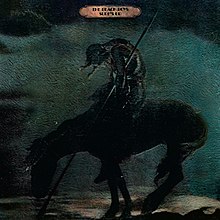
The Beach Boys: Surf's Up (1971)


(Reprise)

RECOMMENDED

A fair review of Surf's Up is an impossible task because it's an unfair album. You want it to be perfect from beginning to end; the cover is so damn cool, and you just know the title track, an almost apocalyptic Smile outtake, is going to be amazing, and it is. A little less than half of the album meets these expectations. Brian's two contributions exceed them; they are unbelievably, incredibly good. Much of the rest is awful. The great parts, however, are so wonderful I simply can't bring myself not to at least recommend the LP.

And really, there's nothing outright unlistenable here, but "Don't Go Near the Water," despite a nifty piano hook, is a bad choice for an opening track, and the preachy, poorly-written lyrics, full of pandering ecological nonsense, render it immediately forgettable. Al's pair of songs are just weird, in a bad way. "Take a Load Off Your Feet" sounds a tiny bit like the Velvet Underground circa "Andy's Chest" in places, but it's a damn song about feet. "Lookin' at Tomorrow," though nice and short, is even worse. The subtitle "A Welfare Song" makes a dull track seem condescending to boot. Plus, Al is a good, wide-ranging singer, so why is he trying to sound like Mike Love on this album?

Predictably, Love provides the biggest humiliation, the appalling four-minute "Student Demonstration Time." You can tell it sucks by the title, but man, does it suck. The cloying rewrite of "Riot in Cell Block #9" has some nice guitar work, but it mostly consists of the band, or at least Mike, trying too hard to be cool or convincing or current or something, and the lyrics seem downright offensive coming from a staunch Republican. Obviously, the "little art band" phase of the Beach Boys' history has ended. They clearly are fumbling for an audience, even if the result sometimes is as fine as their other recent work. (It did work; the album gained significant FM airplay and sold well.) New manager Jack Rieley may be to blame, and he managed to frustrate Bruce to the point of quitting within a few months of Surf's Up's release. Rieley commits himself to lyricist duties on several tracks. They're predictably clumsy and embarrassing, sub-Van Dyke Parks shit made worse by the comparison to Parks' more professional weirdness on "Surf's Up." And the guy even sings on one track, the insane "A Day in the Life of a Tree," an environmental manifesto from the perspective of a dying tree, but that was at the request of Brian, who insisted that Rieley "sounds like a tree." (Parks' complementary vocal on the same song is unexplained.)

The most important development glimpsed here is Carl Wilson's coming of age as a songwriter. It may not be as fascinating as Dennis' full-fledged blossoming on Friends and Sunflower, but it presents a pair of worthwhile if minor chestnuts -- "Long Promised Road," despite its lyrical clumsiness, is a sobering state-of-the-union wafting from the ashes of the '60s. "Feel Flows" is an engaging tribute to the already distant glory days of Brian, Pet Sounds and "Good Vibrations," with the elder Wilson's head-spinning sonic pleasure updated to the world of Moogs and state-of-the-art recording technology. Again, the alliteration-obsessed lyrics are humiliating ("Whether whiteness whisks soft shadows away"?), but you can sense how hard Carl is trying and it's a good effort. (It's a pity that Dennis, apparently due to some infighting, is nearly absent from the record as a composer despite having several songs ready to go at the time; he could have really helped with the consistency here.) Bruce has his most famous-ever contribution to the Beach Boys' discography with "Disney Girls (1957)," an unabashedly nostalgic wish for simpler times that, the narrator seems painfully aware, never really existed. In a sense this is a wake-up call like "Long Promised Road," and it has become something of a standard (covered by everyone from Cass Elliott to Art Garfunkel), though the Beach Boys' original remains somewhat obscure. It may be saccharine -- syrupy as hell, actually, and hard to take -- but at least it's sincere, in contrast to Mike Love's empty claptrap.

The reason Surf's Up is remembered fondly, however, is the pair of closing tracks. The eponymous song, one of the grand experiences and ultimate works of ethereal beauty in all of rock history, is the Beach Boys' absolute knockout, their most wholly impressive moment and certainly the centerpiece of the legendary Smile collaborations between Brian and Van Dyke Parks -- a meditation on art and reality, war and peace, change and consistency, and most of all, the unforgiving ache of loss. Beginning to end, it is the perfect work of pop ambition; all other attempts at "progression," "art-rock," "rock opera," and the like need not bother applying. It was all done here, and if it managed release in 1967, the Beatles' "A Day in the Life" would have had serious competition as a summation and totem. The other lyrics Parks wrote for the Beach Boys, though never irksomely trippy or dated, sound clumsy or pretentious, especially coming from men associated so closely with "409" and such, but with a few weak moments notwithstanding, "Surf's Up" contains along with "Wonderful" his best work with the group, its profundity mostly free of strain. Released four years later after being written and mostly recorded, "Surf's Up" now seems like a meditation on everything the Beach Boys once were and no longer are, everything Brian had the potential to do and never could. It is even more moving in this guise, impossible as that may seem. Once again, the Beach Boys are aided by a business problem: Smile material was being reword and leaked out because part of the Reprise deal necessitated both Brian's involvement and the completion of Smile; without this cumbersome quota, though, Surf's Up would be a far more mediocre record, and would probably not have tracked a slight commercial resurgence for the group.

The preceding cut, "'Til I Die," plays with the same themes, but is far more hopeless in tone, and is so different from "Surf's Up" as to be incomparable, yet it is the perfect match in terms of its sequencing on the LP. (The Good Vibrations boxed set places it after the latter track and it sounds all wrong.) With expansive, almost painfully beautiful harmonies, oceanic and as delicate as a feather, the message is impossible not to understand and feel: "I'm a leaf on a windy day / Pretty soon I'll be blown away / How long will the wind blow? / How long will the wind blow?" The drama, the desperation, the resignation, is all in that repetition. "Til I Die" is among Brian's finest moments as a composer and lyricist; it's certainly a difficult task to name a more moving song. Regardless of the album's flaws, "'Til I Die" and "Surf's Up" would be worth the price alone, but not everything else here is bad. Don't let the lack of balance disrupt what, in some moments, is a rich and wounding record.

***

[Originally posted with slight differences in 2003.]

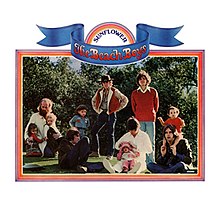
The Beach Boys: Sunflower (1970)


(Reprise)

RECOMMENDED

When the Beach Boys departed Capitol for an ostensibly artist-friendly deal licensing product out under their own Brother label to Reprise, this was the idealized endpoint: a democratically structured album meant to revitalize them for fans and in the wider pop marketplace. (It had been two years since their last major hit, "Do It Again.") The maneuver didn't work, and the album barely charted; it's since grown in stature and for some fans, it's heavenly. As a band, the Beach Boys have never been more unified; although Brian's songs inevitably are the ones that grab the listener's attention immediately, the remainder of the album is consistent, if rarely as inspired as the last five of their Capitol LPs, which would remain the only period in the Beach Boys' career when they operated, it seems, almost separately from commercial motivations or concern about outsider appeal.

Building on that energy, Brian hasn't lost his touch for adventurous music yet, but the advance single couldn't bode well. It's tempting to hear "Add Some Music to Your Day" as condescending nonsense. I'm not fully convinced it isn't... "The Sunday mornin' gospel goes good with the soul" (what the hell?) plants the seeds of "Gregorian chants were a real big thing," a few albums later, and I have to prefer "Do you remember all the guys that gave us rock & roll?" circa 1964 anyway. As charming as I find Brian Wilson's ignorance of all pretense to expressive -- well, oh my, oh gosh, oh gee -- language, in works like "Busy Doin' Nothin'" and "Roller Skating Child" it seemed to fit because he was writing about things that, though not the stuff of teenage diaries, were identifiably personal. Much of the fun is lost when he's trying to explain the history and meaning of music on a two year-old vocabulary and pretending he believes a word of it himself. "At a movie, you can feel it touching your heart." You don't mean that, Brian.

So let me confess, and I don't think this is a bias (what bias?) talking... the voices won me over. The Beach Boys toss the lead vocal back and forth on "Add Some Music" like it's a soccer game, and Bruce Johnston, of all people, gets the goal. "Your doctor knows it keeps you calm / Your preacher adds it to his psalm / So add some music to your day." Makes no sense but I'm somehow comforted, not least because I feel as if I know these people singing. It may all be fabricated bullshit, but I trust them.

That's not the only place where they're stretching it for me. It pains me to say this, but the group effort "It's About Time" is trying too hard for credibility. It's the Beach Boys and it's rock & roll in a non-threatening, pre-sliced sort of way, but it's a whole lot of energy spent on manipulating what you think of the song and the band. Rip its loaded intentions away and you've got nothing in your hands. It's a living commercial for itself: "Struggling to express myself for the whole world to see... I used to blow my mind sky-high searchin' for the lost elation [the "lost elation"!?]... Now I'm but a child who art [art!]..." Wow, and here I thought it was all about ridin' the clutch to get the traction. I'm not one to dwell on lyrics, and the rhythm and guitar and vocals play a big role in what makes "It's About Time" such a festival of posturing, but it's far from my capability as a writer or liar to deny that a big part of the Beach Boys' appeal is/was that they who would emit "Well, it's been building up inside of me for, oh, I don't know how long" would never ever dream of feeding us "The time to hesitate is through, the time to wallow in the mire." This tendency toward distractingly florid language would only get worse when manager and lyricist Jack Rieley joined the gang soon after this; sure, Van Dyke Parks wrote some whoppers but at least he was attempting to channel Brian Wilson's sensibility to some extent, and even his clumsiest couplets could be scanned and delivered competently if not brilliantly by the Beach Boys, but for several years in the early '70s bad lyrics would frequently come close to ruining otherwise good songs by the band.

In yet more ominous foreshadowing, there's also a reference point for the cutesy Eric Carmen void they'd explore even later, in Al Jardine's "At My Window." Up to now the Beach Boys had generally remained on the right side of the line between art and indulgence, but it's possible they fell into this skill due more than anything to an inability to check themselves. No restraint, no control, just recording what they wanted with infinite studio time at their disposal. Conversely, it can't be a coincidence that the first Beach Boys songs post-Pet Sounds that strike the occasional doubtful chord in me are on their first album for Warner/Reprise; it's like they're putting on a good but artificial face for a new relationship. Gotta impress those suits, and the album was rejected first time around; an overhaul followed. This speaks volumes.

As usual with this band, you can't pigeonhole these songs with such misgivings because, again, a number of them are laudably strong, and to present another theory, the variance in both quality and sound here may be a result of a conscious attempt at giving everyone their time in the limelight (as on 20/20), or perhaps simply every stylistic turn possible for them in such a brief window of time. Hence the fact that Bruce Johnston can give us an unlikely but forcefully undeniable pop gem like "Deirdre" but also turn us all off with Humperdink theatrics for "Tears in the Morning," the unfortunate fact of life being that although Johnston would follow up with another schmaltzy nugget on the next Beach Boys album, he'd then leave and clone "Tears" for Barry Manilow and strike pop chart gold.

Inescapably, Brian is the star of the show. He brings us four more masterpieces this time around, chump change in a catalog full of them, but each of the four in this case worth a Today!-era single or two. This Whole World" is a runaway train of a pop song, as structured and studied as any of Brian's classics but running at an unstoppable pace, never pausing in any of its individual sections long enough to ponder its existence, forcing you to taste its gleeful abandon only in sweet, short aural glimpses. It's less than two minutes long; you listen to it enough and it warps you to the point that you wonder why all songs aren't this short. And I promise, you'll never get enough. "Cool, Cool Water" is calmer but no less amazing. It, too, defies the rules of its medium; derived from Smile with a bit of the "Good Vibrations" melody in tow, it's less a song than a soundscape. Brian's chosen form of passage into this kind of ambiance comes, perversely (but not for him) and lovably, in the form of the human voice. Mike Love wants you to know that cool water is a gas, and like that we're home again. The track extrapolates for five minutes but it doesn't feel excessive.

I wouldn't put "Our Sweet Love" up against either of those but I would play it for you on repeat for an hour, and aren't such comparisons pointless anyway? It sounds to me a bit like the Byrds. It has a dumb line about incense and flowers, but that's okay, it also has "Lord knows I love her so" and a lovely guitar solo. The album's strongest track, and the one reportedly with the largest contributions from Mike Love, is the remarkable "All I Wanna Do," every slow power-pop nugget from 1971 on in a single short package. The voices echo and swirl, the melody entices, and the entire song is delicate in the best of ways, floating around and seducing, playing on and with every listener's expectations. Nobody I know of has turned sheer romance into such note-perfect pop. Easily as beautiful as Pet Sounds-era Beach Boys, it's the kind of thing, like "This Whole World" and "Cool, Cool Water," that will keep you addicted for life once you've been exposed once.

Certainly, these twelve cuts are a challenge at times to the "Brian was the Beach Boys" dialogue, even though Brian's songwriting is still leaving everyone else in the dust, with one exception. Dennis Wilson continues to astonish with his unexpectedly warm trilogy -- opening the album with the deliciously sensual "Slip on Through," he additionally provides the Beach Boys with their most beloved love song ("God Only Knows" aside), "Forever," which conquers its excessive syrup with an awe-inspiring vocal arrangement and the pure sincerity of Dennis' lead. Plus, he's wonderfully aware of his own myth, Manson orgies and all. On the bawdy "Got to Know the Woman" (a Dennis title if there ever was one, as Brian points out in the liner notes), he explodes with Jagger lust in ridiculous lines like "C'mon, c'mon and do the chicken" before finally bursting out in laughter. Of course, "Slip on Through" is the best of the lot; somehow I can't help but believe in its proclamations -- "Now you relax and let your mind go free / You won't forget the feeling you receive" -- more than "So I'm goin' away, but not forever." Nonetheless, "Forever" is Dennis' most beloved composition because it proves his genius as a pop writer.

The obvious pining to be seen as a mature band leads to an album that soars on occasion, stumbles elsewhere, and feels uncomfortably compromised, but Sunflower at its best points a way forward for the Beach Boys to continue evolving. Scarcely heard at the time, the record has gradually come to be seen almost as a successor to Pet Sounds, which is a stretch, but something about the record's laid-back, democratic vibe strikes a chord. "Deirdre" may sound like, as one music critic put it, "Beach Boys-influenced anybody" now, but I'd respond that it's not necessarily the band's fault. The fact that people are still hearing and responding to this is more than worth noting, whatever the result, and for all the compromises that produced it, Sunflower remains in its best moments a lovely snapshot of the Beach Boys in their calmest period as a band.

***

[Modified version of a review posted in 2003.]

The Beach Boys: 20/20 (1969)


(Capitol)

HIGHLY RECOMMENDED

You can call it "varied" or "eclectic" all you want, but the truth (acknowledged by no less a figure than Dennis Wilson) is that 20/20 is an utter failure as an album, clearly constructed as a scrambling afterthought. As a collection of songs, the kind of hodgepodges bands release to fulfill dumb contract obligations (Flowers, Magic Bus, Magical Mystery Tour), it's unusually good. Individually, the songs here are mostly excellent. In all other departments -- sequencing, artwork, cohesion, impact -- it falls flat. But it's important to consider that it really was a compilation, and the songs have found homes elsewhere that are probably more appropriate, maybe on a mix CD you've made, maybe in a live performance ("All I Want to Do"), maybe on Smile, maybe as singles or on compilations. It's still an LP full of excellent Beach Boys material, and in that regard it's nothing short of essential.

Ironically, this record that comes from supposedly the most uncommercial phase of the Beach Boys' career, when it's been said they were deliberately making bad music and riding out their Capitol contract, contains not one or two or three but four singles. It's also telling that three of them are covers and one of them, the stellar "Do it Again," is from a year before this album was released. Before I go on, you may as well accept the unnatural divisions that emerge here. Four of the tracks are singles, four are Brian's, and four are compositions from other band members. Of the singles, "I Can Hear Music" is the standout, a beautiful Carl-produced cover of a lovely Ronettes obscurity. the unusually guitar-driven "Bluebirds Over the Mountain" seems a bit anachronistic, and "Cotton Fields" is shoddily produced and dull but inescapably likable. The novelty of the Beach Boys covering Leadbelly carries it more than you'd expect.

After emerging as a composer of considerable note on the prior album, Dennis Wilson here suddenly blossoms, in at least one case: the sublime, orchestral yearning of "Be with Me," more elaborate than anything recorded by the band since before Smiley Smile. It's potent and chilling, and so is "Never Learn Not to Love," for different reasons entirely -- which brings us to the dark side of 20/20, which is that a serial killer assisted in the creation of it. "Never Learn" is the infamous Manson song, his "Cease to Exist" rewritten with the actually somewhat creepier words "cease to resist." By some accounts Manson didn't want credit, he was too free or something for all that -- though it's also been speculated that Dennis considered Manson's theft of numerous valuables from his house as adequate payment -- but he got pissed and made Dennis one of many targets when he found out the lyrics had been modified. He also added some words to "Be with Me," and it was even once rumored (though finally proven false) that the faint recording of a woman and man in the throes of orgasm on the fade of "All I Want to Do," an otherwise rather forgettable foray into cock-rock starring Mike Love, was the sweet sound of one of Manson's studied orgies. Thus 20/20 forms, with Manson's LIE and the White Album, the triumvirate of albums for Manson historians, and all because Dennis didn't know how to say no to people.

On another note entirely, Bruce Johnston, of all people, also emerges as a writer with some skill on the instrumental "The Nearest Faraway Place." It's pretty lame, manipulative stuff, and what a hideous title, but it is effective mood music even if it's obviously pretty derivative of Brian's earlier triumphs. Speaking of which, Brian's work here is all on side two and manages to grab virtually all of the attention, though it's not insignificant that this the record on which he finally truly retreated from the Beach Boys as a producer and primary songwriter; part of the 20/20 process was tracking down fragments of Brian music the others could finish. Two of his four contributions were actually recorded in 1966, but since they happened to be recorded for... just guess... their addition at the end of the album proved a logical marketing decision. "Our Prayer" and "Cabinessence" are both lovely songs that stretch and swell and reveal on their own terms, like most of the better material from the Smile sessions, but they sound woefully removed from their ideal context here. "I Went to Sleep" much more accurately captures Wilson's state of mind circa 1969, but still with the loving detail that made him famous, and even a kind of odd hedonism. He reaches beyond his own limitations, and those of his band, with "Time to Get Alone," the rare love song in pop music that manages to capture its own world of emotion, the solace of comfort and isolation with a partner, without any kind of artifice. It was intended to be sung by others (written for Redwood, as "Darlin'" had been), but the Beach Boys have a hold on its essence like no one else ever could. It's not delicate, it's set and sturdy like a great relationship, and it's among the most gorgeous and sensual moments in a catalog full of them.

Although it contains some of their best work, what is new on 20/20 is collected here too incoherently to make any kind of advancement. Instead the band sounds like they're marking time and trying to stretch in a million directions at once. That's not necessarily a bad thing, but this ominously is the first of four LPs in a row that give that impression. But "Be with Me," "Time to Get Alone," "Cabinessence," "I Can Hear Music," and "I Went to Sleep" alone are enough to make you want to get together and do it again, even if it meant sitting through years upon years of more of this and not a single moment as unified as Pet Sounds. Songs are what it's about, after all.

***

[Originally posted in 2003.]