Sunday, October 9, 2016

The Beach Boys: 20/20 (1969)


(Capitol)

HIGHLY RECOMMENDED

You can call it "varied" or "eclectic" all you want, but the truth (acknowledged by no less a figure than Dennis Wilson) is that 20/20 is an utter failure as an album, clearly constructed as a scrambling afterthought. As a collection of songs, the kind of hodgepodges bands release to fulfill dumb contract obligations (Flowers, Magic Bus, Magical Mystery Tour), it's unusually good. Individually, the songs here are mostly excellent. In all other departments -- sequencing, artwork, cohesion, impact -- it falls flat. But it's important to consider that it really was a compilation, and the songs have found homes elsewhere that are probably more appropriate, maybe on a mix CD you've made, maybe in a live performance ("All I Want to Do"), maybe on Smile, maybe as singles or on compilations. It's still an LP full of excellent Beach Boys material, and in that regard it's nothing short of essential.

Ironically, this record that comes from supposedly the most uncommercial phase of the Beach Boys' career, when it's been said they were deliberately making bad music and riding out their Capitol contract, contains not one or two or three but four singles. It's also telling that three of them are covers and one of them, the stellar "Do it Again," is from a year before this album was released. Before I go on, you may as well accept the unnatural divisions that emerge here. Four of the tracks are singles, four are Brian's, and four are compositions from other band members. Of the singles, "I Can Hear Music" is the standout, a beautiful Carl-produced cover of a lovely Ronettes obscurity. the unusually guitar-driven "Bluebirds Over the Mountain" seems a bit anachronistic, and "Cotton Fields" is shoddily produced and dull but inescapably likable. The novelty of the Beach Boys covering Leadbelly carries it more than you'd expect.

After emerging as a composer of considerable note on the prior album, Dennis Wilson here suddenly blossoms, in at least one case: the sublime, orchestral yearning of "Be with Me," more elaborate than anything recorded by the band since before Smiley Smile. It's potent and chilling, and so is "Never Learn Not to Love," for different reasons entirely -- which brings us to the dark side of 20/20, which is that a serial killer assisted in the creation of it. "Never Learn" is the infamous Manson song, his "Cease to Exist" rewritten with the actually somewhat creepier words "cease to resist." By some accounts Manson didn't want credit, he was too free or something for all that -- though it's also been speculated that Dennis considered Manson's theft of numerous valuables from his house as adequate payment -- but he got pissed and made Dennis one of many targets when he found out the lyrics had been modified. He also added some words to "Be with Me," and it was even once rumored (though finally proven false) that the faint recording of a woman and man in the throes of orgasm on the fade of "All I Want to Do," an otherwise rather forgettable foray into cock-rock starring Mike Love, was the sweet sound of one of Manson's studied orgies. Thus 20/20 forms, with Manson's LIE and the White Album, the triumvirate of albums for Manson historians, and all because Dennis didn't know how to say no to people.

On another note entirely, Bruce Johnston, of all people, also emerges as a writer with some skill on the instrumental "The Nearest Faraway Place." It's pretty lame, manipulative stuff, and what a hideous title, but it is effective mood music even if it's obviously pretty derivative of Brian's earlier triumphs. Speaking of which, Brian's work here is all on side two and manages to grab virtually all of the attention, though it's not insignificant that this the record on which he finally truly retreated from the Beach Boys as a producer and primary songwriter; part of the 20/20 process was tracking down fragments of Brian music the others could finish. Two of his four contributions were actually recorded in 1966, but since they happened to be recorded for... just guess... their addition at the end of the album proved a logical marketing decision. "Our Prayer" and "Cabinessence" are both lovely songs that stretch and swell and reveal on their own terms, like most of the better material from the Smile sessions, but they sound woefully removed from their ideal context here. "I Went to Sleep" much more accurately captures Wilson's state of mind circa 1969, but still with the loving detail that made him famous, and even a kind of odd hedonism. He reaches beyond his own limitations, and those of his band, with "Time to Get Alone," the rare love song in pop music that manages to capture its own world of emotion, the solace of comfort and isolation with a partner, without any kind of artifice. It was intended to be sung by others (written for Redwood, as "Darlin'" had been), but the Beach Boys have a hold on its essence like no one else ever could. It's not delicate, it's set and sturdy like a great relationship, and it's among the most gorgeous and sensual moments in a catalog full of them.

Although it contains some of their best work, what is new on 20/20 is collected here too incoherently to make any kind of advancement. Instead the band sounds like they're marking time and trying to stretch in a million directions at once. That's not necessarily a bad thing, but this ominously is the first of four LPs in a row that give that impression. But "Be with Me," "Time to Get Alone," "Cabinessence," "I Can Hear Music," and "I Went to Sleep" alone are enough to make you want to get together and do it again, even if it meant sitting through years upon years of more of this and not a single moment as unified as Pet Sounds. Songs are what it's about, after all.

***

[Originally posted in 2003.]

The Beach Boys: Friends (1968)


(Capitol)

!!! A+ RECORDING !!!

From some angle, Friends could be the most subversive record released in 1968. The third Beach Boys album recorded more or less at home in Brian Wilson's personal studio, it moves forward with a lusher, more robust sound than Smiley Smile or Wild Honey, but it easily matches those records in its vibe of eccentric isolation. Like its predecessors it's an outwardly inconsequential, feathery pop record -- and infinitely graceful, intelligent, and all of the wordier platitudes above precisely because of it. There is no political statement or even a statement at all here, but there is an outstanding band at the peak of its powers. Is the music as direct, simple, innocent as "Fun, Fun, Fun"? Yes. The band is different, worlds apart from their early '60s doppelgangers, but the same intentions and passions are driving them. Now they want you to relax, space out, try to lose yourself gently -- until they decide it's time for you to wake up.

Friends is a logical enough extension of the otherworldly chillout Smiley Smile and the soulful, biting Wild Honey, but expands on both of them, and moreover calls back further yet to Party! for its sense of spontaneous beauty and Summer Days in its oddball sense of humor. From the goofy title track on down, it's the sound of a band concerned with some unimaginably humble lyrical ideas, some music of quiet, subtle ambiance that's either brooding or sensuous, or both simultaneously. They're breathing down your throat with a forty-second slow-jam for the ladies ("Meant for You") on side one, but they're giving directions to Brian's house and describing an unanswered telephone call in excruciating detail ("Busy Doin' Nothin'") on side two.

Banality remains of no concern to them; they will quite literally try anything, and at this point in their career, commerce has taken a backseat as well. The album may be delicate, but its implications of power and independence are ferocious. If, as is sometimes alleged, this album exists strictly so that the Beach Boys can ride out their Capitol contract, the ancillary effect is that we get a rare chance to hear them free of concern for how an audience will react to their work; such conditions have almost invariably resulted in the best recorded work of the band, Brian Wilson in particular. Friends breaks two cardinal rules -- it never leaps out at the listener, the whole thing seemingly pregnant with eloquent anticipation until the explosion of out-of-tune brass on "Transcendental Meditation," and it's extremely short, under twenty-five minutes. At a time when the pop single had moved past the crafty-two-minute phase of its existence, the Beach Boys were experimenting with even shorter song forms. Only two of these tracks exceed two and a half minutes, and one is a left-field instrumental, "Diamond Head." The songs "Wake the World," "Be Still," and "Anna Lee, the Healer" almost feel unfinished, though they're recorded beautifully and attain in the final analysis a wonderful feeling of weightlessness. All blatantly uncommercial but blissfully gorgeous, they move through their melodies briefly before dropping them entirely and running along to the next idea. They fade before you want them to, in every case. Restless creativity was never illustrated more provocatively on an LP.

The lyrics, of course, are a prize. "I loaned you money when the funds weren't too cool." "When a man needs a woman, they make things like you, my son." "Transcendental meditation can emancipate the man and get you feelin' fine; it's cool!" "When she gets the chance to help someone, she's really happy." "She cures people with her hands. I'm just one of her many fans." Do you suppose even they realized how great this shit was? Considering the popular perspective that they were just coasting, probably not, but hearing the restrained energy and fuck-all spirit here one can hardly help but notice the alarming extent to which the world of this album is irrevocably distant, and indeed harbors a peace was unattainable soon after it hit store shelves. Though he doesn't take a credit, this was the last time Brian shepherded a Beach Boys LP at the production helm for eight years. (By many accounts, it was in 1968 that he had a stint in an institution due to his anxiety and depression, after which he was never the same.)

The laid-back-stoner veneer hides some pretty heady and ambitious stuff, and after all, it is the Beach Boys, with Brian Wilson still at the forefront for now. At the core, "Friends" is a truly menacing piece of work, encompassing as well a wordless vocal break as breathtaking as John Lennon's revered vocal in the bridge of "A Day in the Life." Both "Be Here in the Morning" and "Anna Lee" feature wild arrangements and instrumentation in Brian's favored tradition but charmingly scaled back, and the former enjoys an unashamedly feminine vocal from Al Jardine, creating, aside from "Time to Get Alone," "Don't Talk" and perhaps "Cabinessence," the most overtly erotic song in a canon brimming with a very unbridled kind of romance. The shimmering "Wake the World" toys with a crazily out-of-place tuba, the wordless, sublime "Passing By" with kazoos, "Diamond Head" seemingly with whatever was sitting around in the studio. It's impossible to tell whether "Transcendental Meditation" is a joke or not, and that's probably the intention; it's bound to make some who hear it pretty uncomfortable, not the kind of temptation any good artist can resist. It features a full-fledged brass ensemble collapsing on itself insistently while the band's voices emit hysterically overblown lyrics and hit some deafeaningly tortuous (David Leaf's liner notes say "unpleasant") notes. The effect is both amusing and remarkable, and the Beach Boys seem to take a thrill in ending Friends in the most unlikely way possible. How much more rock & roll than that could you ask for?

All irony aside, what's impressive most of all is Brian's ability to speak from -- and directly into -- the eyes and ears of a child. On "When a Man Needs a Woman," the meaning of this skill comes full circle as he fantasizes about his upcoming son, who turned out to be a daughter. Whatever the gender, it's the rare children's song in rock that is neither condescending or stupid, and it features one of the Beach Boys' first stabs at country-rock. "Busy Doin' Nothin'," an incredible recording in every way, is the album's centerpiece without contest, and although Brian's deftly brilliant composition takes much of the credit, his casually bemused vocal performance and the light, unassuming bossa nova background are what make it work; it becomes funny and human rather than precious and contrived.

The most surprising development in these grooves is the emergence of Dennis Wilson as not only an able but a highly skilled songwriter. The existential (and enjoyably subtle) balladry of "Be Still" is impressive on its own terms, but "Little Bird" places the macho drummer as a talent on the level of his older brother. It's almost scary how quickly he comes of age as producer and composer; by the next album's "Be with Me," he's Phil Spector, Leonard Cohen, and Elvis in a single package, no small feat for the kid who only got in the band 'cause his mom insisted.

"Anna Lee, the Healer" proves the inescapable, and maybe slightly ugly, truth that utter stupidity is one of the Beach Boys' secret weapons. The album's lyrics are aimlessly dumb, and it speaks volumes that you actually miss their astute, off-kilter observations when "Passing By" and "Diamond Head" approach. The latter has a Smile-like loose structure that may count as noodling for some, but such tangents seem like part of a playful, lively whole. Post-Pet Sounds, modest aspirations seem to exhume the best and most irresistible ideas from the Beach Boys. That "Transcendental Meditation" was seemingly conceived to be as annoying as possible redeems its success in that regard enough to make you fall in love with even a recording this insane, if you listen to Friends constantly enough. And trust me, you will.

***

[Originally posted in 2003.]

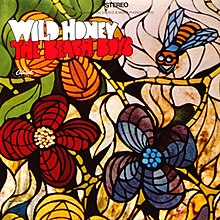
The Beach Boys: Wild Honey (1967)


(Capitol)

!!! A+ RECORDING !!!

Released mere months after Smiley Smile and retaining its homespun vibe without the surrealism, Wild Honey is a return to the past for the Beach Boys in that it's as much an album of pop songs as All Summer Long and Today!, and it's only in the context of 1967 that its heavy soul influences and sparse sound seem strange or off-base. The Beach Boys had, after all, toyed with these textures at least as far back as Little Deuce Coupe, and by the extension of influence even before that. It is, however, hard to name another white rock band with the desire or attitude to do a great cover of a Stevie Wonder hit in 1967. "I Was Made to Love Her" moreover emphasizes the similarities in the Beach Boys at their best and the great R&B artists at their best in this period -- the same purity and starkness, ironically covering flowery Motown with the cutting, pared-down simplicity more typical of Stax, if Stax had been in someone's living room. The Beach Boys and their peers are working for the same cathartic goal regardless of such fine distinctions, and it's thus appropriate that this collectively produced effort is their least filtered, most unadulterated rock & roll album since Surfin' Safari. Not that Summer Days and Pet Sounds couldn't inspire emotional depth with their elaborate chamber-pop instrumentation but there's something major to be said for the elegance of voices, de-tuned piano and hooks (guitars only occasionally dominate here).

Wild Honey is frequently billed as a blue-eyed soul album, and there's some truth in this -- Carl Wilson in particular certainly has the voice for it -- but set it against the Box Tops or Joe Cocker or the Spiral Starecase and it sounds like the primordial mumblings of alien life forms. It's less an R&B album than an honest album full of hunger and horniness. On the wonderfully raw title track Carl strains but convinces. On the glorious, sparkling, effortlessly impassioned hit "Darlin'," it's a different matter; the song and production are brilliant -- a more careful, considered recording originally intended for the band Redwood, a pet project of Brian's that later became Three Dog Night; "Darlin'" itself is a rewrite of Brian's older song "Thinkin' 'Bout You Baby," recorded by Sharon Marie -- but it foreshadows the next few years in the sense that Carl's vocal, the nuances of his performance and the way he seems a part of the material, truly shapes and builds the song. I can't imagine anybody else singing it because no matter who wrote the damn thing, it belongs to Carl. If I didn't love Wonder's original I'd say the same about "I Was Made to Love Her," and if I didn't love the set of brand new Love-Wilson tunes on this album I'd argue that Carl Wilson is what makes it all gel. The frayed, blown-out, defiantly un-slick production helps, particularly on "A Thing or Two," which is so minimal it's close to genuine funk, and the wonderful "I'd Love Just Once to See You." (In case you're wondering, he'd love just once to see her in the nude, presumably after she balls it with the shift on; things had changed by 1967.)

In contrast to the wordy tongue-twisters of the last album and the down-to-earth commentary of the next, the lyrics on Wild Honey are excellent by ordinary rock & roll standards, not a strong point in the canon of latter-day Beach Boys, who typically have to be weird or banal to get past bullshit. Mike's "Let the Wind Blow" is a genuinely desperate, mournful love song taking cues from the Smokey Robinson catalog, and "Here Comes the Night" and "I'd Love Just Once to See You" feature the expected diatribes on beloved women, usually begging for attention: "Hold me, squeeze me, don't ever leave me, tell me I'm doin' all right." The comfortable, casual vibe of the home studio Brian began using during the artistic, band-communal peak period has proven impossible to duplicate, making a knockout like "Here Comes the Night" something to preserve. "Let the Wind Blow" is equally driven by its instrumentation -- the Beach Boys playing in a room, no bullshit -- but it's once again Carl's show, bursting with articulate sorrow when he takes the bridge.

"Darlin'" coheres nicely here and is the closest we get to a "classic" Beach Boys song on Wild Honey, a bit ironic given that it was first meant to be recorded by others, but as a traditional Brian Wilson production, session musicians in the room and all, it sticks out potently. Brian was still directing the band in the studio, but as far as he was concerned Beach Boys music was meant to be modest and slapdash. At least one writer has argued that the Beach Boys' last few Capitol albums reflect a need to ride out a contract they disliked, and that they saved their most rewarding material for their Reprise debut Sunflower. Whether there's some validity to this or not, Brian's vision of laid-back, effortless-sounding lo-fi pop as the Beach Boys' ideal vehicle has aged inordinately well. If Wild Honey and Friends cynically conceived and performed contractual obligations, they're the most brilliant such releases one can imagine.

Not everything is so bare. The horn buried in "Aren't You Glad" implies charming Burt Bacharach aspirations, and "Country Air" has towering harmonies; both came to life on the road and it's a pity they didn't enjoy a longer life in the band's setlists. Like "Darlin'," these brief glimpses at the more polished Beach Boys are handy; no one denies that Wild Honey is underrated and spectacularly good, but the production is thin enough that the whole thing can be daunting for a newcomer, and on "Country Air" in particular the recording quality is such that the tape seems ready to split at any moment. Also, like so many Beach Boys albums, it fizzles out a bit with the adorable but inconsequential a cappella "Mama Says," the sort of thing you have to already be a fan to appreciate, and a bit too similar to stuff from Smiley Smile (no wonder, it used to be part of "Vegetables" where it works better). The rocker "How She Boogalooed It," the Beach Boys' "Foggy Notion" (it's their first communally band-composed song written without Brian's help), features engaging guitar work and gives the record a nice kick in the back end but Carl's outdated hip-speak, much as enthusiasts may get a kick out of it ("outtasight dancin'," "s-o-c-k-i-t to me"), and its slightly awkward shoehorning into this context might disrupt the tranquility for some.

Still, as slight and skimpy as it is, Wild Honey is one of the Beach Boys' most engaging and consistent albums. It was proven ahead of its time first when Dylan, the Beatles, and a slew of others spent 1968 on back-to-roots albums (not that any other direction was possible after the excesses of the previous year), then in the punk era when it became obvious that minimalism and thudding, barely-engineered performances were not such an awful idea. For that alone, Wild Honey deserves its place in the books, and with time it reveals itself to be as surprising and delightful -- and just as tantalizingly brief -- as Smiley Smile.

***

[Originally posted in slightly different form in 2003.]

The Beach Boys: Smiley Smile (1967)


(Capitol)

!!! A+ RECORDING !!!

Look on the bright side: the Beach Boys had gotten past their indulgent psychedelic period with their integrity fully intact, and they did it without releasing a single embarrassing record, and only one record at all: "Good Vibrations," Brian Wilson's painstakingly constructed opera of teen love, bliss and maybe drugs. Overplayed as it may be, it's still one of the most immediately impressive of all his works, and in a sense was the last gasp of his peak period of obsessive control in the studio. "Good Vibrations" was first attempted during the Pet Sounds sessions but was then laid aside and recorded in sections, bit by little bit, over several months (from May to September of 1966) at enormous cost, with at least three studios involved. The reception was validating in a way American sales figures for Pet Sounds hadn't been; Brian Wilson's meticulous art-for-art's-sake had struck a chord, and the single went to #1. In the late summer of 1966, Brian started work on the next Beach Boys album, eventually entitled Smile, with a new brood of hip L.A. friends and influences in tow, not to mention one Van Dyke Parks, musical and especially lyrical collaborator on the project. Smile was intended to be a full-length collection recorded in the same fragmented, incremental manner as "Good Vibrations"; while admirably ambitious, this also was more work and expense than Brian could seemingly handle during a time when he was becoming more than slightly infatuated with drugs and drug culture. His recording methods and behavior grew more erratic, though again, not to the exaggerated degree that's been reported in some of the more sensationalist texts about the band's legend.

Throughout the fall of 1966 and into 1967, the Beach Boys' publicist Derek Taylor hyped up Smile as an Event to Behold until its balloon rose to the heavens with a sort of hype that could never bring anything but disaster, only to pop unceremoniously when the album was shelved, with covers already printed up and ads already running. We could waste a lot of time speculating on the reasons the record was abandoned; a lot of people have been doing so for half a century. The catalyst could have been Van Dyke Parks' departure after he grew frustrated with the other Beach Boys' consternation over the new material. Perhaps the Beach Boys were as unenthusiastic about fulfilling Brian's vision as has sometimes been reported, though session tapes don't seem to bear this out apart from one famous blowup about a line of Parks' that Mike Love found incomprehensible. Perhaps Capitol Records imposed their will and disliked the shape of Brian's decidedly surreal new direction of humorous Americana. Perhaps Brian's insecurity over letting down the many people who were depending on him to deliver hot-selling music had an effect; certainly Murry, who'd wanted the deliriously pot-stoked intro cut from "California Girls," would've been a nagging presence in his ear if he was prompted for any input. But given the evolution of the project into the even weirder, more individualistic Smiley Smile, the most likely scenario is just what Brian maintained for years: that he was uncertain about the impossibly complicated, perhaps emotionally misguided music. Though Smile has many strong advocates, a listen to what exists of it reflects the whims of an overexcited, unfocused artist. There are a handful of brilliant songs and a few more brilliant moments, but they tend to be surrounded by meandering, incomplete ideas that don't show much obvious direction. Parks' lyrics vary between surreal, pseudo-intellectual gobbledygook and occasional moments of profundity (especially on "Surf's Up" and "Wonderful") but aside from Brian, the Beach Boys sound a bit lost and uncomfortable when singing them. Today! and "Don't Worry Baby" might not have sounded smart, but they sounded honest and showed no strain.

It's not for nothing that Smiley Smile, the record that rose from Smile's ashes after its late-date dumping, has a reputation as a major letdown; whereas Smile is brought down by the way its insubstantial bulk rubs up against the lofty aspirations of its peak moments, Smiley Smile -- named, appropriately, by a child -- absolutely owns and takes full responsibility for its airy aloofness. When Smile was abandoned after months of work, Brian supposedly abdicated the throne of studio leadership and wouldn't be credited as sole producer on a Beach Boys album again for nearly a decade. In fact this was mostly a token gesture to absolve himself of some of the pressure associated with the producer title. For some time yet Brian -- by all accounts, including those of other band members -- would remain the band's guiding light in the studio. Moreover, despite some druggy indulgences the run of late Capitol albums seems to have been the music Brian wanted to make with the Beach Boys at this time. This has been hard for some to accept over the years, and there's some truth in the notion that Smiley Smile and its sequels are a retreat or at least a radical turnaround for a man whose work had become steadily more elaborate since 1961. There's even some potential wisdom in noting that Brian seemed more enthusiastic at this point about projects outside of what he may have perceived as the Beach Boys trap; certainly, one probable reason Smile didn't work out was that the Beach Boys didn't seem like the ideal channel for Brian's artier ideas. All that said, though, the Beach Boys' late '60s albums for Capitol are each singular and inventive, idiosyncratic recordings that could be made and issued by essentially no other band. It's very hard to lament the collapse of Smile when Smiley Smile, Wild Honey and Friends exist in its wake; all three have a focus, consistency and charm mostly lacking in the extant Smile material, and the Beach Boys sound comfortable and confident on them while still stretching themselves creatively. Moreover, the sheer perversity of a haunting, minimal record like Smiley Smile following up the emotional tour de force Pet Sounds is somehow laudable, insofar as it's just counter-intuitive enough to be perfect.

Smiley Smile isn't exactly psychedelic but it is strange and goofy and scary, enough to drive the point home that the grandiose excesses of Sgt. Pepper, released a few months later, weren't the only way to bring originality to the LP form. Pepper is an elaborately produced cutting-edge record, though, and this is not. Pepper sounds professional, maybe even too professional, but Smiley Smile sounds amateurish, to some ears too amateurish. However, it isn't the slapped-together stopgap its reputation suggests; much of the album's chilled-out oddness is the result of innovative hard work (the pitch control on "She's Goin' Bald" and the rigorous arrangement on the vocal tag of "Wind Chimes") and calculated editing (on "With Me Tonight" especially). The inclusion of a song as complex and familiar as "Good Vibrations" here is enough of a ridiculous juxtaposition to be somewhat ballsy, especially after the pot-stoked crackup of "Little Pad." You might think the theremin-driven #1 hit wouldn't be out of place on an album of weird shit, but you'd be wrong to assume the Beach Boys only knew one way to be weird. It doesn't help matters that the easily-dismissed "Little Pad" is one of their most beautiful songs, even with the flawed, jarring aesthetic values.

Some of the recast Smile outtakes that surface here are indeed better in their original 1966 forms, but not by the margin some would have you believe. The Smile variants of "Wonderful" and "Wind Chimes" are among the Beach Boys' most intoxicating recordings, but I still wouldn't ditch the creepily seductive Smiley Smile versions for anything. The new 45rpm mix of "Heroes and Villains" -- the song Brian concentrated on under duress after letting the rest of the Smile songs fall by the wayside -- suffers without the sublime "in the cantina" midsection; this single version is not without merit, with a fine a cappella tidbit, even if its seams are more obvious. It certainly fits better here than "Good Vibrations," which could have used a stripped-down Smiley reimagining. (There's something close, from the Lei'd in Hawaii tapes, on Endless Harmony.) But the Smiley Smile "Vegetables" is the perfect encapsulation of the Beach Boys' humor, the one ingredient of their genius missing from Pet Sounds and that Brian wanted so much to be a part of Smile. Meaningless and funny, it skirts all concern for depth and goes straight to what we all care about: food. It has pouring, and chewing, and echo, and bass, and it's just a stellar (and addictive!) recording, replete with audience participation! ("I know that you'll feel better when you send us in your letter and tell us the name of your favorite vege-table.")

From "I'm Bugged at My Ol' Man" and "Amusement Parks U.S.A." all the way to "Games Two Can Play" and "I Wanna Pick You Up," Brian Wilson and the Beach Boys' humor doesn't have its full impact without the other side of their less widely celebrated great works: their ability to be absorbingly creepy and disturbing, more of a piece with future oddballs like the Flaming Lips and Pere Ubu than the essence of California pop. "Fall Breaks and Back to Winter" picks up just after "Vegetables" with a run of freaky oohs and ahhs underneath mysterious, savory, bottom-heavy instrumentation (it's possibly derived in part from portions of Smile's "The Elements: Fire"). The almost dementedly bare deconstructions of "Wonderful" and "Wind Chimes" have an air of mania about them, with Carl breathing out the words on the former sounding like he's about to take you to the back of a van and cover your face with a chloroform-soaked rag. "Wind Chimes" is even more bizarre, a sequence of drugged-out meanderings on the original song's basic theme that might be the first pop song to contain jump scares. For some listeners, these violent reimaginings of once-lofty pop will be anathema, but they have a strange, sinister beauty that goes beyond quirk and novelty. Then there's "She's Goin' Bald," the perfect fusion of incredibly immature Beach Boy comedy, its melody derived from Smile throwaway "He Gives Speeches," and unnerving offbeat abuse of sonics. The point when the chorus of "sha na na / what a blow" gets pitched out into Chipmunkdom, whereupon the Boys offer a brief musical comedy interlude, has long been cited as the likely moment when most 1967 listeners gave up on Smiley Smile in fear and disgust. And if they survived "Bald," the opening chorus of weedy laughter on "Little Pad" finished the job.

But that's just it. Hearing Smiley Smile without expectations or Beach Boys cultural conditioning, the most striking thing is how unique, interesting and even teasingly original each track is. It's short and breezy but it makes time for no weak moments, at least assuming you're eventually tuned into and appreciative of its wispy but lingering tone of smoothed-over paranoia. Unlike nearly every other Beach Boys record, it seems like something that could be released by some probing, audacious bedroom popster today, though one doubts they would find time or resources to construct such beautiful harmonies. Charles Schulz said once that you have to know how to draw well in order to draw cartoonishly; the Beach Boys had to have half a decade of brilliantly constructed, incisive studio pop under their belts before they could convincingly noodle and craft something vaguely magical out of it. Smiley Smile sounds like an accident; what's more impressive is that it really isn't and is as calculated as any of Brian's work, only it's calculated in a way that's not necessarily designed to please other people. (Whether it was meant to please Brian himself is up for debate.)

Along with "Vegetables," the songs that preface most clearly the casual humor and minimalist nuance of the Beach Boys albums to follow are the thrown-out "Gettin' Hungry," and the sublime, barely-written pop slices "With Me Tonight" and "Whistle In." Neither could be more basic, but verbose passion isn't the only kind of passion that exists, and these sparse tidbits have a charm that's harder to hear on the "bigger" Wrecking Crew linking material from the Smile sessions. There's something magic and otherworldly about a band as famous and talented as the Beach Boys gathering around the fire throwing out these bizarre, intricately arranged but aurally stripped-down (organ, bass, piano and up-front vocals, pretty much exclusively) paeans to simplicity. It foretells the 1968 move away from overblown theatrics by nearly a year, and Wild Honey continues its off-key, offbeat, open-hearted tone impeccably. It may take time to find beauty in the drained energy and drugged exhaustion of Smiley Smile (some have called it "joyless"), but you'll never leave it or stop defending thereafter. Though it's probably of interest only to established fans (call it "advanced Beach Boys") I'd recommend it to anyone tuned into the aesthetic of experimental, undoctored and weird pop music. Most people could probably find something to love here, even if it does come in moments or seconds. A fine and unique album, probably more fun than Smile could have ever been.

***

[Originally posted in shorter form in 2003.]

The Beach Boys: Pet Sounds (1966)


(Capitol)

!!! A+ RECORDING !!!

Brian Wilson by now was, on his own, largely leagues ahead of the greatest songwriting teams he idolized, from Goffin/King and Barry/Greenwich to Holland/Dozier/Holland, and at times even Lennon/McCartney. His work blended the eclectic and brilliant with the personal to an extent approached by few others in pop, and his commitment to making beautiful, powerful music had its reach extended by his equal mastery as an arranger and producer. At no time before in American pop music had a monumental artist enjoyed greater control over his own work, and this control, good judgment and sense of restraint became increasingly crucial to Brian despite the absurd insistence by Capitol on a constant stream of fast and furious output. Nowhere are these qualities of restraint and control more evident than on the Beach Boys' eleventh album, Pet Sounds.

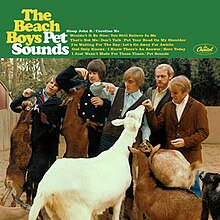
This is not a record that announces itself as a "new phase" for the Beach Boys or any such thing. Taking the title semi-literally, the package has photos of the band at the San Diego Zoo feeding animals, hardly a far cry from carrying surfboards or flanking cars and less eye-catching if anything than Surfin' U.S.A. and Little Deuce Coupe. Whereas the Frank Holmes cover art to the abandoned Smile would earmark it as something separate and special, Pet Sounds seems to set out to look unassuming, perhaps in keeping with its themes of tortured identity and the struggle to reconcile private hopes with interpersonal demands, a struggle that would end up defining Brian Wilson's life for the next decade. You wouldn't know until you bought and played the record that its wistful songs ached so much.

In some ways, Pet Sounds is a less complete picture of the band than the three efforts preceding it. Almost all of the songs are ballads, the incessantly odd sense of humor is absent, and the DIY aesthetic so clear on previous outings is missing in action. In fact, it could easily be seen as a Brian Wilson solo album -- a new debut of sorts, with his first solo single "Caroline, No" as the grand finale -- that uses the Beach Boys as angelic participants (only the third track, "That's Not Me," is largely played by the band instead of the Wrecking Crew), but its immediacy and depth remain startling nonetheless. It proves once and for all that Brian was capable, with concerted deliberation, of paring his conflicting impulses down into a single coherent statement, in a medium (the rock LP) for which the rules had then yet to be written, but which through this release he single-handedly refined.

Against a backdrop of ambitious, unprecedented instrumentation and intricate melodies considerably more complicated (and certainly more heartfelt in origin) than even its obvious inspiration in the work of Phil Spector, Brian Wilson leads us into a beautiful and nearly unique song cycle. Entire books have been written devoted to the numerous layers here, musical and lyrical. Wilson draws from a bizarrely vast pool of influences, from film scores to easy-listening to baroque to Rubber Soul to Dylan, to create something personal and aurally huge, yet never overblown or difficult. Pet Sounds shifts and strides to the extent that it never immediately satiates the listener, and it's this that makes it finally so rewarding. From the sensual "Don't Talk (Put Your Head on My Shoulder)" and mournful "Caroline, No" to the staggering instrumental "Let's Go Away for Awhile," its probing ear-candy cousin "Pet Sounds," and the brooding, startlingly adult slash of anger that is "I Just Wasn't Made for These Times," the songs cast pop romance as florid, almost symphonic art, but the complex sweetness of the Beach Boys' vocals withhold any lofty aims from overtaking the music's appeal across a broad spectrum. The three best-known tracks, the pining, glistening "Wouldn't it Be Nice," the angsty folk-rock "Sloop John B," and the soul-stirring, indescribably warm "God Only Knows," channeled from some other dimension via Carl's astounding lead vocal, are unmistakably glimpses of recorded-music perfection yet still sound right at home among the other songs, and that's saying a lot. French horns, flutes, accordions don't just blend into a Wall of Sound, don't just add ornate classical texture to pop music, they function as a direct channel of the album's emotional urgency. A song like "I'm Waiting for the Day" doesn't merely talk about falling in love, it feels like it, without discarding the growing pains and melancholic questions that come later.

I could tell stories, of course. Having had this record in my life from a very young age, I can easily attest to its durability; in so many disparate situations, it sounds uncannily right and comforting, though simultaneously it sets to music the act of being alone with one's thoughts, subsuming oneself in sadness to understand it better. It's about your best friend you stupidly fell in love with, or years later it's suddenly about the adult relationship you didn't want to run its course. You know these songs back to front, but after twenty years they can suddenly choke you up so much you have to pull the car over. But exploding with hyperbole does no one any favors when it comes to something like this, and excessive verbiage can do little except violate one's personal relationship with "You Still Believe in Me," the ferociously frustrated "I Know There's an Answer," the impeccable growing-up ballad "That's Not Me," of course the juggernaut hits with their subtle traces of bitter irony, and on and on. The point of Pet Sounds is in your own relationship to it, which -- in my experience -- remains permanently elastic; this lasting achievement wholly neutralizes the disappointment of the album's muted commercial success at the time of its release in the United States, which may have been due to Capitol's apprehension over marketing such a left turn, with one label employee (or perhaps Mike Love, depending on which legend you trust) decrying Brian's act of "fucking with the formula."

The truth was, there never really was a formula, and by following his instincts without distraction Brian Wilson crafted his masterpiece. He would always claim Rubber Soul, specifically the altered American version, as his inspiration -- thus, one more Capitol Records bungle managed to change pop history. The U.S. Rubber Soul deletes the UK album's rockers plus the song that became a huge hit Stateside ("Nowhere Man"), and as a result came across as a largely acoustic, folky album with a surprising consistency of slightly dour tone that floored the Beach Boys' guiding light and inspired him to create an album with a similar unity of mood. It probably helps that Brian was exactly the same age as Paul McCartney and only a couple of years behind John Lennon, for their evolution, misdirection and insecurities as people largely informed both records. Brian shared McCartney's anxiety and doubts about romantic relationships, with the former unsure if he'd rushed into marriage -- he and his wife Marilyn would cry the entire time they listened to Pet Sounds together for the first time -- and the latter struggling ("I'm Looking Through You," "You Won't See Me") with the incompatible goals and needs of his longtime girlfriend, actress Jane Asher; compare the difficulties and inarticulate yearning on "You Still Believe in Me." Meanwhile, Lennon spent 1965 in the midst of a depression strongly reflected in his morose, reflective songs of the time, which can be biting and violent in a way Brian never was but aren't a hard comparison with the more plainspoken isolation of "I Just Wasn't Made for These Times." It's easy to talk about these two albums somehow representing a zenith of rock & roll creativity in the mid-'60s, but their real essence is their exploration of the pains and complexities of young adulthood, a major reason they've both remained resonant for half a century.

As a personal message about unrequited, doomed or fleetingly blissful love from the album's creator to the listeners, Pet Sounds is moving beyond measure. The truth is, it has scarcely a false note; "Here Today" is a bit dated and infected by its sweltering time, but so is "The Word." Even with most of the lyrics penned by Brian's new partner Tony Asher, every sentiment -- depicting the same themes of displacement and loss that overshadow everything the Beach Boys have done -- seems felt. Pet Sounds is everything right and good about pop music distilled down to thirty minutes, and though it's a crowning achievement, I would like to think that Brian meant it more as an example of what is possible in the rock idiom, which makes it that much more impressive.

***

[Originally posted in much shorter form in 2003.]

The Beach Boys: Party! (1965)


(Capitol)

RECOMMENDED

My memory's hazy now, but I believe I paid about $15 for most of the "twofer" CDs in Capitol's Beach Boys reissue program, including the one that pairs this extremely strange item with the instrumental collection Stack-o-Tracks. For the time, $15 wasn't bad for two albums and 55 or more minutes of music. However, although I don't think it would be right to charge $15 to pay to hear the Beach Boys covering the Everlys, industry heavyweights coping with the decline and fall of physical media can take note: it'd be worth every penny.

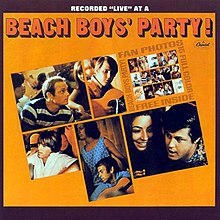
(Deep breath.) Beach Boys' Party! is a fake live album that is actually a covers album with overdubbed "party" sound effects. This was conceived as a way to get product out quickly while Brian finished the real followup to Summer Days. And it's certainly weaker than any of the last few studio efforts, but about half of it is surprisingly lovely, and the rest -- save an indescribable Dylan cover that screams "bad idea" -- is hardly embarrassing.

Three Beatles covers seems like overkill, but when you had a crush on that person (you know the one) in high school, you rarely thought about anything else, right? Interestingly, all three are from films -- "I Should Have Known Better" and "Tell Me Why" from A Hard Day's Night, "You've Got to Hide Your Love Away" from Help!. Dennis really belts that last one out, but the "girls" present see fit to chant the "hey" before the title each time he gets to it, making the whole thing scarcely listenable. The others work better, and I'd wager the Beach Boys' "Tell Me Why" against the original unless you include the footage from that scene of AHDN as part of the song, in which case the Beach Boys lose, badly.

Okay, but covering yourself, that's a stretch. The off-the-cuff but somehow impossibly contrived medley of "I Get Around" and "Little Deuce Coupe" has Mike hamming it up while the ladies laugh, but having him overload the former with sarcasm and improvised wit along the lines of "The other guys... are really... tough / So... those other guys... that are... not yet tough... [trails off]..." isn't even as funny as Weird Al replacing "bad" with "fat." I don't even remember what he does to "Little Deuce Coupe" because usually I've hit the skip button by that point.

I confess, I also don't care much for their cover of the Regents' "Barbara Ann," the album's surprise smash hit, issued on the heels of a much better single that didn't do much and provided an unsettling contrast to this then-new album ("The Little Girl I Once Knew"). I don't deny the garage band appeal of the Beach Boys' version, but that's territory they've covered, and part of what made garage bands so great was that they either advanced or disappeared, not like Enya or somebody who just never improves or goes away. I like the instrumental break where they're pretending to ad lib, just because they're one of my favorite bands and people like it when their favorite bands do stupid shit like that. Wouldn't bother otherwise.

"Hully Gully" is a fine opener, pretty standard cover; I hate the Hollywood Argyles' "Alley Oop," but the Beach Boys' isn't terrible; and I love hearing Brian sing "Papa-Oom Mow Mow" because I like it when he cuts loose and rocks out, but there's a better version on the Concert album. The Beach Boys' version of the durable Harold Dorman single "Mountain of Love," brilliantly covered by Johnny Rivers in 1960, is excellent and notable as the only truly great song that really works in this context. Mike's vocal and the whole band's spontaneous interpretation are just wonderful and most explicitly recall the off-the-cuff fun of an Unplugged show or some such acoustic foray.

Of course I love "Devoted to You" since the Everly Brothers are one of the few acts I come close to loving as much as the Beach Boys, and I'll be goddamned if Mike and Brian aren't a close match for Phil and Don. You can hear this without Party! overdubs on a few later reissues but even here, those chilling harmonies shine through the murk. The Crystals' "There's No Other (Like My Baby)," one of my favorite Spector compositions, also used on the flipside of "Little Girl" with overdubs intact -- is basically just a very nice acoustic variation on a fine tune. Note that even with nothing but acoustic guitars, scant production and a few voices at his disposal, Brian creates a "wall of sound" on the chorus.

On the whole, I'd say if you're a fan or you just like the stylistic flavor of "Barbara Ann," Party! is something worth hearing, especially if you pick it up either in the 2015 version without the fake conversational overdubs or in the twofer edition with Stack-o-Tracks, a bizarre set of instrumental tracks I'd count as indispensable for anyone who's interested in Brian's production techniques. In another way, his skills are just as impressive here (after all, he did fixate a few months later on the idea of a "humor" album that would involve orchestrated laughter and such); he just has a different variety of instruments and tricks at his disposal, and if Party! does little to add to his mystique, it hardly debunks it.

***

[Originally posted with slightly different phrasing in 2003.]

The Beach Boys: Summer Days (And Summer Nights!!) (1965)


(Capitol)

!!! A+ RECORDING !!!

It isn't their best album; indeed, I could make a better case for the music on the one just before it. Summer Days is, however, their most complex and truly representative -- with odd humor and odd pathos and a strange melding of both at times -- including their celebrated late '60s work, and perhaps as well their most unsettling and autobiographical, if not personal (that award goes to Love You). It also is noteworthy for being the first Beach Boys album to point clearly in the varied, dark, bizarrely quirky direction they'd end up taking.

The rockers are generally even more innocuous than "Our Car Club," so all in all they're a delight, particularly the hilarious "Salt Lake City." ("The way the kids talk so cool is an outta sight thing.") They find time to namecheck Disneyland in the utterly terrifying organ-driven "Amusement Parks, U.S.A.," a kind-of-rewrite of "County Fair" combined with "Palisades Park" which also features Hal Blaine as a carny emcee and Brian Wilson doing indescribable voice work as he portrays Regular Citizens visiting the circus and complaining about the price. With Brian in full mad-scientist Orson Welles mode, they'd never again be more hedonistic or gleefully weird, Smiley Smile notwithstanding.

If Summer Days marks the discovery of an identity, though, it also sets the battle lines for the Beach Boys' crippling identity crisis. Between those two playful compositions on side one sits a maddeningly straightforward cover of "Then He Kissed Me," now "Then I Kissed Her," which tampers far too much with the gender-specific lyrics and finds Brian trying too hard to duplicate the feel of Spector's production on the original Crystals single, only with the Beach Boys predominately playing instead of the Wrecking Crew and thus a much smaller lineup. (Kudos to Al, an underappreciated and versatile singer, for a fine lead vocal.) As the shimmering "Salt Lake City" proves, he's at least Spector's equal on his own terms; in his hands a fairly stupid song turns into something magical. It can go the other way, too: The first half closes with "Help Me Rhonda," which was already on a Beach Boys album, but this time it's the single version, seemingly an improvement by all accounts except mine. I think the original from Today! is a gem and I think this one is messier, flimsier, despite a fabulous Carl Wilson guitar solo and an admirably weird backing track.

And then there's "California Girls." It actually contradicts "Salt Lake City," which claims that "girl for girl" Utah has "the cutest of the Western states." Anyway, this time out they've decided they wish all girls could be from California, for what that's worth; the lyrics are among the band's worst and most chauvinistic ever, "Pom Pom Play Girl" without a sense of humor, and they're delivered somewhat obnoxiously by an especially nasal Mike. The song is musically brilliant, obviously. Its introduction is a moment of pure, proto-psychedelic magic that seems to define the sound and mood of summer 1965 the way the opening seconds of Mary Wells' "My Guy" did for the previous year. Otherwise "California Girls" lacks the easy charm of both the Beach Boys' sensitive Pet Sounds-era work and, thanks to its elaborate production, the loud-and-fast punchy appeal of "Fun, Fun, Fun" and "Surfin' USA." Despite a wonderful fadeout and flawless arrangement, it sticks out more as a record tied specifically to its time than most major Beach Boys hits, but it was the perfect summer single and it served its purpose well. It's just slightly more difficult to warm up to now, perhaps because it's a song about a rich rock star cavorting around the world having sex.

When complaints are limited to the acknowledged classics, though, you know an album is special. Even the comparative throwaways are enjoyable; the oddly brief a cappella closer, "And Your Dream Comes True," is gorgeous and thanks to it pregnant sense of anticipation leads neatly into "The Little Girl I Once Knew" and Pet Sounds. Equally inviting is the Hollyridge Strings-like instrumental "Summer Means New Love," though it helps in that case to be an aficionado of Mancini and cornball easy listening. And to accuse "I'm Bugged at My Ol' Man" of unconscious novelty is to betray one's total lack of respect for warmth and humor in rock music, Dr. Demento be damned. Brian's minimalist venting session about being locked up by his dad in a room with the windows boarded up, with deadpan contributions from the Boys, is hilarious and charming -- and, inevitably, quite revealing in regard to the Wilsons' prevailing attitude toward their father. By the end and the line "He doesn't even know where it's at," he's transformed his own clichés to a startling expression of universal teenage frustration. Sitting at the piano he documents an alienation everyone has felt at some point with their parents; knowing even just a bit about his childhood, his easygoing humor is admirable.

Grittier and sweeter than "California Girls," the opener "The Girl from New York City" is good old rock & roll, with sax and riffs and smitten (not leering) vocals and lyrics. It's one of Mike Love's finest hours. Increasingly he is in the background on the more innovative songs in the catalog, but his bass vocals remain incredible and his leads still reflect at least some of the evocative joys of earlier years. Carl and Brian, of course, offer the album's best leads, the former on one of the Beach Boys' greatest and angriest rockers, the sensitive and fabulously subtle "Girl Don't Tell Me," a brilliantly written tale of broken hearts. Carl was now coming into his own as Brian's best interpreter, and following Dennis' pair of strong leads on Today!, he nails this one; he sounds committed enough to the material that you get the urge almost to apologize to him for the mail snub. Mostly you just relate to his irritation and desperation, and the priceless kissoff: "I'll see you this summer, and forget you when I go back to school." The Beach Boys have captured teenage heartbreak with the intensity it has as it happens, but "Girl Don't Tell Me" is only teenage in the sense that it's fast, pissed-off, and bare. one of two songs that hark back to Surfer Girl and the like in their stark arrangements. The resemblance to "Ticket to Ride" is inescapable, especially in the brief electric guitar break, but the songs feed off and complement one another because it was that kind of time. (There's also a superficial resemblance to the general aesthetic of Rubber Soul, still a few months away from completion and release. "I'm Looking Through You" in particular seems like an adequate comparison.)

If "Girl Don't Tell Me" successfully foretells the folk-rock revolution kick-started around the same time by "Mr. Tambourine Man," I find it much harder to nail down the hybrid of the Beach Boys' most astounding and heartbreaking track, "Let Him Run Wild." I know there's a bit of Supremes in it, and there's reportedly a personal motivation behind the lyrics (the "him" being Murry Wilson) similar to that of "I'm Bugged at My Ol' Man." It's useless to attempt to factor out a formula to produce something like "Let Him Run Wild," most famously the b-side of "California Girls," because during its two and a half minutes it is the only song.

Brian here supplies the vocal to end all vocals. Wounded, cathartic and unearthly from a source that not so long ago was painting the sad and soothing portraits of "Don't Worry Baby," it's the sound of man who's learned not everything is simple enough that the nine-word chorus of the earlier classic can fix it. He has been faced with a truth which he cannot grasp, something that includes but expands far beyond the boy-girl follies of the (excellent) lyrics. Even the casual lashing of "Girl Don't Tell Me" seems mild compared to Brian's vicious attack upon a man's "lies." By the end, he has left everyone behind, whereupon he confronts us with that final line, the bitter spit of hatred: "And now that you don't need him, well, he can have his freedom." It's nearly impossible to hear this portion and not realize that something unseen and beyond the surface is happening, that the tone of Brian's voice alone is telling a story all by itself. It does not matter what the story is, but it's a terrible and haunting one and everything you need to know about it is in that line.

The music almost seems like an afterthought, but the melody and production are just as wounding, somehow raw with fury despite boasting a far more elaborate arrangement than "Girl Don't Tell Me" and such. It's clear this was always a song that really meant something to its writer; it may well be the Beach Boys' greatest, most brutal song. On the compilation Endless Summer, it's searing enough that the final notes (featuring the hardest, most impassioned playing from the Wrecking Crew or any non-Motown session crowd I've ever heard) still echo. Every second resonates on the recording, putting it in a league of its own with "In My Room" and "When I Grow Up" and portions of Pet Sounds. Brian's insistence on re-recording it three decades later only solidifies the truth that pop music is a moment, and "Let Him Run Wild" is among the most deeply moving of them all, because the antiseptic result of the 1998 attempt sounds as weak and facile as a paper airplane.

But then you have the marvelous British Invasion-infected "You're So Good to Me," because catharsis is always a good excuse to dance and fall in love, and maybe Brian's just on a roll here, because the thudding 4/4 beat, the sublimely warm backing vocals, and his rollicking lead all seem to belong in yet another pantheon. The lyrics couldn't be far from his best, either, and as love songs go, its sincerity and innocence are enough to make it neither cloying or cold, a fine line to walk. It all comes across beautifully, as usual. Fulfilling all the promise of their best work in the first half of the '60s, Summer Days is the sound of Brian Wilson and the Beach Boys hitting a seemingly unshakable stride.

***

[Originally posted in slightly different form in 2003.]