Sunday, October 9, 2016

The Beach Boys: Christmas Album (1964)


(Capitol)

While I have fond memories of listening to a cassette of this album as a young child, it's easily my least favorite of the Beach Boys' 1960s albums. This probably speaks to a bias; I cannot help being skeptical of the value of Christmas music in a rock & roll context. Maybe it's because I don't really see how somebody who's playing "Santa Claus is Coming to Town" on a Rickenbacker is connecting with his material. These Christmas efforts are rarely done for anything but money, a contradiction of sorts in itself, and it all seems like another charade, a costume. But it was, inevitably, a way for the Beach Boys and Brian Wilson to feed the demands of a punishing contract with Capitol Records. In 1963 there was all the filler; in 1964 there was this; in '65 there would be Party!, and all the greatest hits packages thereafter. At least Christmas Album was an easy score that kept the desperate stuff off the canonical releases.

The measure of holiday music is obviously how well it holds up in July or February or Labor Day weekend or whenever. The truth is, it rarely does. There are exceptions -- Vince Guaraldi's A Charlie Brown Christmas is a worthy, universal tradition; and Phil Spector's A Christmas Gift for You is one of the best early rock & roll LPs of all. Spector's album doesn't just run as an undercurrent of inspiration on Brian Wilson's effort in this vein; its omnipresence as the obvious point of reference is almost comical. Brian fills out the first side of the album mostly with his usual teenage-oriented material, played by the band itself, and the second side is spent on traditional carols and classics that stumble along underneath labored string arrangements by former Four Freshmen associate Dick Reynolds. The failure, of course, is in the attempt to make this a respectable effort For the Whole Family, a trap that did not clamp down Spector, who as a mere record producer inevitably had a much smaller audience than the Beach Boys and so, perversely, more freedom.

A big part of the motivation for farming out the sugary arrangements on Side Two was to cut Brian's workload in half; his own enthusiasm for the project doesn't seem to have been terribly strong, and he seems to have seen this as just a stopgap. Thus it's no surprise that little of the second half is of much interest, unless just hearing the group sing well on songs like "Blue Christmas" sounds like a great time to you, while Brian's originals are fun if quaint, and less likely to induce indigestion. They follow generally in the vein of All Summer Long, which after all was seasonally tied down in its own way. The older novelty "Little Saint Nick," stripped of its ornamental overdubs, doesn't really belong, and "The Man with All the Toys" manages to spend a minute and half with all of its energies focused completely on irritating the living shit out of you. Otherwise it's charming, lightweight stuff, but you don't have to be familiar with Brian to realize he's coasting through it. The shocker is that he doesn't really go for broke on the production on any of this. In fact, much of what drives the better songs, like "Santa's Beard" and the terrific Al Jardine-led "Christmas Day," is the lack of embellishment. The latter has a fine organ bit, but really, you have to admire Brian for resisting the opportunity to go out on a limb and recruit the Wrecking Crew with sleigh bells and oboe and whatever else, a stunt he'd save, of course, for Pet Sounds. Speaking of which, Brian's Spector obsession is new and all over the map here. "Merry Christmas, Baby," perhaps the finest of the originals, is a tribute twice as obvious as "Don't Worry, Baby."

As for the rest, the vocals are usually quite good, but little else is worth salvaging. It's boring even to read the song titles -- "Frosty the Snowman," "Santa Claus is Comin' to Town," "White Christmas" -- but two efforts stand out: "We Three Kings of Orient Are," with shimmering vocals and an especially fine string arrangement, and the mournful "I'll Be Home for Christmas." Curiously, the album skirts the "Little Saint Nick" b-side "The Lord's Prayer," a beautiful a cappella arrangement, replacing it with an equally breathtaking "Auld Lang Syne," but sadly this is disrupted by a painfully contrived spoken-word voiceover from Dennis, wrecking what could have been the album's most sublime moment (you can hear it stripped bare on Ultimate Christmas and its ilk). But it's all sure to bring smiles and happiness this holiday season blah blah blah.

***

[Originally posted in slightly different form in 2003.]

The Beach Boys: All Summer Long (1964)


(Capitol)

HIGHLY RECOMMENDED

The numbers don't say much -- six albums in something like eighteen months seems to defy logic, but so does an LP that spawned only one hit even though well over half the songs have entered the permanent rock & roll lexicon. It's their best album yet, the ultimate instant-greatest-hits effort, only slightly less consistent than Surfer Girl (thanks to a brief lapse into talkative filler under the exciting label "Our Favorite Recording Sessions"), and although there's nothing here quite like that album's "In My Room," "I Get Around" surpasses everything else the Beach Boys did on some level. Long after the harmless fun of the other songs here has faded, something about that one never stops nagging at you.

The Beach Boys' first single to hit the top of the charts, in nothing less than the year of the Beatles and the Supremes' peaks, "I Get Around" is still gripping today with its sparse instrumentation, dizzying chorus, and an attention-grabbing a cappella intro. It also dares not only to evoke a fast-living youthful lifestyle but also to admit boredom with it ("I'm gettin' bugged drivin' up and down the same old strip"), allowing the two opposing forces in the Beach Boys' music -- not to mention their wickedly offbeat sense of humor ("I'm a real cool head / I'm makin' real good bread") -- to combine for a song more sophisticated and personal than most major recordings of the later psychedelic era, "Good Vibrations" inclusive. In terms of pure rock & roll, this may be their finest recording, and with its ambitious production it encompasses the past while pointing ahead. Mix out the vocals and you end up with a track that borders on avant garde but is put forward with such infectious energy by the group that it achieves immediacy; it's a pop song that is, in every possible sense, alive.

Nothing else on the album, makes it quite to the level of "I Get Around," but the best of the remaining songs each expands on a theme dropped in a matter of seconds within that manifesto. Maybe there's no mythology imaginable to fit the throwaway instrumental, "Carl's Big Chance," but it is head and shoulders above previous attempts along the same lines. Perhaps "Do You Remember?" -- a slight rewrite of an old composition called "The Big Beat," recorded by Bob & Sheri -- does a poor job of making its bloated tribute lyrics sound sincere, but there's no reason to doubt Brian and the band's love of rock & roll. Rather, it comes off as a put-on strictly because the central premise that Brian Wilson has any interest in delving into the musical past is so absurd. As he would repeatedly insist to his father a year later, "Times are changing."

Unsurprisingly then, expansion is the rule of the day this time out, and more than on previous efforts there seems to be a conscious goal to maintain a specific mood, the happy summertime scene depicted on the cover, blissful but tinged with sadness, maybe or maybe not because autumn is just around the corner. Or else why would "Girls on the Beach," which bears a superficial resemblance to the moody "The Warmth of the Sun," be such a mournful, turtle-speed ballad when it's about fun in the sun and getting laid and all that? The harmonies carry the thing -- with Dennis sounding on the aching bridge like he almost can't handle all the beauty and tranquility around him by the water -- and, despite the miserable couplet that rhymes the title with "they're all within reach," what mythology these guys had! You can carp that Brian bent his lyrical ideas to fit the Beach Boys' image even after his music progressed far beyond the early simplicity, but teens of today should be envious of the life led within this package. It may not have been so unattainable and great, but they made it sound like a spiritual journey of the senses. In fact, All Summer Long feels like Brian Wilson's big poetic move: a series of short vignettes serving a single purpose to bring forth an inscrutable emotion. The local drive-in is the Mecca, and why shouldn't it be? What the hell does our generation get to write about, our Instagram pals and the drones we saw floating above the freeway?

An odd track like "Drive-In," which could be some other no-name band's greatest-ever hit, has some modest ambitions about it but really only works within the landscape Brian Wilson has established here. In way he really is repeating himself -- in this case the production and vocals are similar to "In the Parkin' Lot," and the backing track is apparently a discarded alternate from the 1963 "Little Saint Nick" sessions -- but he's not self-plagiarizing so much as elucidating upon established themes like a painter or filmmaker whose primary interest is teen pursuits of good times. I don't find Mike Love's imitation of Smokey the Bear especially charming, but there's something about it that seems sweet, like he's trying to impress somebody but knows he's making a fool of himself, and that's the mindset that, even in such an odd moment, comes closest to revealing the idea behind this LP.

Not everything here is brand new. Besides the aforementioned "Do You Remember" and "Drive-In," there's a cover plus an older song, the Gary Usher-cowritten "We'll Run Away." A bit clumsy and surely dated, it still has charm and sultry singing; it's impressive that an adult (Brian) is able to sing the Spector-like opening line "We know they're right when they say we're not ready / But all we care is how we feel right now" without the slightest trace of condescension. It's beyond a shadow of doubt that his reading of this teen lament is heartfelt. This complex feat of empathy points the way toward a raw directness he would perfect two albums later on "She Knows Me Too Well." For this reason, I wish Brian had taken the lead vocal on the equally complicated "Wendy," a densely layered pop song with sophomoric lyrics that might have come across better from another voice. When Mike sings, smarmy but in all seriousness, "I never thought a guy could cry / 'Til you made it with another guy," all you want to do is ignore whatever he's saying for the rest (and you wouldn't be missing much, my favorite moment being his very yuppie-ish accusation that his former betrothed's new beau's "future looks awful dim"). Musically, from the intro on down, it's a remarkable composition -- a precursor of sorts to the impossibly beautiful single "The Little Girl I Once Knew" -- but it sacrifices the first line of defense in the Beach Boys' oeuvre: sincerity.

Thankfully, this remains the exception rather than the rule. It's a bit shocking that the title track does not end the album; it is a perfect and seemingly obvious closer. Even so, it's hard to imagine "Don't Back Down" taking up residence anywhere else on either side. Like "Don't Worry Baby," it's an extremely personal lyric thinly veiled by the usual teen-oriented Beach Boys mold. Ostensibly it's about escaping fear of big waves, but reading the lyrics it's impossible not to relate it to workaholic Brian's need to constantly top himself in the studio. (The analogy is even heavier on an earlier and vastly different version, released in 1990.) Despite the reflective tone, few of their songs are more immediate and fun, with a perfect Brian falsetto hook on the very telling brotherly tip "you gotta be a little nuts."

Side One is the roller-coaster. Encompassing an evocative, intense production and some impossibly cool lyrics, "Little Honda" casts Brian as the engineer of a quick, flawless fix of blustery city nightlife. Incredibly enough, the song was never issued as a single; Gary Usher took the opportunity to assemble his own novelty group, the Hondells, who hit #9 with a nearly identical version of the song. Brian had planned it as the follow-up to "I Get Around," until according to legend a random studio employee walked by during playback and questioned its potential strength as a hit. Crushed, Wilson buried it on the LP. "Little Honda" is far from an obscurity, so "Hushabye" must qualify as the hidden gem here. Expansive beyond all imagination -- a fine doo-wop hit by the Mystics transformed into an utterly transcendent lullaby glittering with gorgeous harmonies and vibrant sonic wonder -- it remains the Beach Boys' greatest cover. Brian's lead is one of his best, nearly equal to "Don't Worry Baby" and "Let Him Run Wild," and in every way this is a lost classic. "Hushabye" alone could cement Brian as an equal to Phil Spector (not to mention damn near anyone as an interpreter) in even the most skeptical mind, and its cinematic, expansive sound requires only the Beach Boys' voices.

The dubious honor of its placement at the close of George Lucas' American Graffiti has made "All Summer Long" itself an acknowledged masterpiece. For its elegantly detailed remembrances of slight events, not to mention a sense, however subtle, of encroaching melancholy, it's as fascinating and irresistible as any of the Beach Boys' singles. The bouncy percussion and the subtly intricate instrumentation, particularly the bridge, stands as a contrast and complement to the grasping-for-the-moment sadness of the lyric and harmony vocals. It's another side of the buried, even unconscious angst of "I Get Around." by creating a collection of songs that added to and expanded upon rather than moving past the mythic universe of the single, Brian and the Beach Boys produced something an early inkling of what are now the modern standards for pop albums. The result is certainly the most innovative of the Beach Boys' early LPs, and the biggest step yet in their evolution.

***

[Originally posted in shorter form in 2003.]

The Beach Boys: Shut Down Volume 2 (1964)


(Capitol)

RECOMMENDED

The Beach Boys were a very prolific band in the '60s, but one's admiration for this is inevitably tempered by how often the strain showed. Less than two years into their demanding Capitol contract, the Beach Boys delivered this, their fifth album, and it was clear that the breakneck pace had taken its toll on producer and lead songwriter Brian Wilson. The impending threat of labelmates the Beatles couldn't have helped much, though surely a hit the size of "Fun, Fun, Fun" couldn't mean his confidence was shot either. Shut Down Volume 2, which features the band's worst descents into pathetic filler, even on the heels of a one-third-recycled Little Deuce Coupe, can be semi-forgiven for two reasons: What's good on the album ranges mostly from excellent to classic, and frankly nobody can be expected to churn out so much in such a short amount of time. In truth, it's incredible that they still had so much ace material to throw around, although one wonders what kind of classic we'd have on our hands if Capitol had stalled long enough last time around to combine Deuce Coupe minus the old songs with this one.

Despite the title, there's no recycled material here, although there is a worthless instrumental "sequel" to "Shut Down," again with Mike Love on sax. The name was a snipe at Capitol for naming a various-artists album after their own song without their permission. The only weak cut on Side One isn't actually a song, it's a very obviously staged argument between Mike and Brian in regard to their singing voices; there are song clips to illustrate each side's point, and Al Jardine seemingly unable to read, and Mike attempting the lead to "Farmer's Daughter," and it's not even stupid-funny, it's just flat and embarrassing, more than likely the worst thing they released in the '60s. The biggest beef to raise with it is that it breaks a flow of wonderful songs, situated awkwardly between "In the Parkin' Lot" and "The Warmth of the Sun." Were it moved over to the flipside, swicthing places with "Keep an Eye on Summer," it would at least be convenient in that casual fans could just skip over the second half of the album entirely.

Much of that back half is unfortunately dire. The cover of Frankie Lymon & the Teenagers' classic "Why Do Fools Fall in Love" -- the first full-on Wrecking Crew production Brian crafted specifically for the Beach Boys -- isn't bad at all, but it shows little genuine creativity beyond a penchant for turning something elegant into something rather absurdly florid -- a far cry from the light rock & roll touch conspicuous on the Beach Boys' hit singles. Brian sings and sings, but the whole thing seems like an uncomfortable forecast of the band's icky relationship with early rock and doo wop chestnuts in their later years. Another cover, this time of "Louie Louie," famous two years later thanks to its inexplicable presence on a popular greatest-hits album, has been the victim of Dr. Demento-style terrorism for years, but the Kingsmen's hit was a cover itself and the Beach Boys are influenced here more by composer Richard Berry's soulful, reggae-like original (with his backing band the Pharaohs). It's still pretty bad, half-heartedly sung and badly played, and the appeal of the Kingsmens' unassailable version is the amateurish dirt of it all, missing in action here. (If only the Beach Boys had attempted the track on their first album.)

When I first picked up my brother's cassette copy of Shut Down Vol. 2 I was, I dunno, six or seven, and I really did hope that "Denny's Drums" was a song about a drumkit. This idea appealed to me and I came away from the ordeal upset and bewildered. It's just Dennis -- replete with composer credit! -- doing a pointless two-minute drum solo. Drum solos in rock & roll are generally a bad idea, and two minutes is a minute and fifty seconds past the breaking point. Awful, awful, awful, and why does it exist with "Back Home," "Thank Him" and all those songs Brian contributed to other groups sitting around? Even the maniacally weird "Mother May I" would have been preferable.

"Pom Pom Play Girl," teenage Carl Wilson's first lead vocal, fares a bit better despite its inauspicious title. His voice buried in the mono mix but right out front in stereo, Carl sounds like a perv when he requests that the title character "shake those pom poms all around," but the song is at least a complete, original creation and somewhat propulsive. The lyrics, not great but not as chauvinistic as "California Girls," decry a cheerleader with unseemly but somewhat engaging sarcasm ("with a freshman or a sophomore she wouldn't be seen"); there's a lot of talk about how hot and full of herself she is, but she's a reasonably well-drawn character, if somewhat less heroic than the female protagonists of "Fun, Fun, Fun" and "Car Crazy Cutie." The song is one of those, like "No-Go Showboat" and "Noble Surfer," that hides its ambition in production and composition terms behind trite lyrics, and again, Mike's bass vocal interludes are hook-ridden.

All of the above mentioned cuts are demolished by the album's better half, with only one real gem stranded on Side Two: the sweet, beautiful ballad "Keep an Eye on Summer" is decried in some circles as an example of Wilson resting on his laurels, but what laurels! Sure, it''s not "I Get Around" and it is a bit too similar to "Your Summer Dream" for its own good, but it has a better chorus and lovable lyrics, plus what counts undoubtedly as among Brian's finest vocal arrangements and maybe the most irresistible bridge he wrote in the first three years; it's almost jazz, with the Four Freshmen influence on plain display. Then there's "This Car of Mine." Maybe it's a bias, maybe it's because Dennis Wilson's lead vocal is so damned charming, or maybe it's just great, but even with classic stuff like "Little Deuce Coupe" and "Our Car Club" in competition it's one of the band's best, sweetest car songs. The lyrics are affectionate and sad enough to be endearing, but not worshipful and cloying like the thematically similar "Ballad of Ole' Betsy." "Ain't no amount of gold in any mine that'd be enough to take away this car of mine" is the best line on the subject in the catalog since "Well, I saved my pennies and I saved my dimes..."

Then there are the classics, the ones that redeem every ounce of tentative dross that made the cut. "In the Parkin' Lot" is the one a lot of people would probably disagree with, but I'll never budge. Here's the only track in the running aside from "I Get Around" in the great contest to find the one song that is a true microcosm of the Beach Boys' work. It has the beautiful a cappella intro, the sheer excitement, the youthful exuberance, and the casually eloquent romance: "Outside it could storm, but we'll still keep warm." It exemplifies Brian's writing and production mastery at a new height of theatrical teenage ecstasy, not to mention his grasp and love of rock & roll. "The Warmth of the Sun" is the rare Beach Boys track in which the words out-perform the music. The vocal arrangement and the wild, evocative chord changes more than compensate; as a production it recalls "In My Room," something of a throwback to haunted simplicity in the face of elaborate concurrent material like "Don't Worry Baby" and "Parkin' Lot." The old allegory about it being written in response to the Kennedy assassination is a nice enough story but I'd say the song works better without that framing so it can be seen for what it is -- a stark, passionate plea for sanity after loss of a love that at some time must have seemed so permanent. The protagonist of "Warmth" might yearn for the past and he might be applying a blemish with the impossible-to-avoid rose tinting of memory. Surely what he wants, and what we all want, is the character in the album's finest ballad who repeats the title refrain of "Don't Worry, Baby" -- the unconditional, adoring comfort and friendship of an understanding lover.

For years we've all heard consistent allegations that the lyrics of "Don't Worry, Baby" make no sense and/or are stupid, that the point of the song is all in the chorus. The latter may be true, but aside from "In My Room," no better lyrics exist in the Beach Boys' catalog, and few in rock as a whole. They make perfect sense -- he's gotten into some shit and he doesn't know how to deal with it, she tells him she loves him. Anyone who can trash a line like "If you knew how much I loved you, baby, nothing could go wrong with you" needs some grace in their life. But enough about that. "Don't Worry, Baby" would be, even with words about the growing and maintenance of wheat, a comforting and impossibly eloquent piece of music. A melody that evokes more precisely the particular kind of love its writer was attempting to chronicle is hard to imagine. The harmonies, the arrangement, and production all fit together beautifully, wound tightly by Brian's lead. Heartbreaking and beautiful and suggestively feminine to a degree hidden by a younger man in the somewhat less sophisticated but equally beautiful "Surfer Girl," it's unlike any other vocal in rock -- comforted and comforting, man and woman and child and mourning balladeer. In its own way just as wrenching, David Marks' delicate non-solo -- just two notes -- is perfect enough to spit in the eye of the entire guitar hero conceit.

Carl plays a bigger role when he duck-walks his way through the hit here, "Fun, Fun, Fun," simply one of the best A-sides ever called forth by a rock band. Having graduated from the eager but tentative marching-band rudiment of "Surfin' U.S.A." to a grinning, assured confidence, the Beach Boys make their way through a charged catalog of Berry-vintage hooks, treating "Johnny B. Goode" like a template of sorts as if Berry had been some old country blues traditionalist. It becomes their own first of all because of Mike Love, who would later cheese his way through the song nightly in concert but sounds nothing but smitten and casual here, second because the music and lyrics are direct and fast-paced enough for mass approval yet smirking and witty enough to mark something of depth and subtlety. It follows the adventures of a young girl in a fashion that is never trite and never stoops to the obvious by defining her by her looks or boyfriend. Instead, the character portrait Brian and Mike paint is witty and admiring ("She makes the Indy 500 look like a Roman chariot race"), not disrespectful. To some degree it's just a remarkable song about the inherent freedom (and imprisonment) of being young, but it also carries with it at least some trace of feminism and a more dimensional, sympathetic understanding of relationships than nearly anyone else in pop music of the time ("You can come along with me 'cause we've got a lot of things to do now"). The girl in "Fun, Fun, Fun" displays all the tendencies of a regular cocky Beach Boy protagonist and our hero Mike is unsure enough of how to deal with it that he just sputters off into a promise of "fun, fun, fun." It's about silliness and cars, but it's also about companionship and youth, buried as deeply in love as "Don't Worry, Baby."

At the beginning of 1964, it was this single that signaled the Beach Boys' coming of age into a fully realized, muscular rock band, fusing their fast and fierce power with the introspection evidenced on the terrific Surfer Girl album. To begin with, they proved themselves able to withstand the crushing tide of the British Invasion, landing this instant classic high on the charts at the peak of Beatlemania. The lyric is eloquent and the song is anything but crude (they can play now, quite brilliantly), but the song is marvelous enough that it always seems raw and revelatory, and of course charged from start to finish like a two-minute interstate road trip.

"Fun, Fun, Fun," "Don't Worry Baby" and "The Warmth of the Sun" are as monumental as any songs in any rock band's catalog; that they occupy the same original album is rather alarming to contemplate. But that said album also is the home of "Denny's Drums," "Shut Down Part II" and "'Cassius' Love vs. 'Sonny Wilson" is a good example of just how frustrating the Beach Boys could be. Perhaps it wasn't their fault; the constant screaming for product by Capitol seems to have put unfathomable pressure on Brian Wilson, especially following the departure of second guitarist David Marks, which made it harder for Brian to avoid live shows. By at least one account, though, Brian was pretty dismayed at having to let Shut Down Volume 2 out the door with so much obviously subpar material, and nearly scrapped it; with his competitive spirit flaring, he vowed to create something more unified. Having conquered the rock & roll single by 1964, Brian would now turn to effectively inventing and then refining the American rock & roll LP. The highs and lows that would result are the crux of the great Gothic tale of the Beach Boys in the '60s.

***

[Originally posted in shorter form in 2003.]

The Beach Boys: Little Deuce Coupe (1963)


(Capitol)

RECOMMENDED

They released it less than a month after their first excellent LP. It's their fourth album and it also happens to be their fourth in a period of less than a year. Even mixed up in these bracing, embarrassment-of-riches standards, Little Deuce Coupe stands out as an oddity. It was created in bitter response to Capitol's peddling of a compilation called Shut Down, not a Beach Boys LP but a bizarre various-artists piece, dreamed up by Gary Usher and Nik Venet, with a few Beach Boys hits (with superfluous car sound effects) and a lot of filler, all concerning cars. They were especially irked because trade ads at the time touted it as the accompanying LP to the popular title track, a b-side that was also on Surfin' U.S.A., the album Capitol should have been plugging for them (not that it needed much help). The band responded with this album of car songs, four of them previously released, the title track among them, and most of the others recycled in one way or another. It's a shame that Capitol's insatiable appetite for product ended up with this album being thrown out so quickly, not because the rushed material is bad or because the presence four old songs is unforgivable, but because six of the eight new ones here, at least, could have been combined with the good stuff from Shut Down Volume 2, the next record, to create an incredibly consistent LP.

That's not to say the rush job doesn't show. With the exception of "Be True to Your School," the lyrics are all, and I mean all, about cars, every detail about them, sometimes to a laughable extent. This mostly comes via Brian Wilson's DJ friend Roger Christian, apparently author of a notebook full of poetry (!?) waxing on about cars. Beyond the usual bragging about engines and drag races and such, there's a song about the breaking of the land speed record called "Spirit of America," and "Their Hearts Were Full of Spring" gets reworked into a ballad about James Dean's fatal automobile accident; don't you dare fault these guys for lack of commitment to a concept. Generally none of the words have the witty, oddball novelty of "Our Car Club," but "Car Crazy Cutie," a rewrite of Brian's harder-edged single for his short-lived second group the Survivors, "Pamela Jean," is amusing in its proto-"Fun, Fun, Fun" chronicle of a tomboy too obsessed with her car to give her boyfriend the time of day, and "No-Go Showboat" shows shades of grace with its wonderful self-parody ("I'm even shut down by the ice cream truck"). It's also hard to believe that Brian is serious when he claims "the chicks really dig that metal flake paint," but the lyrics don't deserve too much derision -- they're not awful, they're just there, as usual just an obligatory way for the Beach Boys to stick with the brand while they go adventuring.

In fact, the rush job is probably what makes Little Deuce Coupe special. Unguarded and scrambling to his repository of recycled ideas, Brian lets the influences flow and the result is a palette of Western music of the '50s and '60s, sort of like a miniature White Album. From the doo wop balladry of "Ballad of Ole' Betsy" (written for Surfin' U.S.A. but shelved) and the a cappella Four Freshman homage "A Young Man is Gone" to the bump-and-grind earworm rock of "Custom Machine" and the god-knows-what of the splendid "No-Go Showboat," Brian's in high gear even on this low-tier record company obligation. You can hear Dion all over "Car Crazy Cutie," a zillion vocal groups on the derivative but fun "Spirit of America" (a sentimental ode to the breaking of the land-speed record; ) and the Beach Boys are able to tackle it all perfectly, to say nothing of the apparent magnitude of Brian's skill that he can write so much of this disparate shit and make it all convincing enough that it's undeniably from the same man who released "In My Room" one month earlier.

More than anything, this LP is significant as the Beach Boys' most unadulterated stab at no-holds-barred rock & roll. No production tricks -- "Our Car Club" from Surfer Girl sounds almost too slick in this context; "409" and "Shut Down" have the opposite problem to a much greater degree -- and nothing high-minded. There's even some blatant rah-rah pandering on the brassy, nasal original album take on "Be True to Your School"; the excellent "Custom Machine" is a much more natural example of the radio-song Beach Boys, but a fully reworked "School" did hit the top 10. (They dressed up the horrible off-tune intro but they added the Honeys in a cheerleading routine. It should be pointed out that my cynicism in regard to the song is maybe due to the fact that I distanced myself from my school whenever humanly possible, and I think you should too. And I don't like bands I love promoting values that have been shoved down my throat to no end, but then there's Mike Love's politics, so never mind.)

My three favorite new songs on Little Deice Coupe -- "Custom Machine," "No-Go Showboat," and "Cherry, Cherry Coupe" -- are all under two minutes: unflashy and elegant. "Cherry, Cherry Coupe" is the Surfin' Safari outtake "Land Ahoy" rewritten and I don't even know the relentlessly technical words except the first few lines, but the melody and swagger of it are flawless and the vocals, especially Mike's bass singing, are outstanding. I don't like "No-Go Showboat" quite as much but it's great in every way and is surely one of Brian's most innovative compositions yet, with its head-spinning changes and crazed structure, neither of which leave the increasingly professional Beach Boys musically daunted. For such a simple production, it's miraculously evocative. Imagine those three plus "Ballad of Ole' Betsy," "Spirit of America," and "Car Crazy Cutie" plus the non-garbage from the next record: "Fun, Fun, Fun," "Don't Worry Baby," "In the Parkin' Lot," "The Warmth of the Sun," "This Car of Mine" and "Keep an Eye on Summer." A hell of a single album that would be, instead of two near misses. Still, padding and all, Coupe is a worthwhile addition to the canon.

***

[Originally posted in slightly different form in 2003.]

The Beach Boys: Surfer Girl (1963)


(Capitol)

HIGHLY RECOMMENDED

It might look slight at a glance -- with Brian Wilson filtering his many ideas into songs that are largely designed to strictly fit the surf and cars regiment -- Surfer Girl is one of the first great American rock & roll LPs. It's also one of those that demonizes technological progress: it must be heard in mono, a form in which it was long unavailable on compact disc. In stereo the title track and "The Surfer Moon" -- Brian Wilson's most florid early creation for the Beach Boys (with strings arranged by Jan Berry!), though he first used the track for a record by forgotten pop duo Bob & Sheri -- seem too theatrical, many of the others feel drained of their energy, and "Little Deuce Coupe" shows traces of artifice. In mono Brian Wilson, now in full control of the Beach Boys' studio output, manipulates his audience through a maze of teenage fantasies, wisdom, and dark truths. He has clearly grown into his own skin as a composer, seemingly almost overnight, but it makes a world of difference that no one is holding his creative ambitions at bay any longer. He and the band may falter a bit at times, "South Bay Surfer" and "Surfers Rule" being relatively trivial, the two instrumentals ("The Rocking Surfer" aka "Good Humor Man" and "Boogie Woodie") that are better than any of those on Surfin' U.S.A. still being the work of a band not built for instrumentals, but they never cease to be fun or affecting.

The Surfin' U.S.A. album had displayed the Beach Boys' exceptional penchant for ballads ("Farmer's Daughter," "Lonely Sea," and the unjustly forgotten "Lana"), and the group's melancholy was suggested by early outtakes like "Land Ahoy," but "Surfer Girl" was the single that put this wider dimension of their sound on public display. When the context of its time has long since passed, it's clear that this song is not only a glance at the pop mastery to come but remarkable in itself. The last of the four "surf" singles in the canon, it may be the most durable track Brian ever wrote. It's sentimental but not overreaching, sweet but not corny, and it shows Brian using his musical arena for some surprisingly sophisticated lyrics -- note the romantic escape suggested by "I will take you everywhere I go" -- as well as, of course, his penchant for an intoxicating melody and his nearly peerless skill with vocal arrangement. Even before Brian became a Spector nut and before the band could play particularly well, they were jointly capable of a classic that endures as well as any work they later did.

The flipside "Little Deuce Coupe" is their highest-charting b-side ever and a classic in itself. A single moment of comparison to "Shut Down" or "409" puts the Beach Boys' rapid evolution in full perspective. "Little Deuce Coupe" is smart, sassy, and relentless, with a shuffle rhythm, bass line, and fabulous lyrics and vocals. The song is easily the grittiest rocker the Beach Boys had released thus far (check out the demo version on Hawthorne, CA to catch an earful of its raw blues origins), and Brian Wilson certainly has no interest in using his harmonies just to sweeten the material. Like the album, this single is a staggering step forward on both sides.

Like "Surfer Girl," "The Surfer Moon" and "Your Summer Dream" are lovely prototypes. Influenced though they may be by Brian's heady ambitions as a songwriter, absorbing the Four Freshmen, Mancini, and Disney films, they create the Beach Boys' hopeless white-boy romantic persona that would be imitated unstoppably by sensitive rock groups for decades. "Your Summer Dream" is especially prescient, placing the roots of the c. 1999 alt-rock ballad in 1963. By immortalizing this, the Beach Boys -- not just Brian -- are placing and courting a new voice on record. It would be silly to suggest that record-collector geekdom can be traced back to this, but no mainstream performer aside from Buddy Holly had previously been possessed of what we'd now call indie appeal. That's not down to race, at least not strictly -- rather, it's down to ordinariness. All of Brian Wilson's gifts -- as well as those of his brothers -- are below the surface, the product of secret fixations and pleasures; the sex appeal of Dennis may help to sell it, but by and large these are gawky young men. It's not insignificant.

It all cuts deeper than simple trends, though. That's why "Catch a Wave" is a tower of glory (and incredibly, not a single, though Jan & Dean took it to the charts rewritten as "Sidewalk Surfin'") and "Little Deuce Coupe" has all the legitimacy of a Delta blues side despite the escapist subject matter of both. Brian's talent for, without condescension, evoking the thoughts and desires of teenage life like some sort of undercover journalist is still striking. In his lightest moments -- the miraculous rocker "Hawaii," the rhythmically enticing "Our Car Club" (a revision of a discarded Honeys tune called "Rabbit's Foot" with ingenious, jazzy drumming by Hal Blaine) -- he's still got his finger on the pulse of the adolescent moment. Moving away from the confines of the Capitol tower once and for all, Surfer Girl is the first full album to credit Brian as producer, following a bit of nastiness between band and label over the credit on the "Surfin' U.S.A." single and coming after he'd already proven his mettle as a composer and producer for other artists, and it emphasizes his skill as a showman. Surfing and cars weren't his scene, but he gives them everything he's got, at least as pretext.

"In My Room," though, is something else, and it's the type of creation you can't ignore in any context. Articulating insecurity and unrest -- arguably the very purpose of rock & roll -- better than any other work of our time, the lyrics move past distortion and aim not to move but to understand. If everyone could speak with such grace, wit, and intelligence, we'd all write this in our diaries. That the Beach Boys are expressing something extremely personal that happens to extend to everyone to whom they're speaking exemplifies a capability rare in all art and certainly in pop culture. Few rock & roll records touch the significance and power of this one. "Do my dreaming and my scheming / Like awake and pray / Do my crying and my sighing / Laugh at yesterday." That's all that most people would ever need to say.

***

[Originally posted in slightly shorter form in 2003.]

Friday, October 7, 2016

With you with the windows down: June 2016 music diary

This is three months overdue, and you'll see why in the next couple of days. Somehow I got the idea that I should post this at the same time as my big project I was working on, which quickly resulted in a comical number of delays as I got devoted to making sure said project was going to be solid and infallible. Once I realized this didn't make much sense I did it anyway, and part of the reason I let this happen was that I sort of needed a vacation from everything and to immerse myself in something tied to the past, tied to old loved things, and completely divorced from a reality that, outside of my safe bubble, was getting to be a bit overwhelming. It wasn't new music's fault but I needed a break from the modern world. It felt good to sink into researching something that took a long time. But I'm better now, and will do everything in my power to get us back on the right track with our regular posts.

***

Gold Panda: Good Luck and Do Your Best (City Slang) [r]
Push-button UK producer establishes a strange rhythm initially on his latest set, with a kind of repetition that calls to mind Four Tet with an extra emphasis on ear-tugging annoyance. Then the record unexpectedly poises itself to seduce and fills the room with skeletal but absorbing sounds that fall around most pleasingly. He achieves unexpected brilliance when he completely pulls the rug out with the glassy, delicate sound of "Time Eater" and the perfectly barbed retro lounge of LP closer "Your Good Times Are Just Beginning." Stick with this and the groove keeps deepening.

Holy Fuck: Congrats (Innovative Leisure) [hr]
The wonderful physicality of this Big Beat throwback unit from Toronto comes from their use of analogue instrumentation to mimic classic electronica; it will render Amp-sized nostalgia in a lot of folks, the yearning for a manic party atmosphere in others, but regardless it's searing, and the absence of programming gives it all a healthy, invigorating crunch. The pacing is relentless, though faint vocals and moments of flagging intensity offer a seemingly effortless beauty at times, especially on the highlight "Neon Dad."

Whitney: Light Upon the Lake (Secretly Canadian) [hr]
Remember Smith Westerns, who imploded after throwing out some terrific, backward-adolescent rock & roll earlier in this decade? Two of the band's members now show up in Whitney, which retains the T-Rex and David Bowie influences but with a softer, cleaner sound; they're not kids anymore, they're full-on Americana romantics. Their debut is the earworm-filled guitar-based power pop record for our time (with some scattered R&B elements); like the Shins and Beulah before them, they demonstrate the evergreen glory of the great hook. This album isn't nostalgic because it's just timeless, and it seldom steers wrong. Out of the gate, "No Woman" grips with its melodic stillness and florid construction, a perfect melancholic pop concoction that builds and falls seductively, leading right into the low-key propulsion of "The Falls" and never flagging from there. Talking of nostalgia, let's note the instantaneous generation of it with "No Matter Where We Go" and "Dave's Song," songs that sound genuinely classic with amazingly joyous guitars and choruses. Big Star and Badfinger comparisons are unavoidable; how awful.

Paul Simon: Stranger to Stranger (Concord)
Getting smugger (and less convincingly rhythmic) as he gets older. It's not pretty and it's sometimes insufferable; a song like "Wristband," which is the sort of thing Cameron Crowe would probably find appealingly witty, reveals how the wit of "Boy in the Bubble" and "Me and Julio" washes away into banality. Say this for him, though: his voice is if anything better than it was in his peak years as a writer. He sounds like Peter Gabriel at times. But the better moments are really those in which he shuts up, and less because they're inspired than because of the fatigue his lecturing and prattling inspires. "The Riverbank" is probably his best song since Surprise, but only sentimental types will likely notice.

Steve Gunn: Eyes on the Lines (Matador)
NYC guitarist used to play with Kurt Vile, so it's no surprise he's a practicioner of what seems to be turning into the Matador Records house style. I suppose you can zone out to his lazybones pop compositions and find some charm here and there but it's music that invariably sounds better when it's not being given your direct attention.

Tegan and Sara: Love You to Death (Warner Bros.) [hr]
A brisk half-hour of almost criminally catchy pop music, carrying over the beats and top 40 influences of its strong predecessor Heartthrob; the duo reimagines glossy '80s pop by the likes of Mr. Mister, Air Supply and Berlin as the glittery harbinger of difficult emotional truth, the breakups and breakdowns and successes and failures of romance stuck between adolescent angst and grownup anxiety. They can't resist writing anthems, and somehow those are tougher to shake than the more lofty and theatrical slow ones; somehow the dance songs also seem more vulnerable. "BWU," about not wanting to get married, and "Boyfriend," about not wanting to be a secret lover, demand and provide gratification, though the burned-out neon sleaze of "Dying to Know" and "Faint of Heart" leave me most exhilarated; thorny complexity and the brokenness it mines always seems to provide us with the most unqualified pleasures in pop.

The Strokes: Future Present Past (Cult EP)
Track 1 sounds like the Strokes covering the Bee Gees. Track 2 sounds like the Strokes covering the Red Hot Chili Peppers covering Journey. Track 3 sounds like the Strokes covering, I dunno, Jimmy Buffett? Paul Simon? Some dad-rock somewhere. Track 4 sounds like Twin Shadow covering the Red Hot Chili Peppers. I loved Comedown Machine and I still don't quite get why this exists.

Joey Purp: iiiDrops (s/r) [r]
Part of the amazingly fertile Chicago hip hop scene, Purp doesn't have much of a "house style"; whether that makes him more or less dangerous is your call -- he screams, he Kendricks, he skews, he Autotunes. The production on this mixtape is equally varied, lyrical content less so, though with a few clever vignettes on sex and conscous nods toward dealing, working class life and the prison state. Major shoutout for the synthpop, Latin and free jazz influences courtesy of a whole slew of producers, but the unassailable highlight is the Chance the Rapper guest shot "Girls @," which swings more than it bangs.

Mitski: Puberty 2 (Dead Oceans) [r]
At first I was put off by the Enya-isms of this NYC singer-songwriter's fourth album (she has a similarly toned voice, and a convenient attraction to something like the baroque, Phil Spector-like flavoring of some of the less Celtic/New Age-based material on Watermark) but closer listens on headphones reveal that there's something of an emotional powerhouse hidden underneath the dross. Atmospheres abound, sure, but also more and smarter thinking than Bon Iver's or Lana Del Rey's to back them up. One likely must be in quite a specific mindset to appreciate a song like "My Body Is Made of Crushed Little Stars," about giving up and starting over, but its rendering of personal fear and hangup in careful, well-considered language offer Mitski up as a sort of millennial Leonard Cohen. The tasteless production helps too, but it's not something that's going to function as background music by any means.

case/lang/veirs (Anti-)
Multi-generational supergroup consists of Neko Case, grand singer and all-around splendid individual inside and outside of the New Pornographers; k.d. lang, about whom I'm realizing I should know a lot more than I do beyond the radio hits; and Laura Veirs, who impressed me when I saw her live in 2009 but whose recorded work never really struck me. The three voices harmonize and ring out in unison sometimes, but mostly this is a cycle of solo songs with the two remaining members serving as backup, and thanks to the homogenized, Nashville-like production, it's all a bit forgettable, if hardly unpleasant. Case and lang are impassioned, engaging if not thoroughly nuanced singers; Veirs is a good deal less technically accomplished and mature, but somehow her songs seem to me the most felt here. Her "I Want to Be Here" leaves me a bit gutted, honestly: "The hungry fools who rule the world can't catch us / surely they can't ruin everything / I just wanna be here with you." For a person hiding out in a dark world with a new spouse, those words sear.

The Jayhawks: Paging Mr. Proust (Sham) [hr]
In running this blog, I occasionally come across gaps in my knowledge that rather embarrass me. Just to cite one recent example, until very recently I had no idea of Al Green's consistency as an album artist, having grown to love him through his singles and hits compilations; as a strong advocate for soul LPs that typically get ignored, like Wilson Pickett's, I feel terribly guilty that I have not been championing and loving these acknowledged classics for years. I'm working on putting together a sort of lists-project like I've done at my movie blog to try and cover some of the things that, in twenty-odd years of obsessive music listening, I've somehow missed; it bugs me that there are big things out there that aren't part of my world yet. So it goes with the alt-country pioneers the Jayhawks; I'm familiar with so many bands in their orbit but somehow barely even knew who they were, apart from their genre and the era in which they began recording. This came up on my list of auditions, then I heard the whole thing and loved it, and in researching it discovered that my praise for this is bound to ring hollow because it's my first Jayhawks album, and one that doesn't even feature their longtime guiding light Mark Olson, whose songs apparently gave the group their bite. I can't testify to the truth of that, though I certainly intend to scroll back and learn more, but all I can say is that this album's melancholic, breezy tone falls wonderfully on the ear and sounds instantly like music you've lived with your whole life. Peter Buck serves as producer, and traces of R.E.M. are everywhere, with a bit of Doug Hopkins melded in with the country-derived traditionalism. Nearly every song on the first half is a gem, while the second is a bit more listless apart from the haunting closer "I'll Be Your Key" and the restlessly catchy "The Devil Is in Her Eyes," but the false moments don't linger like the pure, unpretentious pleasure does. This is not an informed opinion; ignore me if you like, then, but this is a lovely, lilting, well-crafted record anyway.

Pity Sex: White Hot Moon (Run for Cover) [hr]
It's been proven many times in this space that I'm a sucker for knockoff shoegaze; I'm not going to make an impassioned case for Ann Arbor quartet Pity Sex being original or remarkable on a level with, say, Pinkshinyultrablast, but what I will say is that when I played their second album while driving along the street by the ocean in my hometown on a Saturday afternoon, its decadent, burned-out bliss sounded more perfect than perfect. In part because it took me so long to finish this post, this has really been the most dependable record of my summer. Part of its surprising beauty comes from the vocal trade-off between the band's co-guitarists, bored-stoned Brennan Greaves and the silky eagerness of Britty Drake. The best songs are those on which they take lines in tandem, though the ones dominated by Drake are often the most covertly emotive, like "Plum," which is about how much her mom loved them and how much her dad loved her mom. During the summer that I'll always associate with this band, though, they apparently fell apart; Drake left in July, and it's already hard to imagine the point without her.

FURTHER INVESTIGATION TO COME:
* William Tyler: Modern Country
* William Bell: This Is Where I Live
Tony Joe White: Rain Crow
Flume: Skin
The Hotelier: Goodness
Big Thief: Masterpiece
Daniel Romano: Mosey
The Monkees: Good Times!
Kate Jackson: British Road Movies
Beth Orton: Kidsticks
Cat's Eyes: Treasure House
Allen Toussaint: American Tunes

REJECTS:
Kacy & Clayton: Strange Country [NYIM]
Yak: Alas Salvation
Andy Shauf: The Party [NYIM]
Pantha du Prince: The Triad [NYIM]
PUP: The Dream Is Over
Moonface: My Best Human Face
Amber Arcades: Fading Lines
Mourn: Ha, Ha, He. [NYIM]
Minor Victories
Xenia Rubinos: Black Terry Cat [NYIM]
Dan Lissvik: Midnight
Lone: Levitate
Brandy Clark: Big Day in a Small Town
Diarrhea Planet: Turn to Gold
The Invisible: Patience [NYIM]
Gemma Ray: The Exodus Suite
Eli "Paperboy" Reed: My Way Home
Garbage: Strange Little Birds
Let's Eat Grandma: I, Gemini
YG: Still Brazy
Red Hot Chili Peppers: The Getaway
Laura Mvula: The Dreaming Room [NYIM]

ALSO RECOMMENDED:
Imarhan (City Slang) - grooves with a welcome sultriness, though they run a little long
Kyle Craft: Dolls of Highland (Sub Pop) - extraordinary first half, real pained passioned lyrical rock & roll (Rolling Stones / Gram Parsons / etc.) in the finest fuck-all early '70s tradition, but unfortunately it collapses. First five cuts ("Eye of a Hurricane" / "Balmorhea" / "Berlin" / "Lady of the Ark" / "Gloom Girl") all pretty flawless.
Konono No. 1: Meets Batida (Crammed Discs) [relentless dance music from Ethiopia never stops to take even a split second of a breath]
Nothing: Tired of Tomorrow (Relapse) [sort of like if Built to Spill had made it to the radio]
Mark Pritchard: Under the Sun (Warp) [I fell asleep, but I think I was supposed to?]
Oddisee: The Odd Tape (Mello Music) [the deep space vortex in yr bachelor pad]

ORPHAN TUNES:
Pantha du Prince "You What? Euphoria!" [The Triad]

OLD MUSIC RATED (NOT REVIEWED) THIS MONTH:
I need to clear out some space on my hard drive which means I need to form an opinion on a bunch of stuff I downloaded pre-Spotify so I know what I can wipe. I don't have time to review these yet but I do want to briefly share my enthusiasm for the good ones. And so far they're not just good but extraordinary, which means I've totally failed on my free-up-some-disk-space trek.

Al Green: Call Me (Hi 1973) [hr]
Al Green: Livin' for You (Hi 1973) [hr]
Al Green: Explores Your Mind (Hi 1974) [hr]

***

Current plan is to post the results of my long excursion into 1960s mythos (it's done apart from the introduction, which is coming easier than I thought it would) and then move straight through the rest of the summer's releases, culminating I hope in a right-on-time end-of-year list, but you never know.

Tuesday, June 14, 2016

HOLD UP: May 2016 music diary

Sorry this is so late this month! Blame Radiohead. A quick housekeeping note: I'm thrilled at the reception my Bangles "Essentials" posts got last month; after seeing how long they took me to research and write I've decided to make one slight change to my plans for the Essentials series, dealing strictly with the order in which artists will be approached. I was going strict alphabetical but I don't really fancy waiting till I'm 50 to write at length about, like, Yo La Tengo (and yes, I do plan to keep writing this blog in my fifties and after, thankyouverymuch), so I'm actually going to prioritize the handful of favorites with the largest amount of material I want to cover, then we'll go on from there in descending order with the big guns coming up first. Not necessarily my absolute favorite bands -- Chuck Berry and Little Richard, to name two that spring to mind, are a bit more important to me than some of the first few Essentials artists but the parts of their catalogs I care most about aren't quite as exhaustive -- but the ones who've released so many classic and rewarding albums and compilations and such that they tend to dominate my shelves, playlists and brain. I very seriously doubt you'll be surprised by the first three performers we address; after that, well, stay tuned.

***
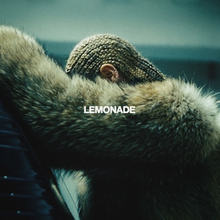
Beyoncé: Lemonade (Columbia) [hr]
There's more here than on the more musically adventurous Beyoncé that feels superficial; engaging as it all may be, a country song about gun-toting Daddy and a proclamation of master-capitalistic "black Bill Gates"-dom are oddly tone-deaf coming from this corner in 2016. Treating it as the relationship concept record it really is, though, it's both surprisingly explicit in its pain and genuinely moving. The eccentricity of the previous album pokes its head out here and there in production terms, but this is mostly about songcraft, storytelling, a exorcism with millions' eyes pointed toward it. That doesn't mean the trapped-feeling emotional emptiness on "Pray You Catch Me," the tearful anger of "Don't Hurt Yourself" and the open-armed redemption of "All Night" haven't been carefully tweaked and calculated by the world's biggest popular artist to become something universal. In this element, though, we find not insincerity but the uncanny ability to render private castastrophe into public catharsis not directed at -- this isn't a brooding song cycle -- but meant to be shared with a mass audience. Almost everyone has most assuredly been through infidelity in some form, usually on both sides of it; almost everyone can feel the pain, hate and anger that emanate here and that thereby erase the multitudes of wealth separating Beyoncé's (and Jay-Z's) life experience from our own. There's a lot of powerful, familiar stuff in that acerbic, wounded first half, but the conditional making up in "All Night" showcases an ability to funnel complicated emotional evolution and adult depth into pop song form worthy of Smokey Robinson. I'm sure you could read "Nothing real can be threatened / true love breathes salvation back into me" as trite, but not if you've ever lived through it, and certainly not the way she sings it.

King Gizzard & the Lizard Wizard: Nonagon Infinity (Heavenly) [NO]
I have security measures in place to prevent myself from ever having to hear music like this, but I guess I need to reevaluate them.

Kaytranada: 99.9% (XL) [r]
A carousel of joy from the trip hop revival DJ; it sounds great on a night drive. Having wanted something like this to happen on this scale for years, I only wish it went harder and further in the full-on 1997 direction. Credit to Kaytranada, though, for starting an international conversation about the woeful absence of trip hop from all of our lives in the 2010s. I know that you'll feel better when you send us in a comment and tell us the name of your favorite deep-cut trip hop gems.

Anohni: Hopelessness (Secretly Canadian) [r]
A surprisingly literal series of rants and raves -- about war and politics as often as anything more intimate -- from the former Antony peaks on "4 Degrees," which sounds like some lost mid-'80s Kate Bush cut and is truly exhilarating. Anohni's always had one of the best voices in modern recorded music and she absolutely soars here, though the most culturally significant moment on offer might be the cut on which she gives the current president a serious ticking off. Her grievances are of course sound -- drone bombs, no protection for whistle-blowers, assassination programs -- and if you're remotely conscious of left-wing politics you're aware of them, but the way "Obama" renders them is genuinely unsettling, quite horrible in its commanding, confrontational surrealism. "The hope drained from your face" is a hell of a symbol and a striking wake-up from the fantasy of 2008. I skipped the song the first couple of times because I just couldn't handle the vocal gurgling, but it does pin you to your seat. Other such heights are sporadic here, but not absent.

White Lung: Paradise (Domino)
'70s-derived, metallic hard rock flies in and out with an eye toward the arena as much as the club. The hooks aren't absent but Sheer Mag's come faster and crunchier. Still, this is solid and won't have / hasn't had any trouble finding its ideal cult. Ch ch ch ch cherry bomb.

Radiohead: A Moon Shaped Pool (s/r) [r]
This musically dense, cloudy-day breakup album is a semi-return to the florid Radiohead of the early-to-mid-2000s. Thom Yorke has never sung more beautifully or with more urgent passion, and the album routinely flirts with the ethereal beauty of the likes of "Pyramid Song" or "Street Spirit" without the existential fatalism; its specific miseries are far more pragmatic. Extending on that premise, though, its best moments call back all but explicitly to Radiohead Greatest Hits -- "The Numbers" is "Optimistic" part deux, "Identikit" a veritable "Idioteque" for the '10s and "True Love Waits" was of course written more than twenty years ago and has been a fan favorite for almost the entire time. There are surely conceptual reasons for all this nostalgia, namely that one of the relationships that probably helped make In Rainbows one of the most unabashedly romantic albums ever issued by a mainstream rock band has dissolved after two decades, now the subject of mournful epitaphs like "Daydreaming" and "Glass Eyes," and so the two similarly gorgeous, melodically restless recordings present two sides of an upsetting coin. The result is an hour of mood music, retaining the relaxed modesty of their last two wonderful records but without the openness of In Rainbows and the beat-driven sensuality of The King of Limbs, or the economy of either. It has spoken to many and will continue to, but its songs wither and float away from these ears the same way Hail to the Thief did, only I never once want to turn this off while it's playing. All a roundabout way of saying that I like this but I either can't hum its tunes or don't wanna. I love this band, one of the only childhood obsessions that's still with me, and I think they're fully committed to these morose laments, and I hope they feel better soon.

Modern Baseball: Holy Ghost (Run for Cover)
This is emo. Not "emo" in the mall-rock Hot Topic sense but the real-ass thing; it might actually not be an accident that this Philadelphia band's name is two or three inches away from American Football. Vocals and guitar chords and the general depressive mood of it all take me right back to fall of freshman year '98. I didn't listen to this kinda thing but it was swirling around. Brendan Lukens sounds a hell of a lot like John Samson from the late lamented Weakerthans. It's all very serious stuff -- I'm not really in the audience anymore but I'm not supposed to be, and taking this in the context of what it is and all expectations thereby implied, it's quite good.

Jessy Lanza: Oh No (Hyperdub) [r]
Ontario singer's sophomore album confines all its best tricks to the first three songs: twinkly toy-store pop, the absurdly fun "VV Violence" with lively chanting and a sound like c. 1985 R&B, and "Never Enough," which is like someone decided to cover Depeche Mode's "Lie to Me" while committing the verboten atrocity of enjoying it. The rest is increasingly pedestrian dance music, some of it Grimesy, some of it just boring, but it's hard not to at least mildly like a record with such a strong opening sequence.

James Blake: The Colour in Anything (Universal) [NO]
Here's a dude whose fame makes less and less sense as the decade rolls on. His second real LP, all costume-jewelry R&B and pathetically self-absorbed Bon Iver-like balladry, starts to get annoying after barely fifty seconds, but I held out -- more than once, even -- in tireless service to you, the reader. It is morose, whiny, butt-stupid and instantly dated, and it's the only album a Certain Type of Person is going to listen to this year. Blake is the cautionary tale of what happens if Dad doesn't tell your brother to stop trying to rearrange Elton John songs on his tinkly-ass Yamaha keyboard at the kitchen table. Total length: 76:13.

Car Seat Headrest: Teens of Denial (Matador)
More Titus Andronicus than Ric Ocasek, this elaborately constructed, mildly psychedelic adolescent macho hellscape has a sort of swaggering integrity about it but that doesn't really save it from being fatally overextended and familiar. Virginia native Will Toledo was a lo-fi architect but has moved on to using the studio as an instrument for echo chamber teen angst; one more bedroom pop enthusiast becomes one more overly processed and AOR-derived indie rock band. That's "indie rock" in the sense that olds are always whining it really isn't anymore, like the people who still think reading Chunklet is edgy af. I guess there's some novelty in this day and age to this sort of muscular traditionalist exercise, but it doesn't hold my interest for even half of its length -- which is, in total: 70:07.

Bob Dylan: Fallen Angels (Columbia)
Enough with the trolling. The most fanatical Dylan acolyte -- and increasingly I consider myself one -- is not interested in hearing him take on the greatest hits of the crooners and the heavy hitters from the Great American Songbook, yet here we are for some unfathomable reason. His vocal performance is somewhat more relaxed, and therefore more appealing, than on Shadows in the Night, and he imbues his interpretations with obvious reverence for the material; the album has an admirably still, laid-back ambiance. But you can't sincerely take it as anything except some act of resignation and a misguided cop to Dylan's increasingly AARP audience; it has so little to do with anything that makes him a cultural force worth knowing in the first place that it's hard to know what to make of it, or to think of it as anything except a hardcore fans-only diversion. He simply doesn't put enough of emotional consequence across in his versions to give you even the first reason to listen to his ragged singing in lieu of bloody Sinatra's. (Jesus, at least cover somebody who's remotely in your range.)

Chance the Rapper: Coloring Book (s/r) [r]
I thought Chance's older stuff was annoyingly flighty and, in that weird shruggy "lol wtf!" manner of so much so-called "hipster rap," very much up its own ass. This is very different; it's still as long-winded as mixtapes usually are, but its effervescence really does firmly place him as a singular artist, or at least a singular puller-together of hooks, pop and talent. If anything it's the closest analogue out this year to the purely joyful, archetypal early '80s R&B record -- in which regard it's more convincing than Blood Orange, Frank Ocean, the Foreign Exchange, or Kwabs, and almost equal to even somebody as brilliant and crafty as Kelis -- but it's also too relaxed to come across as ambitious, which works both for and against it. It's as committed to vibe as any R&B, pop or hip hop record in recent memory -- it's quite a ride to take, soaring and plodding with great rhythm and pacing, not to mention well-injected charm -- without falling into the inevitably limited stoner-jam stereotype. An odd, unexpected pleasure.

Zo!: Skybreak (Foreign Exchange) [r]
Speaking of... While people keep giving dullard non-entity acts like Porches a bunch of copy space, at least the likes of the Foreign Exchange and Zo! find ways to appropriate the sort of bland "adult-targeted" music that is actually occasionally fun to listen to. A delightfully outdated, easygoing dance record with a touch of lite jazz and very little memorable material but some wicked Stevie Wonder-ish keyb flourishes here and there, this is kind of like throwing some DeBarge in with those UltraLounge compilations. Queue it up in your space-age bachelor pad on your next hot date.

Samiyam: Animals Have Feelings (Stones Throw) [hr]
A gritty cycle of obscure and troubling but consistently engaging samples constructed into a long Donuts-style cycle of weird, tense sonics by this L.A. hip hop production vet. There are tons of beats here that shouldn't flow or scan naturally but hardly any cut, idea or tangent wears out its welcome, and the sporadic guest shots from the likes of Action Bronson and Earl Sweatshirt are well-placed even if you don't care much for the performers themselves. This is also an impressively malleable record, working readily as background, jittery dance, or intensely pored-over headphone music, expertly mounted and ingeniously fused together whatever the case. It's often not just the material itself but the way it's filtered, manipulated, fucked up by Samiyam that gives the record such an intriguing moodiness. Speaking as someone who got sick of junk-culture sample albums a long time ago, this is the real deal, a beat-heavy answer of sorts to Flying Lotus' last LP.

***

FURTHER INVESTIGATION TO COME:
* Imarhan
* The Jayhawks: Paging Mr. Proust
* Pity Sex: White Hot Moon
* Kyle Craft: Dolls of Highland
- Konono No. 1: Meets Batida
- Kacy & Clayton: Strange Country
- Nothing: Tired of Tomorrow
- Yak: Alas Salvation
- Mark Pritchard: Under the Sun
- Oddisee: The Odd Tape
- Andy Shauf: The Party
- Pantha du Prince: The Triad

REJECTS
Grant Lee Phillips: The Narrows [NYIM]
M83: Junk
Wire: Nocturnal Koreans
John Doe: The Westerner [NYIM]
Brian Eno: The Ship
The Bo-Keys: Heartaches by the Number
Freeway: Free Will
Gregory Porter: Take Me to the Alley [NYIM]
Julianna Barwick: Will
LUH: Spiritual Songs for Lovers to Sing
Dan Michaelson & the Coastguards: Memory
Pierce the Veil: Misadventures
Jameszoo: Fool
Karl Blau: Introducing
Twin Peaks: Down in Heaven
Eagulls: Ullages
Corinne Bailey Rae: The Heart Speaks in Whispers
The So So Glos: Kamikaze
Mudcrutch: 2 [NYIM]
Saosin: Along the Shadow
Ariana Grande: Dangerous Woman
Marissa Nadler: Strangers

ALSO RECOMMENDED:
Expanding the diary format slightly to include these, rather than have one huge post collecting them at the end of the year. These are good albums I didn't have time to listen to more than once or twice but still feel comfortable recommending and commenting on briefly. Here's everything from the first five months of 2016 and the last couple of 2015.

Basia Bulat: Good Advice (Secret City) [Canadian pop autoharpist erupts with not-always-perfectly-mounted hooks; "Long Goodbye" / "La La Lie"]
Venice Dawn/Adrian Younge: Something About April II (Linear Labs) [psychedelic soul-Muzak with a Peaches & Herb/Free Design '70s sheen; catnip for me of course]
Sidestepper: Supernatural Love (Society of Sound) [at first you're thinking agh South American music rendered all too EZ for US ears, but then its easy vibe gets under your skin; "Lover"]
Field Music: Commontime (Memphis Industries) [tricky OMDisms, solid sythery]
Rokia Traore: Ne So (Nonesuch) [excessively polite, but great voice]
Mavis Staples: Livin' on a High Note (Anti-) [brilliantly ragged performance, stunning guitar work; "Action" / "MLK Song" / "Jesus Lay Down Beside Me"]
Lapsley: Long Way Home (XL) [R&B trip hop / skater rink dreams at first, then it gets pretty nasty, though she always plays it cool as a cucumber; "Hurt Me" / "Operator (He Doesn't Call Me)"]
Glenn Jones: Fleeting (Thrill Jockey) [bunny strums idly]
Tacocat: Lost Time (Hardly Art) [pop-punk that won't make you spew, with lyrics that tickle; "Talk" / "Night Swimming"]
Loretta Lynn: Full Circle (Columbia) [that voice, an inexhaustible instrument]
Bombino: Azel (Partisan) [as they (we) say during library storytime, get your wiggles out]
Laura Gibson: Empire Builder (Barsuk) [always pleasant, sometimes probing singer-songwriter; "Damn Sure" / "Two Kids" / "The Last One"]
Lucy Dacus: No Burden (EggHunt) [a voice that cuts you down as soon as you're lulled into complacency]
A$AP Ferg: Always Strive and Prosper (RCA) [portrait of a modern rock star: cuts loose and goes apeshit then feels guilty about it; "Strive" / "Let You Go"]

ORPHAN TUNES:
Sideline to the above, songs I liked on albums I didn't (badly reviewed or rejected from consideration), or other tracks I picked up on other places.

Brian Eno "I'm Set Free" {Velvet Underground cover} [The Ship]
Iggy Pop "Sunday" [Post Pop Depression]
Robert Pollard "My Daughter Yes She Knows" [Of Course You Are]

******

The next Essentials installment should be ready by sometime next week. There may or may not be something else cool showing up between that and the June post, too. Thanks all!