Friday, October 7, 2016

With you with the windows down: June 2016 music diary

This is three months overdue, and you'll see why in the next couple of days. Somehow I got the idea that I should post this at the same time as my big project I was working on, which quickly resulted in a comical number of delays as I got devoted to making sure said project was going to be solid and infallible. Once I realized this didn't make much sense I did it anyway, and part of the reason I let this happen was that I sort of needed a vacation from everything and to immerse myself in something tied to the past, tied to old loved things, and completely divorced from a reality that, outside of my safe bubble, was getting to be a bit overwhelming. It wasn't new music's fault but I needed a break from the modern world. It felt good to sink into researching something that took a long time. But I'm better now, and will do everything in my power to get us back on the right track with our regular posts.

***

Gold Panda: Good Luck and Do Your Best (City Slang) [r]
Push-button UK producer establishes a strange rhythm initially on his latest set, with a kind of repetition that calls to mind Four Tet with an extra emphasis on ear-tugging annoyance. Then the record unexpectedly poises itself to seduce and fills the room with skeletal but absorbing sounds that fall around most pleasingly. He achieves unexpected brilliance when he completely pulls the rug out with the glassy, delicate sound of "Time Eater" and the perfectly barbed retro lounge of LP closer "Your Good Times Are Just Beginning." Stick with this and the groove keeps deepening.

Holy Fuck: Congrats (Innovative Leisure) [hr]
The wonderful physicality of this Big Beat throwback unit from Toronto comes from their use of analogue instrumentation to mimic classic electronica; it will render Amp-sized nostalgia in a lot of folks, the yearning for a manic party atmosphere in others, but regardless it's searing, and the absence of programming gives it all a healthy, invigorating crunch. The pacing is relentless, though faint vocals and moments of flagging intensity offer a seemingly effortless beauty at times, especially on the highlight "Neon Dad."

Whitney: Light Upon the Lake (Secretly Canadian) [hr]
Remember Smith Westerns, who imploded after throwing out some terrific, backward-adolescent rock & roll earlier in this decade? Two of the band's members now show up in Whitney, which retains the T-Rex and David Bowie influences but with a softer, cleaner sound; they're not kids anymore, they're full-on Americana romantics. Their debut is the earworm-filled guitar-based power pop record for our time (with some scattered R&B elements); like the Shins and Beulah before them, they demonstrate the evergreen glory of the great hook. This album isn't nostalgic because it's just timeless, and it seldom steers wrong. Out of the gate, "No Woman" grips with its melodic stillness and florid construction, a perfect melancholic pop concoction that builds and falls seductively, leading right into the low-key propulsion of "The Falls" and never flagging from there. Talking of nostalgia, let's note the instantaneous generation of it with "No Matter Where We Go" and "Dave's Song," songs that sound genuinely classic with amazingly joyous guitars and choruses. Big Star and Badfinger comparisons are unavoidable; how awful.

Paul Simon: Stranger to Stranger (Concord)
Getting smugger (and less convincingly rhythmic) as he gets older. It's not pretty and it's sometimes insufferable; a song like "Wristband," which is the sort of thing Cameron Crowe would probably find appealingly witty, reveals how the wit of "Boy in the Bubble" and "Me and Julio" washes away into banality. Say this for him, though: his voice is if anything better than it was in his peak years as a writer. He sounds like Peter Gabriel at times. But the better moments are really those in which he shuts up, and less because they're inspired than because of the fatigue his lecturing and prattling inspires. "The Riverbank" is probably his best song since Surprise, but only sentimental types will likely notice.

Steve Gunn: Eyes on the Lines (Matador)
NYC guitarist used to play with Kurt Vile, so it's no surprise he's a practicioner of what seems to be turning into the Matador Records house style. I suppose you can zone out to his lazybones pop compositions and find some charm here and there but it's music that invariably sounds better when it's not being given your direct attention.

Tegan and Sara: Love You to Death (Warner Bros.) [hr]
A brisk half-hour of almost criminally catchy pop music, carrying over the beats and top 40 influences of its strong predecessor Heartthrob; the duo reimagines glossy '80s pop by the likes of Mr. Mister, Air Supply and Berlin as the glittery harbinger of difficult emotional truth, the breakups and breakdowns and successes and failures of romance stuck between adolescent angst and grownup anxiety. They can't resist writing anthems, and somehow those are tougher to shake than the more lofty and theatrical slow ones; somehow the dance songs also seem more vulnerable. "BWU," about not wanting to get married, and "Boyfriend," about not wanting to be a secret lover, demand and provide gratification, though the burned-out neon sleaze of "Dying to Know" and "Faint of Heart" leave me most exhilarated; thorny complexity and the brokenness it mines always seems to provide us with the most unqualified pleasures in pop.

The Strokes: Future Present Past (Cult EP)
Track 1 sounds like the Strokes covering the Bee Gees. Track 2 sounds like the Strokes covering the Red Hot Chili Peppers covering Journey. Track 3 sounds like the Strokes covering, I dunno, Jimmy Buffett? Paul Simon? Some dad-rock somewhere. Track 4 sounds like Twin Shadow covering the Red Hot Chili Peppers. I loved Comedown Machine and I still don't quite get why this exists.

Joey Purp: iiiDrops (s/r) [r]
Part of the amazingly fertile Chicago hip hop scene, Purp doesn't have much of a "house style"; whether that makes him more or less dangerous is your call -- he screams, he Kendricks, he skews, he Autotunes. The production on this mixtape is equally varied, lyrical content less so, though with a few clever vignettes on sex and conscous nods toward dealing, working class life and the prison state. Major shoutout for the synthpop, Latin and free jazz influences courtesy of a whole slew of producers, but the unassailable highlight is the Chance the Rapper guest shot "Girls @," which swings more than it bangs.

Mitski: Puberty 2 (Dead Oceans) [r]
At first I was put off by the Enya-isms of this NYC singer-songwriter's fourth album (she has a similarly toned voice, and a convenient attraction to something like the baroque, Phil Spector-like flavoring of some of the less Celtic/New Age-based material on Watermark) but closer listens on headphones reveal that there's something of an emotional powerhouse hidden underneath the dross. Atmospheres abound, sure, but also more and smarter thinking than Bon Iver's or Lana Del Rey's to back them up. One likely must be in quite a specific mindset to appreciate a song like "My Body Is Made of Crushed Little Stars," about giving up and starting over, but its rendering of personal fear and hangup in careful, well-considered language offer Mitski up as a sort of millennial Leonard Cohen. The tasteless production helps too, but it's not something that's going to function as background music by any means.

case/lang/veirs (Anti-)
Multi-generational supergroup consists of Neko Case, grand singer and all-around splendid individual inside and outside of the New Pornographers; k.d. lang, about whom I'm realizing I should know a lot more than I do beyond the radio hits; and Laura Veirs, who impressed me when I saw her live in 2009 but whose recorded work never really struck me. The three voices harmonize and ring out in unison sometimes, but mostly this is a cycle of solo songs with the two remaining members serving as backup, and thanks to the homogenized, Nashville-like production, it's all a bit forgettable, if hardly unpleasant. Case and lang are impassioned, engaging if not thoroughly nuanced singers; Veirs is a good deal less technically accomplished and mature, but somehow her songs seem to me the most felt here. Her "I Want to Be Here" leaves me a bit gutted, honestly: "The hungry fools who rule the world can't catch us / surely they can't ruin everything / I just wanna be here with you." For a person hiding out in a dark world with a new spouse, those words sear.

The Jayhawks: Paging Mr. Proust (Sham) [hr]
In running this blog, I occasionally come across gaps in my knowledge that rather embarrass me. Just to cite one recent example, until very recently I had no idea of Al Green's consistency as an album artist, having grown to love him through his singles and hits compilations; as a strong advocate for soul LPs that typically get ignored, like Wilson Pickett's, I feel terribly guilty that I have not been championing and loving these acknowledged classics for years. I'm working on putting together a sort of lists-project like I've done at my movie blog to try and cover some of the things that, in twenty-odd years of obsessive music listening, I've somehow missed; it bugs me that there are big things out there that aren't part of my world yet. So it goes with the alt-country pioneers the Jayhawks; I'm familiar with so many bands in their orbit but somehow barely even knew who they were, apart from their genre and the era in which they began recording. This came up on my list of auditions, then I heard the whole thing and loved it, and in researching it discovered that my praise for this is bound to ring hollow because it's my first Jayhawks album, and one that doesn't even feature their longtime guiding light Mark Olson, whose songs apparently gave the group their bite. I can't testify to the truth of that, though I certainly intend to scroll back and learn more, but all I can say is that this album's melancholic, breezy tone falls wonderfully on the ear and sounds instantly like music you've lived with your whole life. Peter Buck serves as producer, and traces of R.E.M. are everywhere, with a bit of Doug Hopkins melded in with the country-derived traditionalism. Nearly every song on the first half is a gem, while the second is a bit more listless apart from the haunting closer "I'll Be Your Key" and the restlessly catchy "The Devil Is in Her Eyes," but the false moments don't linger like the pure, unpretentious pleasure does. This is not an informed opinion; ignore me if you like, then, but this is a lovely, lilting, well-crafted record anyway.

Pity Sex: White Hot Moon (Run for Cover) [hr]
It's been proven many times in this space that I'm a sucker for knockoff shoegaze; I'm not going to make an impassioned case for Ann Arbor quartet Pity Sex being original or remarkable on a level with, say, Pinkshinyultrablast, but what I will say is that when I played their second album while driving along the street by the ocean in my hometown on a Saturday afternoon, its decadent, burned-out bliss sounded more perfect than perfect. In part because it took me so long to finish this post, this has really been the most dependable record of my summer. Part of its surprising beauty comes from the vocal trade-off between the band's co-guitarists, bored-stoned Brennan Greaves and the silky eagerness of Britty Drake. The best songs are those on which they take lines in tandem, though the ones dominated by Drake are often the most covertly emotive, like "Plum," which is about how much her mom loved them and how much her dad loved her mom. During the summer that I'll always associate with this band, though, they apparently fell apart; Drake left in July, and it's already hard to imagine the point without her.

FURTHER INVESTIGATION TO COME:
* William Tyler: Modern Country
* William Bell: This Is Where I Live
Tony Joe White: Rain Crow
Flume: Skin
The Hotelier: Goodness
Big Thief: Masterpiece
Daniel Romano: Mosey
The Monkees: Good Times!
Kate Jackson: British Road Movies
Beth Orton: Kidsticks
Cat's Eyes: Treasure House
Allen Toussaint: American Tunes

REJECTS:
Kacy & Clayton: Strange Country [NYIM]
Yak: Alas Salvation
Andy Shauf: The Party [NYIM]
Pantha du Prince: The Triad [NYIM]
PUP: The Dream Is Over
Moonface: My Best Human Face
Amber Arcades: Fading Lines
Mourn: Ha, Ha, He. [NYIM]
Minor Victories
Xenia Rubinos: Black Terry Cat [NYIM]
Dan Lissvik: Midnight
Lone: Levitate
Brandy Clark: Big Day in a Small Town
Diarrhea Planet: Turn to Gold
The Invisible: Patience [NYIM]
Gemma Ray: The Exodus Suite
Eli "Paperboy" Reed: My Way Home
Garbage: Strange Little Birds
Let's Eat Grandma: I, Gemini
YG: Still Brazy
Red Hot Chili Peppers: The Getaway
Laura Mvula: The Dreaming Room [NYIM]

ALSO RECOMMENDED:
Imarhan (City Slang) - grooves with a welcome sultriness, though they run a little long
Kyle Craft: Dolls of Highland (Sub Pop) - extraordinary first half, real pained passioned lyrical rock & roll (Rolling Stones / Gram Parsons / etc.) in the finest fuck-all early '70s tradition, but unfortunately it collapses. First five cuts ("Eye of a Hurricane" / "Balmorhea" / "Berlin" / "Lady of the Ark" / "Gloom Girl") all pretty flawless.
Konono No. 1: Meets Batida (Crammed Discs) [relentless dance music from Ethiopia never stops to take even a split second of a breath]
Nothing: Tired of Tomorrow (Relapse) [sort of like if Built to Spill had made it to the radio]
Mark Pritchard: Under the Sun (Warp) [I fell asleep, but I think I was supposed to?]
Oddisee: The Odd Tape (Mello Music) [the deep space vortex in yr bachelor pad]

ORPHAN TUNES:
Pantha du Prince "You What? Euphoria!" [The Triad]

OLD MUSIC RATED (NOT REVIEWED) THIS MONTH:
I need to clear out some space on my hard drive which means I need to form an opinion on a bunch of stuff I downloaded pre-Spotify so I know what I can wipe. I don't have time to review these yet but I do want to briefly share my enthusiasm for the good ones. And so far they're not just good but extraordinary, which means I've totally failed on my free-up-some-disk-space trek.

Al Green: Call Me (Hi 1973) [hr]
Al Green: Livin' for You (Hi 1973) [hr]
Al Green: Explores Your Mind (Hi 1974) [hr]

***

Current plan is to post the results of my long excursion into 1960s mythos (it's done apart from the introduction, which is coming easier than I thought it would) and then move straight through the rest of the summer's releases, culminating I hope in a right-on-time end-of-year list, but you never know.

Tuesday, June 14, 2016

HOLD UP: May 2016 music diary

Sorry this is so late this month! Blame Radiohead. A quick housekeeping note: I'm thrilled at the reception my Bangles "Essentials" posts got last month; after seeing how long they took me to research and write I've decided to make one slight change to my plans for the Essentials series, dealing strictly with the order in which artists will be approached. I was going strict alphabetical but I don't really fancy waiting till I'm 50 to write at length about, like, Yo La Tengo (and yes, I do plan to keep writing this blog in my fifties and after, thankyouverymuch), so I'm actually going to prioritize the handful of favorites with the largest amount of material I want to cover, then we'll go on from there in descending order with the big guns coming up first. Not necessarily my absolute favorite bands -- Chuck Berry and Little Richard, to name two that spring to mind, are a bit more important to me than some of the first few Essentials artists but the parts of their catalogs I care most about aren't quite as exhaustive -- but the ones who've released so many classic and rewarding albums and compilations and such that they tend to dominate my shelves, playlists and brain. I very seriously doubt you'll be surprised by the first three performers we address; after that, well, stay tuned.

***

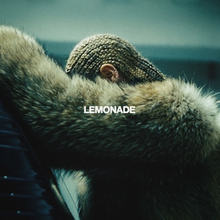
Beyoncé: Lemonade (Columbia) [hr]
There's more here than on the more musically adventurous Beyoncé that feels superficial; engaging as it all may be, a country song about gun-toting Daddy and a proclamation of master-capitalistic "black Bill Gates"-dom are oddly tone-deaf coming from this corner in 2016. Treating it as the relationship concept record it really is, though, it's both surprisingly explicit in its pain and genuinely moving. The eccentricity of the previous album pokes its head out here and there in production terms, but this is mostly about songcraft, storytelling, a exorcism with millions' eyes pointed toward it. That doesn't mean the trapped-feeling emotional emptiness on "Pray You Catch Me," the tearful anger of "Don't Hurt Yourself" and the open-armed redemption of "All Night" haven't been carefully tweaked and calculated by the world's biggest popular artist to become something universal. In this element, though, we find not insincerity but the uncanny ability to render private castastrophe into public catharsis not directed at -- this isn't a brooding song cycle -- but meant to be shared with a mass audience. Almost everyone has most assuredly been through infidelity in some form, usually on both sides of it; almost everyone can feel the pain, hate and anger that emanate here and that thereby erase the multitudes of wealth separating Beyoncé's (and Jay-Z's) life experience from our own. There's a lot of powerful, familiar stuff in that acerbic, wounded first half, but the conditional making up in "All Night" showcases an ability to funnel complicated emotional evolution and adult depth into pop song form worthy of Smokey Robinson. I'm sure you could read "Nothing real can be threatened / true love breathes salvation back into me" as trite, but not if you've ever lived through it, and certainly not the way she sings it.

King Gizzard & the Lizard Wizard: Nonagon Infinity (Heavenly) [NO]
I have security measures in place to prevent myself from ever having to hear music like this, but I guess I need to reevaluate them.

Kaytranada: 99.9% (XL) [r]
A carousel of joy from the trip hop revival DJ; it sounds great on a night drive. Having wanted something like this to happen on this scale for years, I only wish it went harder and further in the full-on 1997 direction. Credit to Kaytranada, though, for starting an international conversation about the woeful absence of trip hop from all of our lives in the 2010s. I know that you'll feel better when you send us in a comment and tell us the name of your favorite deep-cut trip hop gems.

Anohni: Hopelessness (Secretly Canadian) [r]
A surprisingly literal series of rants and raves -- about war and politics as often as anything more intimate -- from the former Antony peaks on "4 Degrees," which sounds like some lost mid-'80s Kate Bush cut and is truly exhilarating. Anohni's always had one of the best voices in modern recorded music and she absolutely soars here, though the most culturally significant moment on offer might be the cut on which she gives the current president a serious ticking off. Her grievances are of course sound -- drone bombs, no protection for whistle-blowers, assassination programs -- and if you're remotely conscious of left-wing politics you're aware of them, but the way "Obama" renders them is genuinely unsettling, quite horrible in its commanding, confrontational surrealism. "The hope drained from your face" is a hell of a symbol and a striking wake-up from the fantasy of 2008. I skipped the song the first couple of times because I just couldn't handle the vocal gurgling, but it does pin you to your seat. Other such heights are sporadic here, but not absent.

White Lung: Paradise (Domino)
'70s-derived, metallic hard rock flies in and out with an eye toward the arena as much as the club. The hooks aren't absent but Sheer Mag's come faster and crunchier. Still, this is solid and won't have / hasn't had any trouble finding its ideal cult. Ch ch ch ch cherry bomb.

Radiohead: A Moon Shaped Pool (s/r) [r]
This musically dense, cloudy-day breakup album is a semi-return to the florid Radiohead of the early-to-mid-2000s. Thom Yorke has never sung more beautifully or with more urgent passion, and the album routinely flirts with the ethereal beauty of the likes of "Pyramid Song" or "Street Spirit" without the existential fatalism; its specific miseries are far more pragmatic. Extending on that premise, though, its best moments call back all but explicitly to Radiohead Greatest Hits -- "The Numbers" is "Optimistic" part deux, "Identikit" a veritable "Idioteque" for the '10s and "True Love Waits" was of course written more than twenty years ago and has been a fan favorite for almost the entire time. There are surely conceptual reasons for all this nostalgia, namely that one of the relationships that probably helped make In Rainbows one of the most unabashedly romantic albums ever issued by a mainstream rock band has dissolved after two decades, now the subject of mournful epitaphs like "Daydreaming" and "Glass Eyes," and so the two similarly gorgeous, melodically restless recordings present two sides of an upsetting coin. The result is an hour of mood music, retaining the relaxed modesty of their last two wonderful records but without the openness of In Rainbows and the beat-driven sensuality of The King of Limbs, or the economy of either. It has spoken to many and will continue to, but its songs wither and float away from these ears the same way Hail to the Thief did, only I never once want to turn this off while it's playing. All a roundabout way of saying that I like this but I either can't hum its tunes or don't wanna. I love this band, one of the only childhood obsessions that's still with me, and I think they're fully committed to these morose laments, and I hope they feel better soon.

Modern Baseball: Holy Ghost (Run for Cover)
This is emo. Not "emo" in the mall-rock Hot Topic sense but the real-ass thing; it might actually not be an accident that this Philadelphia band's name is two or three inches away from American Football. Vocals and guitar chords and the general depressive mood of it all take me right back to fall of freshman year '98. I didn't listen to this kinda thing but it was swirling around. Brendan Lukens sounds a hell of a lot like John Samson from the late lamented Weakerthans. It's all very serious stuff -- I'm not really in the audience anymore but I'm not supposed to be, and taking this in the context of what it is and all expectations thereby implied, it's quite good.

Jessy Lanza: Oh No (Hyperdub) [r]
Ontario singer's sophomore album confines all its best tricks to the first three songs: twinkly toy-store pop, the absurdly fun "VV Violence" with lively chanting and a sound like c. 1985 R&B, and "Never Enough," which is like someone decided to cover Depeche Mode's "Lie to Me" while committing the verboten atrocity of enjoying it. The rest is increasingly pedestrian dance music, some of it Grimesy, some of it just boring, but it's hard not to at least mildly like a record with such a strong opening sequence.

James Blake: The Colour in Anything (Universal) [NO]
Here's a dude whose fame makes less and less sense as the decade rolls on. His second real LP, all costume-jewelry R&B and pathetically self-absorbed Bon Iver-like balladry, starts to get annoying after barely fifty seconds, but I held out -- more than once, even -- in tireless service to you, the reader. It is morose, whiny, butt-stupid and instantly dated, and it's the only album a Certain Type of Person is going to listen to this year. Blake is the cautionary tale of what happens if Dad doesn't tell your brother to stop trying to rearrange Elton John songs on his tinkly-ass Yamaha keyboard at the kitchen table. Total length: 76:13.

Car Seat Headrest: Teens of Denial (Matador)
More Titus Andronicus than Ric Ocasek, this elaborately constructed, mildly psychedelic adolescent macho hellscape has a sort of swaggering integrity about it but that doesn't really save it from being fatally overextended and familiar. Virginia native Will Toledo was a lo-fi architect but has moved on to using the studio as an instrument for echo chamber teen angst; one more bedroom pop enthusiast becomes one more overly processed and AOR-derived indie rock band. That's "indie rock" in the sense that olds are always whining it really isn't anymore, like the people who still think reading Chunklet is edgy af. I guess there's some novelty in this day and age to this sort of muscular traditionalist exercise, but it doesn't hold my interest for even half of its length -- which is, in total: 70:07.

Bob Dylan: Fallen Angels (Columbia)
Enough with the trolling. The most fanatical Dylan acolyte -- and increasingly I consider myself one -- is not interested in hearing him take on the greatest hits of the crooners and the heavy hitters from the Great American Songbook, yet here we are for some unfathomable reason. His vocal performance is somewhat more relaxed, and therefore more appealing, than on Shadows in the Night, and he imbues his interpretations with obvious reverence for the material; the album has an admirably still, laid-back ambiance. But you can't sincerely take it as anything except some act of resignation and a misguided cop to Dylan's increasingly AARP audience; it has so little to do with anything that makes him a cultural force worth knowing in the first place that it's hard to know what to make of it, or to think of it as anything except a hardcore fans-only diversion. He simply doesn't put enough of emotional consequence across in his versions to give you even the first reason to listen to his ragged singing in lieu of bloody Sinatra's. (Jesus, at least cover somebody who's remotely in your range.)

Chance the Rapper: Coloring Book (s/r) [r]
I thought Chance's older stuff was annoyingly flighty and, in that weird shruggy "lol wtf!" manner of so much so-called "hipster rap," very much up its own ass. This is very different; it's still as long-winded as mixtapes usually are, but its effervescence really does firmly place him as a singular artist, or at least a singular puller-together of hooks, pop and talent. If anything it's the closest analogue out this year to the purely joyful, archetypal early '80s R&B record -- in which regard it's more convincing than Blood Orange, Frank Ocean, the Foreign Exchange, or Kwabs, and almost equal to even somebody as brilliant and crafty as Kelis -- but it's also too relaxed to come across as ambitious, which works both for and against it. It's as committed to vibe as any R&B, pop or hip hop record in recent memory -- it's quite a ride to take, soaring and plodding with great rhythm and pacing, not to mention well-injected charm -- without falling into the inevitably limited stoner-jam stereotype. An odd, unexpected pleasure.

Zo!: Skybreak (Foreign Exchange) [r]
Speaking of... While people keep giving dullard non-entity acts like Porches a bunch of copy space, at least the likes of the Foreign Exchange and Zo! find ways to appropriate the sort of bland "adult-targeted" music that is actually occasionally fun to listen to. A delightfully outdated, easygoing dance record with a touch of lite jazz and very little memorable material but some wicked Stevie Wonder-ish keyb flourishes here and there, this is kind of like throwing some DeBarge in with those UltraLounge compilations. Queue it up in your space-age bachelor pad on your next hot date.

Samiyam: Animals Have Feelings (Stones Throw) [hr]
A gritty cycle of obscure and troubling but consistently engaging samples constructed into a long Donuts-style cycle of weird, tense sonics by this L.A. hip hop production vet. There are tons of beats here that shouldn't flow or scan naturally but hardly any cut, idea or tangent wears out its welcome, and the sporadic guest shots from the likes of Action Bronson and Earl Sweatshirt are well-placed even if you don't care much for the performers themselves. This is also an impressively malleable record, working readily as background, jittery dance, or intensely pored-over headphone music, expertly mounted and ingeniously fused together whatever the case. It's often not just the material itself but the way it's filtered, manipulated, fucked up by Samiyam that gives the record such an intriguing moodiness. Speaking as someone who got sick of junk-culture sample albums a long time ago, this is the real deal, a beat-heavy answer of sorts to Flying Lotus' last LP.

***

FURTHER INVESTIGATION TO COME:
* Imarhan
* The Jayhawks: Paging Mr. Proust
* Pity Sex: White Hot Moon
* Kyle Craft: Dolls of Highland
- Konono No. 1: Meets Batida
- Kacy & Clayton: Strange Country
- Nothing: Tired of Tomorrow
- Yak: Alas Salvation
- Mark Pritchard: Under the Sun
- Oddisee: The Odd Tape
- Andy Shauf: The Party
- Pantha du Prince: The Triad

REJECTS
Grant Lee Phillips: The Narrows [NYIM]
M83: Junk
Wire: Nocturnal Koreans
John Doe: The Westerner [NYIM]
Brian Eno: The Ship
The Bo-Keys: Heartaches by the Number
Freeway: Free Will
Gregory Porter: Take Me to the Alley [NYIM]
Julianna Barwick: Will
LUH: Spiritual Songs for Lovers to Sing
Dan Michaelson & the Coastguards: Memory
Pierce the Veil: Misadventures
Jameszoo: Fool
Karl Blau: Introducing
Twin Peaks: Down in Heaven
Eagulls: Ullages
Corinne Bailey Rae: The Heart Speaks in Whispers
The So So Glos: Kamikaze
Mudcrutch: 2 [NYIM]
Saosin: Along the Shadow
Ariana Grande: Dangerous Woman
Marissa Nadler: Strangers

ALSO RECOMMENDED:
Expanding the diary format slightly to include these, rather than have one huge post collecting them at the end of the year. These are good albums I didn't have time to listen to more than once or twice but still feel comfortable recommending and commenting on briefly. Here's everything from the first five months of 2016 and the last couple of 2015.

Basia Bulat: Good Advice (Secret City) [Canadian pop autoharpist erupts with not-always-perfectly-mounted hooks; "Long Goodbye" / "La La Lie"]
Venice Dawn/Adrian Younge: Something About April II (Linear Labs) [psychedelic soul-Muzak with a Peaches & Herb/Free Design '70s sheen; catnip for me of course]
Sidestepper: Supernatural Love (Society of Sound) [at first you're thinking agh South American music rendered all too EZ for US ears, but then its easy vibe gets under your skin; "Lover"]
Field Music: Commontime (Memphis Industries) [tricky OMDisms, solid sythery]
Rokia Traore: Ne So (Nonesuch) [excessively polite, but great voice]
Mavis Staples: Livin' on a High Note (Anti-) [brilliantly ragged performance, stunning guitar work; "Action" / "MLK Song" / "Jesus Lay Down Beside Me"]
Lapsley: Long Way Home (XL) [R&B trip hop / skater rink dreams at first, then it gets pretty nasty, though she always plays it cool as a cucumber; "Hurt Me" / "Operator (He Doesn't Call Me)"]
Glenn Jones: Fleeting (Thrill Jockey) [bunny strums idly]
Tacocat: Lost Time (Hardly Art) [pop-punk that won't make you spew, with lyrics that tickle; "Talk" / "Night Swimming"]
Loretta Lynn: Full Circle (Columbia) [that voice, an inexhaustible instrument]
Bombino: Azel (Partisan) [as they (we) say during library storytime, get your wiggles out]
Laura Gibson: Empire Builder (Barsuk) [always pleasant, sometimes probing singer-songwriter; "Damn Sure" / "Two Kids" / "The Last One"]
Lucy Dacus: No Burden (EggHunt) [a voice that cuts you down as soon as you're lulled into complacency]
A$AP Ferg: Always Strive and Prosper (RCA) [portrait of a modern rock star: cuts loose and goes apeshit then feels guilty about it; "Strive" / "Let You Go"]

ORPHAN TUNES:
Sideline to the above, songs I liked on albums I didn't (badly reviewed or rejected from consideration), or other tracks I picked up on other places.

Brian Eno "I'm Set Free" {Velvet Underground cover} [The Ship]
Iggy Pop "Sunday" [Post Pop Depression]
Robert Pollard "My Daughter Yes She Knows" [Of Course You Are]

******

The next Essentials installment should be ready by sometime next week. There may or may not be something else cool showing up between that and the June post, too. Thanks all!

Thursday, May 26, 2016

The Essentials - The Bangles: overview & introduction

DISCOGRAPHY
ALBUMS
1. All Over the Place (Columbia 1984) [hr]
2. Different Light (Columbia 1986) [r]
3. Everything (Columbia 1988)
REUNION ALBUMS
4. Doll Revolution (Koch 2003)
5. Sweetheart of the Sun (Waterfront 2011)

COMPILATIONS
Greatest Hits (Columbia 1990) [hr]
Ladies and Gentlemen... the Bangles! (Down Kiddie! 2014)

EPs
Bangles (I.R.S. 1982) [hr]

ESSENTIAL NON-LP TRACKS
Getting Out of Hand [as the Bangs] (Downkiddie 7" 1981)
I Got Nothing [from The Goonies OST] (Epic 1985)
What I Meant to Say [b-side] (Columbia 1988)

The Bangles' story is in many ways the story of how young guitar bands weaved in and out of underground and widespread acceptance in the 1980s; their close label contacts and a rush of good luck with collaborators and A&R, as well as their presence in a highly visible and well-connected scene, assured that each step in their evolution would be either a microcosm of or a reaction to the state of American pop bands in the years after new wave faltered. It's a strange thing to say about a group that achieved considerable, even massive, mainstream success and arguably fulfilled much of their early promise, but they also were one of the cautionary tales of pre-Nirvana alternative rock. When cultists of power pop, indie rock and obtuse guitar bands talk about the corruption entailed by a major label signing, it's hard not to think of the Bangles' move toward increasingly slick and soulless (by some accounts) radio pop as a perfect case study, even though this is complicated by the enormous popularity they achieved as they moved away from their punkish origins.

Rising from the short-lived but vibrant Paisley Underground scene in the Los Angeles area, the Bangs -- as they were first christened -- consisted initially of Susanna Hoffs (rhythm guitar, vocals), siblings Debbi (drums, vocals) and Vicki Peterson (lead guitar, vocals), and Annette Zilinskas (bass). This lineup recorded and self-released one of the best underground singles of the early '80s, the infectious "Getting Out of Hand," possibly the quintessential Paisley Underground cut: it jangles, it boasts heavenly but low-key harmonies, it's full of hooks and unabashedly beholden to the folk-rock, psychedelia and British Invasion pop of the '60s. After Miles Copeland took an interest in the band and signed them to a subsidiary of his beloved semi-indie I.R.S., this was followed swiftly by a name change (Bangs became Bangles) and a terrific EP, released in 1982. Zilinskas left the band before they signed to Columbia and recorded their full-length debut All Over the Place, which marked the crucial addition of bassist, vocalist, and third major songwriter Michael Steele (ex-Runaways).

Rawer and leaner than their later work, the EP and first album are the real, undoctored Bangles, the band preserved with few outside instincts guiding their work; though All Over the Place cleans up their sound slightly, it captures the underground L.A. sound of the early '80s with virtually no dilution, and plenty of instantly pleasurable pop smarts making plain the band's devotion to their influences. The Dream Syndicate had more sustained credibility, the Long Ryders probably compromised less, but the Bangles in the end were the representatives of an entire vernacular to the larger world. They'd continue to nod to the jangly Paisley sound, successfully fused with more luxurious and expensively radio-targeted impulses, on later songs like "I'll Set You Free"; and they'd provide mainstream teenage exposure to Big Star, the Grass Roots and Jules Shear by covering all three at various points, but Bangles and All Over the Place are the sound of the band working solely as themselves, and both are sweetly cutting experiences indeed.

Of course, two further albums followed before a greatest hits set that corresponded with the band's somewhat sudden breakup in 1990, and those two albums contain most of the material for which the Bangles became world-famous. Greatest Hits (not so much the overly generous Essential Bangles; just listen to the albums if you want that much stuff) is the best way to experience the big singles, which tend to shed guitars in favor of a big, hit-factory sound and lots of synth flourishes and programmed excess. They are in fact often ecstatic and wonderful; much like the Cars, the Bangles were at their best in the 1986-88 period able to meld unadorned, natural pop instinct with in-vogue sounds, so that they really existed as neither a mainstream nor an alternative band exclusively. The move away from hook-driven guitar interplay toward the sterile, digitized production-line sound of pop production in the late '80s has unfortunately caused Different Light and Everything to age in a manner that All Over the Place has not. At certain moments -- like Hoffs' wordless wail that opens the band's cover of Shear's "If She Knew What She Wants" -- the music is so transcendent that such copping to commercial motives (surely encouraged by Columbia after the first album sold tepidly) still doesn't matter much.

Ironically for a group with not just one or two but three excellent songwriters, the majority of the Bangles' big hits are either covers or were given to the band by others, though one upshot is that anyone who's enamored of Greatest Hits will have plenty of motivation to look further into, say, Katrina and the Waves and Kimberley Rew, whose brilliantly sunny-melancholy juxtaposition "Going Down to Liverpool" is given reverential treatment by the Bangles in one of their best moments. Beyond that and the huge, obvious Simon & Garfunkel cover "Hazy Shade of Winter" (collector bait in this compilation since it was only previously on a soundtrack): "Walk Like an Egyptian" is a song-factory cut, the aforementioned "If She Knew What She Wants" covers Shear, and most famously of all, the indelible "Manic Monday" -- which sounds completely unlike anything else the Bangles recorded -- was donated to the band by Prince, who loved the Bangles and especially Hoffs, and contributed it under the pseudonym Christopher.

Unfortunately, the Bangles' very biggest hit "Eternal Flame" is arguably their weakest moment on record, a well-sung but anonymous and musically unbearable power ballad that fully sheds once and for all the band's noble, scrappy origins. For unknown reasons, probably again record label-related, Hoffs teamed up with pro songwriters to come up with several of her Everything-era songs. It's not as if this was a big violation of principles in and of itself, especially since the Bangles were trying like so many others to make a mark with the resources they had and those resources happened to be enormous and well-funded; and Hoffs also cowrote "In Your Room" under the same circumstances, thereby offering the band's last truly great moment... but it's not a coincidence that after achieving this Hoffs-centered massive success, with two #1 hits and multiplatinum sales, the band quickly disintegrated.

I've been listening to the Bangles since I was three or four years old; I owned Different Light on cassette, a gift from my brother. (For this reason, it seems certain we'll tackle that one more in-depth eventually.) Some pang of nostalgia may have a hand in how much I love their best work; I care much more for them than the other Paisley Underground performers I'm familiar with. At the same time, however, I can sense the artificiality and compromise in the band's later songs (especially those sung by Hoffs, who took the lead on most but not all of their hits, with all four band members perfectly capable singers) in a way that has rendered their early work, which I didn't discover until these last eight to ten years, much more attractive now. Thus, for now, you'll find reviews of their EP, first album and the hits package I own, with further information potentially forthcoming down the line (no promises). Note: I've chosen not to grade Everything because my memories of it are hazy, though I have heard it in its entirety more than once.

AVAILABILITY:
All three original Bangles albums are readily available on Spotify. The first two LPs can be heard with various b-sides in "expanded editions" there as well; recommended rarities are the fine "Eternal Flame" flip "What I Meant to Say" and the terrific cut "I Got Nothing" from the Goonies soundtrack, a major pre-fame break for them thanks to curator Cyndi Lauper.

There are three hits albums streaming: the strongly recommended Greatest Hits, the excessive Essential Bangles, and the abbreviated Super Hits, which is missing a number of popular and key cuts but does add two fabulous ones missing from Greatest: the Big Star cover "September Gurls," apparently responsible for fattening up Alex Chilton's bank account at a very opportune time (Michael Steele's vocal is lovely, though it's a mystery why she changes some prominent lyrics, a distraction if you know the original well); and the absolutely perfect All Over the Place deep cut "James." If you're looking on streaming services for the debut EP and first single, fear not; they're included in a rarities set called Ladies and Gentlemen... The Bangles! with some other odds and ends. (The band's website mentions a physical version of that collection is now available for purchase.) The Bangles reuinted in the late '90s to record a song for an Austin Powers movie (Austin Powers director Jay Roach is Hoffs' husband) and they've put out two albums in the new guise, one with Steele and one without; I can't comment on them but will try to hear them at some point.

Vicki Peterson records with her sister-in-law Susan Cowsill as the Psycho Sisters. Debbi Peterson's group Kindred Spirit recorded an album for I.R.S. in the '90s. Michael Steele remained an active musician but was the latest holdout for the Bangles' reunion, and is no longer in the band today. The bass player she replaced, Annette Zilinskas, later was the lead singer of the L.A. band Blood on the Saddle, who have recorded for SST and Kill Rock Stars; she left that band in 2006. Hoffs, after an unpleasant early-'90s experience as a VH1-friendly solo artist, has also recorded several covers albums with Matthew Sweet that will possibly be of interest to readers here; probably enabled by the similarly Hollywood-infected She & Him project, they certainly go all the way with Hoffs' longtime '60s-vintage attachments.

READING & VIEWING:
Apart from scattered articles you can find on the web, there isn't much substantial writing on the Bangles specifically that's readily available, though Jim DeRogatis covers the overall Paisley Underground scene in his book Turn on Your Mind. There's also an excellent, fairly extensive oral history over at the Guardian; Vicki Peterson is among those interviewed.

From what I can tell the Bangles' cult has lingered pretty reliably into the new century, with a large repository of 1980s-vintage interviews and short TV performances preserved on Youtube. Much of it is brief and insignificant, though it's fun to see this 1984 MTV News piece. Those with a more vested interest in marginalia about the band may appreciate some raw footage of an interview from 1985 starting here and finishing here; I didn't watch it all but an interesting moment has them essentially nixing a question about being "women in a rock band." More broadly worthwhile are fragments from a 1985 episode of the I.R.S. showcase The Cutting Edge hosted by the band, wandering goofily around town with video cameras; this includes a few Take Away Show-foretelling acoustic performances and the weird experience of seeing them introduce clips of Chaka Khan, the Stranglers and the Minutemen. Finally, if you want to travel back to 1986 at its most flagrant, here are the Bangles visiting Joan Rivers' talk show.

Probably the most comprehensive history that exists on the web is the episode of the old VH1 series Behind the Music (the link changes a lot because of copyright claims, but search Youtube and Vimeo and you should find it). This is a minority opinion but I never cared much for that seris apart from its reliably trashy chronicles of awful bands like Creed. Its very title is a lie -- it's never, ever actually about music in any meaningful sense -- and it mostly functions as a glorified tabloid article, the Bangles' episode included. Jim Forbes' narration is also gratingly dry. But this installment is handy for including interviews with all four members of the band's classic lineup, including the typically withholding Hoffs. I would love to see the interviews themselves in longer form, but what we do get is often surprisingly cutting and insightful.

The Bangles' music videos are mostly pretty bad, though "Hero Takes a Fall" does boast some bizarre Devo-style black comedy involving mannequins, and "In Your Room" has fun, once cutting-edge graphics. "Going Down to Liverpool" famously features Leonard Nimoy as a grouchy driver, though its cutesiness somewhat undercuts the resonant despair of the song. Watch the lecherous "Be with You" if you want to be reminded that "the biz" was and remains dude central (simplifying the band's fairly complex conglomeration of influences into a hair metal aesthetic to boot). You can click through to the band's Vevo channel to see the rest, but I don't advise such a measure.

The earliest live footage that seems to exist dates from 1982, with the band opening for the English Beat. The sound is faint but the performances seem to be terrific, including the honest-to-god best cover of the Seeds' classic "Pushin' Too Hard" I can remember hearing.
- How Is the Air Up There?
- Pushin' Too Hard
- Tell Me

The most extensive concert footage currently available comes via MTV, who presented an hour-long edit of a headlining Philadelphia show commercial-free in 1986. It's up in its entirety here and shows off how tight the band was at the height of their fame, though the decision to keep Hoffs invariably center-stage is a bit mysterious, especially given that she invariably looks nervous and shifty in that position. Vicki Peterson plays the crowd with hilarious Chris Frantz-like MCing; as she'd later note, you have to squint sometimes to see the group's unvarnished origins, but they are evident. Note particularly that an excised cover of Love's "7 and 7 Is" plays over the credits, heroically allowing the Bangles to get Arthur Lee on MTV, however briefly.

The Bangles: Greatest Hits (1984-90)


(Columbia)

THE ESSENTIALS [hr]

As we are hardly the first to point out, the Bangles' platinum-selling hits collection opens with one of those runs of classics that spins you right 'round and around again, faithful like you rarely are at the evergreen possibilities of the pop song form: "Hero Takes a Fall" into "Going Down to Liverpool" into "Manic Monday" into "If She Knew What She Wants" into "Walk Like an Egyptian" into "Walking Down Your Street." It's like an airy, spirited walk across the '80s, brightly colored, big and bouncy. Only thing is, this chronological half-dozen gems signals a strange incongruity: coming from a band with four good songwriters, this run of their biggest hits incorporates only two actual originals, the first and last named.

It's easy enough to think of the Bangles as a big success story of the '80s and, measured in most superficial ways, they were. However, theirs is also a portrait of compromise that began almost before they had even fully established an identity as a band. Conversely it's easy to forget that, judging from their tastes, the scene in which they initially thrived and their choice of cover material, they had the same natural sound and base of influences as bands like the Cure, Yo La Tengo and the Soft Boys, whose Underwater Moonlight is nearly the utopian ideal of cerebral, witty guitar rock in the post-punk era totally uncorrupted by compromise. The Bangles' first EP is a shot of the same kind of real energy and enthusiasm but their songs hadn't caught up with their spirit and their playing just yet. All Over the Place consists mostly of originals that any band would rightfully be proud of, yet at least one member of the band felt even it was too polished.

Simultaneously with the "cleaned-up" sound that encroached on the Bangles' garage and Paisley roots after the stirring of Miles Copeland and Columbia Records into the pot, there was a marketing push to give the band a "style." You can see this in even the earliest of their videos for the major label. In fairness, labels did this to lots and lots of bands at the time but in the case of a group like the Bangles that comprised four women, the fixation on personal aesthetics had an obvious lecherous undertone that's hard to miss or deny. There was resentment over this, more resentment yet over record company people wondering which song would be the single and producers trying to put session musicians everywhere, but these things all happened anyway, one after another.

It's not fair to the Bangles to knock them for compromising, especially since all four of them, Vicki Peterson and Michael Steele most of all, seem to have had their doubts about the maneuvering required of them even in the '80s. At the time, of course, this was what was expected when a new band signed to a big label that assumed the hits would start flowing forth. And it's really the ballad of rock & roll in general: no more than a half decade earlier, the once-heroic Clash had slowly shed principles until they were exactly like a thousand other bands with cripplingly lame songs on the radio. The Bangles suffered with the added risk of being placed into some sort of a "women in rock" box that was inherently meaningless and looked obliviously past everything that made their music vibrant and affecting.

The two singles from All Over the Place are the most that Greatest Hits ever sounds like the band the Bangles really were -- the slight folk-rock inflection they add to Katrina and the Waves making a broad promise that was only partially filled years later when they took Simon & Garfunkel back to the top of the pops. It was these two singles and their videos that caught the attention of one Prince Rogers Nelson. He then made what may be the largest contribution to the Bangles' cultural longevity, a song called "Manic Monday."

As is often the case with songs Prince gave to others, if you listen to the initial demo he made for Apollonia 6 (with Apollonia and Prince sharing vocals) you'll find that the Bangles changed very little about the song or the arrangement suggested by its author aside from cleaning up the bridge slightly. Except in their earliest days as a club band, they were never radical interpreters of other writers' material, just very good ones. But "Manic Monday" is still a remarkable single, albeit one that obviously makes more sense in the context of Prince's inexhaustible decade than in the Bangles' arc. Its keyboard-heavy, slick production bears no resemblance to any of All Over the Place. Hoffs sings it perfectly, the harmonies are divinely rendered and arguably the most memorable, innately seductive aspect of the record. And though the song probably was given away at least in part because it resembles "1999" in melody and structure, it's of course a clever composition with sly, empathetic lyrics about working for the weekend with the events off the clock constantly swirling around one's head. In that regard, at least, the song fit well with the Bangles' favored, trustworthy twentysomething angst.

There's been ample speculation about the nature of Prince's interest in the band over the years, which in some ways led to the beginnings of a fracture: not that anyone was jealous if Prince had the hots for Susanna Hoffs, but the way it became the basis for the bulk of press attention paid to the band bred understandable resentment. Hoffs, not the lead singer of the band (they didn't have one) but the singer of most of their hits, gradually overtook the others as the central figure, the "face" of the Bangles. In what was meant from the beginning to be a unit of equals, this was toxic, and neither Hoffs nor the others seem to have been given much of a say in it. It's disappointing to see and to say it, but the group really did get sucked into the machine and never had the chance to get actually started being a band on their own terms.

Thus, by Different Light -- the group's biggest-selling album -- the seeds of the Bangles' dismantling had already been planted. This also was the album whose recording sessions were marked by a rift between producer David Kahne and the band over the perceived deficiencies of their playing -- Debbi Peterson's drums most of all -- against the (very odd, but nearly universal) desire for arid digitized perfection on hit songs circa 1986. Tortured as the origins might have been, the spoils came quickly. "Manic Monday" was an enormous hit, followed by two more non-originals. In fairness, "If She Knew What She Wants" -- a Jules Shear number just a year old as of 1986 -- was another glossy, sledgehammer-sensitive pop ballad in the "Manic Monday" vein with an excessively clean, sterilized sound... and somehow, it once again shimmers and even defines its time beautifully, its opening wordless cooing and ringing guitars as evocative of a certain kind of summer as the introduction of Mary Wells' "My Guy" once was. It's as intricately crafted as any song they ever released and ties with "Going Down to Liverpool" as the best of their recorded covers ("Manic Monday" excluded).

Presumably "Walk Like an Egyptian," a #1 hit, needs no introduction; its embarassingly stupid video's domination of MTV -- with Hoffs mugging more effectively than her bandmates, in a manner that now seems prophetic -- would have been enough to imprint it on the cultural memory of 1986, but the song was everywhere at the time. Even I remember it, and remember loving it, and I was three years old. Hearing it now, the reasons for its success are quite obvious. It might be a novelty song, but it's unstoppably catchy and brilliantly produced by Kahne with a nod to early industrial rock and the boxy club sound of Art of Noise's "Close (To the Edit)," all co-opted in a shining pop nugget that -- for the first time -- successfully avoids any possible condescending gendered categorization, and not just because the vocals, as trite as the stuff they're singing may be, are engagingly brash.

Emboldened by what was now a run of major hits that could no longer be classified as flukish, Columbia finally sent one of the Bangles' own originals into the marketplace as a single. "Walking Down Your Street" proved just as engaging with radio and the larger pop audience, and as a side benefit it was the most conventionally guitar-oriented "rock" song they'd issued since the All Over the Place period, even if Kahne's "big '80s" treatment of it delivers a song that sounds a bit too well-contoured to the airwaves of its day. The song is evergreen, but the record itself hasn't aged as well as Kahne's other hits with the band. Still, scoring a hit with what was, at least in part, a Hoffs composition brought forward the even more inspired choice of "Following," a stark and unpolished folk-rock acoustic number written and sung by Michael Steele, breaking the pattern of singles with Hoffs vocals and willfully expanding perceptions of the band's sound. Laid down in the middle of Greatest Hits, it feels something like a misplaced Laura Nyro or Suzanne Vega track; Steele's delivery of periodic songs breaking the mold of expectations attached to the band made her sort of their de facto George Harrison or Dan Bejar. "Following" plays well to her strengths and is genuinely haunting; an album full of songs that gave the floor to the four Bangles as musicians rather than electrified pop tarts would obviously have been preferable for all of them, but too many shareholders were now coming to the meetings.

It's somewhat confusing just where the band's role in all the breakdown and compromise began and ended; this seems often to be the case in such a collective, in this case with four apparently nice and malleable people not wanting to step on any of the other three's toes or let down any bigwigs. Vicki Peterson would remember being confused when the Bangles' continued identity as a band became tied to singles, videos, the look; she cited the label as a culprit, maybe her bandmates. Hoffs told interviewers at the time that she was determined the band's third album would concentrate on straightforward, loud rock & roll. In fact, the desire for a return to some semblance of their now distant and radically different original seems to have been shared by everyone in the group.

At first they fulfilled such campaign promises and, as a side benefit, proved themselves more than capable of handling their output successfully with little outside interference through a massive hit cover of Simon & Garfunkel's "Hazy Shade of Winter," from the soundtrack to an Andrew McCarthy movie no one remembers. Though I'm fond of the original, the Bangles do improve it (if not nearly as much as the Diodes improved "Red Rubber Ball") and add considerable spark and urgency to it without sacrificing its melodic craftiness or the sparkling, now-dated production that had become a trademark since the band had acquired a mainstream audience. It's a remarkably satisfying single, given an FM-friendly but not excessively professional sound by Rick Rubin. The Bangles felt they had greater control when working with Rubin and remembered the experience of making the record fondly, so it's strange that they moved onward to another overly tested hit factory professional, Davitt Sigerson, for their third album.

The sessions for Everything and subsequent tour brought the band's interpersonal issues and frustrations to the boiling point, and they anticlimactically parted ways barely a year after it was released. In the meantime it offered one of their most enduring hits, a staple on adult-contemporary radio even now. Unfortunately "Eternal Flame" is about as far as the Bangles ever got from the sort of music that made them engaging in the first place. Vicki Peterson rightfully stated that it had nothing to do with the Bangles and was essentially a Susanna Hoffs solo outing that would more rightfully have belonged to someone like Whitney Houston, not the Bangles. That it became their second #1 despite this problem likely ensured that the star-making forces brooding around Hoffs would end up rupturing the group, even though Hoffs hadn't necessarily set this as her target. Of course, there's precedent for "Eternal Flame" in the band's myriad reference points, most obviously the Beatles' "Yesterday," which in reality features no Beatle except Paul. But "Yesterday" was an anomaly and was always meant as such; the band never wanted it to be a single and it became one only in America, against their wishes. "Eternal Flame" clearly points in a new direction for the Bangles' name and reputation, and its massive popularity thereby makes clear that Columbia and the group's new management team would feel justified in edging the group ever further away from the type of music at least three fourths of them wanted to be making.

The other singles from Everything actually do retain the rock & roll mission statement; "In Your Room" is honestly the best Bangles original in this package, and their best song post-All Over the Place. You can maybe carp with the programmatic sensuality of the lyric, which at the operative moment of Hoffs' winking "I wonder what you're gonna do to me" sounds almost like the result of a focus group survey comprised wholly of young men, but it also functions as a reaffirmation of the band's ownership of themselves -- their music, their image and, sure, their expressions of desire -- because it is, like "Hazy Shade of Winter," a track that embraces the contemporary, hyped-up production style of Different Light without completely copping to it. It sounds like the All Over the Place band in a bigger studio with a hotter producer, with excellent punk-derived guitar and airy harmonies, because that's exactly what it is. It's a wonderfully adolescent, invigorating fantasy on record.

The other two singles from Everything -- "Be with You" and "I'll Set You Free" -- happily stick to the "In Your Room" mold, even if they don't quite overflow with hooks. "Be with You" returns drummer Debbi Peterson to the microphone and tackles stadium rock more than competently, while the sentimental "I'll Set You Free" manages to fuse the Bangles' garage-Paisley Underground and Younger Than Yesterday roots with '80s pop almost perfectly. It's one of the few songs here that would sound at home as much on an alternative station as on an adult contemporary one, thanks in large part to Hoffs' distinctive rhythm guitar. The excellent new cut "Everything I Wanted" heads back even farther into the jangle closet, which may be why it was left off Everything, leading perfectly into their early Grass Roots cover "Where Were You When I Needed You." By letting "Eternal Flame" stand as a strange aberration and having the end of the sequence refer back to the beginning, Greatest Hits functions well as a portrait of the band the Bangles strove to be, hidden behind and sometimes conflicting with the one they played on television.

That speaks to a broader point which is probably a sign of the times in which the group came about. Later on in the '80s, alternative rock not wholly unlike the sort the Bangles were generating effortlessly in their first few years was making waves uncompromised on mainstream radio. Bands like U2, Depeche Mode and even the relatively unadulterated R.E.M. may have altered their ambitions and their sound slightly on the road to becoming household names, but there's little to no evidence they ever had their talents co-opted or nudged along in a certain direction by businessmen and label officials. Were those headaches foisted on the Bangles because they were women, because they arrived a few years too early, or both? Regardless, the ancillary benefit of this bad situation -- which, it should be said, they've made the best of, remaining a popular draw whenever they reconvene -- is a lot of great pop records that, as Vicki Peterson said, weren't necessarily music that required the Bangles themselves to come along and play. If they'd been able to follow a more natural, modest trajectory, we might have heard a true progression from All Over the Place and witnessed a tight rock band evolving as they themselves saw fit. We can never know, but in this reality "Manic Monday," "In Your Room" and "If She Knew What She Wants" might be enough compensation.

The Bangles: All Over the Place (1984)


(Columbia)

THE ESSENTIALS [hr]

The Bangles' first album is almost incomparable to the records that made them famous a few years later. Though they were already being meddled with almost as soon as they signed to Columbia Records, and though they are identifiably -- by their impressive harmony vocals if nothing else -- the same band that would record "Be with You" and "In a Different Light," this is truly an alternative rock, guitar and jangle-based Paisley Underground recording. It fits snugly with power pop as it evolved in the wake of new wave and at the precise juncture when post-punk began to transform into what's variously called college or indie music. It's only subtle by comparison to the band's subsequent albums, only polished by comparison to the EP and first single. Taken on its own terms, it's a marathon of relentlessly catchy, precisely performed, enthusiastically sung and still unassuming, still restless rock & roll with a slight punk-era kick.

All Over the Place's emotional color and strength are also not to be underestimated; the words may be an essentially ordinary catalog of relationship grievances, but their tone of early-twenties absorption and gathering of experience is immensely relatable and conversational. In direct contradiction to the bliss of "In Your Room" and such, most of these songs capture the singer after reality has set in, and you can hear this weariness drifting into the vocals by all four members. The toxic relationships of "James" ("I'll only take this shit for so long"), "Silent Treatment" ("nothing, nothing / he says nothing") and "More Than Meets the Eye," which is about a boundary-stretching, controlling boyfriend or maybe even a stalker, take on universally recognizable subject matter that was almost never explored with such seen-it-all wisdom by women in rock music before the '80s. Lesley Gore and a few obscure '60s garage bands like Denise & Co. notwithstanding, they'd never really had the chance.

Not all of the changes that were thrust on the Bangles between the EP release and the Columbia signing were negative. Their recruitment of bassist Michael Steele, a pro who'd been a member of the Runaways before they began to implode, completed the picture of Susanna Hoffs and the Petersons' Beatles-inspired ideal: four members, four singers, four songwriters. Steele's writing is tougher, her singing gritter, than the others', and this sets up her addition to the lineup as a perfect counterpoint. She doesn't contribute any songs on All Over, but her work would ironically be the future albums' strongest channel to the Bangles as they originally stood: as a rock band who delivered crafty originals about the anxieties and uncertainties of becoming an adult.

The sterling, occasionally barbed, consistently infallible power pop on this LP carries through from Bangles but adds a healthy amount of folk-rock influence, in the writing and vocals if not the performances. The bed of singing and sweet guitars on the country-derived, soaring "All About You" and "Tell Me" (which, to be honest, sound a bit too much alike) easily recall the Byrds circa "I'll Feel a Whole Lot Better," and though it may not be all that shocking given their shared pallette of favorite bands and a common onetime association with Miles Copeland and IRS, it's striking how much they occasionally sound like R.E.M. In particular, listen carefully to "Dover Beach" and tell me you can't hear Michael Stipe belting it out circa Lifes Rich Pageant.

Of course, Stipe and his band's abstraction isn't theirs, and R.E.M. would never in a hundred years have opted for Vicki Peterson's stinging, impressively loose guitar solos on the cranked-up, confident opener and single "Hero Takes a Fall" -- the first of the album's many subtle jabs at the male-dominated business and universe, thrilling at a powerful man's failures -- or on the later big rock move "Restless." Underneath the album's fairly uniform sound -- emphasizing harmonies in full-blown stereo -- is an eclectic range of sounds that are all approached ably. In general Hoffs sings the stronger pop songs, Vicki Peterson the more rollicking cuts, but not uniformly, and they share "Hero Takes a Fall" and each take one of the album's slinkiest grooves, "Restless" and the brilliantly swinging "He's Got a Secret," giving them both a chance to take the spotlight as a singer with chops and sophistication. There's no obvious "leader" at this point. And with the odd, string quartet-led "More Than Meets the Eye," the entire band works mostly a cappella and turns the Beach Boys' "And Your Dream Comes True" upside down.

On Different Light two years hence, the Bangles would introduce Alex Chilton and Big Star to an audience with an enormous age range by covering "September Gurls," sung by Michael Steele. Chilton was a great fit for them as a lyricist because he shares their empathy for a kind of angst that can seem petty even as you're feeling it, but he also provided a connection to their roots as music fans and crate-diggers. If anything, the first album leans even more strongly on these impulses, and has more space to do so in the absence of the "donated songs" that would dominate Light. Their Grass Roots cover "Where Were You When I Needed You" would be relegated to a b-side, but their take on the Emmitt Rhodes-penned Merry Go Round song "Live" is slotted in right between "Hero Takes a Fall" and "James," and it's a heavy compliment to the Bangles that it sounds for all the world like an original in this context.

The album's other cover, though, is something else. It would be a permanent staple in their setlists, drummer Debbi Peterson's big move on lead vocals, and they would ride it to semi-notoriety with a trite but agreeably eccentric music video starring Leonard Nimoy. With "Going Down to Liverpool," the Bangles give the floor to an even more unfairly unsung act from the '80s, Katrina and the Waves, the utopian power pop band conjured up by ex-Soft Boys guitarist Kimberley Rew, who wrote nearly all of their songs, and singer-guitarist Katrina Leskanich. The Bangles don't do a whole lot with "Going Down" (which the Waves had never released as a single) except add stronger harmonies and soften it up a bit, and it's hard to define one of the records as better than the other, but there is a vast gulf of difference in feeling between Leskanich's hardened hopefulness and Peterson's absolute ache. Both performances are about boredom, feeling lost and sedentary and cast off in a shrinking world, but the Bangles' is somehow the more haunting of the pair because its displacement is magnified by its act of love toward a relatively obscure pop song. It's something picked out from burial and held up as a monument of rock & roll perfectly defining a feeling; like the best melancholic pop from the Beach Boys to Dusty Springfield, it conceals its agony with sonic heaven. In all of this it becomes the defining gesture of affection by the Bangles toward their chosen art.

Yet the grandest moment on All Over the Place nevertheless hits closer to home. A true collaboration written by Vicki Peterson and sung by Susanna Hoffs, "James" is nowhere close to being the most famous of the Bangles' originals but it's very likely their best. For one thing it's a model of pop structure, unhinged guitars gathering into blissful unison over verses that sound like choruses and a short chorus that touches the ground before careening off again. Hoffs' vocal takes new wave paranoia back into the scope of rational disappointment and dread -- in nearly the same breath, she can remember a long-lost ambition and feel defeated, damaged and fully in control ("I knew it'd turn out like this, I'm keeping one foot on the train," she begins). Peterson's lyric is precise and felt in a sense that seems telling, like it's the one full picture we get of the relationship that might have inspired the consternation and skepticism heard all over this record. As a songwriter she wastes no time exploiting James' one-syllable name, but takes no easy way out elsewhere, forming tongue-tying grievances into words that scan perfectly, then wound. You don't write a line like "You think there's someone better for you / you think I'm too young to see this thing through" if there's not an honest scar at its core, but then again how could Hoffs sing it the way she does if it weren't her story? That's the magic, one supposes.

"James" is really a microcosm for the rest of the album, but it lingers long afterward as one of the clearest, most cutting broken relationship songs of its stripe, certainly one of the most mature. It's moving and cathartic because it's so weirdly specific, and because Hoffs and the band hit such an aural sweet spot with its soft-hard contrasts. Transforming heartbreak into a singalong is an act of stubborn defiance. So is going to the record store, hearing a song like "Going Down to Liverpool" that both takes you far away from your problems and lets you completely dive into them anew, and sharing it. The garage band is a salve for us; it certainly is for the Bangles, and they pass the emotional relief along elegantly.

Bangles EP (1982)


(I.R.S.)

THE ESSENTIALS [hr]

The seeds of the Bangles were planted the day after John Lennon was killed in New York; on the opposite coast, Susanna Hoffs had a conversation with the Peterson sisters -- Vicki and Debbi -- about their grief that resulted in a discovery of shared musical interests. These were mostly the same fixations that gripped the power pop bands that laid the groundwork for the subgenre in the '70s: Beatles, Byrds, Beach Boys with a strong dollop of generalized Anglophilia and a passion for the straight pop hook. Savvy music consumers all, the three of them also shared a taste for underground rock with parallel influences, something that would be apparent in their choice of cover material for nearly their entire career.

The Bangles' nostalgia for a crafty, chiming, trebly past helped them attain a readymade base of peers in the L.A. music scene of the early '80s, fitting snugly into a world in which punk had evolved into hardcore and new wave had become the sound of all things commercial, synthpop close behind. Bands like the Long Ryders and the Dream Syndicate set out with the same base of musical inclinations as the Bangles and took this into multiple directions; none of them would last into the '90s but their passion for performing original material that reacted against the tired mechanics of FM radio and arena rock clearly evoked memories of New York five years earlier.

With impressive speed, Hoffs and the Petersons recruited bassist Annette Zilinskas and began recording, putting a record out ostensibly so they could lay claim to the name "Bangs," a maneuver that failed. The Bangles' first EP, issued as a 12" on a short-lived I.R.S. imprint called Faulty Products, should rightfully be considered of a piece with their earlier self-released 7", "Getting Out of Hand," a song of Vicki's that defines their sound quickly -- clipped, chirping guitar lines, close harmonies, a slightly oddball rhythm and rich, immediately appealing writing, all careful and precise, recorded simply but evocatively. The band's scrappiness is appealing in a sense that calls back swiftly to softer, song-driven punk bands like the Only Ones.

It's quickly apparent that one element of the band was always strikingly professional: their vocals. Even when the music they're performing is loud and deliberately raw, they sound even in live shows like the most long-lived and hyper-confident of seasoned vocal groups. This skill likely lent itself to their destiny as prolific hitmakers a few years hence, which doesn't seem to have been their intention.

The EP that follows, produced by punk rock talent scout Craig Leon after he was recruited by I.R.S. head Miles Copeland, continues in the mold of "Getting Out of Hand." Over in less than fourteen minutes, it's straight-ahead pop music that just happens to be doused in ringing guitars and intricate melodies. Susanna Hoffs and Vicki Peterson trade off lead vocals, the latter making arguably the biggest impression as a singer on the stop-start Jam homage "I'm in Line" and as a guitarist on her soaring, quintessentially jangle-pop solo on "The Real World."

The Beatles' influence all but overwhelms the record -- "Want You," a great showcase for Hoffs' relentless rhythm guitar, is practically a Meet the Beatles! summary -- but this was no more true for the Bangles than it was for the likes of Big Star and ELO, and drummer Debbi Peterson deserves special credit for grasping an essential element of the early Beatles records that rarely makes its way into interpretations: Ringo Starr's deliberately unusual, constantly changing rhythms and unorthodox fills. The drum pattern on the folk-rocker "Mary Street," for instance, is extremely involved and thus exhilarating to hear, all while Peterson shares in the fully harmonized, brilliantly smooth vocal.

It's primarily because of the band's very good but still evolving songwriting that Bangles isn't their best record, but it's not hard to consider it the best, least diluted capturing of their sound on record. The fusion of hard, banged-out garage band instrumentation with the soft core of the vocals gives the EP a comfortably appealing but intriguingly detailed sound. More than a lot of simplistic power pop, these songs reward close listening and linger in your head. When side two ends with the first of many covers in the band's catalog, of "How Is the Air Up There?" by the La De Das (famous in New Zealand, obscure everywhere else), you get the most direct statement of the Bangles' innate appeal: fine interpreters always, they're having the time of their lives when they get a chance to share a song that matters to them. The enthusiasm is infectious, and it's enthusiasm far less for their own band or what it is they're singing about (inattentive partners and general angst, mostly, and like most good bands they put it across musically rather than lyrically) than simply for the act of playing music itself. They never sounded more enamored of it than here.

Wednesday, May 4, 2016

I find the scene of the crime, I take my body back: April 2016 music diary

Frankie Cosmos: Next Thing (Bayonet) [r]
Young New York songwriter -- daughter of Hollywood royalty, but you'd never guess it -- Greta Kline stands out because of her individualistic modesty, with songs that celebrate the humor and humanity in doing your best to disappear within a crowd. Like a kind-hearted, probingly anxious Pink Flag crossed with Modern Lovers, this breakneck succession of fifteen songs in twenty-eight minutes is subtler, more teasing than the typical jolt to the punk jugular. At its best, the songs that often fail to pass the minute mark leave you yearning to revel in their hooks more and longer, which is the ideal response to music like this that mystifes, teases, leaves a scar. But just as much of it passes by like an unnoticed breeze, and the performances -- despite her charmingly mild voice -- are sometimes sterile and dispassionate, not always matching up to the obvious inventiveness in her hooky, intense, lyrically astute compositions.

Explosions in the Sky: The Wilderness (Temporary Residence) [r]
When this proggy Texan post-rock unit first surfaced with their bombastic, florid instrumentals I resented them; the reasons now seem a bit obscure, especially since -- in keeping with the way they've made much of their living in the last decade and a half -- I look at records like this as a minor godsend for my quest to provide ambient, distinctive but unobtrusive and tasteful accompaniment to the silent films I watch, since I all but invariably hate the modern scores DVD producers provide for such films. I can't vouch for the veracity of this as a creation unto itself, but it sounded great when scoring G.W. Pabst's Joyless Street early this past month, and as a shuffled addition to my big Spotify playlist of silent film-friendly music since then. Heard in sequence, it achieves a trance-like calm after a while; it's wholly possible I underrated their older work.

Charles Bradley: Changes (Daptone)
Throwback soul singer Bradley sounds great; what else is there to say, really? Unfortunately the stylistic costuming of the Daptone crew has never stopped striking me as arbitrary and limited, at least on record. Bradley deserves less self-consciously backward-looking material, like that given to Leon Bridges. Bet Bradley is incredible live, anyway.

Andrew Bird: Are You Serious (Loma Vista) [r]
The weird thing about Bird for the past ten years is that the less prepared he is, the more interesting his music seems to be. His latest series of small non-anthems with occasional bursts of stringed energy -- newly on something akin to a major label -- starts out tremendously and occasionally shows off genuine invention, like on the ominously catchy "Roma Fade" and the magnificent Fiona Apple duet "Left Handed Kisses," but he's never as much fun here as he was on the off-the-cuff, unambitious Hands of Glory. Sometimes being very practiced and dedicated can derail you a bit, though the obvious joy and craft here can't really be denied. Perhaps if Bird got more credit for the musical restlessness he constantly conveys he would feel free to loosen up more often, but oh well; enjoy Mac DeMarco or whoever.

Pet Shop Boys: Super (x2) [hr]
One of a number of cult acts that went global thanks to a weird trick of timing and on the strength of a group of songs that have almost nothing to do with their usual tastes, Pet Shop Boys have never seemed comfortable with any status as a global act, at least beyond the safe and understanding confines of the disco floor. Their liberation from their UK label, and therefore the end of their long game of ping-pong between American licensees (in order, since 1996: Atlantic, Sire, Sanctuary, Rhino, astralwerks, only one of which issued more than one of their albums), probably had a hand in their follow-up to the revelatory Electric being their best fusion of club ferocity and lyrical pop in twenty years. It feels like the first time in forever that they've been allowed to release an album that doesn't have a single defined sound: there are stupid dance songs, clever dance songs, nostalgia pieces, pained ballads, and otherworldly sonic stretches into oblivion. Producer Stuart Price is still on board from last time and remains a match made in heaven for them. When music this good, expressive and entertaining sounds this effortless, like they could pump it out with eyes half shut, you know you're hearing a couple of guys at peak, but have they ever really not been?

Mogwai: Atomic (Temporary Residence) [r]
One of the more musically agreeable of the post-rock bands whose big moment was the mid to late-'90s. This was conceived as scoring for a Mark Cousins project so, as with Explosions in the Sky above, I've happily co-opted it for my own cinematic purposes. It's a stirringly dynamic recording, even if I can't personally imagine making much use of it outside of this context.

Robbie Fulks: Upland Stories (Bloodshot)
Chicago-based Fulks has been recording for three decades and he's recorded on and off for Bloodshot for nearly the entire time, fairly reliably issuing a record every three years or so; his work can descend into novelty, particularly during the period (roughly 2008-11) when alt-country and bluegrass briefly became a bourgeois fixation and he got a bit of attention for a record of Michael Jackson covers. A touch nastier than the usual Americana, this is a musically gentle, lyrically incisive and vocally rough-hewn cycle that goes down easy if you're not paying attention, but never fully shakes itself out of a droning lull. Recommended if that sounds like your kind of confessional.

Tim Hecker: Love Streams (4AD)
Eighth album from cult electronic hero Hecker is more accessible than usual for him, feeling much of the time like a somewhat conventional gathering of ambient music; but his impulses as a producer have always bewildered me, chiefly because I don't seem to have the ears to appreciate his sensibility. There's still too much murk and obsessive difficulty here, drowning out the music as well as anything that might be endearing about the experimentation.

Parquet Courts: Human Performance (Rough Trade) [c]
With respected critics hailing this as perhaps the key rock band of the current decade, I feel more and more out of touch. Parquet Courts co-opt the sound of early Pavement almost to the letter, though here they allow a bit more interference from one of that band's major influences, the drone and strung-out lyrical ambivalence of John Cale-era Velvet Underground. These are obviously good tentpoles to have, but what made Pavement's music interesting, especially if you contasted it with the Paisley Underground, post-punk and power pop bands that courted almost exactly the same audience and certainly claimed the same cultural context, was that theirs was a new sound that had never been recorded in such a fashion. You could point to the Replacements as sort of a forerunner but only because they in their fashion were equally singular, equally good, and also stood out from the frustrating dross of alternative rock in those times. I fail to hear what Parquet Courts are adding to the conversation, but more to the point, they are just so fucking annoying; I think we can do better than this, and I think we already have. Rally around Ezra Furman or someone for your backward-looking forward-thinking, just please not this.

dvsn: Sept. 5th (Warner Bros.) [r]
Into the endless stream of loverboy nostalgia R&B comes this atmospheric forty-five minutes of throwback heaven, scaling back on the drugginess of the Weeknd but also the profane complications of Jeremih. Instead, this is for the most part so straightforward you could listen to it with your family at a barbecue, especially if they remember Maxwell and Brian McKnight too. It's all too familiar, yeah, but you know how little that matters if you're in the mood; in fact, it might be a benefit. Key sentiment, delivered with belted-out sensual agony: "I could make it better / if I could have sex with you."

Thao & the Get Down Stay Down: A Man Alive (Ribbon Music) [hr]
If your ears perk up when mine do, first you notice this sounds like current nominee for Best Band in the World tUnE-yArDs, for the comically simple reason that Merrill Garbus produced it, following her work with Thao Nguyen on her collaborative album with Mirah. Garbus is a tight fit for these songs -- a logical match on the order of Stuart Price and PSB above -- because they are unrelenting body music, liberated from confinement but also traditionally structured and infectious, which is where Nguyen's power as a songwriter comes in. This sincerely extraordinary album melds a heartbreaking story about adolescence and adulthood after becoming a child of divorce with snatches of earth-shaking rhythmic power and the simple beauty of tremendous pop hooks, over and over and over again, with enough variance to encompass the chant-like "Slash/Burn" as easily as the bittersweet "Hand to God," the wounded and angry "Endless Love." Not since the Shins' Wincing the Night Away or perhaps even Beulah's untouchable The Coast Is Never Clear has a gathering of expertly written, passionately delivered alterna-pop earwormed its way into the subconscious so amiably. Moreover, the lyrics retain surrealism and mystery so that they never become clunky or simplistic. So yes, as a person who would currently follow Garbus approximately anywhere, there's a sort of bias involved in addressing this album, but the rousing sing-song exuberance and precision of it all is down to Nguyen and her impeccably tight partners. Garbus' own confidence, it seems, increases enough when overseeing someone else to deliver some of the most indelible, thrillingly dry vocal and instrumental sounds on any recent rock record; it feels as though you are in the middle of the band, surrounded by their delightful cacophony. And it was Garbus, author of her own personal gut-splitter "Wait for a Minute," who persuaded Nguyen that the beautiful, anguished "Millionaire" had to make the LP when Nguyen lost confidence in it. Thank goodness for that impulse -- it's the finest, smartest, saddest song I've heard this year.

PJ Harvey: The Hope Six Demolition Project (Vagant) [hr]
Five years (already!) after her World War I concept record Let England Shake, Harvey returns with another moody formal experiment, heavily inspired by poverty she saw firsthand in Afghanistan, Kosovo and especially Washington DC, that's driving some of her longtime acolytes positively bonkers. To be perfectly frank, I'm mystified by the relatively cool reception this engagingly atmospheric, desperately sad but still playful song cycle has faced. I guess some of the lyrics are pedestrian and clumsy and a few songs wander -- "all near the memorials to Vietnam and Lincoln" repeated twelve or thirteen times -- but the accusations of concern trolling that greeted the release of the single "The Community of Hope," a kind of despairing reversal of "Penny Lane," seem rooted in affluent consternation at the very existence of poverty. You don't want to think people who actually know and care about music could be similarly aloof, but one reviewer's implication that Harvey's documentation of disenfranchisement without "proposing solutions" is tantamount to siding with uncaring politicians is so patently absurd and disappointing that it's best to pretend it didn't happen. In a strange way, this is the opposite of England because it's completely a record of its time: exposing much like the current election a fissure in so-called liberal thinking by mere virtue of not pretending that war and economic distress don't have real live victims. Should you want an escape from this brutal planet, at least the music here has your back, with perversely catchy melodies, perfect vocals and -- as on the last album -- phenomenal stormy arrangements, defined by wheezing brass and ghostly backing vocals. And yeah, the moral consciousness is reassuring.

Sturgill Simpson: A Sailor's Guide to Earth (Atlantic) [c]
Morose country from a 37 year-old man straining to sound at least twenty years older, though his songs edge closer to novelty than outlaw, and his tiresome child-of-the-'90s PBR nudge-nudge reaches its awful peak with a cover of "In Bloom." I hate that song and even I'm offended by the change he made to the lyrics. It all just demonstrates: all you gotta do to get on a major these days is ensure that everyone can picture your entire career path within ten seconds of track number one.

Kevin Morby: Singing Saw (Dead Oceans)
To state the obvious, this guy was in Woods; his florid and excessive folk rock is now untempered, apparently, by band politics. The results are more listenable than, say, Father John Misty because while there's an equal dose of retro costume-jewelry insincerity, at least the self-consciousness isn't quite so damn smarmy. It's sort of like hearing Tom Petty cover a dozen of the least impressive songs Bob Dylan ever wrote.

***

FURTHER INVESTIGATION TO COME:
* Tacocat: Lost Time
- Loretta Lynn: Full Circle
- Grant Lee Phillips: The Narrows
- Laura Gibson: Empire Builder
- Bombino: Azel
- Lucy Dacus: No Burden
- M83: Junk
- Samiyam: Animals Have Feelings
- A$AP Ferg: Always Strive and Prosper
- Wire: Nocturnal Koreans

REJECTS:
Meilyr Jones: 2013
Andrew Weatherall: Convenanza [NYIM]
Robert Pollard: Of Course You Are
Clark: The Last Panthers
Iggy Pop: Post Pop Depression
Fatima Al Qadiri: Brute
Eric Bachmann
Parker Millsap: The Very Last Day [NYIM]
The Thermals: We Disappear
Open Mike Eagle: Hella Personal Film Festival
White Denim: Stiff
Kiran Leonard: Grapefruit
Margo Price: Midwest Farmer's Daughter [NYIM]
Three Trapped Tigers: Silent Earthling
Black Stone Cherry: Kentucky
Autolux: Pussy's Dead
Teen Suicide: It's the Big Joyous Celebration, Let's Stir the Honeypot
The Field: The Follower
Bibio: A Mineral Love
Black Mountain: IV
Weezer: (White Album)
Moderat: III
Colin Stetson: Red Flag [NYIM]
Future of the Left: The Peace & Truce of Future of the Left
Teleman: Brilliant Sanity [NYIM]
Woods: City Sun Eater in the River of Light
Frightened Rabbit: Painting of a Panic Attack
Edward Sharpe & the Magnetic Zeros: PersonA
Sam Beam & Jesca Hoop: Love Letter for Fire
Cate Le Bon: Crab Day [NYIM]
Ash Koosha: I AKA I
Xiu Xiu: Plays the Music of Twin Peaks [NYIM]
Andy Stott: Too Many Voices [NYIM]
Greys: Outer Heaven
Carlos Nino: Flutes, Echoes, It's All Happening! [NYIM]