Monday, July 27, 2015

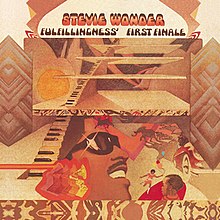
Stevie Wonder: Fulfillingness' First Finale (1974)


(Tamla)

!!! A+ RECORDING !!!

Following the release of the masterful Innervisions, Stevie Wonder earned the right to rest on his laurels; to begin with, that album was brilliant enough to linger permanently as the definitive statement of a fully developed artist. But then came the day, just after its release, when Wonder sat dozing in the passenger seat of a car whizzing down I-85 when the driver smashed into a flatbed truck, impact focused squarely on Stevland Morris' forehead. Wonder was in a coma, had to be medicated, had to gradually gain back his faculties. The pop world's adoration of him was vocally affirmed as though it hadn't been already. He showed up to his first gig afterward pointing proudly at his scar and sending the enormous crowd into utter jubilation.

Did he slum it, then? Some have regarded Fulfillingness' First Finale as an indulgent, monochromatic affair. It's dominated by ballads and subtleties and explodes into action really only twice, both times with adult emotions -- sexual urge and political rage -- hard to imagine emanating from the 12 year-old genius or even as of Talking Book. Some also see it as a stopgap, sandwiched between two masterpieces, and of course it earns poignance from being part of a larger story and a longer run of superlative works. Yet the album's comparatively off-the-cuff nature and comfortably sparse production managed to seal it, for all its contemporary popularity, as a product ahead of its time. And as with Fleetwood Mac's Tusk, it bears noting that its supposed uncommercial nature is only by a matter of degrees -- it is Stevie Wonder, it is accessible and deeply moving and very plainly glorious.

If there's less momentum, if the ballads are subtler and more troubled than usual, it's merely because Fulfillingness is an unblinking representation of Wonder's mind in the months after his by all accounts life-changing accident. Wonder has never before exhibited so much frank sorrow or cynicism; the genius grows up. "Heaven Is Ten Zillion Light Years Away" argues with but also struggles over its title's implication; hook-filled as ever but mournful, it comes about its moving climax bit by bit, as though a catharsis like that of the prior record's religious anthem "Higher Ground" can now only come with hard work, uncompromised faith and pleading.

Wonder's musical preoccupations evolve less on Fulfillingness than on any of his past three albums or the next one; this is much more an exploration of established methods, an attempt as though in real time to determine if all of the artist's gifts remain, and then how far he can go with his own expertise at harnessing our bodies, hearts carefully, quietly (hell, "Bird of Beauty" is really just a seductive, surrendered variant on "Too High"). The only other mainstream soul record of the '70s that achieves so much under such dark, careful, unflashy circumstances is Marvin Gaye's Here, My Dear. Yet Wonder never presents anything that resembles a dirge; the closest he comes is the classical piano-inspired, mournful and frightened "They Won't Go When I Go," as stark and hopeless a creation as Big Star's "Holocaust," but even it can't stay wallowed in the mire for its duration -- bursting finally and redeemed.

The record offers no "Don't You Worry 'Bout a Thing," no "You Are the Sunshine of My Life," certainly no "For Once in My Life," yet it immediately envelops us in its uniquely reluctant spirit and mood. In short, Wonder is troubled, and not troubled in the conscious but swaggering manner of Talking Book and Innervisions at their darkest. Even the latter's saddest moment, "All Is Fair in Love," was suffused with sheepish wit. Wonder's accident-related revelation doesn't lead him all that far from his prior concerns or personality. Nixon terrifies him just like racism toremented him on "Living for the City"; the result is the outrageously funky, ferocious clavinet-driven "You Haven't Done Nothin'," boasting the great man's best-ever lyric and the propulsive vocal contributions of the Jackson Five, who visited Wonder in the North Carolina hospital where he lay nearly dying and now fight alongside him.

Indeed, one is reminded of Frank Capra, who once alleged that after the release of It Happened One Night he was struck by a godly revelation of sorts -- that his duty was to let the people who saw his films know that he loved them. Capra's work thereafter was deeply populist and humane... but so was nearly everything he had already made up to that point. Perhaps his focus was simply tightened. It's by this line of reasoning that FFF opens softly, assuredly, warm-heartedly with "Smile Please" -- a jazzy and casual saunter of catchy optimism only mildly tempered by its chorus' slight desperation. It's a giving, caring setting of the stage for what's to follow, yet it also withholds -- what it builds to isn't quite a peak, only a vague allowance of joy that's more or less brought to fruition by the even more complex "Heaven Is Ten Zillion Light Years Away."

Herein lies the major artistic evolution of this LP, its most famous payoff to come two years later. Probably very few people would make an argument that Innervisions is an inferior record to this one; many of us find them nearly equal, but there's little question that the prior album is the signature achievement and very possibly Wonder's finest moment on record. But each song of Innervisions was a world unto itself; they may have complemented one another beautifully, but they did not necessitate one another. In a shattered, newly awake world and outlook like Wonder's circa 1974, it suddenly must have seemed obvious that the tempered sweetness of "Smile Please" necessitated the worshipful paean and questioning of "Heaven...", that therefore the tentative, virginal, slide guitar-ridden "Too Shy to Say" required the pure sex of "Boogie On Reggae Woman," that both needed the romantic dread and superstition of "Creepin'." Without exception, all of the fine songs here are stronger when heard together in proper sequence; the album furthers, enlivens itself and its sometimes morose, lost sensibility. It's partly because no sentiment here is simple, childlike, innocent.

"Boogie On Reggae Woman" is accomplishment enough to require some digression, and a speedy comparison to the romances of Talking Book or My Cherie Amour casts into stark light just how much Wonder's albums of the '60s and '70s are a narrative of boyhood fading into physical and emotional maturity -- more eloquently and musically than the output of any other teen idol. Masculine sexual identity in rock & roll has historically been turgid and superficial, a result both of gender roles and of the bounds of the form. But even if Stevie Wonder is a modern American hero on a level with few, he as a musical entity is hardly traditional. Somehow, his hot-sex song is different -- and hotter -- not only because of the stark vulnerability in his voice but also the passive androgyny of the lyric. The song cannot be denied musically, driving along with cosmic force in one of the rawest grooves of Wonder's career. As engaging as it is, it's still the composition and -- especially -- the vocal performance that makes the song so potent, even today in a pop music world swimming in innuendo. This is the real thing, with genuine feeling, genuine primal lust.

Like Brian Wilson's legendary take on the far less (but not entirely a-) sexual "Don't Worry Baby," Stevie's vocal here makes its mark with orgasmic mystery, with his teasing groans and the bashful secrecy of "I like to do it to you 'till you holler for more," the submissive thrill of "I like to make love to you 'till you make me scream." The song is an admission of sex not just in one of the three pop interpretive traditions -- as pornographic bliss or an expression of love or a political metaphor, all of which have some truth -- but as a function of the flesh and a feeling that marks true humanity. The line that grips every time is the one that reveals the most about Wonder and the beauty of sexual relationships in general -- "I like to reggae with you, but you dance too fast for me." There's no song better suited than this for such delightful interpersonal revelation.

Yet again, however, that split second of dancing bliss requires counterpoint, and therefore side one ends with the gorgeous but meacing "Creepin'"; his voice never better or truer, Wonder wraps it around a blackened tale of obsession and lust, no ordinary love song, more evocative and conflicted than even Gaye's work of the period. It's a strange, counterintuitively calming track that belies its secret heart on a record that very often isn't what it seems to be. Songs that begin as whispers routinely evolve into full-blown gospel revival.

If "Creepin'" alone doesn't make the case, if the melody and ache of something like "It Ain't No Use" can't render this as vital and grand as any of the outstanding achievements in Wonder's catalog, if its thematic sophistication does nothing for you, maybe it's wise to stick to something simple: Fulfillingness' First Finale features the artist's best, most nuanced singing ever, full of character, charm, sensuality like at no point in his career before this and honestly not often thereafter. Beyond just his own singing, it's the versatile use of the human voice he displays in his productions: the harmonic lushness, openness, the intimacy of the way he is himself recorded.

This might really be a finale of sorts; it's the definitive moment of Stevie Wonder as the artist he set out to become at the end of the '60s when he acquired control of his output. Conceptually it's virtually perfect, almost seemingly effortless, and consistently rewarding and revealing. But when he lets the facade break just a bit and starts to suggest a bit of joy and passion looking ahead on "Please Don't Go," it's the first evidence of the earth-shaking universal classic he would unearth just a few years hence. Fulfillingness can't help but sit in the shadow of two great records it sits next to on the shelf of every music collector with an ounce of taste in this country and many others, but it's a great record in its own right specifically because of what it slowly begins to imply: more than a decade after "Fingertips," the reality of growing up and becoming an individual is beginning to require the full force of Wonder's creativity and intellect. He'd grown up before our eyes, and now we would really see in full the man he had become.

***

[A small portion of this essay incorporates material from a previously published piece about "Boogie On Reggae Woman," posted in 2004.]

Tuesday, July 7, 2015

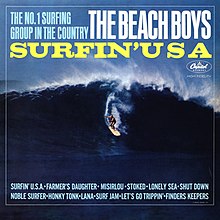
The Beach Boys: Surfin' U.S.A. (1963)


(Capitol)

They weren't much of a surf group. The best genuine surf music is instrumental and has little to do with the Beach Boys' entirely separate if not incompatible skill set; rock instrumentals were for a time an explosive subgenre that achieved occasional transcendence with miracles like Dick Dale's tricky, evocative guitar heroics. Such music just as frequently emanated from minor bands or studio musicians who'd unroll one crucial, vibrant single, maybe two, then disappear. Surf music didn't have much commercial or cultural presence for long, and as the subculture itself grew it was apparent that the music of genuine surfers was neither "Pipeline" nor "Surfin' Safari" but harder-edged R&B. So the irony is the Hollywood guys who in all but one case had never surfed in their lives have this gorgeous album cover on which it is proclaimed that they are "the no. 1 surfing group in the country."

The Beach Boys were undoubtedly "bigger" by the time this album rode up the charts than any other popularly identified progenitors of surf music. But not better, at least on the evidence of the whopping five instrumentals that fill out the tracklist on their second album. Three of them are covers, one dull but enthusiastic ("Misirlou"), one competent but uninspired (Bill Doggett's "Honky Tonk"), one that drains all the life out of the original, indicating the harsh limits of youthful enthusiasm (Dick Dale's "Let's Go Trippin'," in its original version probably the best surf 45). Of the originals, "Surf Jam" is scrappy and fast but forgettable and "Stoked" is exactly the same, only it contains the band obnoxiously repeating the title.

Then the Beach Boys, it seems, are no more a surfing group than Loudon Wainwright is a calypso singer. Their true innovations lie someplace else entirely, exemplified by the title track here, an exhilarating and real moment hampered only by the lifting of Chuck Berry's "Sweet Little Sixteen." (The song was supposed to be credited to Berry as cowriter but Capitol botched it on the single.) The song has little to do with the conventions of surf music, everything to do with pure rock & roll and the sheer aural rush of its strong, forceful sound and escapist lyric. Like Berry, the Beach Boys lyrically are literate and wordy, instrumentally raw and therefore infinitely expressive. In mono, at least, I could put "Surfin' U.S.A." on a par with any rock & roll recording; it's utterly explosive and has a power over any listener that remains potent to this day, maybe because there's not a human alive who can't relate to the opening line -- "If everybody had an ocean..." -- including those with no interest in water or surfing. It's one of the greatest statements of purpose in all rock music.

The b-side signals that all isn't right. The popular but oddly listless car song "Shut Down," built from one of Roger Christian's oddly romanticized, jargon-filled car poems, feels contrived compared to its coupling and both sides of the first Capitol single. Insincere formulas invariably wear thin quickly, after all, which may explain, on the album, the prevalence of ballads above all else, surely something that seems to stand in a kind of contradiction to the teenage utopia symbolically depicted on the front of the package.

"Lana" is simplistic to the point that it barely exists, but it plays to the band's strengths because it seems that Brian, taking one of his first leads, actually cares about what's being sung. Indeed, he'd stumbled at last on the ideal subject, as had so many before him. Just as, with "409" and "Shut Down," he'd discovered cars to be twice as universal as surfing, girls had tenfold or more on both of them. The two other knockout tracks here, "Lonely Sea" and "Farmer's Daughter," both have Brian slipping into lovelorn balladeer mode. Written mostly by Gary Usher, "Lonely Sea" is an early classic, astonishingly enough lifted from the band's Murry Wilson-produced demo tape for Capitol, the same one that brought us "Surfin' Safari" and "409." However, the beloved "Farmer's Daughter," famously covered by Fleetwood Mac, remains the loveliest song here, its depth of emotion -- surely as wrought and considered as on the mournful "Lonely Sea" -- is suggested rather than explicitly stated, thus drawing a direct line to the next album and the Beach Boys' work thereafter. The minimalist lyrics carry a kind of hopeful sadness that takes its time to hit you, and then suddenly "Surfin' U.S.A." seems like a song not about beach party fun but about how everybody wants to be where they can't, by the ocean or next to the farmer's daughter.

Thus, it's not hard to link these tastefully restrained but still exuberant love songs to the bright "Noble Surfer," full of delicious bass vocals from Mike Love, concerned with admiration of a hero from a distance and equipped with an atypically clever lyric and an unexpected celeste solo. The ideology is enough to weigh you down, but that's why we have the Frankie Valli-like "Finders Keepers," because beach party fun is still damned important too. Either of these eclipse "Shut Down," though that song's celebrated breeziness make it easy enough to forgive. The five solid originals plus both sides of the single comprise half of a solid, though not brilliant, sophomore album, but the record's pacing is so fouled up by the constant instrumental interjections that it's best heard piecemeal and, despite higher peaks, is a far less consistent record than Surfin' Safari. Modern non-obsessives are likely to lose patience digging for the gems, a problem that anticipates similar issues with Shut Down, Vol. 2 a year later.

Consumers turned Surfin' U.S.A. into the first rock & roll album to sell in mass quantities in the era of the LP as a vehicle primarily intended for classical, opera, jazz, and bloated film soundtracks. It success would be parlayed into much greater artistic control for the Beach Boys -- namely, the ability to record wherever they wanted and to credit one of their own, Brian Wilson, as producer. (Brian had all but officially produced this album but, as was then customary, A&R man Nik Venet received the sleeve recognition.) Credit the band's bizarre appeal to nearly everyone, the universal spontaneity that seemed so simple then and was slightly less simple for the Beatles and became an impossibility by the time of the Stones and the Who. In some terms, it actually is a step backwards for the group, but a closer look reveals that it's scarcely related in any fashion to the first album, a different beast entirely. Dodge the stereo mix and approach it with historical distance, plus a promise for a few lost jewels. And for what it's worth: in his autobiography, David Marks reports a fan running up to him in the late '90s with a copy of this LP bearing the three Wilson brothers and Mike Love's signatures, asking Marks to complete the set. That fan: none other than Dick Dale.

***

[Originally posted elsewhere in 2003. Subsequently fact-checked and revised to align with a larger Beach Boys-related project in 2016.]

Sunday, July 5, 2015

Back to the way it was: February 2015 albums

I've had this written for you-don't-wanna-know-how-long, and kept putting off gathering the album covers from the Net, then this morning I started wondering why I even do that; the links end up being broken eventually anyway, it seems. You don't need album covers to enjoy or be somewhat informed by these writeups, right? Good, good, let's keep moving then.

K. Michelle: Anybody Wanna Buy a Heart? (Atlantic)
"Drake would love me," yeah, probably. Despite a few early moments of sparkling, synth-heavy production, this is schmaltzy, shrill R&B that doesn't harness Michelle's appealingly nuanced, raspy, Mary Wells-like voice the way it potentially could, nor the momentum of the decent single "Love 'Em All." The parts about weed are best.

Kaki King: Junior (Rounder 2010)
I have come increasingly to feel that King is one of the all-time great guitarists, and one of the very few capable of filling out an entertaining album with nothing but her own noodling and improvisations. This is therefore easily the oddest specimen in her catalog by virtue of its being atypically conventional, a weird, breathy Cold War concept album with songs about Russian spies, Pasternak references and musical thematics lifted from various espionage movies of the '60s. There is a gorgeous, classic KK instrumental ("Sloan Shore"), and yet the remainder gleans so little depth from its relatively far-ranging influences and ideas that it ends up blending even more than usual with the "musical wallpaper" notion associated with what was once called Beautiful Music. King is to be applauded for stretching, but her gifts -- and gifts for consistency -- lie elsewhere.

D'Angelo: Black Messiah (RCA) [A+ (originally hr)]
This stunning, sprawling heap of hardened, difficult R&B is intricate, detailed, subtle, addictive, even inscrutable, and absolutely brilliant. (My favorite Marvin Gaye record is Here, My Dear, in case you're wondering which you weren't after that sentence.) Every listen seems to push one further into its paranoid, troubling murk and redemptive sensuality. It's worthy of James Brown, George Clinton or Prince at peak, and its racial and social consciousness -- its feeling of an important act that is happening right now -- gives you some whiff of what it might have been like to live and work in the real age of those titans. This is an album of the ominous, chaotic moment, maybe the only one. Not one of its songs is as satisfying as the entire package, but not one of its songs is incomplete or weak; the package simply ebbs, flows, intensifies as a whole. The funk album of the century.

Avey Tare: Down There (Paw Tracks) [c]
The Animal Collective phenomenon already seems silly enough with hindsight to make onetime deriders somewhat more sympathetic to their cause, but my low tolerance for QUIRKY VOCALZZ keeps me from hearing anything in this.

Mark Ronson: Uptown Special (Columbia) [c]
"White Gold," eh? Sounds like a DJ who spins nothing but various volumes of Now! That's What I Call Music.

John Coltrane: Africa/Brass (Impulse! 1961) [A+]
Coltrane's first album on his famously lucrative contract with the then-fledgling Impulse! is, perhaps more than any of the other LPs issued in his lifetime, the palpable sound of sustainable artistic freedom. Its centerpiece is an otherworldly but wonderfully familiar take on "Greensleeves," demonstrating how -- with one of the loveliest melodies ever written at his disposal -- the master was so adept at toying infinitely with simple chords and melodies, working and twisting out into the sublime. But the two originals are propulsive and alight with fire, chaos and beauty -- and beauty perverted -- all at once. This featured Coltrane's largest band and some of the most unusual instrumentation featured on a jazz record of this period, including Garvin Bushell's woodwinds and Bill Barger's splendidly incongruous tuba; the orchestrations by Eric Dolphy, adapted from McCoy Tyner, are dissonant, evocative, wholly immersive. The secret weapon here is drummer Elvin Jones, however, who brings these lofty sounds back to an earthy bliss. The record's still-potent liveliness is astounding.

Jazmine Sullivan: Reality Show (RCA) [r]
Solid, varied R&B record with stern attitude and unique voice. An auspicious return to a still-fraught, intense scene.

J.B. Hutto and His Hawks: Hawk Squat! (Delmark 1968) [r]
Danceable electric blues from South Carolina by way of the Chicago '50s scene is certainly a reflection of the brief mainstream popularity of electric blues, and there's no mistaking its populist appeal. Hutto has a bite of eccentricity, something that keeps him from blending in to the 12-bar wallpaper, and this comeback session is a solid, engaging evening with a rowdy monster.

Viet Cong (Jagjaguwar) [c]
"Alternative" "rock".

Ayub Ogada: En Mana Kuoyo (Real World 1993) [hr]
Stunningly beautiful, instantly appealing folk music from Kenyan singer-songwriter Ogada, whose vocals more than mildly resemble Nick Drake; at the very least, he's second to Alexi Murdoch in the Drake soundalike contest. The vibe is accessible (the record comes from Peter Gabriel's label) and low-key and it's hardly a monument of innovation, rather of the universal appeal of restraint: it's mostly just Ogada's voice and the nyatiti, which offers a lovely combination of the warm and the unique. The mood, occasional injections of variance via layered vocals and woodwinds, and subtle tones of lyrical unrest make it universal. I don't like to be one of the constant advocates of the slicker, quieter, less abrasive side of East Africn music, but good is good.

Sleater-Kinney: No Cities to Love (Sub Pop) [r]
Songs are only here and there but it's fun to hear them play them. Were it anyone else, it might not seem so weighty.

The Decemberists: What a Terrible World, What a Beautiful World (Capitol) [c]
A band whose work was once so full of wit seems to have slowly shed it piece by piece; the warning sign was probably when so many of the richest, most satisfying and singular songs from the Crane Wife cycle were left off that release. Still, The King Is Dead suggested maturity and a future for Colin Meloy as a Nashville factory songwriter. This new record, though, is a strange leap into the adult contemporary abyss that seems hard to justify as the follow-up to a commercial breakthrough (but then, so did the Avett Brothers' last few albums; so does the work of just about every band that switches to a major label), and my best guess is that a hiatus due to Jenny Conlee's cancer treatments dimmed their focus. Cleverness, however self-conscious it sometimes was, has been replaced with cutesiness and syrup that call to mind Wild Life-era Wings. Meloy reveals how easy it is for even a dynamic, distinctive frontman to become a total nuisance. The Decemberists' audience might skew slightly mid-forties hipster at this point, but they seem to be bidding for office Muzak mostly, a curious fate for several other '00s folk-rockers like Iron & Wine and Band of Horses as well. The moments that stand out only do so in their wrongheadedness; annoying jaunty backing vocals, songs that sound routinely as stupid as barrel-scraping R.E.M. numbers like "Wanderlust" and "Shiny Happy People," and on the cut that provides the album's title, a surprisingly crass sentiment from someone so allegedly sensitive as Meloy. He wrote it in the days after the Sandy Hook massacre; it's about the contrast between the grief being felt by the parents of the dead children then with Meloy's own placid happiness as a father. In other words, it's essentially a humble brag about one's child being alive, undoubtedly well-intentioned but just another sign of how aloof a very popular band can quickly become, and how fast my generation's indie rock as a whole has faded hopelessly out of touch as it ascends to messy middle age.

The Damned: Damned Damned Damned (Stiff 1977) [hr]
Cited frequently as the first-ever UK punk band, a statistic that becomes harder to define and more meaningless with each passing year, the Damned have never had quite the international audience or legendary cachet of the Clash, the Sex Pistols or even Australian counterpart the Saints. But the claim Damned Damned Damned can lay down that's nearly unique in its era is that, beyond its association with any particular movement, it's a truly brazen piece of timeless rock & roll fuck-all, fast and furious in the vein of the Stooges -- whose "1970" is memorably covered herein -- but with ample devilish wit to match. It's an absolute shot of pulp joy that hasn't grown old with time, and its two signature singles "Neat Neat Neat" and "New Rose" (with its glorious opening echo of the Shangri-Las) can still pump up and blow apart a middling evening. But in contrast to Never Mind the Bollocks, the rest of it lives up to its peaks; the cascading, furious "I Fall" might be their very best song, and "So Messed Up" is Ramones-worthy. Taken together it's all so clear and full and complete, when punk was serious in its irreverence, focused and deeply inventive.

Belle & Sebastian: Girls in Peacetime Want to Dance (Matador)
Having conquered seemingly two disparate career paths for the same band, Stuart Murdoch's current endeavor takes them to the dance floor, sort of. And yet, as on Write About Love, he's best when he plays to / remembers his strengths. Aside from the songs that really extrapolate into miniature but extensive dramas, the work here largely seems too cute and lacking in tangible emotion. Much like Stephin Merritt's later work, what we're hearing is the career twilight of someone for whom this has simply become too easy. Murdoch could write most of this with one eye open, his band could play it with both shut, and the stylistic toying is just costume jewelry. We're less bored than he is, but we can tell he's bored and it's tragic.

Al Green: I'm Still in Love with You (Hi 1972) [hr]
This is one hell of a subtle record; having long loved Green's singles I've only just in the last couple of years started to process his albums in order, which has been an excellent experience I wish I'd taken on with more artists (and probably will down the line). Pretending this was a new release, thus ignoring the inescapable fame and power of its several hits, I was initially disappointed that the album seemed dialed back, painstakingly smooth, even soppy at times. But each revisit reveals the tension and power lurking in songs that never make their sensual longings as initially explicit as they finally are. Thinking at first that it was the least of his first three Hi albums, I now would say it's the best. And the "Oh! Pretty Woman" cover is Wilson Pickett-worthy. But of course the singles leap triumphantly over all. Is the best of the bunch the ubiquitous title cut, which revises but amplifies "Let's Stay Together"? The teasing "Look What You Done for Me"? No way. The champion is the strangest, most hardline and brutal of the bunch -- the hard, pleading, possibly mildly sarcastic "Love and Happiness." That the album retains the vibe of its most beloved inclusions without ever growing repetitive or dull is just one of the treasured revelations it's hiding.

Pond: Man It Feels Like Space Again (Caroline)
Annoying Grizzly Bear-lite stuff.

Wednesday, June 24, 2015

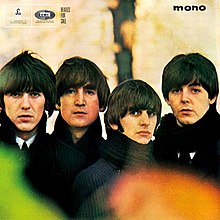
Beatles for Sale (1964)


(Parlophone)

!!! A+ RECORDING !!!

Quieter and sadder than any other Beatles album, this country-infected set is still dynamite whether you observe the six skillful covers or the overwhelmingly melancholy originals. Either way it's a rumination upon where the four of them were just as peak Beatlemania began to crest, as a year of international fame took its toll on head-spinningly young men who couldn't possibly have known how to process it. Simultaneously the Beatles seem to dig in their heels with more honesty, maturity and pessimism than ever before and also to yearn for a past, of blistering rock & roll nights and seemingly so much less responsibility. They might always have longed to "make it" but now they saw what making it meant, particularly for a band as good as they were.

The upbeat cuts -- Chuck Berry's "Rock and Roll Music," Little Richard's "Kansas City/Hey, Hey, Hey, Hey," Carl Perkins' "Honey Don't" and "Everybody's Trying to Be My Baby," and the classic "Eight Days a Week" -- leap out of the speakers, of course, but their surroundings cause the album to seem like an introspective, vital piece of work reaching to a more direct and cathartic place beyond its influences. John Lennon sounds cold, hurt, and distant on the opening cut, "No Reply," a spit in the eye to the warmth and energy of A Hard Day's Night. "I know that you saw me / 'Cause I looked up to see your face / I tried to telephone / They said you were not home," and the chilling payoff: "That's a lie." These three words carry more weight than "You Can't Do That" and "Run for Your Life" put together. Just as the Beatles put every bit of their manpower into constructing the careening pop jet engines of their past, "No Reply" reveals them diving full-force into an unexpectedly angry, unforgiving world. "I nearly died / I nearly died." The drama is almost oppressive... and the tension does not lift.

On "I'm a Loser," John's navel-gazing lyrics of the previous album culminate in a single bare moment. No one else could write with this clarity. "Although I laugh and I act like a clown / Beneath this mask I am wearing a frown." In the chorus, the entire band nearly loses its reins on the song; it threatens to burst at any second and then, out of nowhere, comes the unabashedly foreign harmonica solo. John's vocals, unsurprisingly, possess a jolting magic for the duration of the album but particularly here. It's rare that every second of a song matters so much. The song betrays the influence of Dylan -- Beatles for Sale predates the Billboard dawn of the folk-rock movement by several months -- but sheds every bit of poetic abstraction or pretension; it's Lennon talking to us.

From there we travel to "Baby's in Black," a slice of melodramatic black humor that boasts, once again, a performance that speaks volumes about the Beatles' versatility. They fill a relatively simplistic ballad with noise, refusing to allow it the obvious fate. During a repetition of the verse that offers the song's ugly lyrical essence -- "Though he'll never come back / She's dressed in black" -- the wall of sound is shut off, underscoring the weight of the moment, before a drum fill leads it all back in. It's not exactly subtle, but there's something magnetic about it.

Even hearing "Eight Days a Week" after all these years, it's stunning that in Britain it was never a single. The way it hops straight at you and spends two minutes focused thoroughly on enchanting you. "Pop bliss" has never been such a true and valid term, and even the introduction and coda have sex appeal. If any song could dream of capsizing "I Want to Hold Your Hand" as a peak of all the Beatles' powers, if any song could cause the mass surrender of "She Loves You" to a similar extent, this is probably it. And what an odd context in which to find it, but evidently they felt it lackluster in the face of prior hits. The concurrent choice of a single for the end of 1964, "I Feel Fine," does reassert the band's commitment to innovate, but the slow burn of Beatles for Sale is no less valuable in its palpable fear and pain.

As a composer, Lennon had a hell of a year in 1964; he even offers his own "Here, There and Everywhere" in the absolutely perfect, Spector-size, way too fucking short "Every Little Thing." Even in its platitudes it seems as personal as the stark folk ballads of Side One. And there's one more, another knockout. "I Don't Want to Spoil the Party" is a start-to-finish masterpiece. The western tones finally reach their climax here on Lennon's last song of the album... the band is as quick, efficient, and loud as ever, but in this world the sadness is eternal. He takes a walk, but he never reaches his destination. The following year John would be striking with "Help!," "You've Got to Hide Your Love Away," and "Girl," all of which can be traced back in delicate spirit to "Party."

Paul McCartney's bizarre absence as a songwriter in the band's most crucial year rages on, but the two he offers are staggering. The moving "I'll Follow the Sun" is, without question, his most personal piece to date, and begins his golden era as a composer (though in fact it was written much earlier). And don't talk to me about "What You're Doing," just about the finest song he's ever written, because you will surely regret it. If you need proof that the soliders of the Beatles for Sale-as-worst-album school of thought are full of shit, dig that proto-Byrds guitar riff and "If you need a love that's true / It's meeeeeeeeeeeeeeee" and the piano. This should not be an obscurity; the commitment audible in the band's performance reminds you of what sort of confounding interplay they had at the beginning of it all. (Future fusions are also predicted within the perfect harmonies and stinging guitars of the Beatles' take on Buddy Holly's "Words of Love," which seems to bury itself simultaneously in the past and future and attain a true sweetness that doesn't devolve into the saccharine broadness of "Till There Was You.")

The covers that are peppered throughout the album continue the Beatles' tradition of outstanding taste and selection even though at least three of them stand in direct contradiction to the rest of the material. "Rock and Roll Music" is a perfect example, but somehow the transition seems natural. And it's useless even for a tireless Chuck Berry fanatic to deny that John Lennon's voice utterly revitalizes this gorgeously written anthem. McCartney lights up "Kansas City/Hey! Hey! Hey! Hey!" with his usual conviction, and George conquers the echo chambers of his Carl Perkins cover, "Everybody's Trying to Be My Baby," to deliver a moment of unbridled charm. Ringo delivers that same key ingredient in spades on perhaps his finest vocal performance, behind the wheel of a wonderful "Honey Don't." The expert understatement and southern swing of Carl Perkins' songwriting helps, but Ringo really makes this recording even with a flawless performance to back him up. "Aw, rock on, George, one time for me." He is really on fire after the solo, too. In its manner this is no less cause for Beatle worship than your "Eight Days a Week."

"Mr. Moonlight" is a cover, but it may as well not be; it belongs to Lennon forever. Okay, Lennon and George Martin's cheesy organ. The song passes into the overblown Paul Anka corners of songwriting... it is an outrageously dumb composition, and the Beatles' performance happily pushes all the buttons to ham it up to the max. John pushes his vocal chords to the end of the world. It is the band's stupidest, goofiest moment on record (the hell with "You Know My Name"), yet it's sublime. Dark, moving ballads, warmly surreal humor, naked self-examination, pangs of love, country, melodrama, the sheer wonders of growth, and undeterred rock & roll. It's not often these all come in a single package. When they do, the result is seldom -- if ever -- this strong, this unforgettable.

[Reformatted version of a review from 2003.]

Monday, May 25, 2015

R.E.M.: Fables of the Reconstruction (1985)


(I.R.S.)

HIGHLY RECOMMENDED

"I've seed de first en de last...I seed de beginnin, en now I sees de endin'."

The above comes from William Faulkner's The Sound and the Fury, not at all coincidentally the original title of R.E.M.'s third album, which in the end received a name equally indicative of its concern with the Southern identity. It's a circular title; it can be Fables (as in Uncle Remus) of the Reconstruction or it can be Reconstruction of the Fables, but in fact it is both infinitely, a title that goes on forever and is reproduced as such on the nearly incomprehensible album sleeve. The flexibility may be pretentious, as may be Michael Stipe's description of the album's sound: "It reminds me of two oranges being stuck together with a nail." The things adorning the heart of the record are clumsy and confused, but that is a natural result of a strength in atmosphere and surrealism that perhaps even the band itself didn't fully understand. Musically, this is one of the few rock albums of its period in which everything seems studied, devised, proper, all to serve a central idea: the immersion into Heaven and Hell, sound and fury, comfort and terror of the Deep South.

The South is a place of secret histories, the antithesis of the entirely human nature to gather and store knowledge of the outside. It is the last place in America where reality can be completely overtaken by eccentricity, willful isolation, de-evolution. It would be pointless to elaborate extensively on how R.E.M.'s Fables is not just a Southern album (recorded in London, in fact) but an album about the South... the definitive writing has already been done by Marcus Gray, in his "About the Place Where You Live" chapter of It Crawled from the South. Nevertheless, the issue is impossible to avoid in a record so dominated by Southern images and characters, by the highest level of disorientation achieved by any American band.

"Feeling Gravitys Pull" may have little to do with Faulkner, but it remains the random shreds of rantings and ravings of a deluded man beyond help, the necessary entrance to an alternate universe. "Driver 8" and "Auctioneer" are train songs, the box cars pulling out of town. "Maps and Legends," "Good Advices," and "Green Grow the Rushes" are Appalachian folk songs. "Life and How to Live It" is a song about a bizarre, deeply racist man who split his house into two halves and wrote a book (Life: How to Live) about his philosophies. "Old Man Kensey" and "Wendell Gee" are both also about deep South weirdos, the former a dogcatcher who used to hide in a coffin and scare children, the latter a man who ran a car dealership and whose entire family dominated the businesses of the tiny town of Philomath, referenced in "Cant Get There from Here." The entire experience is a dream, not accidentally. The first words spoken on Side One are "I fell asleep," the random information sliding in and out of the speakers (and the sensory overload of the end of the opening track) are evidence of the degree to which the band and the producer Joe Boyd fought for a completely heightened, disarming experience; after the more haphazard Reckoning, the band has returned to the mystery of Murmur with a newfound tendency toward the macabre that would remain untapped for the rest of their career.

Michael Stipe described the musical inspiration as "someone with an old tape recorder recording an old man with a fiddle, with a woman in the background with her hand on the stove." The juxtaposition of this with the dirty Tom Verlaine guitar of "Feeling Gravitys Pull," the New Orleans funk of "Cant Get There from Here," and the unfiltered electric terror of "Old Man Kensey" is only superficial; all three songs present conventionally youthful entrances into deeply unusual but identifiably ancient ideas, the central notion behind rock & roll in the very beginning. Fables is a far more difficult recording than Murmur, for reasons that may at first be tough to determine: Listen to the sparkling production and harmonies of "Maps and Legends," so far from the earlier album's mud and mush. But the band has been taken over; not content to merely make an impression, they are now performing. The overpowering chorus of "Maps and Legends" is alien, stunning, unexpected even years later. Its power is nearly subliminal; the listener is overwhelmed, a feature inherent in one gorgeous song that becomes increasingly important as the album progresses. The glory of "Maps" and the two other pure folk songs, "Green Grow the Rushes" and "Good Advices," is in their simplicity of emotion, in which lies an improbable elegance. The majesty and mystery of "Legends" would be remarkable enough even if not complemented by the sing-song grace of the two later songs. "Advices" is amusing and offhanded, but "Rushes" is a masterpiece of sorts, perhaps not on a scale with "Maps and Legends" but certainly impressive in its fusion of distant worlds with the bracing clarity of feeling in the bass, guitar, and harmony vocals.

On "Old Man Kensey," a remarkable piece of fully tangible atmosphere, the lyrics are fine (as studied below), but the story is told well enough by the performances, not even so much the music. The way the guitars and bass are presented offer the strongest case for Kensey as a breathing human, the precise double tracking of the guitar line evocative of a long-ago whisper from David Byrne: "Someone controls electric guitar!" R.E.M. defines performance art here, a point driven home by the way that Fables stands apart from everything else in their catalog; all of them are performances, and all are entirely convincing.

Michael Stipe is perhaps on an equal level of importance here with Mike Mills and Peter Buck (something that would change with Lifes Rich Pageant, which owes much of its greatness to Stipe), but his vocals are what truly sell the record. On many of the songs, he calls to mind an early lyric (from "Pilgrimage") that mentioned "speaking in tongues." Perversely, Stipe dominates several of the songs because he is himself dominated by the music, his body and mind taken over until what he sings, rather than what he says, is a direct product of what circles around him, unadorned by conscious thought, entirely informed by rawness of emotion. "Life and How to Live It" is the most soaring example, an exhilarating and horrifying song that finds both Stipe and the listener gradually taken over by the beautifully sustained intensity that builds and builds until an explosion of babbling ("the air quicken thicken tension build and then suddenly"), at the point of which it is verifiable that Stipe and the audience are feeling and experiencing exactly the same thing, an identification established in "Maps and Legends" that becomes almost unbearable when confronted with the cathartic devastation of "Kensey." It becomes difficult to separate the music from oneself, to distinguish the otherworldly environment -- real as it is -- from one's own. "Spooky gospel" was how the band described it then. "Spooky gospel" it remains, and the speaking in tongues continues with the deliberately unpleasant, uncompromisingly bleak vocal line of "Auctioneer (Another Engine)," a song of rolling around in agony, a song of being tied to the tracks, of certain doom, of the darkest of dread.

Indeed, the problem of Fables of the Reconstruction is ultimately that the band can't keep up with Stipe. Everyone is in unison at first, but as in many other cases, the formula breaks down on the second half; it seems wasteful for themes and structures to be established with such care only to be eventually ignored. Two of the strongest songs on Side Two break the album's mold uncomfortably. On vinyl, it might be easy enough to overlook this, with "Can't Get There from Here" easing the audience from a familiar world to an alien one, but on CD, the lack of space between is crippling, even after the threatening "Kensey." "Feeling Gravitys Pull" has already set the scene; after a recording as evocative and intriguing as "Old Man Kensey," an equally brilliant but far more lightweight song like "Can't Get There from Here" simply can't keep up the pace, not even so much because of the R&B influence as because of its affecting of an outsider rather than an insider perspective, and the strong separation of listener from narrator, a line that was blurred and destroyed by "Maps and Legends," "Old Man Kensey," and "Life and How to Live It" in an impressive feat of performance and storytelling.

Every song on the first half shared a sense of menace, even the single "Driver 8," a haunting thematic "summing up" of the album. There is no such string tying together the rest of the material. "Green Grow the Rushes" is bleak but comfortable, "Good Advices" weird but hardly disconcerting. "Kohoutek" is completely divided from the rest of the album, an atypical love song, except on the point of the vocals. While not bad, it is doomed to be indistinct in this environment. "Auctioneer (Another Engine)" is an unworthy rock diversion despite the intrigue of the vocals, the album's own "Second Guessing." And "Wendell Gee" is the album's only note of absolute fakery, though it made a fine single and contains the album's only moments of charm, but more ominously its only moments of sap, despite some unforgettably disturbing images of chicken wire and appealingly incomplete backwoods phrases of almost barbaric nature ("he was rare to give respect"). Clever as it is, it doesn't do half as much work as the best songs on the record, saved narrowly from schlock by the exquisite hollering of Bill Berry (not the cloying banjo solo by Peter Buck, the opposite of the charm of "Rockville," recalling the type of material a band that had never been to the South might play to imitate the sound of the region). The lamenting a dead but kind-hearted weirdo may be more pleasant than the lamenting of the insanity of a live one, but all of the emotion in "Wendell Gee" is processed and secondhand. The same cannot be said of "Life and How to Live It" or "Old Man Kensey," both of which strive so completely for the direct transference of trepidation if not fear, disorientation if not insecurity. The effect may be colder, but the stronger achievement is clear.

However, "incomplete" is an important description because it is so accurate an articulation of why Michael Stipe's lyrics (when they are important) work so well. These are more direct narratives than anything on Chronic Town, Murmur or Reckoning, but Stipe noted correctly that they are by no means conventional story-songs. They don't have a beginning, a climax, an end. They are "a slice somewhere out of the middle." This is what gives the random imagery, the folky portraits of characters and behaviors in a strongly traditional oral-storytelling flavor, its power and its genuine nature. "Old Man Kensey" and the antihero of "Life and How to Live It" sound like people who actually exist (which they did), not pawns forced into a balladeer's one-dimensional stories (like, for instance, the story of "Wendell Gee," who in fact did not die until ten years after the song was written). It's interesting to note, too, how vital the interplay is between Stipe's singing and his words. When read, the lines "Those who know what I don't know, point to the yellow, red, and green" and "Keep these books well stocked away and take your happy home" have no meaning, make no impression; when he sings them, they are standout moments of tongue-rolling beauty and satisfaction, of comfortable sing-song invitation. The sense of melody provided by Mills plays an equal part, but it's highly evident on this record how much a knowing, intelligent vocal performance can enliven a seemingly useless line into something sublime. It would be easy to misread this as a criticism of the lyrics; in fact, it's a compliment to Stipe's intrepid genius as a writer, his understanding of the three-way interactions between lyric and music and vocals, of what sounds good not on paper but when sung.

Stipe fills "Driver 8" and "Can't Get There from Here" with witty southern terminology but takes each song, very similar on paper, to entirely different places, and ensures that every word of "Life and How to Live It" adds to the urgency. "Wendell Gee" may be a fun but empty exercise in cushiness, but it does hit a note of genuine feeling in the simple line "There wasn't even time to say goodbye," which rings woundingly true despite all else. None of this is to suggest that Stipe always makes the right decision. His character portrait of Old Man Kensey is almost oppressively evocative and Roald Dahl scary, listing the occupations Kensey "wants to be": A dog catcher, a sign painter. But he can't be these things; first he's got to learn to read, or count. In a throwback moment of apparent panic, Stipe adds that Kensey also "wants to be a goalie." A goalie!? That feels false, as if the opposite of the mentioned bit of "Wendell Gee" that defies criticism. It's the only second of disappointing self-conscious doubt in a song that otherwise maintains itself perfectly.

R.E.M. had broken with their regular producers and their regular location to make this album with Boyd in England, and they nearly broke completely, according to legend. The band later shunned the album, but if not their best, it may easily be their most fascinating, certainly in the way it is seeped in legends and harsh realities of the Deep South, a region of endless fascination, stories winding up and down through centuries, beautiful and ghostly and surreal. So completely was the band taken over by these ideas, it invaded everything up to their promotional handouts (a tour poster from the time features a chilling Southern Gothic woodcut-type image of a man filling his family's turn-of-the-century vehicle with petrol). The only criticism of any real significance for this album is the way it sets up so many ideas that have potential to stretch and expand the boundaries of a rock LP, then forgets most of them. In practice, it isn't a major problem, but on their next two records, R.E.M. offered songs that could easily have repaired it. With "Swan Swan H," "King of Birds," and "Oddfellows Local 151," Fables could have been nearly perfect, despite Stipe's statement that "Oddfellows" was a "debunking" of Fables. That may have been the best case for its inclusion. Myth-making is the essence of rock & roll, but there is equal vitality in the destruction of those same myths.

As such, Fables cannot be described as kaleidoscopic, but it's as strong a statement any band could make on myth making and myth destruction, and the equal importance of each. They had taken "spooky gospel" as far as it would go, as far as it will ever go. The album precludes the need for more like it, because it is a work of such conceptual exploration and depth that it can offer a permanent sense of discovery.

***

[Originally posted elsewhere in 2005.]

Sunday, May 24, 2015

Back in class again: January 2015 albums

Delving into the back catalog; sorry this wasn't posted sooner.

******

Goldfrapp
Seventh Tree (2008)

(Mute)

At the time this was released I was very high on Goldfrapp's two previous (and much glitzier) albums, which didn't really prepare me for this complete reversal of technique, though in retrospect it's hardly out of nowhere. "A&E" is still one of their worst, most pandering moments of baldfaced stylistic ripoff, but I sort of like some of the bleak cabaret stuff now. Eventually they would master this style with the far bleaker Tales of Us; the strongest song here is clearly "Happiness," which is better in a bootlegged Rex the Dog remix from '08.

***

Gossip
Music for Men (2009)

(Columbia)

HIGHLY RECOMMENDED * This extremely focused collection of thirteen unstoppable disco bangers never quits; it's, at last, the perfect application of this odd trio's perverse, trebly format and Beth Ditto's titanic voice to joyous, explosive music that fits it. The main vinyl release consists of a set of 12" singles and that's more than appropriate, so convincing is the sense of throwback to an era of glorious, beautiful decadence that now translates as a kind of unfettered freedom. "Men in Love" is the cheerful promiscuity anthem of the century, "Pop Goes the World" and "Dimestore Diamond" the democratic statements of purpose assuring that the band's new, utopian dance-music-sex-romance revolution is all-encompassing; nearly all of the rest (other favorites: "2012" and "Heavy Cross") are splendidly, engagingly filthy. Their best by far, and one of the best dance albums ever released by a rock band.

***

Game Theory
Tinker to Evers to Chance (1982-90)

(Enigma)

Scott Miller's verbose power pop is clearly distinctive and unusual but, despite the lineage and tragedy, the band and their songwriting come off as flat to me. Most nerdy indie rock can likely be traced back here, but everything feels so subservient to the cerebral words and the scramble to fit them into the songs that the emotion doesn't reach.

***

Hospitality (2012)
(Merge)

RECOMMENDED * Compared to the wonderful follow-up Trouble, this is a bit fluffy -- hookier, sweeter, thus more ordinary in the landscape of alt-rock. But the guitars and vocals still ring, and the songs are actually best at their jauntiest. Justifies the instinct to call them a singular, affecting band.

***

Average White Band
AWB (1974)

(Atlantic)

HIGHLY RECOMMENDED * All-time fave Scottish funk band's best moments are mostly here; you don't need a greatest-hits. A fine party record if decades of radio overplay haven't worn you out on the singles. "Pick Up the Pieces" is still capable of bringing introverts back out onto the dance floor after a break.

***

Interpol
Our Love to Admire (2007)

(Capitol)

In retrospect, this isn't bad per se -- though that doesn't mean it isn't embarrassing, like someone proving that if you amped up the self-importance on their first two records just slightly you'd get a mortifying self-parody of generational Joy Division affectation. Lots of laughs here, beginning with "how are things on the west coast?", extending to the absolutely horrendous update to David Crosby's absolutely horrendous "Triad" ("No I in Threesome" is the actual title; the best song about group sex remains Curren$y's "Bring Her Home") and an amusing piece of abortive 2000s-indie history; they signed to Capitol Records to release this then were immediately, unceremoniously dropped. It almost feels like an act of sabotage, what with these bad threesomes, bad city symphonies, bad macho romantic demands. The quintessential post-Mike Love surfer jock album. Key lyric: "I haven't slept for two days / I've bathed in nothing but sweat."

***

Chuck Berry
One Dozen Berrys (1958)

(Chess)

HIGHLY RECOMMENDED * Caveat: all of Berry's early Chess albums are a few classics plus a lot of filler, so if you're not already enamored of him and interested in hearing him noodle, this won't do much for you. It's inconsistent and lazy... and brilliant, raving up and goofing around and kissing off. Any album that boasts not just "Sweet Little Sixteen" (Berry's very best, a masterpiece of freedom and hero worship) and "Rock and Roll Music" but "Oh Baby Doll" and the marvelously witty "Reelin' and Rockin'" warrants forgiveness for the likes of "Guitar Boogie," or for the fact that two songs are the same performance played at different speeds (!). Best buried treasure: the hopping "It Don't Take But a Few Minutes," one of the best early Berry songs missing from The Great Twenty-Eight. An essential package for fans.

***

Kaki King
Dreaming of Revenge (2008)

(Velour)

HIGHLY RECOMMENDED * Kaki King's largely instrumental releases differ by degrees in their approach and execution, but that doesn't mean they aren't all terrific. This is probably her best -- a vibing, whispering plunge into a warm Eno-like abyss that features some of the most idiosyncratic, graceful guitar playing on record. And on "Pull Me Out Alive," she proves as capable of an immersive and straightforward pop song (with words) as she is with crafting atmosphere.

***

Kaki King
...Until We Felt Red (2006)

(Velour)

HIGHLY RECOMMENDED * Slower, dirgier, weirder, longer, more sprawling, more elaborate, somehow even more of a trance. She also sings more, which isn't a bad thing. To be honest, these days King's music fits my lifestyle in a manner I can vouch for with few other performers. Absolutely can't get enough.

***

Kendrick Lamar
Section 80 (2011)

(Top Dawg)

RECOMMENDED * Before delving into the dense, extremely busy and complicated To Pimp a Butterfly, I felt I should get to know Lamar's very first record a bit better. The same mild criticisms that apply to most of his work already bloom here -- the music does bend and break itself based on where Lamar's preoccupied, constantly moving heart and mind are headed, which makes his work an unmistakable document of artistic brilliance but also hard (for me) to get lost in. His albums require intense concentration, not just to critique but to merely listen. He is major, and this is hardly a mere rehearsal for his later efforts -- already a master storyteller with almost overwhelming complexity. And so damn young here.

***

The Avett Brothers
Four Thieves Gone (2006)

(Ramseur)

RECOMMENDED * Played this expecting a challenge of my former convictions about this briefly beloved unit's agile, emotive upholdings of country traditions. But in fact it's actually quite engaging and soulful, a reminder that they weren't always toothless Rubinites. "Matriomy" is a good taste -- tough, uncompromised, tortured. The tortured part is what I miss in most modern country music, and honestly in the last couple of Avetts albums.

***

Killer Mike
PL3DGE (2011)

(Grand Hustle)

Good politics, good flow, shakier beats than later.

******

Wednesday, May 20, 2015

The Avalanches: Since I Left You (2000)


(Modular/Sire)

HIGHLY RECOMMENDED

Though a more nebulous entity at times, the Avalanches during the period when they recorded their first (and so far, only) album always primarily consisted of Darren Seltmann and Robbie Chater; the two of them pieced together thousands upon thousands of samples to craft one of the most seamless cut-and-paste jobs in the annals of dance music. Since I Left You is a liberating, timeless delight that renders virtually every other entry in the mashup subgenre, including the famous ones, all but pointless. Its only serious peer is probably Moby's Play, which can boast nothing like its layered detail.

The album is divided into eighteen cuts, some short and some medium-sized, but more than most endless-disco records of its breed, it feels truly like one song with several interludes that build, fade and build again. It doesn't come off simply as a collection of beats and hooks that segue into one another but a more complicated overlay of themes, ideas, musical touchstones surrounding and laid atop one another, with an almost logical wisdom and precision -- there are recognizable songs being created, sure, but more than that what we have is a group of obscure tidbits melded into a larger whole with a specific ebbing, flowing mood. It's a party record -- really it's designed in such a manner that it starts when things are fully heated and eventually wanders out into a sweet, quiet abyss with the last few people left -- but it's also incredibly malleable, suited to an unknowable variety of moods and even dark nights.

Still, what the duo primarily communicate is real joy -- the album, the title cut, the mutation of it in "Stay Another Season" and the finale are all built on a simple concept of absolute, resonant personal freedom: "Since I left you, I've found a world so new." The quote is from a song by the Main Attraction; like most of the album's samples, it was little known prior to its use here. But when the unfettered, carefree weightlessness of that sentiment rings out, it signals an album that is to eventually feel like a vacation away from everything. Welcome to Paradise, indeed; in contrast to so many other records similarly formatted, this isn't merely about beats or prolonging a physical impulse. It's also lilting, nostalgic, sweet -- and a valentine to recorded music itself.

Part of the album's resonance -- and perhaps the reason it has only grown in stature since its release, with the populace awaiting with bated breath a follow-up release that may never happen -- is its use of the unfamiliar and idiosyncratic to create its settings and build to its crescendos. There is the wonderful moment with the muffled bassline of Madonna's "Holiday" bleeding through from somewhere in the distance, which perfectly captures the arm-waving drunken atmosphere of an effortless good time, but for the most part the album's effective because the Avalanches create excitement using acrobatic vinyl manipulation without falling back on cultural familiarity. Instead of being an actual party set, it's a sort of impressionistic variant of one, which hands it a remarkably durable "found art" element. Its freshness stands undiminished. Like any crate-digging DJ worth their salt, they can't resist the two most alluring oddities of the analogue era: easy-listening Beautiful Music and novelty records, both of which they make something of. "Frontier Psychiatrist" is the graveyard for all of the oddball comedy pieces they managed to find, but even it achieves by its parrot-scratching climax a sense of wonder.

The Avalanches may never move onward from this; half of the pair is now long gone in the frustration of endless legal hangups and false starts. A revolving door of other personnel creeps through their twenty-year history. There were remixes and EPs after this, spawning what may be the group's best song ("Everyday"); there were disastrous headlining tours that somehow seemed to invariably culminate in physical injury. But whatever the future may hold, a future that seems maybe permanently out of their reach now, Since I Left You is likely to always remain the most humane and therefore the best of all mashup records. Its fusion of mad genius and fat-and-happy relaxation is utterly irresistible.